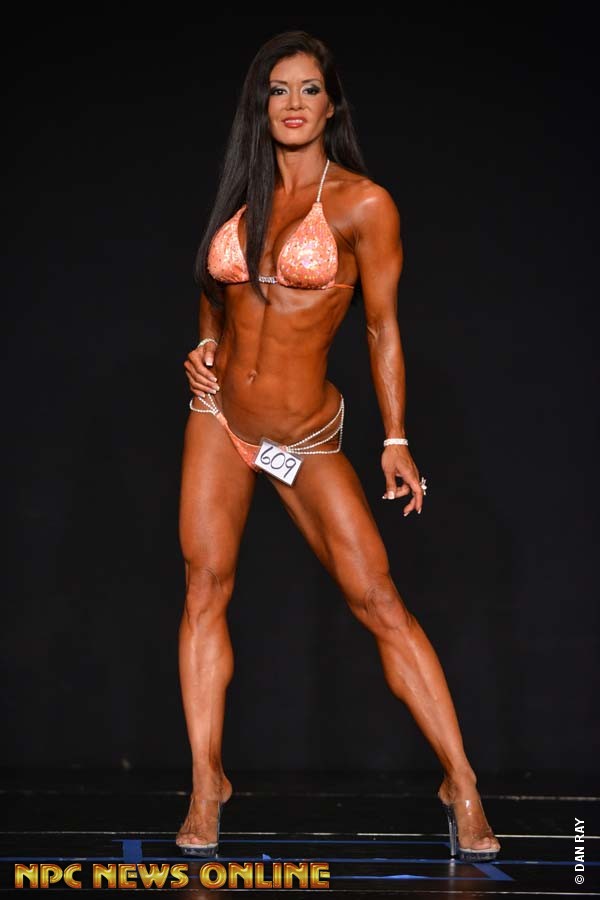
“Do You Still Compete?”

First Place Masters Bikini 35+ B Class, Team Universe, July 2013

First Place Masters Bikini 35+ B Class, Team Universe, July 2013

Whenever I hear that question now, I have mixed feelings, which range from a sense of longing for the stage, to complete relief that I have not stepped onto a bodybuilding stage for close to two years now. My short answer to the question, “Do you still compete?” is “Probably not.”

Though I competed in four Pro Bikini events, I was struggling so much with metabolic damage and perimenopause that I often think it wasn’t the best idea to jump onto the Pro stage only 4 months after I won my IFBB Pro Card. That sort of strategy might work for a twenty-something competitor who is at the top of the heap, but it didn’t work for my 47-year old body which had been beaten down physically, emotionally, and mentally. I honestly needed a break, but I pushed through, and as a result had ho-hum placings.

It has taken over three years for my body to return to a level of leanness which I feel comfortable with. I know you might assume that I was in a massive spiral with my weight and body fat, but it wasn’t THAT bad, at least not compared with many other competitors who spiral. Nevertheless, I spent over two years with excess fluff that I was not accustomed to at all, and I couldn’t stand how I looked or felt.

Here’s the breakdown of my stats throughout the years:

From age 21 through 43: Between 104-109 lbs., 11-13% body fat
2010 – Age 44: 112-113 lbs., 12% body fat
2011 – Age 45: 114 lbs., 12% body fat
2012 – Age 46: 115 lbs., 12% body fat
2013 – Age 47: FIRST HALF OF YEAR: 117 lbs., 11% body fat SECOND HALF OF YEAR: 119-126 lbs., 13-18% body fat
2014 – Age 48: 121-125 lbs., 14-18% body fat
2015 – Age 49: 119-123 lbs., 12-15% body fat
2016 – (soon to be 50): 115-119 lbs., 11-13% body fat

It has been a veritable see-saw for me over the years. I also firmly believe that I would not have gone through menopause as early as I have if it had not been for all the metabolic insults I made to my poor body as a result of competing. Since 2013, I have investigated every possible cause for the water retention issues which rather suddenly hit me. This year I have FINALLY been able to rid myself of the excess fluid around my midsection, but somehow that was at the cost of the fullness in my glutes which I had worked so tirelessly to achieve during the years in which I competed.

If you ask me what my plans are for competing, don’t be surprised if I evade the question. I realize with each passing day that competing is no longer something which I rely on to define who I am. I have paid my dues and proven my worth, and though I completely understand why people have a drive to compete, I am no longer chomping at the bit to throw on a ridiculously expensive, blingy bikini and stripper heels and put myself at the mercy of a panel of judges.

Minimalist Footwear

minimalist footwear

Please check out my latest article for American Fitness Educators which discusses minimalist footwear! Original post can be found at:

http://www.fitnesseducators.com/blog/minimalist-footwear/

Merrell-Road-Glove-Barefoot-Shoe
Less Is More

Are there benefits to training in minimalist footwear? Studies have demonstrated that training while wearing minimalist shoes results in enhanced performance due to greater foot pliability and a closer approximation to a barefoot stance. Since our feet adjust to wearing raised heels over time, it can be incredibly challenging to keep our heels on the ground while performing exercises like deep squats. Proponents of minimalist footwear may even argue that barefoot is best for heavy weightlifting, but the risks of exposure to microbes or hazardous fragments of glass, metal, or rocks, make minimalist shoes a much more feasible choice while at the gym.

Dysfunctional movement patterns become established throughout the body over time. Conventional athletic shoes can often contribute to ankle and foot dysfunction because they inhibit natural foot action. If you don’t believe it, then try to perform some of your physical activities barefoot and see how well, or poorly, you perform. Chances are that the impaired mechanics in the feet and ankles will make it difficult at best to perform those activities. By gradually switching over to minimalist footwear, an athlete can essentially correct improper foot mechanics and optimize kinetic feedback throughout the body during movement.

Benefits Of Minimalist Shoes

Conventional athletic footwear features a cushioned heel which also can compromise power. In contrast, minimalist footwear features little to no heel, and the soles are very thin and malleable, so they allow the joints in the foot to move and adjust to weight loading movements. In addition, the heels and midfoot make solid contact with the floor, causing more activation in the glutes and hamstrings. Studies have demonstrated that people who wear minimalist footwear develop greater strength in their legs and feet, since more power is transferred from the working muscles, through the feet, and into the movement. Plyometric movements and sprint power will also be enhanced while wearing minimalist shoes.

A 2011 study by Squadrone and Gallozzi assessed the ability of experienced runners to estimate the degree of inversion, eversion, dorsiflexion, and plantarflexion, of a slope surface board placed under their right foot while standing. They found that the degree of proprioceptive feedback which subjects received while wearing Vibram Five Fingers® was much more accurate than in subjects who wore a standard running shoe. In conclusion, cushioned shoes conferred a distinct disadvantage when compared to minimalist shoes during assessment of foot position awareness.

How To Transition Into Minimalist Shoes

Anyone who is transitioning from conventional athletic shoes to minimalist footwear needs to do so gradually, since the body has to adjust to radically different proprioceptive input. There have been cases of metatarsal stress which developed after converting too quickly to minimalist shoes. However, once the transition is made, noticeable strength gains should occur. Try spending about 15 to 30 minutes, twice a day, wearing minimalist shoes around the house. After about a week or two, you can try them out at the gym one to two days a week until you become accustomed to the feel of the shoes. Be aware that your gait and foot stance will probably change as you acclimate to this type of shoe.

REFERENCES:

Squadrone R, Gallozzi C (2011) Effect of a five-toed minimal protection shoe on static and dynamic ankle position sense. J Sports Med Phys Fitness Sep;51(3): 401-8.

Please Check Out My Profile at Sports Nutrition Supplement Guide Website!

I have had the good fortune to be one of the Authoritative Experts on Sportsnutritionsupplementguide.com for the past year. Please check out their site, which is chock-full of information and inspiration! The link below will take you to my profile on the site:

http://www.sportsnutritionsupplementguide.com/get-certified/brand-specific/itemlist/user/486-drstaceynaito

dr-stacy-naito-left-banner

The Power Of Leucine

Original post can be found at:

http://www.sportsnutritionsupplementguide.com/supplementation/item/1528-the-power-of-leucine

Leucine310x250
Leucine could be considered the most important supplement you should add to your regimen as you age, especially if you are a competitor. Leucine breaks down much faster during exercise than the other two branched-chain amino acids (isoleucine and valine), and is also unique in that it plays a critical role in intramuscular protein production through anabolic signaling and mediation of insulin secretion, so it certainly makes sense to ensure that you are getting sufficient amounts of leucine in your diet.

If you are over the age of 35 or 40, leucine is depleted even more rapidly, so replenishing this amino acid through leucine rich food or through leucine supplements can be an insurance policy to guard against age-related muscle loss.

Leucine crosses the blood-brain barrier, and once in the brain, it sends satiety signals to the hypothalamus, thus guarding against overeating.1 It also promotes glucose tolerance and insulin sensitivity by optimizing glucose metabolism. Another important function which leucine has in the brain is the stimulation of glutamate production and release. Since glutamate is an important neurotransmitter in the brain which is involved in memory and learning, the presence of leucine exerts protective effects on cognitive function.

One study by Donato et al discovered that leucine supplementation while on a calorie restricted diet resulted in more fat loss overall, as well as increased protein synthesis in muscle tissue and the liver. 2 The human requirement for leucine is the highest of all the essential amino acids, at approximately 40 milligrams per kilogram of body weight in sedentary adults. However, this requirement does not take into account the muscle preserving needs of individuals who are engaged in intense resistance training. Such individuals benefit greatly from supplementing with up to 200 milligrams of leucine per kilogram of body weight. 3

If you are considering adding leucine to your regimen, be sure to time it so that you ingest it when you take in a protein-rich meal. If you prefer actual food sources of leucine, you can consume turkey breast (over 2 grams of leucine in a 3 ounce serving), fish, dairy products, seeds, soy or nuts. Leucine powder is VERY bitter, so make sure to mix it with a tasty protein powder, or take it in capsule form with your whole food meals. This will optimize protein synthesis in muscle tissue and enhance the anabolic effect.

REFERENCES

1. Potier M, Darcel N, Tome (2009) Protein, amino acids and the control of food intake. Curr Opin Clin Nutr Metab Care 12(1):54-58.

2. Donato J Jr, Pedrosa RG, Cruzat VF, Pires IS, Tirapegui J (2006) Effects of leucine supplementation on the body composition and protein status of rats submitted to food restriction. Nutrition 22 : 520 –527,2006

3. WHO/FAO/UNU (2007) Protein and amino acid requirements in human nutrition. Report of a joint WHO/FAO/UNU expert consultation. World Health Organ Tech Rep Ser. 1–265.

To Compete, Or Not Compete…That Is The Question

389009

The experience of being onstage at an NPC or IFBB bodybuilding contest is unique and exhilarating, and I miss it. What I don’t miss, though, is the maddening prep which precedes the event, and the constant self-scrutiny which always surfaces during prep. I remember when I couldn’t wait to step onstage again, and would always make sure that I had a contest lined up to prep for, but my priorities have shifted dramatically over the past year. One thing I grew tired of with prepping for contest after contest is that I had to be so disciplined all the time, and was unable to ever let loose and have fun for fear of messing up my prep. A few of my closest friends even remarked that I no longer knew how to have fun, and they were absolutely right. Though I understand that the sacrifice is essential for success onstage, I don’t want to live in a constant state of physical and spiritual deprivation. Life is short, and I certainly don’t want to look at my life and think, look at all that fun stuff I missed!

last Fall, I visited Hungary, Sydney, and Bali, and quickly realized during these trips that despite all my efforts to maintain clean eating and regular exercise, there was no way that I would be able to hold onto a goal of competing once I returned home. I had been struggling with significant metabolic issues, and though I ate relatively clean during my travels, I didn’t follow the seven daily meal regimen I had been accustomed to. Here’s another shocker: I had wine while in Hungary because that country is known for its wine, and I am a wine lover. I wasn’t about to deprive myself because of some orthorexic thought process which in previous years would have had me convinced that the fermented libation was evil. I also had little to no access to weight equipment, and though I made every effort to use exercise equipment whenever it was available to me, I didn’t follow the six-day workout regimen which I follow when at home. Was that a bad thing? I think not. I was able to see parts of the world which I had always wanted to see, and I had an amazing time. Thank goodness I didn’t obsess over what I was supposed to do and complain about the lack of resources in these countries.

arrival
Though I always want to win, I am not going to have a nervous breakdown over the fact that my placings as a Pro have been underwhelming. I don’t feel pressured to step onstage, and I honestly wouldn’t have a problem with retiring completely from competing if that is what I decide to do. Yet I still get that question, “When’s your next show?” One person (NOT a competitor) went so far as to say, “Hey girl, you need to step up your game!”, which I thought was extremely rude and presumptuous. I am tired of trying to balance a very busy schedule with two-a-day cardio sessions and double training. At the peak of my contest prep, I was training FIVE HOURS daily, six to seven days per week. Every part of my body hurt. I did plyometrics with a foot strain, and trained nonstop with hip bursitis, sciatica, a rotator cuff tear, tennis elbow, carpal tunnel, and a wicked skin reaction to the latex corsets which I would wear. I have been through the paces and have paid my dues. I AM good enough, I just choose to focus my efforts on showing off my brain now. So please don’t tell me that I need to keep running in the race when I already won.

In case you are wondering if working towards a personal best and finally winning my Pro Card was worth all the sacrifice, I can say without hesitation that it absolutely was worth it. Would I do it again? Absolutely. But I will no longer sacrifice balance in my life for the sake of getting to the next level. I have come to terms with the fact that I won’t ever qualify for Olympia, and to be honest, I wouldn’t want that pressure anyway. Life is good, and I have settled into a really nice groove.

Some very well-meaning people in the industry have warned me that the competition in the Pro ranks is getting even stiffer, and I have seen proof of that with my own eyes. Let me be very clear: I am NOT going to get myself all worked up and feel self-conscious because other Pros have raised the stakes. I am quite content to avoid the stage if need be. To be honest, the vast majority of IFBB Pros don’t even compete, so I feel no remorse over my casual attitude towards competing in future events.

Life is about balance, and the way I choose to maintain balance now is by working on my careers, passions and talents fully, without being distracted by notions of returning to the stage. Yes, I love the bodybuilding stage. But I also love my life and the freedom which I reclaimed after shifting my priorities.

Foam Rollers

JFT-20-0617 EVA High Density Foam Rollers_main
If you have not used a foam roller to massage tight muscles before, you might want to explore their ability to release muscle tension. When you use a foam roller, your body weight provides the pressure which releases tension in tight muscles on the back, legs and other body regions. These clever rollers can also be used during exercise to increase balance. There is a wide selection of rigidity, size, and shape available in foam rollers today, each designed for different tasks or body regions. Some foam rollers even have ridges which are excellent for trigger points or particularly hypertonic tissues.

If you are primarily interested in using a foam roller for releasing tension knots in your muscles, you probably should opt for a greater degree of firmness. However, if you are the type of person who doesn’t enjoy deep pressure when getting massages, you might want to opt for a softer roller. The more basic types of foam rollers are usually color coded according to firmness, with the following designations:

WHITE – The softest
BLUE or GREEN – Moderate density
BLACK – The firmest

If you are truly new to foam rolling, you might want to start with a white one, then switch up to a greater degree of firmness later. However, if you are like me and need a good amount of pressure to release muscle tension, the other colors will confer greater firmness and also will be more sturdy and durable. You should also select a firmer roller if you plan to use it often, and if you plan to lie on it frequently during exercise.

As for shape, you may choose a half-dome roller so that the roller will not roll out from under you, or you may choose a full-dome roller if you really want to manipulate tense tissues by rolling on it while using the weight of your body. If you plan to take a roller with you to the gym, pilates or yoga classes, you can purchase a roller which is shorter in length, perhaps 12 or 24 inches as opposed to the full 36 inch length which is most commonly seen.

Do You Have Lower Back Pain? Check Out The VacuPractor

PIC_8905_1_TP

PIC_8915_1_TP

If you have lower back pain, you should check out the VacuPractor! The VacuPractor is a doctor-recommended and FDA registered device which relieves pain, decompresses vertebrae in the spine, and stretches the muscles naturally. It does so by utilizing an outward pull on the lower back, stretching the muscles in the area, and relieving pressure on disks and nerves. This device is easy and safe to use.

Use of the VacuPractor improves many lower back conditions, including the following:

low back pain
herniated discs
degenerated discs
compressed discs
back injuries
hip injuries
sciatica
spinal stenosis

I enthusiastically endorse the VacuPractor and encourage my patients, clients, friends, and followers to use it. I have been able to arrange a special price for all of you which is almost 50% off the price which is listed on the VacuPractor site! Instead of paying $89.95, you will only pay $50 if you enter my discount code at checkout. This is absolutely the lowest price you will find anywhere for the VacuPractor. There is also a 90 day money back guarantee, no questions asked.

Please make sure to enter the discount code “stacey” at checkout!

VacuPractor.com

Could You Be Undernourished?

Bodybuilder-FoodOriginally written for and published by sportsnutritionsupplementguide.com

If you are a fitness fanatic or competitor, you may assume that you are adequately nourished because you practice clean eating. However, that might not necessarily be the case. Shockingly, many people who are in the fitness world suffer from under-nutrition as a result of consuming limited types and amounts of foods in an effort to reach a super lean state. Think about it: if you are limiting caloric intake during a contest prep phase, have eliminated foods which become demonized during prep such as fruits and peanut butter, and aren’t supplementing your body with the nutrients it needs, then you are probably undernourished. Such nutrient deficits can have a serious negative impact on your health if practiced for an extended period of time.

Under-nutrition is a nutrient or energy deficiency, while malnutrition can represent either a deficiency or an excess of nutrients. Some individuals (especially women) in the fitness world continually follow meal plans which are unbalanced and extremely low in calories and are thus chronically undernourished. Such a state of deficit can be amplified if certain medical conditions such as leaky gut are present, because whatever nutrients are supplied to the body might not be absorbed properly.

Mild cases of under-nutrition are often symptom-free, while more severe cases are usually symptomatic. Some deficiencies can cause permanent damage to the body, for example, blindness with severe vitamin A deficiency. Typical symptoms of under-nutrition vary based on the specific deficiency, but can include:

Joint and bone pain
Ringing in the ears
Difficulty breathing
Poor night vision
Sores at the corners of the mouth
Muscle weakness
Impaired immunity
Fatigue
Delayed wound healing
Dry skin and hair
Bleeding gums
Skin rashes
Easy bruising
Digestive problems
Dizziness
Irregular or halted menstrual periods
Depression

It can be difficult to determine whether a symptom is reflective of a nutrient deficiency or some other cause, but if your diet is restrictive, there’s a decent chance that a nutrient deficiency is to blame. The following nutrients are being highlighted here because they are most likely to be lacking in a fitness person’s diet.

Vitamin D3: The majority of the U.S. population is deficient in this vitamin, which is not only important for bone health but also reduces the risk of heart disease, type 2 diabetes, and many types of cancer. Here’s the challenge: very few foods contain vitamin D3 (egg yolks, fatty fish like salmon), and the skin only makes vitamin D3 in response to exposure to sunlight. Common symptoms of vitamin D3 deficiency are muscle aches and joint pain, both of which could mistakenly be brushed off by bodybuilders as the consequence of heavy lifts at the gym. If you want to supplement with vitamin D3, take 5,000 mg per day.

Calcium: Have you ever gotten a mad craving, especially in the middle of contest prep, for fatty foods or soda? Both cravings can be a sign of calcium deficiency. Calcium is essential for formation of healthy bone tissue and plays a vital role in nerve impulse conduction. Because the typical fitness meal plan excludes dairy sources, a calcium deficiency can sneak up on fitness people. Take 500 milligrams twice daily.

Iodine: This element is essential for the production of thyroid hormones. Main dietary sources of iodine include table salt, eggs, seafood, and dairy products. However, table salt is avoided by most fitness people, as are dairy products, increasing the risk of developing an iodine deficiency. Ironically, though sea salt provides many of the minerals which are missing in table salt (such as magnesium and potassium), it also potentially creates iodine deficiency since it is not fortified with iodine.

It may be difficult to tell if an iodine deficiency exists in the early stages because symptoms don’t surface until the thyroid gland reacts to the lower iodine levels. By that time, the symptoms of hypothyroidism have usually kicked in, such as fatigue, constipation, dry skin, depression and weight gain. The good news is that iodine supplements are available. Iodine deficiency can also be remedied by consuming seafood, kelp and meat products.

Magnesium: Have you ever noticed that your cravings for chocolate are intensified as you get closer to a contest date, or right before you ladies hit “that time of the month”? Chocolate cravings are a common signal that the body is deficient in magnesium. Deficiencies of this important mineral are quite common among regular folk and bodybuilders. Magnesium is important for hundreds of bodily functions, has a calming effect, and keeps the digestive tract moving optimally. It also has a protective effect against high blood pressure. If you prefer to supplement magnesium with a tablet, take 400 mg at night. If you prefer food sources of magnesium, almonds are an excellent source, providing 80 milligrams per ounce. Spinach, legumes, seeds, unrefined whole grains, and cashews are also good sources of magnesium.

Potassium: Lack of this mineral can wreak havoc on contest prep since it is excreted during the diuresis phase of most contest prep regimens. Potassium is present in every cell of the body, is essential for energy production, guards against high blood pressure, and maintains fluid balance. Daily needs range about 5,000 milligrams daily, and can be obtained from fit-friendly foods like spinach, sweet potatoes and broccoli, but during final week prep, the loss of potassium during the water-shedding phase must be compensated for in order to avoid cramping, weakness, tingling, numbness, nausea, vomiting or palpitations. Severe potassium deficiency can be life threatening and must be corrected quickly.

Zinc: Some women have intense food cravings right before their periods which can be a sign of zinc deficiency. Zinc plays a vital role in cell division, DNA synthesis, immune system function, and protein synthesis. A deficiency of zinc can result in hair loss, skin rashes, frequent colds and other infections, insomnia, loss of taste or smell and decreased libido. If you prefer to obtain zinc from food sources, turn to red meat, wheat, oats, eggs, nuts, peas, and leafy green vegetables. Otherwise, a 50 milligram daily supplement will suffice for most individuals.
Do Anti-Inflammatory Medications Hinder Muscle Growth?

stupidest

There has been a heated debate over many years within the bodybuilding community about whether anti-inflammatory medications like ibuprofen (Advil, Motrin) and naproxen sodium hinder muscle growth. These medications inhibit the synthesis of prostaglandins, which also play a role in muscle synthesis. All it took was one clinical study published in the Journal of Clinical Endocrinology and Metabolism to put bodybuilders into a panic about reduced protein synthesis, and it didn’t matter that such results were found in laboratory rats. While there is some evidence to suggest that the anabolic signal is shut off when anti-inflammatories circulate in the bloodstream, nothing is absolutely conclusive, and what might be seen in the rat model might not necessarily be the case for humans.

While I will never advocate chronic use of painkillers and anti-inflammatory agents, I think they definitely serve a purpose when acute injury is present. When I find myself in the middle of disputes with bodybuilders who INSIST that a few days on such medications will completely destroy all their efforts in the gym, I simply shake my head in frustration. If you are injured and your lifting is adversely affected by the injury, whether it be a muscle strain, a ligament tear, or a minor disc herniation, you need to be aware that training through that injury, especially when it deranges your form and causes other body parts to compensate for the injury, will end up really messing you up over time. I honestly think that a minimal decrease in muscle mass over the course of a few days is preferable to the imbalance and asymmetry which usually occur when a bodybuilder foolishly pushes through heavy workouts despite an injury which has a domino effect on the body.

Common sense, and medical expertise, dictate that the inflammation must be removed from the area, most commonly through short term administration of anti-inflammatory agents, ice, and rest. Trust me, if you follow a regimen like this, you won’t lose all the muscle you have built over the years. Be sure to take these medications with food, and if you have any history of gastric ulcers. bleeding disorders, or kidney dysfunction, avoid taking them. Remember that I am talking about DAYS, not weeks or months. This is one time when eating constantly has its benefits, since bodybuilders and fitness people can pretty easily fit in their medication administration with one of their meals. I know it’s difficult to back off from training, but if you truly want to HEAL, you must give the injured area time to repair itself. If you insist on continuing to train through the injury, especially, without any medications or other interventions on board, you can count on the injury either lingering or worsening over time.

emptystomach