Help! My Face Is Falling!

Original post can be found at http://www.rxmuscle.com/rx-girl-articles/7293-help-my-face-is-falling.html

Filler Tx

An inevitable consequence of the aging process is the loss of elasticity in the skin that we often take for granted when we are young.  This loss of firmness is amplified by competition diets and training which can trim storage fat stores to the point that female competitors’ faces look positively skeletal.  My eye is trained to scan a person’s face for areas of lipoatrophy, elastosis, rhytids, shifting of malar fat pads, etc….in other words, sunken, sagging, drooping, wrinkled skin.  The degree of elastic breakdown and loss of soft tissue fullness that I see in an average fifty year old is something I commonly see in many female competitors as young as their late 20’s.  This process only gets worse over time unless the competitor is willing to do something to prevent progression.

What can a competitor do once her skin has started this dreaded sagging process?

There are laser treatments available which help to resurface and refine the skin and which can also tighten the skin somewhat.  However, these treatments are often too expensive for competitors, especially when considering all the costs associated with competing.  Another viable and cost-effective solution to the issue of loosening skin is a chemical peel.  There are many different types of chemical peels available, ranging from very light glycolic acid peels to an aggressive TCA (trichloroacetic acid) peel.   One composite peel (phenol, TCA, salicylic acid and Retin-A) which is my personal favorite is the Vi-Peel which is well tolerated, painless, and confers a good tightening effect on the skin.

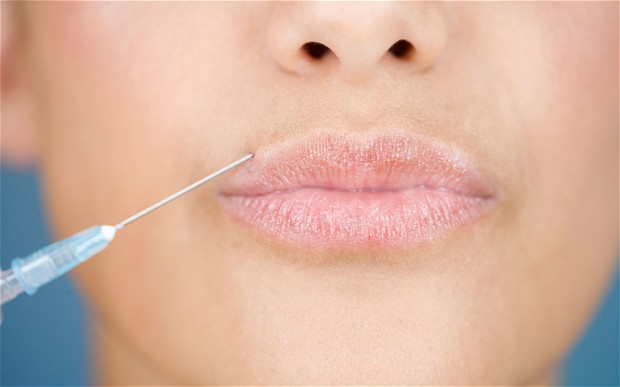
Another wonderful option to correct the loss of volume in the face and add structural support is fillers.  There are a number of hyaluronic acid based fillers available now (Restylane, Perlane, Juvederm, Belotero) which last 6 months to a year.  Radiesse is another natural filler option which is comprised of calcium hydroxylapatite.  Radiesse also acts as a biostimulator, stimulating cells in the skin to produce collagen over time.  Another wonderful feature of Radiesse is the fact that it lasts 18 months or more.

If you have wrinkles in the forehead and around the eyes, Botox and Dysport are excellent treatments and will last for 3 to 6 months.

If you are in the Los Angeles area, I offer filler and Vi-Peel treatments.  Please go to my medical website for more information:  www.staceynaito.com

New Year’s Resolutions Don’t Work

2013By no means am I trying to destroy the motivation that some of you may be experiencing with the fresh slate of a new year and some new goals placed before you.  But it drives me nuts when people make these promises to themselves to eat healthy foods, start going to the gym regularly, quit drinking, etc., then give up after only weeks or even days because they supposedly blew it for the year. I fully expect, along with countless other fitness people, to see a major influx of new faces at the gym next week, hogging the equipment without knowing how to use it and increasing the temperature of the gym to hatching-baby-chicks hot, only to see a drop off shortly after Valentine’s Day.  It really is a shame that many individuals lack the drive to keep after their goals and only find yet another excuse to abandon the idea of bettering themselves for the long run.  SO WHAT if it is a new year, and SO WHAT if you mess up after a few days or weeks?  The most important thing is to keep your eye on the prize and get back up on that horse!

If you think I don’t have moments of weakness, I will tell you right now that I am human just like the rest of you.  While I do not indulge in bad foods frequently, I will have an occasional treat, meal or feast that is well outside the definition of a clean meal.  On rare occasions I will miss a workout, though this happens once a year (in fact it just happened today because I have been battling the flu since yesterday).    But if I were to say, “okay, I blew it for 2013”, then of course that would be the perfect cop-out and I would no longer have the pressure to conform to a schedule or continue to pursue a goal.

Ask yourself this:  WHY do you have a goal to lose weight, eat better, (fill in the blank)?  If you have an understanding of the psychology behind your goal, and if you develop a do-or-die attitude, you will increase the chances of reaching your goal dramatically.  Make your choices the types of choices that are made for a lifetime.   Be specific about your goal and have a SPECIFIC PLAN in place, whether that plan is a written workout schedule, printed meal plan, timeline for when and how you will make measures to get that promotion at work, etc.

Every day spent with a focused mindset will get you closer to your goals.  Allow yourself the occasional slipup but also refrain from allowing such incidents to completely derail you from what it is you really want.

Commit To That Date!

North American 2012I may upset a lot of people by saying this, but I cannot stand hearing a competitor talk about an upcoming contest they plan to do, only to back out at the very last minute.  I can understand how a significant family emergency, significant illness or a significant injury can undermine plans to compete at a specific event, but I have heard everything from a lack of financial preparedness, to going on a vacation in which all self-control is abandoned, to failing to follow a contest prep plan faithfully, etc., as reasons for pulling out of an event.  It is just one excuse after another.  Yes, that’s right, I said excuse.

I lead a very busy lifestyle which has me switching roles from physician to model to writer to contest prep coach to trainer.  My mother is in a skilled nursing facility and since I am her only child, the burden of monitoring her care falls upon me.  I train intensely and regularly five to seven days a week.  I pack my food daily.  Yet when I select a competition to participate in, I never, ever allow myself to back down from that goal.  I commit to it entirely.

What is involved in this commitment to compete in a specific contest?

  1. I research the show schedule thoroughly beforehand and determine which contests I plan to do.
  2. I establish a detailed budget for each contest.
  3. I coordinate financial resources, both my own and those of my sponsors so that I know how expenses are being covered.
  4. I compile a to-do list for each event which includes a timeline so that I am sure to stay on track with when show registration is due, deposits are due, and when flight reservations should be made.
  5. I follow my contest prep plan faithfully and do not sabotage my own efforts to be contest ready by the time of the event.

I honestly believe that fear and self-doubt are what jeopardize a competitor’s focus and generate the feeling that contest plans should be postponed.  By pushing plans back repeatedly, a competitor develops a cop-out attitude which flies in the face of the determination and fortitude that characterizes the world of competitive bodybuilding.  Let’s face it, life always throws challenges at us.  But there is no reason whatsoever to allow those challenges to discourage us from continuing to pursue that goal of stepping onstage and showing of the efforts of our determination and hard work.

Pick a contest date, commit to it and just DO IT!

Thinking of Having Breast Augmentation Surgery? – Part 2

breast augmentation part 2I am devoting this blogpost to what to expect post-surgery at least through my own experience with breast augmentation surgery.  Though recovery from breast augmentation surgery is relatively tolerable, you should know what to expect.

First of all, when the procedure is completed, you will be wheeled over to a recovery unit where you will come out of anesthesia.  Some women may become very emotional or confused when coming out of anesthesia. What was strange about my experience coming out of anesthesia, other than the fact that it took me an unusually long time to come out of anesthesia, was that I was very chipper and even joked around with the nurses that it was time to party (what a goofball I was!).  My friend Mara picked me up from the hospital and drove me home.  Let me tell you, that car ride was the most painful one I have ever experienced as my very swollen and scalpel-assaulted chest bore the brunt of every single dip and bump in the road.  I sat in the passenger’s seat wearing a support bra.  Once home, I got in the habit of applying a sandwich of ice packs, one above my breasts and one below them, and began taking Vicodin three times a day to take the edge off the pain.  Some women may experience full pain relief from their prescription pain meds, while others (like me) might only receive some relief.

Do not make the mistake of assuming that you are tough enough to take care of yourself immediately post-surgery.  I am tough and I work out regularly, but I was not prepared for the need for complete assistance in sitting up in bed from a supine position.  This went on for four days.  I was very sore and had to stay home for three days before I felt strong enough to return to work.  I also had to apply the ice pack sandwich constantly for those first three days and was constantly alarmed by the fact that my new breasts sat so high on my chest that they abutted my clavicles.  It was truly bizarre.  As the days and weeks passed, my newly augmented chest began to relax and settle and the feeling that my skin and muscles were stretched to the hilt began to subside.

In addition to the constant pain which I experienced over the first two weeks following surgery, I experienced “zingers”.  Women may not be aware of zingers but they should be if they are preparing to go under the knife.  Zingers feel like sudden electric jolts which are felt at the nipple and which I imagine are akin to getting electrocuted.  They are strange but a direct result of local nerve damage which occurs as a result of the surgery.  This will also subside over time so don’t be alarmed!

After two weeks I was allowed to return to lower body weight training and after four weeks I was allowed to hit my upper body workouts.  To this day, however (and it has been almost ten years since I had my surgery), I cannot do heavy chest workouts and experience lateral movement of the implants when I work my chest.  This movement makes my boyfriend laugh and I can honestly say that I don’t blame him for laughing!

I have never had a single regret about having had the surgery and would do it again in a heartbeat.

Thinking of Having Breast Augmentation Surgery? – Part 1

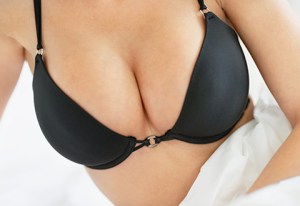
breast augmentation part 1Breast augmentation surgery has steadily increased in popularity over the last decade and has become the most common cosmetic surgery procedure performed in the United States, with over 300,000 women undergoing the procedure annually.  However, despite its popularity, breast augmentation surgery does carry some risks and maintenance issues which must be taken into consideration when trying to decide on whether to go under the knife.  In order to ensure that you make an informed decision, here are the factors you should consider.

COST: Though costs vary depending on what region you reside in, which surgeon you select and what type of implant you choose, you can expect to spend anywhere from $4,5o0 to $10,000.  Saline implant surgeries are less costly due to the fact that the incision site is smaller, the surgery is somewhat less involved, and the implant material uses less silicone.  Just as a side note, ALL implants have silicone since the capsule in which the implant material sits is composed of silicone.

IMPLANT TYPE:  Two different substances are used to fill an implant shell: saline and silicone.  Some women opt for saline because they fear rupture and leakage of silicone.  Others will turn to silicone because it has a more natural look and feel.  There is a newer cohesive gel silicone implant that if ruptured will not leak, thus providing an additional option for women.  There are also different shapes of implants such as round, round high profile, and teardrop.  Discuss options with your surgeon to determine the best type for you.

WHAT TO EXPECT:  Surgery for breast augmentation takes between one to two hours and is performed under general anesthesia.  The vast majority of women go home a few hours after the procedure with prescription pain medication and aftercare instructions.  Incisions can be made around your nipples, at the fold of the breasts, in the underarms or at your navel.  The implant is inserted into a soft tissue pocket either above or beneath your chest muscle, then the area is closed up with sutures.

After the surgery you may have drainage tubes, an elastic bandage and/or a bra to wear for several days.  You should also expect to take it easy for several weeks following surgery so that you can heal optimally.  Swelling and tenderness are to be expected for up to two weeks following surgery.

POSSIBLE COMPLICATIONS:  As with any surgery, breast augmentation surgery is not without risks.  Some of those risks include:  pain, changes in nipple sensation, bleeding, infection, scarring, capsular contracture, asymmetry.  Over time, implants may also leak or rupture.

MAINTENANCE:  Breast implants tend to have an average lifespan of 10 to 12 years and should be replaced as the risk of leakage increases over time.

WHAT SIZE TO CHOOSE?: When choosing a size of implant, make sure you choose one that will look proportionate to your frame.  In most cases the surgeon will be able to determine what size is most appropriate for you.  Whatever you do, please do not give into peer pressure or get a size that your significant other wants you to get when you do not feel comfortable with that size.  Remember that you are the one who has to live with your decision 24 hours a day, so you should be happy with the end result.

FIGURE OUT WHY YOU WANT THEM:  I have heard women say that they want to get their breasts done because they believe the procedure will somehow change their lives.  I have heard other women say they want to please their men more and have been pressured by their men to have the procedure done.  If you are considering breast augmentation surgery, make sure you are doing it because YOU WANT IT.  Don’t do it to please your man or to “fit in” more with societal pressures.

When I decided to have breast augmentation surgery in 2003, I truly did it for myself.  I was going through a divorce and felt it was a great time to do something I had always wanted to do.  I chose the date of my surgery, the size I wanted, and the incision site.  I was tired of not being able to wear certain styles of clothing and figured that having the surgery would give me the fashion accessories I had always wanted.  I had a very positive attitude about the whole thing and never had any doubt or fear about the procedure.  In other words, I had a very healthy attitude about having breast augmentation surgery.

It is VERY important for a woman to have a healthy mental attitude about having cosmetic surgery of ANY kind, whether it be breast augmentation, a neck lift, lid lift, nose job, tummy tuck, etc.  Make sure to gather information, make informed decisions, and undergo procedures only if you understand that while they may boost your self-confidence, you must already be secure within yourself.

Why I Prefer To Work Out Alone

As a physician I meet new people constantly and have mastered the art of setting a patient’s mind at ease.  I am amenable to chit-chat when running errands and enjoy engaging in conversations with strangers while at social events.  However, when I am at the gym, I automatically shift into a “don’t mess with my flow” mode which has left other gym members with the distinct impression that I am some sort of ice queen.

I have made numerous attempts over the years to train with friends and at the conclusion of every one of those training sessions have resolved to avoid such scenarios at all costs.  Thus in my estimation having a training partner has a completely ergolytic effect on my regimen.  Though I recognize the utility in having a supportive human by one’s side to encourage one more rep, such commentary from a pep squad only serves to distract me and in some cases raise my ire.

I have spent my entire life as an aggressive self-starter.  Without such drive I would never have endured the rigors of medical school and residency.  As an NPC national Bikini champion I have consistently pushed myself to reach a personal best, which has been no easy task given the demands of my career and life in general.  I stroll into a gym with my equipment and my regimen for the day like a thoroughbred horse lining up at the gate, blinders in place, ready to charge towards the finish line at full speed.  It certainly doesn’t help that I am usually in an incredible rush to get to the office or a meeting and must keep moving from movement to movement.  You can imagine how I respond to the weekend warrior who decides to wipe the drool from his chin and ask me while I am in the middle of a set how he can get his abs to look like mine.  So the mere thought of spending my entire gym session hyperaware of my time constraints while trying to work in on gym equipment with a training partner is more anxiety-provoking than a trip to the dentist.

If you and your training partner are completing staggered supersets, I suppose you could yell words of encouragement at each other.  If there is sufficient equipment for two side-by-side setups, or if you are engaging in plyometrics, it is possible that you may both train simultaneously.  However, if you are taking turns on equipment, especially if you are using different weights for each set, a thirty-second rest could easily broaden into 60, 90, 120 or more seconds as you load or re-rack or perhaps have a good laugh about the Facebook post one of you just saw on your cell phone.

With all that said, I realize that some individuals thrive in a workout regimen which includes a training partner.  After all, a supportive and upbeat buddy could consistently push you beyond what you believe you are capable of with respect to strength, power and endurance.  If this is what your training partner possesses, and this person is easily able to surrender the cell phone along with idle chat for the duration of the workout, you are quite lucky indeed.

Clean House, Clean Mind

No one should have to live like this!

No one should have to live like this!

The phrase which I have used for the title of this post is one I was always intrigued by, perhaps mostly due to the fact that I grew up in a household in which various areas were “clutter zones”.  This is not to say that I grew up in a messy home.  My mom was actually quite tidy and quite the neat freak.  But I never saw more than half the surface of the dining room table since the other half was covered with one foot high stacks of bank statements, other financial documents, greeting cards and letters from family.  In like fashion, about a third of our coffee table was piled with astrology guides, tv guides, and other books which my mom was reading.  Stacks of papers and magazines sat next to our living room sofa.  My mom’s bedroom had banker’s boxes instead of furniture at the foot of the bed.

I also was witness to my mom’s extensive collection of jewelry and clothing.  Though we had six closets, only one was filled with my clothing, while all the rest were jam-packed with my mother’s clothing. Some of the clothing had never been worn and had the price tags still attached.  I admit that I knew this behavior was unusual, but I did not know how pervasive such behavior was in my mom’s family until I went to Hawaii and saw that my aunts and uncles also practiced the same behavior.  Some of my relatives were so extreme in their tendency to hold onto things that they earned the label of pack rats.  In fact, when one of my uncles had a severe stroke and had to be placed in a convalescent home, my cousins discovered five-foot high stacks of newspapers throughout the house in a serpentine pattern (leaving just enough room for a person to wiggle through the house), moldy food in the refrigerator, Japanese antiques which were stuffed in a room collecting dust, and a plethora of other collectibles and junk which made it next to impossible for him to use the kitchen, toilet or sleep in his bed.

When my mom became ill and had to be placed in a convalescent home, the task of cleaning her apartment fell upon me.  The enormity of sorting through all the things my mother had collected was overwhelming, and I shut down emotionally numerous times.  I was shocked to find collectibles that had never been displayed, bank statements going as far back as the 1950’s, hundreds of pairs of earrings and shoes, about 150 handbags, etc. Suddenly it was left up to me to determine what items of my mom’s were worthy of being kept. Since these items could not be stored at the nursing home, they were stored in my garage and my closet. My mom still asks about her things and becomes angry if I tell her that we had to sell or give away many of the items she had collected over the decades.  I did my best to keep what she deemed most valuable, either monetarily speaking or in terms of sentimental value.  It always breaks my heart when I see her upset over losing her things.

Now I am trying to figure out what to do with my favorite aunt who lives in Hawaii.  She has no children and is a widow, so that means I am the one who will help her.  I am happy to do it only because my love for her is very deep.  But entering her house makes me hyperventilate. I cannot fathom why it is so important to keep 60 plastic Smurf miniatures, nor do I understand why my aunt has a collection of about 200 plastic food storage containers. My aunt’s collections are numerous and extensive. If you have ever tuned into the show “Hoarders” you would get a sense of what my aunt’s environment is like. I fail to understand why she has allowed her belongings to swallow up her living space so severely that she is unable to stretch out on her bed and can barely get to her toilet because there is so much junk in the bathroom.  The last thing I want is for that house full of things to entomb her.

This past week has been hellish, trying to come up with options for an assisted living situation which my aunt can afford. It is no easy task when I aam 3,000 miles away from her and am being asked by her to decide on what is best for her given her disabled condition and need for ongoing care.  Tough my aunt’s safety and comfort is my primary concern, I also know that I will need to organize a major cleanup of her home, all the while feeling like I am infringing on her privacy.

In October of this year I had to move from a place I had been in for over six years.  Though I have gone through my entire adult life very successfully squashing any hoarding tendencies that may be hidden in my genetic makeup, I had still acquired many things over the years, including some of my mother’s belongings which I had felt guilty about giving away or selling.  Once I was in the new place and had to sort through everything, I just said, “Enough is enough.  I don’t have to feel guilty about STUFF.”  What ended up happening was I went through one of the most spiritually cleansing purges of my life.  That is saying a lot since I go through the bulk of my belongings three to four times a year and perform regular purges.  This time, though, I truly cut out the fat from my life, and it was liberating.

No clutter...just cats!

No clutter…just cats!

When it comes to your belongings, don’t allow yourself to become encumbered by them.  Don’t hold onto feelings of guilt.  If you haven’t used something in a while and it is collecting dust, get rid of it. There is probably someone out there who will use it and will appreciate it. If there is something you haven’t used or worn because you are waiting for the right occasion, either USE IT or let it go!  I used to frequently argue with my mom about our differing philosophies about objects.  She always told me I was hard on things.  Scratches on my watches and my shoes were deemed by my mom to be marks of carelessness, when in contrast, my mom sequestered similar items in boxes and tissue paper for decades, never to be worn or used, in a static, pristine state and hidden under a bed or a drawer. I will continue to use the things I possess and will not worry about wear and tear. I will also make sure that tables and all the living areas of my house serve only their intended purposes, and that my storage areas never get to the point where they are overflowing.

If you know a hoarder, please GET HELP. http://hoardershelp.org/
Maintaining a Healthy Perspective With Contest Prep Meal Plans

Those of us who compete are well aware of the critical importance of following specific meal plans which are designed to optimize lean muscle mass and promote fat loss.  However, these meal plans, especially during cutting phases, can be extremely restrictive.  In our quest for attaining the ideal physique for whatever division we compete in, we may find ourselves in a spiral of obsessive nose-to-the-grindstone adherence to foods we may have grown to abhor, intertwined with strong temptation to deviate from the plan and indulge in forbidden foods, only to berate ourselves afterwards for doing so.  After all, we are only human, and after weeks or months of eating clean, we may be so exasperated with daily servings of asparagus, tilapia, chicken breast, and sweet potatoes that our emotional food triggers may kick in and undermine our contest prep efforts.

With orthorexia, there is an unhealthy fixation on clean foods and one’s moods are dictated by how rigidly a clean diet is maintained.  So how is this different from what competitors do in the weeks leading up to a competition?  The mentally healthy approach is to regard food simply as fuel and to dismiss any emotional association with particular items.  I have been witness to and a participant in the fantasizing of forbidden foods in a manner akin to lustful, sexual craving.  I have heard competitors talk backstage at length about all the foods they were planning to indulge in immediately following their final visit onstage for the night.

What I find interesting about such food fixations is how they are distinguishable from anorexic behavior.  When I was 19, I battled anorexia, dropping to 85 pounds on a 5’5’’ at my lightest.  With anorexics, they have a clear and complete aversion to calorie-rich foods and have successfully turned off any interest or cravings for such items, whereas with bulimics, orthorexics and many healthy competitors in contest prep mode, coveting indulgent foods is rather commonplace.  Among all these groups, there is a propensity for obsessive and compulsive behaviors.  One may argue that such obsessions and compulsions are a vital component of contest prep and that without such tendencies a competitor will lack the focus necessary to succeed.

It seems apparent that competitors as a general rule are dangerously close to that fine line which separates a healthy relationship with food from orthorexia.  I remember quite  well how rigid I was about the food I ate when I was anorexic and even kept a daily food journal in which I wrote down the calories and fat grams of every food substance ingested.  I also recall how horrified and ashamed I was of myself when I would reluctantly consume a food I regarded as fattening.

Over 20 years later, I have a healthy relationship with food and for the most part regard it as fuel.  Yet I am immersed in the world of contest prep and like many other competitors will balk and grumble about the clean foods I must eat.  There are times when the mere thought of eating another spear of asparagus seems like the most disgusting activity in the world.  On the rare occasion that I find myself in a restaurant, I find it an alien concept to peruse a menu and actually be able to order whatever I want from any part of the menu.  There are also times during which my metabolism is in hyperdrive and I could eat almost nonstop for the duration of the day.

Here’s the thing: if I indulge in something that is not part of a contest prep meal plan, I don’t flog myself. Rather, I allow myself to enjoy the rare treat and move on.  If you find yourself wallowing in extreme anxiety and prolonged guilt over ingesting a food item which is on the banned list, beware.  This could signify the beginning of a food-related psychopathology.

Strike A Pose

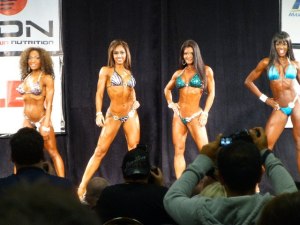
It takes a certain amount of bravery to grace the stage, clad in a minimal amount of clothing which reveals your body shape and conditioning, while standing under glaring stage lights and the scrutinizing gazes of a panel of judges.  Some of us love the exhilaration of such an experience, while others cringe at the thought.  Let’s face it, being onstage is something that won’t appeal to everyone, and that is completely acceptable.  However, it is extremely empowering to celebrate the efforts of your training and discipline by holding your frame in poses which best display your hard work.  I find myself telling people constantly that having that awareness of self engenders a spiritual metamorphosis which affects every aspect of one’s life. 

Because of this I believe that there is some utility in learning to pose.  It instills a confidence which changes your posture and your general attitude.  Think about the individuals who strike you as overflowing with self-confidence.  They walk with purpose and often have a bit of a swagger to their step.  They exude an energy which is attractive and inspiring.  You don’t even need a competitor-level physique to learn to pose in such a way that aligns the mind-muscle connection and enables you to celebrate the miracle that your body represents. 

This does not mean that I advocate boastful posing in front of the mirrors at the gym, though I find it acceptable to cast sly glances at your muscles while they are working through a challenging move.  By learning to pose, you can assess your progress if you are on a weight loss or muscle building program even if you never intend to strut your stuff onstage.

For some folks, standing in front of a mirror can be stress-inducing.  Yet it is this sort of visual feedback which can fuel your motivation and help you attain your goals more effectively.  I have patients and clients who dread taking standard front and back shots, yet when point out their strengths while also showing them how to stand and pose with confidence, they begin to experience a psychological shift.  This shift becomes more pronounced with time as their physiques begin to respond to proper nutrition and regular exercise.  I always love hearing someone say they notice muscles they didn’t think they had, or that their clothes fit differently.  I will often notice that the way patients dress and walk will slowly but surely change as they begin to accept themselves for who they are both inside and out. 

The best thing you can do for yourself is to learn how to pose and take full ownership of the abilities and strengths you possess.  So get in front of that mirror and show it what you have!