Training For Life

Over the past few weeks I have heard a few competitors state that they plan to completely stop weight training for a few weeks because they are burnt out on prepping for competitions. While I agree that taking some time off can be a good thing, taking several weeks off seems like complete madness to me. Though I get a kick out of people who have this on-again, off-again attitude with respect to training, I am more disturbed than amused by such an attitude because it is in stark opposition to my attitude towards training.

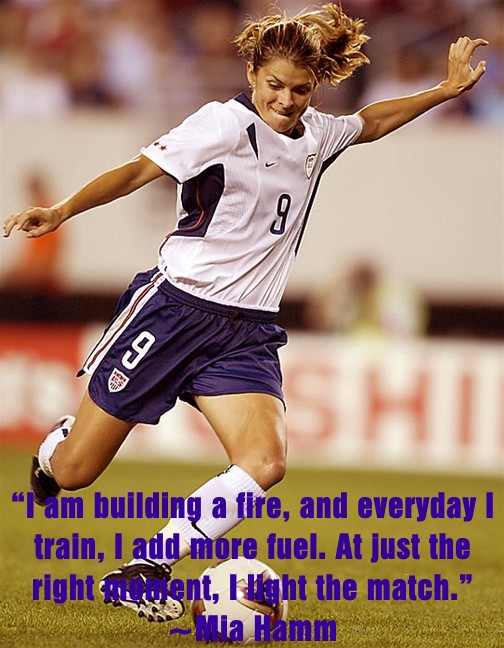
My attitude towards training stems from the fact that I train for life, not for the stage per se. I increase the number of workouts before a big contest, but I never hang up my training hat for more than a couple of days at a time. Why? Because I truly love training, and I strive to remain consistent with my conditioning. I also ensure that I will be shoot ready whenever the need arises. I have had last minute calls to shoot and never have to worry that I will not be camera worthy.

It blows my mind how many people have asked me if I plan to stop training now that I have earned my IFBB Pro Card. I didn’t train hard to get my Pro Card just so I could let it all go to mush! If anything, I have even more reason to uphold the level of conditioning which has taken years for me to achieve. You won’t see me avoiding the gym or eating tons of bad foods, because I have every intention of honoring the status I have earned. It’s back to the gym for me!dumbbells

Not Everyone Is Meant To Have Children

BabiesIt has always bothered me when people have pressured me to start a family. I have received this pressure from my family and feel that this is appropriate, but I have also been pressured by friends, patients, acquaintances and complete strangers. What is with the intense societal pressure to create progeny? I have never understood it and will never allow ANYONE to pressure me into popping out a kid. It is NOT my duty as a woman. Besides, I joke that the dairy section is getting stale, when in reality, it isn’t a joke. The medical risks associated with pregnancy in women over the age of 35 are considerable and not something I want to sign up for.

On another note, I have noticed that the older I get, the less interested I am in being around babies and children. I tolerate them and simply do not imagine my life colored by the incessant responsibilities and time requirements of child-rearing. Let me be the aunt or honorary aunt and observe from a considerable distance and for brief snippets of time. It’s not that I don’t like children. I think they are cute enough, but I don’t experience the ache that many childless women describe when seeing an adorable child.

Perhaps someone will sweep me off my feet and change my mind about raising children, but it is highly unlikely. I love my life and my freedom and do not feel that I am incomplete because I don’t have children. If I want to feel more rooted to my homebase, I will get a dog.

Woof.

Why Do Some Competitors Quit Competing?

Women's Physique LadiesI love the drive that competitors have and certainly understand it first-hand. There is something exhilarating about preparing for a contest that no other goal delivers for me, so I plan to continue competing for as many years as I possibly can. However, I have spoken with people who have chosen to abandon the stage for a multitude of reasons, which I will discuss here.

Contest Placings: Some individuals get so fed up and discouraged by poor contest placings that they decide to throw in the towel after a while. Those who are realistic will acknowledge their own shortcomings as competitors and harbor a positive attitude, while others may harbor resentment over being passed over by opponents who usually have won their placings fairly.

Not Into It: Though it surprises a contest addict like me to hear, some people have told me that after doing one or several contests, they realized that competing wasn’t something that resonated with them.

Cost: I will tell you honestly that it is VERY costly to compete. Even a local contest has expenses which include entry fees, tan, suit, and accessories. Expenses can become dramatically higher if you factor in makeup and hair services, coaching and training, posing sessions, food, and supplements. If you travel for contests, there are numerous travel expenses which include flight, hotel, rental car, bag fees, gym fees, and incidentals. Believe me, it all adds up. So I am not surprised when people step back from competing for financial reasons.

Physical Demands: It is a challenge to keep up with the intensity of training and cardio which molds a physique into contest-ready shape. Injuries and illness can put roadblocks into contest prep, as can overtraining. I have seen some competitors train so stubbornly and intensely, then exhaust themselves to the point that they are too drained to even think about stepping onstage.

Life events: No one is immune to the impact that a major life event such as a wedding, divorce, job change, move, or death in the family can have on the natural patterns of life that we become accustomed to. Such events can really throw a wrench in the works, and only the most stubborn and determined individuals can stay on track during trying times.

How To Succeed In Your Fitness Journey

James Ellis is always in phenomenal shape and the consummate professional!

James Ellis is always in phenomenal shape and the consummate professional!

Whether you are a regular person in pursuit of a higher level of fitness or someone who is embarking on a career in fitness, there are habits which must be developed early on in order for you to be successful in remaining in optimal shape. While there are health implications for anyone who does not practice healthy habits, poor habits can destroy a fitness career in the blink of an eye. It all boils down to one thing: CONSISTENCY.

No one will take you seriously if you are inconsistent with your level of fitness. I have seen competitors and so-called fitness professionals who yo-yo incessantly, holding onto the excuse of being “off-season” when they pack on considerable weight and cannot work fitness events or do photo shoots as a result. A great deal of this has to do with unhealthy meal plans during contest prep which often completely cut out all carbohydrate sources, followed by a complete loss of control and extended periods of binge eating post-contest. Aren’t fitness and bodybuilding people supposed to be the picture of health? I know I certainly don’t want to just look good a couple of times a year and look like crap for the rest of the year. I take my position as a fitness and medical professional VERY seriously and will ALWAYS lead by example. I will always be shoot ready no matter what time of the year. I do not use crazy meal plans which have me depleted, nor do I overtrain and injure myself.

The most respected fitness people who have viable and admirable fitness careers are those who lead by example year-round. They inspire their fans, friends, families and industry people, and they become accustomed to people asking them what show or photo shoot they are getting ready for because they are ALWAYS on their game.

Emotional Eating

Find original post at:  http://www.rxmuscle.com/rx-girl-articles/6941-emotional-eating.htmlemotional-eating ice cream - Copy

Rather than discuss well-known emotional eating disorders such as bulimia, I will concentrate on binge eating which many women engage in from time to time.  It is important to recognize this behavior if it becomes a regular pattern, because frequent emotional eating warrants a diagnosis of binge eating disorder and requires treatment and intervention.


Binge eating is characterized by eating compulsively to cope with negative emotions and stressful situations.  A binge eater is rarely hungry when she begins to eat and will continue to eat well after she is full.  Such episodes can last for up to two hours or can occur off and on throughout the day.  The binger feels guilty both during and after the episode, but will not attempt to counteract it by fasting, taking laxatives, vomiting, fasting or over-exercising.  A strong lack of self-control as well as feelings of shame will accompany this behavior pattern.  There is a strong association between binge eating and depression.  Binge eating is also driven by social components such as social pressure to be thin, emotional and sexual abuse, parental criticism of a child’s weight, and the use of food as reward or punishment.


Food cravings are usually the strongest when you are in emotional crisis.  You may reach for food for comfort or to serve as a distraction.  Consider the following highly stressful events and think about whether you reached for comfort foods during such times:


  • Financial problems
  • Health problems
  • Work issues
  • Relationship issues
  • Fatigue
  • Family issues


Though some people will lose their appetites when stressed and will refrain from eating, many others will engage in impulsive eating in an effort to deal with negative emotions.  This may be relatively harmless if such emotional eating occurs on a very rare occasion, but becomes a serious problem when it is used as the only coping mechanism for stressful situations or negative emotions.  Just bear in mind that if you have a rare moment of weakness, it is important to recognize it as just that and to prevent yourself from spiraling into excessive feelings of guilt over the incident.  If you engage in an episode of emotional eating, learn to forgive yourself and have a fresh start the following day.


Why We Engage in Emotional Eating


What occurs almost invariably when we eat emotionally is that we turn to cookies, cakes, candy, fried foods and breads rather than to healthy foods.  There is a biochemical basis for such behavior.  Carbohydrates which are high in sugar or fat release dopamine in our brains which in turn stimulates the brain’s pleasure center, creating a sense of euphoria.  These foods are usually associated with pleasurable memories, such as cake which you may have looked forward to on your birthday, or macaroni and cheese as a treat after school when you were a child.


Food can also serve as a happy distraction from conflict or stressful events by stimulating the aforementioned pleasure centers.  What will frequently occur is that an excessive amount of these foods will be consumed.  However, if you remain aware of such automatic connections between food and mood and realize when you are eating for reasons other than hunger, you can break this cycle and get back on track with healthy eating habits which are associated with true hunger.


How To Combat Emotional Eating


  • Keep a food diary.  Get in the habit of writing down everything you eat and drink, including the quantity, the times at which you eat, your emotional state while eating the meal, and your level of hunger.  By doing this you may see patterns which will reveal your emotional relationship with food.


  • Remove tempting foods.  Avoid stocking comfort foods in your home if you find that they are difficult to resist.  And by all means avoid making trips to the grocery store if your emotions are spiraling out of control!


  • Practice stress management.  Yoga, meditation, and relaxation techniques are effective methods of managing your stress.


  • Determine whether you are truly hungry.  Many times people may believe they are hungry when in reality they are actually emotionally distraught and desperately searching for a way to defuse such emotions.


  • Make sure you consume adequate calories.  Individuals who are trying to lose weight will often restrict their calorie intake too much, and will turn to the same foods in an effort to remain on track without rewarding themselves with an occasional treat.  Adding variety to your meal plan will also help to keep you on track.


  • Distract yourself.  If you get an urge to snack when you aren’t truly hungry, distract yourself by watching a movie, calling a friend, reading, listening to music, or taking a walk.


  • Consume healthy snacks.  If an urge to snack between meals strikes, choose a low-calorie snack such as vegetables with seasoned nonfat Greek yogurt, fresh fruit, low fat cottage cheese or rice cakes.


  • Get enough sleep.  Getting enough sleep is an important component in decreasing cravings for comfort foods.


  • Eat at regular intervals.  Consume smaller meals every three to four hours to keep you from feeling hungry or deprived.


  • Focus on the experience of eating.  Learn to eat in a mindful manner, in which you pay attention to your meal and only your meal.  Become aware of the sensations associated with eating.


  • Reward yourself.  It is both physically and emotionally unhealthy to practice excessive calorie restriction for prolonged periods.  Allow yourself to have a favorite food or meal once each week.


  • Connect with your emotions.  When a food craving hits during an emotional time, write down the emotions you are experiencing, such as sadness, loneliness or anger.


  • Seek professional help if emotional eating is frequent.  There are countless support groups which you can join which will help you to develop insight as well as the skills to avoid engaging in such behavior.


Physicians Are Therapists Too

doc and patientThe scientific nature of medicine often tricks people into believing that doctors are so cerebral that they spend all day diagnosing and treating, without much regard for social factors which patients may bring into an appointment. However, it has been my experience that medicine is deeply rooted in connecting with others emotionally, mentally and spiritually. I realize that my personal journey as a physician is colored by the fact that I chose primary care as my post-graduate foundation, as well as the fact that I truly enjoy getting to know my patients. It is relatively common for me to discover that the “chief complaint” which brings a patient into the office is not the main concern the patient has. For example, I may have a patient come to me for evaluation of right shoulder pain and after 10 minutes of speaking with the patient find out that the patient hates her job, is suffering from insomnia and is exhausted from also caring for two small children and an ailing father. What ends up happening is that I will evaluate the shoulder, but will also discuss sleep hygiene and the importance of putting the oxygen mask on herself instead of giving all of her energy to her job, her children and her father. She certainly still has all those responsiblities, but when she neglects herself she drains herself of the potential energy she could be carrying to sustain herself and those she cares for.

Another common scenario is the patient who has gotten out of shape over the years and wants to make a change. These patients may come in for weight management, but in most cases they present to the office with a completely unrelated medical complaint. Almost invariably, I find out that the patient is overloaded, and also has difficulty committing to a specific regimen. This is yet another example of putting the oxygen mask over oneself, and is also a situation in which the patient needs to break the cycle of making excuses which serve as blockades to reaching ANY goals. The too-tired, too-busy, too-old excuses don’t fly with me at all. There is NO EXCUSE which justifies making regular visits to fast food restaurants, skipping meals regularly, and leading a sedentary lifestyle. It is important to realize that such habits are also rituals which the person has chosen to hang onto because they are familiar. It can be quite intimidating to manifest a major lifestyle shift because it requires a person to abandon old habits and patterns and undergo a complete change of mindset.

I honestly love helping people and take my role as an educator and healer very seriously. I also know that I can be a motivator, but only if I can successfully ferret out the psychological issues which hold people back from gaining true fulfillment in their lives.