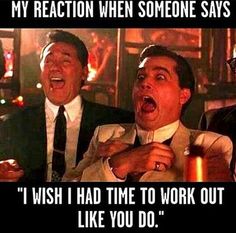
I am willing to bet that the vast majority of women out there respond positively when a significant other, spouse, or someone she simply digs tells her she is beautiful or even uses the word “beautiful” as a nickname. That word can completely transform a woman, especially if she is experiencing a rough day. If that doesn’t work, you could always follow the advice in the meme below!
Tag psychology
Making Regular Exercise A Priority
I freely admit that I chuckle to myself whenever I hear people say that they wish they had the discipline to work out on a consistent basis. It’s not that I am insensitive to the rigors of busy schedules, because I spend my days running from place to place, multitasking and barreling through tons of tasks, errands and responsibilities. But I set aside about two hours per day, six days per week, to go to the gym, and I train HARD and HEAVY every time. The main reason why I am so consistent about hitting the gym consistently is that it is a priority, as important as brushing my teeth and showering on a daily basis. As a matter of fact, I look forward to my gym sessions as a way to begin each day, which is why Sunday, my rest day, is a bit rough for me and throws me off my usual daily pattern of waking up and heading straight to the gym.
Perhaps you are one of those people who believes that there isn’t time to work out, and you continue to allow your schedule to annihilate any chance of working out. The thing is, if you actually made working out a MUST instead of something to fit into your schedule as it allowed, you would find a way to get your butt to the gym and follow a plan. I have definitely noticed that people who want to reach certain fitness goals are much more successful in reaching them when they follow a specific regimen which provides guidance and structure. Making promises to yourself like, “I will go to the gym on Mondays, Tuesdays, Thursdays and Fridays from 6 am to 7:30 am”, or “I will drive straight to the gym after work every day” can be a great start to adding discipline and consistency, but you need to follow through and hold yourself accountable.
I am not kidding when I say that you need to put your workouts into your schedule! Enter your workouts on your iPhone or your Google calendar so that you have the time blocked out in your schedule. Don’t allow other things to interfere with the time you have allotted for exercise either, because when you do that, you reinforce the idea that exercise is not that important and can be pushed off. Those of us who are committed to a fitness way of life don’t allow life’s little hiccups to interfere with our gym time. It’s that simple.
Closet Organization 101
Are you the type of person who can’t keep your closet organized? Do you have stuff crammed into the corners and clothing strewn on the floor? Are you unable to find anything in your closet? If so, it might be time to clean it up and establish some order in your home.
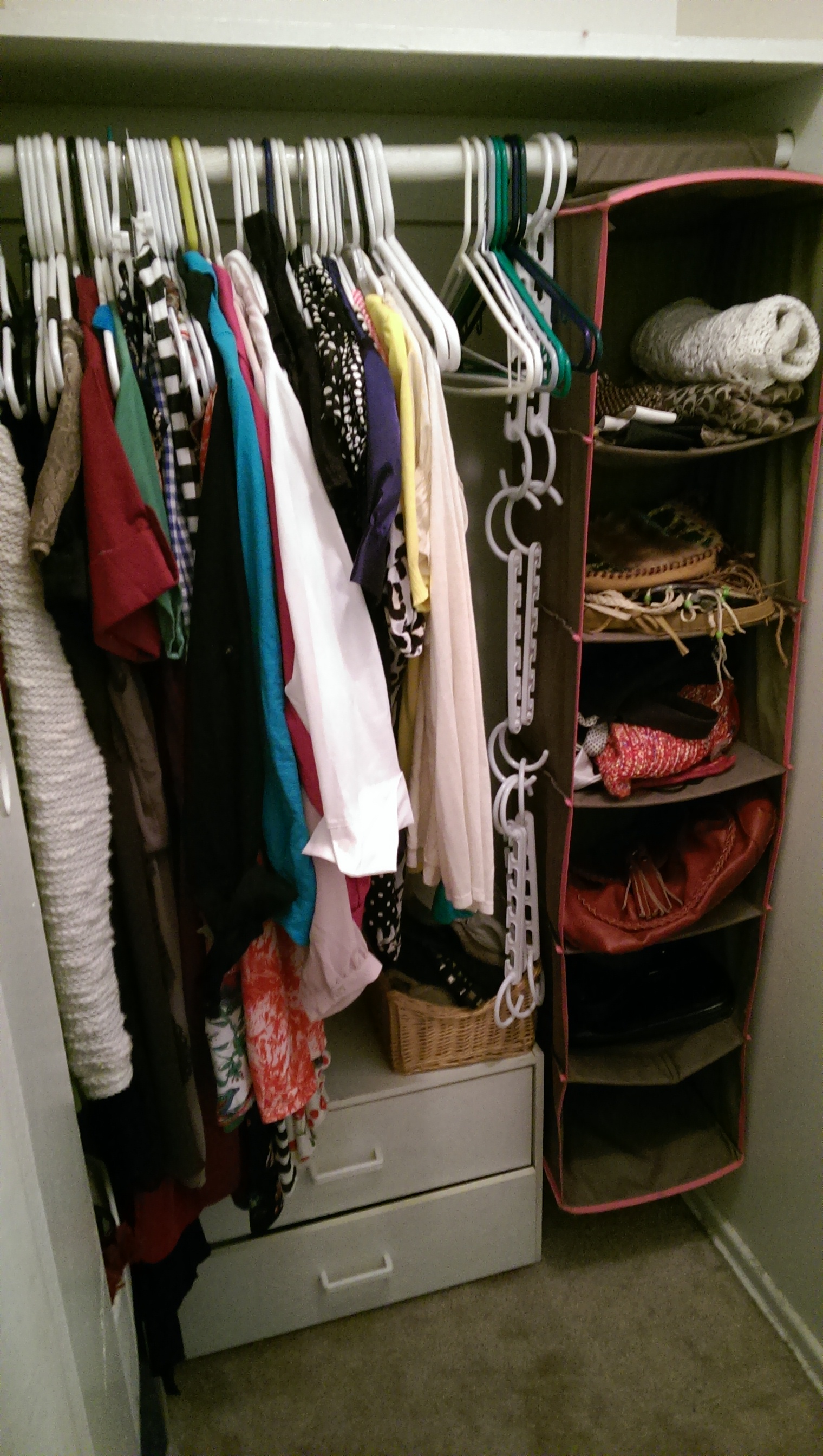
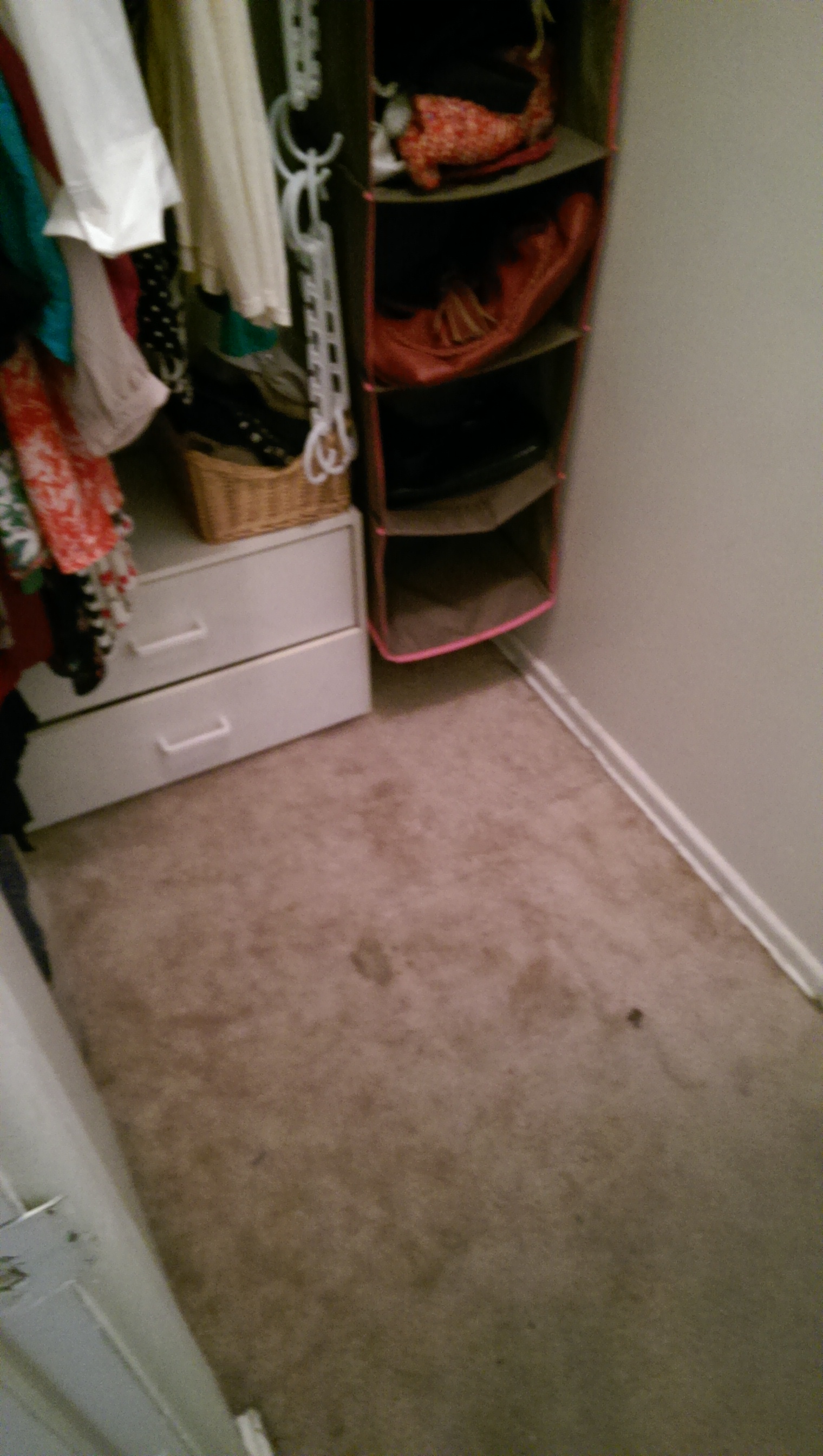
Here are some before pictures of a friend’s closet:
I completely understand why my friend has had difficulty finding things. I mean, who could find anything in such a disorganized space? Within the span of about 3-1/2 hours, I had organized the closet and convinced my friend to get rid of items which were in need of repair or hadn’t been used in a long time. Ideally, I would have added some decorative elements and completely transformed the space, but financial and time constraints stood in the way, so I just worked with what was already there.
Here is what I was able to accomplish in terms of organization:
How did I accomplish this? I began by removing every single item from the closet so that I would have a clean slate. I then slowly returned items back into the closet, first by bringing the hangers back and organizing them by type. Next I organized the clothing by type, so that all coats were together, dresses were together, etc. I further organized clothing by sleeve length and by color so that an organized and eye-pleasing palette was created. I also moved and reassigned a soft hanging shelf storage system for my friend’s handbags.
This is phase one, in which I have established some organization in my friend’s place and cleaned up years’ worth of junk. Stay tuned for phase two of this reorganizing project, in which I will transform all the spaces in this person’s apartment.
Maintaining A Healthy Perspective With Contest Prep Plans
The following article is featured on SportsNutritionSupplementGuide.com as well:
http://sportsnutritionsupplementguide.com/authors/authoritative-experts/stacey-naito/item/1496-maintaining-a-healthy-perspective-with-contest-prep-plans#.VVezzPlVikp

Those of us who compete are well aware of the critical importance of following specific meal plans which are designed to optimize lean muscle mass and promote fat loss. However, these meal plans, especially during cutting phases, can be extremely restrictive. In our quest for attaining the ideal physique for whatever division we compete in, we may find ourselves in a spiral of obsessive nose-to-the-grindstone adherence to foods we may have grown to abhor, intertwined with strong temptation to deviate from the plan and indulge in forbidden foods, only to berate ourselves afterwards for doing so. After all, we are only human, and after weeks or months of eating clean, we may be so exasperated with daily servings of asparagus, tilapia, chicken breast, and sweet potatoes that our emotional food triggers may kick in and undermine our contest prep efforts.
With orthorexia, there is an unhealthy fixation on clean foods and one’s moods are dictated by how rigidly a clean diet is maintained. So how is this different from what competitors do in the weeks leading up to a competition? The mentally healthy approach is to regard food simply as fuel and to dismiss any emotional association with particular items. I have been witness to and a participant in the fantasizing of forbidden foods in a manner akin to lustful, sexual craving. I have heard competitors talk backstage at length about all the foods they were planning to indulge in immediately following their final visit onstage for the night.
What I find interesting about such food fixations is how they are distinguishable from anorexic behavior. When I was 19, I battled anorexia, dropping to 85 pounds on a 5’5’’ at my lightest. With anorexics, they have a clear and complete aversion to calorie-rich foods and have successfully turned off any interest or cravings for such items, whereas with bulimics, orthorexics and many healthy competitors in contest prep mode, coveting indulgent foods is rather commonplace. Among all these groups, there is a propensity for obsessive and compulsive behaviors. One may argue that such obsessions and compulsions are a vital component of contest prep and that without such tendencies a competitor will lack the focus necessary to succeed.
It seems apparent that competitors as a general rule, are dangerously close to that fine line which separates a healthy relationship with food from orthorexia. I remember quite well how rigid I was about the food I ate when I was anorexic and even kept a daily food journal in which I wrote down the calories and fat grams of every food substance ingested. I also recall how horrified and ashamed I was of myself when I would reluctantly consume a food I regarded as fattening.
Over 20 years later, I have a healthy relationship with food and for the most part regard it as fuel. Yet I am immersed in the world of contest prep and like many other competitors will balk and grumble about the clean foods I must eat. There are times when the mere thought of eating another spear of asparagus seems like the most disgusting activity in the world. On the rare occasion that I find myself in a restaurant, I find it an alien concept to peruse a menu and actually be able to order whatever I want from any part of the menu. There are also times during which my metabolism is in hyperdrive and I could eat almost nonstop for the duration of the day.
Here’s the thing: if I indulge in something that is not part of a contest prep meal plan, I don’t flog myself. Rather, I allow myself to enjoy the rare treat and move on. If you find yourself wallowing in extreme anxiety and prolonged guilt over ingesting a food item which is on the banned list, beware. This could signify the beginning of a food-related psychopathology.
An Organized Person’s Approach To Decluttering
The images above are NOT from my house, but are great examples of a before and after organization transformation.
I often take my intense need for organization for granted and assume that other people are just like me. However, I know that this isn’t the case, and that many individuals tend to get literally and figuratively buried in their own stacks of paperwork, unfinished projects, and unused items which have sat in storage for far too long. One of the reasons why I am able to remain relatively organized on a consistent basis is because I go through every item I own several times a year and assess its value and function in my life. If it no longer serves a need, it goes to Goodwill, the trash, or a pile of items which will be part of a garage sale. I fail to see the point of hanging onto things I don’t need, because those items only collect dust and take up space. In addition, items of value which sit in storage are better utilized by being sold, because then the money can go towards paying bills or fattening up a vacation fund.
When I conduct my regular organizational purges, I move in a clockwise or counter-clockwise fashion, starting in one corner of the room. I make sure to COMPLETELY sort everything in that area before I move onto the next portion of the room. I have discovered that this method is very effective for decluttering, especially for individuals who become easily overwhelmed with the task of cleaning and organizing a space. As an example, I may start at a storage cabinet. The exterior of the cabinet is cleaned, and any items which are on top of or around the cabinet are assessed. Once the area outside the cabinet is done, I will go through each shelf in the cabinet. Whenever I assess an item, I ask these questions:
1. Does this item belong where I found it?
2. If the item doesn’t belong where I found it, and I am going to keep it, where does it belong?
3. When was the last time I used this item?
4. Is this item damaged and in need of repair?
5. Will I have a need for this item in the future?
6. Does this item have sentimental value?
7. If I decide to get rid of the item, does it have enough value to put into a garage sale, or does it belong in a Goodwill pile or the trash?
8. Is this a collectible or specialty item which requires research and appraisal?
People who have hoarding tendencies have strong emotional attachments to objects, and will have a particularly difficult time answering these questions, especially numbers 5,6,7 and 8. In their minds, EVERYTHING has some sort of value which warrants a permanent spot in their home, even if it isn’t being used.
When I conduct these semi-annual purges, I have the following on hand:
trash bags
cleaning solution and paper towels
box designated for Goodwill/Salvation Army
box for items which need to be repaired or professionally cleaned
area for garage sale items
area for collectibles to sell
Once I get started, I am pretty ruthless about getting rid of things I don’t need. To be honest, I love making money back on items I bought which haven’t been used in a while, and I also get great joy out of donating things to Goodwill. Above all, I am very honest with myself about emotional attachments to inanimate objects. There are some items I will NEVER get rid of, like the little yellow musical stuffed dog that was in my crib, jewelry my mother gave me, my Pro Card watch, and all my trophies, but I am not going to develop anxiety about getting rid of a sweater I have had for 15 years which I haven’t worn for over 5 years!
If you are long overdue on spring cleaning, now is a good time to clear up the clutter. You’ll end up with a cleaner, more organized home, you will know where everything is, and you may make some decent money selling some of your belongings!
Clean Eating or Eating Disorder?
Most people are familiar with anorexia and bulimia, but there is a lesser known eating disorder which has high prevalence in the world of competitive bodybuilding. Though it is not classified as an official eating disorder, orthorexia meets the criteria of one: obsession, social isolation, and emotional lability.
Orthorexia is an obsessive-compulsive disorder which involves an obsession with healthy eating. The orthorexic will go to great lengths to avoid foods which contain substances he determines to be unhealthy, such as fats, preservatives, processed foods, etc. For an orthorexic individual, the focus is on the quality of food, which is in stark contrast to the anorexic’s focus on quantity. Frequently this disorder may begin as a normal diet or an effort to eat in a healthier fashion, but after some time is taken to the extreme. In the quest for pure, clean foods, the sufferer becomes obsessed and self-imposed food restrictions become a primary focus.
The distinction between normal individuals and orthorexics is that the health conscious person will practice moderation and won’t wallow in guilt if they indulge in a food which may be deficient in healthy nutrients. In contrast, the orthorexic individual will obsess about the quality of food and will feel extremely guilty after straying from a self-imposed rigid diet.
Physical Signs and Symptoms of Orthorexia:
- Because orthorexics limit themselves to foods they deem healthy, they may appear emaciated or malnourished
Behavioral Signs and Symptoms of Orthorexia:
- Social isolation
- A tendency to eat alone
- Aversion to certain foods which have been deemed dangerous or disgusting
- Criticism of people who don’t engage in healthy eating
- Experience extreme pleasure in eating properly
- Feel guilty when they deviate from a rigid diet
- Strong desire to eat forbidden foods when under stress
- Has difficulty eating foods prepared in a restaurant or by another person
Medical Signs and Symptoms of Orthorexia:
- Malnutrition
- Hypotension
- Weakness
- Calcium deficieny
- Anemia in those who avoid animal protein
- Decreased gastric motility
- Abdominal bloating
- Constipation
An essential element in contest preparation for competitive bodybuilding, physique, fitness, figure and bikini divisions is rigid meal planning. As a result of this, competitors often dance along, and sometimes cross, the fine line that separates clean eating from a psychopathological relationship with food. When taken to the extreme, sufferers may experience medical signs of malnutrition similar to anorexia. While it is common for a competitor to experience feelings of guilt when a specific contest prep meal plan is not adhered to, warning flags should go up when a competitor becomes so obsessed with such transgressions that compensatory behaviors are adopted, such as excessive cardio sessions, laxative usage or starvation. If such behaviors are commonplace for an individual, behavioral intervention will become necessary in order to restore one’s emotional and physical well-being.
Since prepping for competitions places excessive pressure on an individual and underscores the pursuit of “perfection” in the sport, orthorexic behavior may be so irresistible that it is rationalized as a necessary component of one’s prep. This in and of itself makes orthorexia particularly insidious and dangerous.
Eating Disorders – An Overview
Modern society has continually sent a clear message that a slender physique is the most attractive and desirable. This has not only driven the success of the diet industry as people have scrambled to attain the ideal body, but has also served as the catalyst for numerous eating disorders such as anorexia and bulimia. These disorders are often encountered in the world of competitive sports and bodybuilding as competitors develop a warped perspective on their relationship with food. The nature of competition draws driven, obsessive personality types who by fixating on performance goals often will develop an excessive desire to maintain what they describe as clean eating. If an athlete fails to obtain the ideal leanness which a sport requires, the reaction is often manifested in chronic undereating in a desperate effort to drop fat. The greatest irony is that many athletes and competitors who are regarded as having the most desirable physiques are beset with poor body image and low self-esteem.
Another relatively common scenario is for a competitor to measure his or her self-worth by how rigidly he or she adheres to a strict meal regimen. Some individuals will have a strong desire to engage in emotional eating, indulging in what they deem forbidden foods, only to wallow in excessive guilt and self-doubt as a result. Eating disorders in general will cause an individual to feel tremendous anxiety when in social environments where food is served, so these situations are usually avoided.
It is important not only to recognize the warning signs of an eating disorder, but to also understand how it can undermine one’s fitness goals. Furthermore, these disorders are extremely deleterious to one’s health and psychological well-being.
BULIMIA:
Bulimia is characterized by compulsive episodes of excessive food consumption followed by purging behaviors such as laxatives, diuretics, excessive training or self-induced vomiting in an effort to compensate for the irregular behavior. The most common trigger for such binges is the excessive calorie restriction which is seen with dieting or at times with contest prep. The body responds to starvation by producing powerful cravings which may be irresistible. However, once the binge has occurred, the individual usually feels a sense of failure since the diet was not strictly adhered to, often causing more binge eating to occur. A period of purging follows soon afterwards, but the most common purging methods fail to rid the body of all the calories consumed. On average, laxatives rid the body of 10% of the calories eaten, while vomiting will eliminate 50% or fewer of the calories.
Physical Signs and Symptoms of Bulimia:
- Normal weight or slightly over ideal weight.
- Frequent weight fluctuations.
- Discolored teeth, tooth decay and mouth sores.
- Calluses or scars on knuckles.
- Puffy cheeks.
- Smell of vomit.
Behavioral Signs and Symptoms of Bulimia:
- Covert food consumption – Bulimics will engage in binges alone
- Inability to stop eating until abdominal pain and distension set in
- A pattern of overeating followed by fasting
- Makes frequent trips to restroom immediately after eating
- Using laxatives, diuretics or enemas after a binge
- Excessive high intensity exercise following a binge
Medical Signs and Symptoms of Bulimia:
- Chronic constipation
- Abdominal pain
- Dehydration
- Lethargy
- Swelling of hands and feet
- Chronic sore throat or hoarseness
- Broken blood vessels in eyes
- Weakness or dizziness
- Acid reflux or ulcer.
- Loss of menstrual periods in women
ANOREXIA:
The hallmark of anorexia is excessive food restriction coupled with a severe, irrational fear of weight gain. These individuals have distorted body images which cause them to feel that they are overweight despite the fact that the majority of sufferers are underweight. Anorexia sufferers are usually high achievers who harbor perfectionist tendencies which may lean towards or even reside within obsessive compulsive disorder. However, these individuals feel socially isolated and are overcome with a sense of failure and a loss of control over their own lives. Ironically, the anorexic behavior of forced starvation which gives one a sense of control eventually takes over and the individual is unable to interrupt the pattern.
Physical Signs and Symptoms of Anorexia:
- Loss of a considerable amount of weight in a relatively short period of time
- Wears baggy clothes to hide weight loss
- Appears emaciated or gaunt
- Cold hands and feet
- General hypothermia
- Dry skin
- Loss of muscle mass
- Constipation
- Hair loss
- Lanugo (fine, downy hair) on face or back
- Brittle nails
- Yellow or grayish appearance to the skin
Behavioral Signs and Symptoms of Anorexia:
- Complains of being fat despite being dangerously thin
- Obsessed with nutritional information of food, especially calories and grams of fat
- Will only eat certain foods
- Refuses to eat in public or will only eat a small morsel of food
- Exercises obsessively and becomes very upset if something interrupts plans to exercise
- Usually avoids fatty foods, fried foods, animal products, bread
- Often become vegetarians
- Constantly counts calories in foods eaten
- Either weighs oneself constantly or avoids being weighed at all costs
- Eats in private
- Inability to concentrate
- Irritability
- Appears anxious
- Depression
- Socially withdrawn
- Never stops moving or refuses to sit down
- Obsessive avoidance of food
Medical Signs and Symptoms of Anorexia:
- Headaches
- Fainting
- Dizziness
- Lethargy
- Insomnia
- Lowered blood pressure
- Lowered heart rate with weak pulse
- Heart palpitations
- Hypoglycemia
- Shortness of breath
- Loss of menstrual periods
- Decreased white blood cell count
It’s All Just Stuff: Decluttering Your Home

Despite the fact (or perhaps BECAUSE of the fact) that my mother’s family is full of pack rats, I cannot stand the idea of accumulating tons of items which just take up space. Since my mom and I had different philosophies about objects and belongings, the subject of decluttering was a point of contention between us. My mom sequestered all kinds of things in boxes and tissue paper for decades, never to be worn or used, frozen in a static, pristine state and kept hidden. After dealing with tremendous guilt over my mother’s attachment to things which I had somehow held myself responsible for, I let it go, and was able to purge items which only collected dust in closets and the garage. I just had a garage sale last weekend and it felt GREAT to finally let go of large, bulky items such as two very traditional oil paintings which simply were never my style to begin with, and which sat in museum boxes in my garage for nine years. I also got rid of a bunch of hot little mini-dresses which I had worn during trophy presentations at bodybuilding contests from 2010 through 2013. I must have pulled about 40 dresses from my collection, all of which were only worn once or twice. It was like shedding old skin, and it felt fantastic.
One of my friends had asked me if I had ever gotten rid of something and later regretted it. There have been a few instances in which this occurred, even as recently as last weekend when I realized that a re-seller who had purchased several groups of items had gotten a few gems which I had foolishly forgotten to remove when I was organizing and displaying items for the garage sale. Though I had a moment of sadness, I let it go since there wasn’t a single thing I could do about retrieving those things. Oh well, I thought, it truly is all just stuff. There are some items I will NEVER get rid of, things which hold huge sentimental value. But for the most part, just about anything which is damaged or worn down or sitting on a shelf unused in my residence will eventually find its way into a garage sale.
If you haven’t used something in a while and it is collecting dust, get rid of it. There is probably someone out there who will use it and will appreciate it. If there is something you haven’t used or worn because you are waiting for the right occasion, either USE IT or let it go!
Rich Person Quirks
Many years ago, when I was in the midst of a divorce, I reluctantly signed up for a dating service. One particularly persistent guy kept messaging me, asking if he could call me. Though I was quite cynical and skeptical, and didn’t think the guy was really my type, I acquiesced. He called me, and right off the bat came across as extremely controlling, but what really ruined any chance he ever had to ever go on a date with me was his admission of several strange quirks. After about five minutes of strained conversation, this man told me that if I went on a date with him, that I HAD TO get my nails done in a French manicure beforehand. He stated that I could choose any salon to fulfill this request, and that he would pay for the service in advance. He then told me that he was fastidious about wiping down his vehicle twice a day with a soft chamois cloth. I didn’t think that was too odd, but it did seem a bit excessive to perform the car-buffing ritual twice a day. Obviously this guy was financially well off and flaunted it in a bizarre way. I have never been impressed by affluent men, especially those who are nuts like this guy was.
Somehow we got on the subject of weightlifting, which caused more oddities to come crawling out. He explained his pre-lift routine and post-lift regimen in great detail, emphasizing the fact that he had a tall dresser jammed full of brand new white athletic socks, and that he wore a fresh, BRAND NEW pair of socks for every workout. Once he returned home, he would immediately remove his shoes and socks, then toss the socks in the trash. Considering the fact that this man worked out six days a week, that meant that he threw out six pairs of brand new athletic socks per week! His garage was also full of boxes of brand new socks to ensure that he would have a steady supply. What made the whole ritual even worse was that he didn’t give those socks to charity, he just threw them in the regular trash bin, which meant that his once-used socks were contributing in a big way to landfill overflow. It was such an obsessive-compulsive, extravagant, wasteful habit that I couldn’t wait to get off the phone with this weirdo!
Falling Off The Radar
I will never understand how and why some people will expend a great deal of energy discussing potential projects or other opportunities, displaying enthusiasm and expressing a strong desire to get started right away, only to completely drop off the face of the earth, never to be heard from again. Instead of mincing words here, I will come right out and say that I detest such people and think they are cowards, liars and bullshitters. Once someone tries to bait me with incredible promises and then disappears with no explanation or apology, I cross that person off my list. Seriously, what is WRONG with people these days? Is the concept of honoring one’s own word and upholding a certain amount of integrity dying in this fickle society?
It is impossible to endure countless lures with no follow-through without developing a biting cynicism. I have heard some individuals remark that flaky behavior is confined to major metropolitan cities like Los Angeles, but I beg to differ. For one thing, I have dealt with people all over the country, ranging from small towns to large metropolitan areas, who have displayed what I call “empty promise behavior”. Secondly, I was born and raised in Los Angeles, and have never been the type of person to make a promise I cannot keep. Accordingly, the majority of my friends who are also native Californians are blessed with complete integrity and do not make false or empty promises.
Please don’t be one of those people who talks big and can’t deliver on ANY promises made. It’s tacky and it makes you look like a complete douche.