How Menopause Messes With Our Hair

Women who have gone through menopause typically experience striking changes in hair texture, which can quite frankly, be distressing. For those of you who didn’t know about menopausal hair changes, be afraid. Be very afraid. Because your hair texture will morph into something you won’t understand or find very manageable.

My hair before the waves kicked in…

When a woman reaches menopause, hormonal changes can lead to noticeable differences in hair texture, volume, and growth patterns. While hair thinning and loss are commonly discussed, another fascinating change is how hair texture can become curlier or more unruly. On a personal note, my hair went from being almost arrow straight to having a pronounced wave, which makes it look like I had braided my hair and then let the crimps remain after unraveling the braid. I fight this new waviness by flat ironing my hair, because I just can’t stand the look. The waves became intense for a while (see pic below), then settled down a bit once I reached 57.
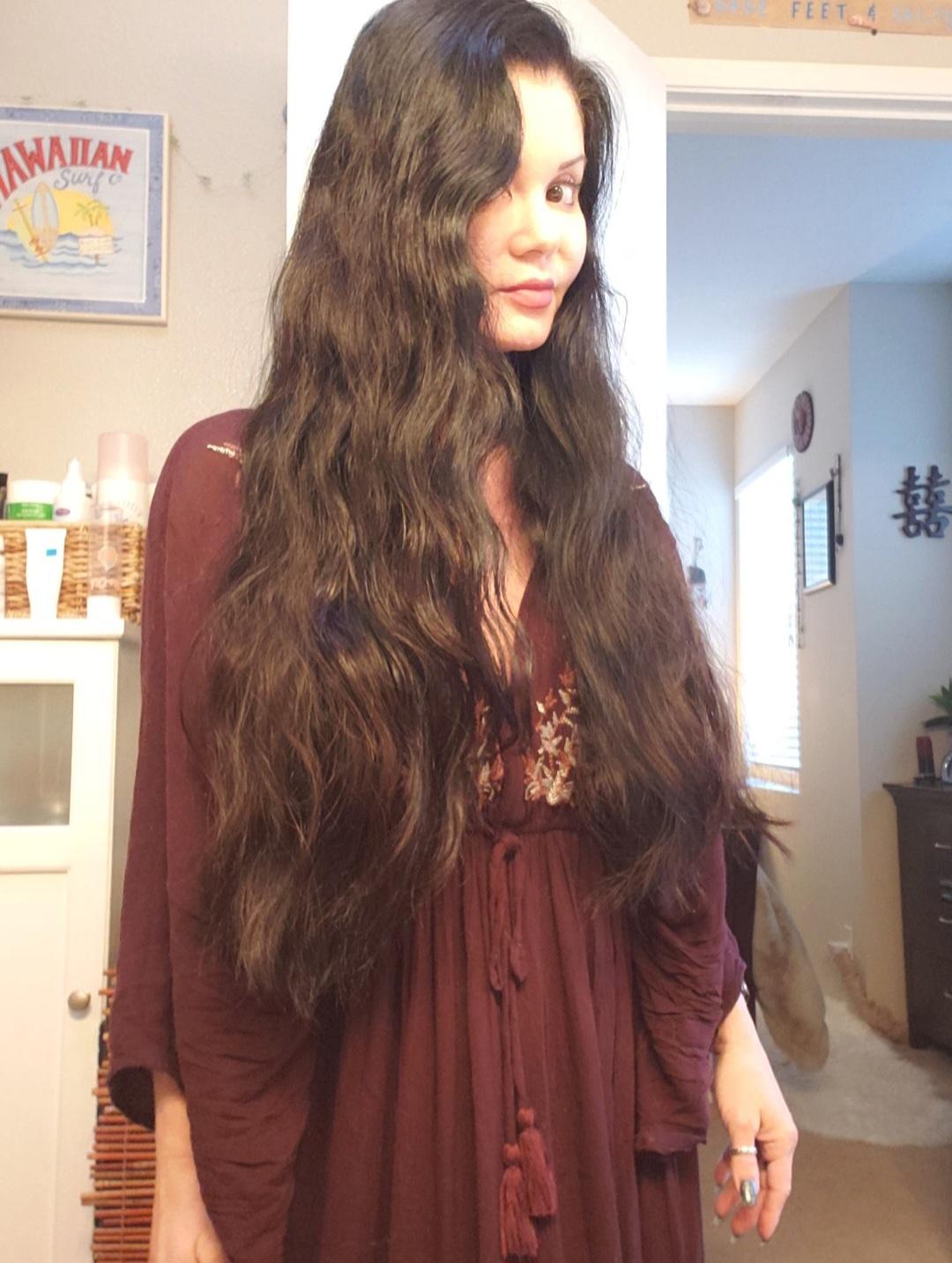
There are several scientific explanations which help account for the changes in hair texture during menopause:

1. Hormonal Changes and Hair Texture

Estrogen and progesterone, two key hormones that regulate many aspects of a woman’s body, play an important role in hair growth and structure. Before menopause, these hormones help maintain the hair growth cycle, ensuring strong and healthy strands. As estrogen and progesterone levels decline, their regulatory effect diminishes, which can lead to changes in the shape and structure of hair.

At the same time, androgen (male hormone) levels remain relatively stable or increase in comparison, which can influence hair follicles in several ways:

  • Some women experience hair thinning or miniaturization, particularly along the crown.
  • Androgen dominance may alter the activity of sebaceous (oil) glands, affecting hair texture.
  • Hair strands may become drier, more brittle, or coarser.

2. Changes in the Hair Follicle and Muscle Relaxation

One lesser-discussed but compelling explanation involves changes in the follicular muscle layer—specifically, the arrector pili muscle, a tiny muscle attached to each hair follicle. This muscle plays a role in the positioning of the follicle in the scalp.

  • During menopause, the arrector pili muscle may weaken or relax due to hormonal shifts, particularly as estrogen levels drop.
  • When this muscle relaxes, it can cause the hair follicle to shift at a different angle.
  • A change in the follicle’s orientation may lead to hair emerging in a more curved or spiral pattern, making previously straight or wavy hair appear curlier.

3. Structural Changes in the Hair Shaft

The cross-sectional shape of the hair shaft is a major determinant of hair texture. Straight hair typically has a round cross-section, whereas curly hair has a more oval or flattened shape.

  • Hormonal shifts can influence keratin production, the protein that makes up hair.
  • Changes in keratin bonding patterns could contribute to an altered hair structure, making it curlier or frizzier.
  • Hair may also become thinner in diameter, which can enhance the appearance of curls or waves.

4. Aging and Changes in Scalp Health

The scalp itself undergoes changes with age, including:

  • Reduced blood flow to hair follicles, which affects nutrient delivery.
  • Changes in oil production, leading to drier hair that may behave differently.
  • A shift in collagen and elastin levels in the skin, which might indirectly impact follicle positioning and hair texture.

The waves in my hair tend to look more like this, but I have a lot of frizz right after washing my hair. Thank goodness for flat irons!

Conclusion

Menopause brings a variety of changes to hair due to the interplay of hormonal fluctuations, follicular shifts, and changes in scalp and hair fiber structure. While some women may experience thinning, others may find their hair becoming curlier or more textured due to follicle repositioning, muscle relaxation, and shifts in keratin structure. Understanding these changes can help women adjust their hair care routines to maintain healthy, manageable hair during and after menopause.
Progesterone and Stress

We all know that constant stress can play havoc with our health and well being. In this post I will focus on the effects of excessive stress on progesterone levels.

Progesterone is produced in the ovaries, the adrenal glands, and in the placentas of pregnant women. It has a calming effect, is a natural diuretic, regulates menstrual cycles, and prepares the body for conception and pregnancy. Some women can experience excessive levels of progesterone, which usually produces symptoms of PMS, but in general, progesterone is a vital and beneficial hormone.

Let’s examine what happens to progesterone if you are a woman under constant and chronic stress. When the body is pummeled with endless stress, the adrenal glands simply cannot keep up with the demand for more cortisol, so they convert more pregnenolone into cortisol to make up for the deficit. However, this has devastating effects on progesterone levels, since progesterone is also synthesized from pregnenolone. Basically, a woman who deals with excessive amounts of stress not only overtaxes her adrenal glands, but progesterone concentration also drops to a precipitously low level. So that calming, diuretic effect of progesterone falls away, and menstrual cycles become erratic or periods cease altogether. Sounds like fun, huh?

I cam tell you that running on an empty tank of progesterone is no fun at all. You retain water, you get irritable and cranky, and you lose your ability to navigate calmly through stressful situations. If you depend on a regular menstrual cycle as a reassurance that all is right with the world, then living with the mystery of whether or when you might have a period can be maddening. I found out during perimenopause that I actually WANTED a period, and I thought I would never feel that way.

I began retaining water like crazy after attaining IFBB Pro Status last July, and I knew something just wasn’t right. I didn’t feel like I was in my own body, as strange as it sounds. I began flailing, and went through a rebound which was disturbing and unexpected. My emotional barometer was all over the place, and I couldn’t get out of the funk that I was in. Gaining eight pounds (which is considerable for me), most of which was water weight, made me even more depressed.

Another completely irritating set of symptoms which suddenly popped up at the end of January 2015, and which persisted every single night is that I would wake up at around 4 a.m., completely drenched in sweat and with a sensation which could best be described as being lit on fire from the inside. I would throw the covers off and quickly disrobe, then rather quickly fall asleep, only to awaken about 30 minutes later, shivering and pulling the covers over me.

The nightmare finally subsided to a great extent once I began replenishing my body with bioidentical progesterone in late February 2015. Though I still retained a bit of water for several months, my weight returned to a reasonable 120 pounds, versus the 125 I had been at in the Fall of 2014, my hot and cold episodes subsided, I felt much calmer, and more like myself. Now that I have been on bioidentical progesterone for two years, I have maintained balance and feel infinitely better.

Had I removed the stressors that I had some control over, I am firmly convinced I would not have bottomed out with my progesterone levels like I did. Even if I had engaged in meditation more regularly a couple of years ago, I think I could have saved my progesterone levels from bottoming out. Trust me when I say that progesterone depletion can be incredibly disruptive and upsetting. And don’t think for a second that this is only a problem which women past the age of 45 deal with. I have come across female patients as young as 32 who had almost no progesterone in their lab tests.

If you do one thing to improve your health, please reduce your stress! You can do this by removing the stressors that you have some control over, performing breathing exercises, tai chi, yoga, and meditation, enjoy time with friends, loved ones and pets more often, and letting go of anxiety and worry.

Menopausal Weight Gain

spare trunk woman
Menopause can really break a woman’s spirit, for countless reasons. Her ability to reproduce comes to a screeching halt, her nether regions may start to resemble an arid climate, hot flashes may make her feel like she is spontaneously combusting, and she may have mood swings that would make the Tazmanian Devil look like a calm little bugger in comparison. But it’s the weight gain which often upsets menopausal women the most. Menopausal women will notice that if they drop their caloric intake, weight won’t drop at all, even though it may have easily melted off in the past.

That’s because the plummeting levels of progesterone and estrogen also adversely affect a woman’s ability to mobilize fat. Cortisol levels can go unchecked as a result of the low levels of progesterone and estrogen, and any extra calories will end up getting stored as fat. If a menopausal woman is at a caloric deficit, the switch flips in favor of burning muscle instead of turning to the storage fat she so desperately wants to incinerate. This is especially true for the adipose (fat) tissue around the midsection, because cortisol is notorious for padding that area with extra fat, resulting in an ever expanding belly. Another unfortunate consequence of cortisol is that levels will rise dramatically with prolonged intense exercise. The key is to have more abbreviated, yet still intense, exercise sessions so that the cortisol release is also accompanied by a boost in HGH and testosterone, thus conferring a protective effect on muscle.

Basically, the WORST thing you can do if you are in the midst of menopausal hell and struggling with weight gain is to engage in lengthy gym sessions. That might work for a 20 year old, but it can be devastating for a 50 year old. If you are a gym rat like me, you can still train up to six days per week (that’s how frequently I train), but keep your sessions intense but relatively short, between 30 to 60 minutes. If you train beyond that time window, the excess cortisol release will only trigger your body to cling to fat.

Menopausal women also experience an increase in carbohydrate sensitivity, which means that carbohydrate-rich meals which they used to be able to consume in their younger years without much consequence will suddenly wreak havoc on that waistline. The extra carbs settle in for a long and uninvited stay in the midsection and end up making women miserable. Because of this, dietary shifts need to be implemented in which the intake of starches and grains is dramatically reduced, while the consumption of more lean protein and green vegetables is increased. I also strongly recommend supplementing the diet with digestive enzymes and probiotics to optimize gut health and digestion of different foods.

Don’t Feel Like Yourself? Hormone Imbalance Could Be The Problem.

Portrait of a happy middle aged couple together outdoors

Portrait of a happy middle aged couple together outdoors

Are you experiencing any of the following?

Low energy
Insomnia
Irritability
Hair loss
Weight gain
Mood swings
Hot Flashes
Night sweats
Skin changes
Dry skin
Brittle nails and hair
Decreased libido
Erectile dysfunction
Difficulty concentrating
Memory loss
Depression
Anxiety
Muscle loss
Decreased strength

The above signs and symptoms are usually a clear sign of hormonal balances which are a function of the aging process. It is pretty widely known that women go through a process in which their estrogen and progesterone levels diminish and bring about symptoms of menopause which can be downright frustrating. However, men also go through a decline in testosterone as they age, with some men experiencing a sharp or early decline which manifests in troubling symptoms which have an adverse effect on their day to day lives. This decline, known as andropause, can be monitored through salivary or serum testing of hormone levels and treated with BHRT.

The good news is that in many cases, natural supplements and certain food choices can correct these issues, but some individuals, both men and women, may require supplementation with bioidentical hormones, also referred to as BHRT. Bioidentical hormones have the same molecular structure as the hormones which are produced naturally within the body. As a result, the body treats bioidentical hormones exactly like hormones produced within the body, which means that the body’s hormone balance can be restored.

If you are in the Los Angeles area and interested in booking a consultation with me for hormone balancing, please visit: http://www.drstaceynaito.com/#!natural-hormone-support/c1wd8

Running On Empty – Progesterone And Stress

Stress meterWe all know that constant stress can play havoc with our health and well being. In this post I will focus on the effects of excessive stress on progesterone levels.

Progesterone is produced in the ovaries, the adrenal glands, and in the placentas of pregnant women. It has a calming effect, is a natural diuretic, regulates menstrual cycles, and prepares the body for conception and pregnancy. Some women can experience excessive levels of progesterone which usually produces symptoms of PMS, but in general, progesterone is a vital and beneficial hormone.

Let’s examine what happens to progesterone if you are under constant and chronic stress. When the body is pummeled with endless stress, the adrenal glands simply cannot keep up with the demand for more cortisol, so they turn to progesterone, converting it into cortisol to make up for the deficit. Eventually, however, not only do cortisol levels plummet, but progesterone levels also drop to precipitously low levels. So that calming, diuretic effect of progesterone falls away, and menstrual cycles become erratic or periods cease altogether. Sounds like fun, huh?

I cam tell you that running on an empty tank of progesterone is no fun at all. You retain water, you get irritable and cranky, and you lose your ability to navigate calmly through stressful situations. If you’re like me and you depend on a regular menstrual cycle as a reassurance that all is right with the world, then living with the mystery of whether or when you might have a period can be maddening. I found out that I actually WANT a period, and I thought I would never feel that way.

Though I had regular periods until very recently, I began retaining water like crazy after attaining IFBB Pro Status last July, and I knew something just wasn’t right. I didn’t feel like I was in my own body, as strange as it sounds. I began flailing, and went through a rebound which was disturbing and unexpected. My emotional barometer was all over the place, and I couldn’t get out of the funk that I was in. Gaining eight pounds (which is considerable for me), most of which was water weight, made me even more depressed.

Another completely irritating set of symptoms which suddenly popped up at the end of January and which persisted every single night is that I would wake up at around 4 a.m., completely drenched in sweat and with a sensation which could best be described as being lit on fire from the inside. I would throw the covers off and quickly disrobe, then rather quickly fall asleep, only to awaken about 30 minutes later, shivering and pulling the covers over me.

The nightmare finally subsided to a great extent once I began replenishing my body with bioidentical progesterone in late February. Though I still retain a bit of water, my weight is back to a reasonable 120 lbs. versus the 125 I had been at in the Fall, my hot and cold episodes have subsided, i feel much calmer and I feel more like myself.

Had I removed the stressors that I had some control over, I am firmly convinced I would not have bottomed out with my progesterone levels like I did. Even if I had engaged in meditation more regularly a couple of years ago, I think I could have saved my progesterone levels from bottoming out. Trust me when I say that progesterone depletion can be incredibly disruptive and upsetting. And don’t think for a second that this is only a problem which women past the age of 45 deal with. I have come across female patients as young as 32 who had almost no progesterone in their lab tests.

If you do one thing to improve your health, please reduce your stress! You can do this by removing the stressors that you have some control over, practice breathing exercises, tai chi, yoga, and meditation, enjoy time with friends, loved ones and pets more often, and let go of anxiety and worry.