Euphorbia trigona, also known as the African Milk Tree, is a striking succulent often mistaken for a cactus, though it actually belongs to the spurge family (Euphorbiaceae). It’s popular as a houseplant because of its sculptural shape and relatively easy care.
🌍 Origins
Euphorbia trigona is native to central and western Africa, particularly regions like Cameroon. In its natural habitat, it grows in warm, semi-arid environments with plenty of sunlight. It has long been cultivated both locally and globally, so its exact wild origin range is a bit blurred by human propagation.
🌿 Appearance
This plant has a very distinctive look:
Growth form: Upright, columnar stems that branch upward, giving it a candelabra-like shape
Stems: Triangular (hence trigona), with ridges lined by small paired spines
Leaves: Small, oval leaves grow along the ridges; they’re usually green but can be reddish in some varieties
Color varieties:
Standard green
“Rubra” or “Royal Red” form with reddish stems and leaves
Although it resembles a cactus, it differs in structure and produces a milky white sap (latex), which is typical of spurges and can be irritating or toxic if handled improperly.
📏 How Tall Can It Get?
Height depends heavily on where it’s grown:
Indoors: Typically reaches 4–6 feet (1.2–1.8 m), though with time and good conditions it can grow taller
Outdoors (warm climates): Can reach 10–15 feet (3–4.5 m) or more, forming a large shrub-like structure
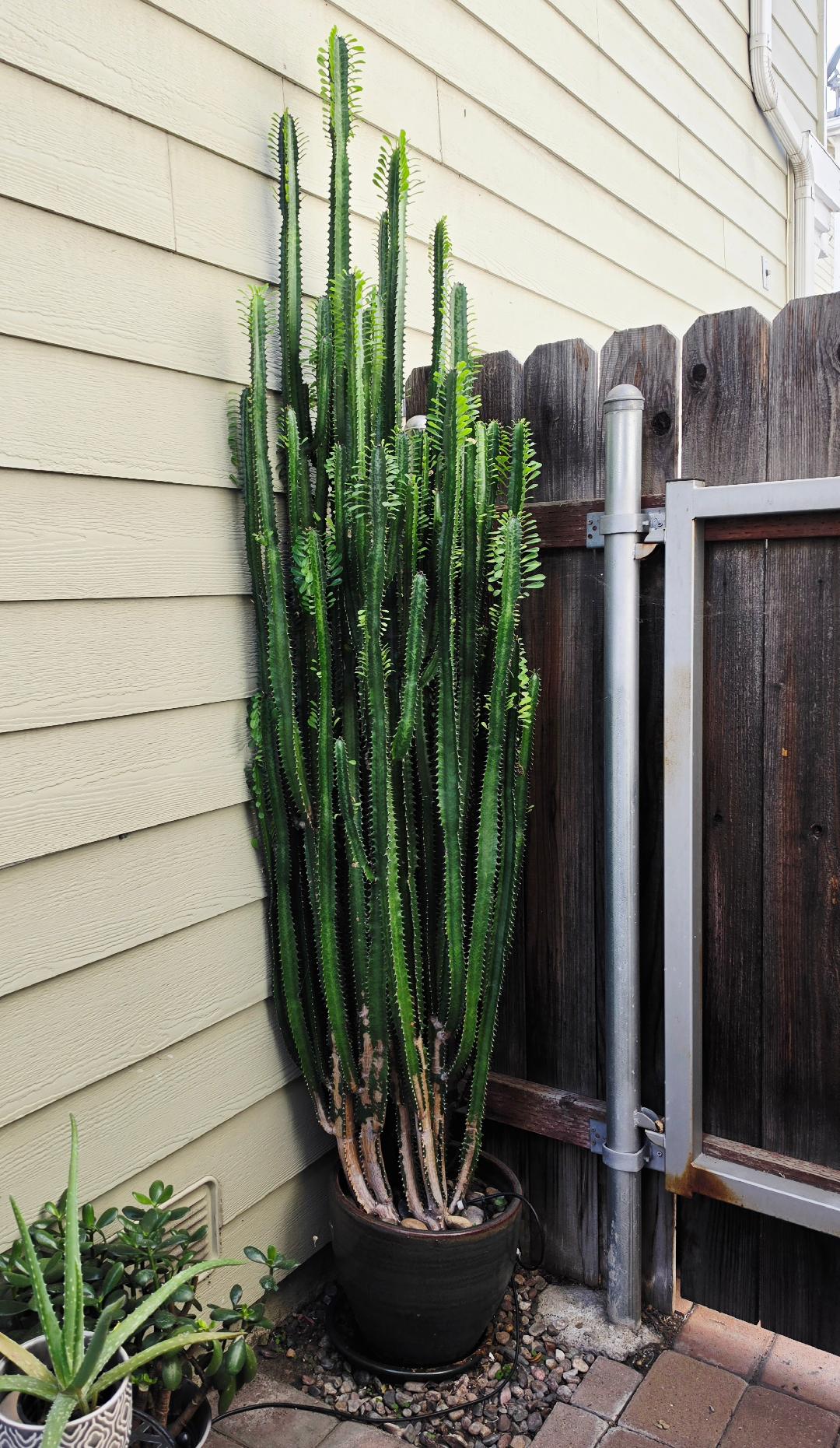
It grows relatively fast compared to many succulents, especially with bright light and consistent care. When I bought my Euphorbia trigona in 2021, it was about 18 inches tall. One spring, it shot up about 2 feet, which I never expected. About a year and a half ago, a close friend and I decided to move it from my second-floor balcony to the side yard on the first floor. My reasoning was that it was almost 6 feet tall, and would be almost impossible to move from the balcony if it got much larger. As you can see in the photo, it is now 7-1/2 feet tall!
Since one of my biggest interests lies in houseplants, I thought I should cover the health benefits of growing greenery within a household. Houseplants offer a range of health benefits, both physical and mental, making them a great addition to any home or office space. Here are some of the key benefits:
1. Improved Air Quality
One of the most well-known benefits of houseplants is their ability to purify indoor air. Plants absorb carbon dioxide and release oxygen through photosynthesis. Additionally, certain houseplants, such as peace lilies, spider plants, and snake plants, are known to remove toxins from the air, including formaldehyde, benzene, and trichloroethylene. This can lead to cleaner, fresher air indoors, which may help reduce respiratory issues and improve overall health.
2. Stress Reduction
Several studies have shown that being around plants can help reduce stress and anxiety. The presence of greenery has a calming effect, potentially lowering heart rates and blood pressure. Simply interacting with plants—whether it’s watering them, trimming leaves, or just admiring their beauty—can trigger a relaxation response, helping you feel more grounded and less overwhelmed. Houseplants offer a range of health benefits, both physical and mental, making them a great addition to any home or office space. The best part of having a large collection of houseplants is that my home has a Bohemian, Zen-like feel to it which people find relaxing and welcoming.
I will say that watering the plants in my collection is a bit of a hassle, even considering the fact that I only water half of the plants each week. Part of the issue is that I have over 100 plants inside my home, and many of them are suspended from ceiling hooks, making it necessary for me to cart around a stepladder on plant watering day. However, as long as you have a manageable assortment of plants in your residence, the task shouldn’t be too strenuous.
3. Enhanced Mood and Mental Health
Houseplants can have a positive impact on mental well-being. Studies suggest that spending time around plants can improve mood, reduce feelings of fatigue, and increase feelings of calm and contentment. The act of caring for a plant, and the sense of responsibility that comes with it, can also boost feelings of accomplishment and purpose. For people experiencing mild depression or anxiety, the nurturing of plants can offer therapeutic benefits, acting as a form of mindfulness or relaxation practice.
4. Improved Productivity and Concentration
Research has shown that having plants in the workspace or at home can improve focus, cognitive function, and productivity. Plants can increase attention span, enhance memory retention, and even promote creativity. In offices, employees with plants in their workspaces often report higher satisfaction, fewer sick days, and improved mental clarity. The presence of plants can help people feel more connected to nature, even in an urban setting.
5. Better Humidity and Temperature Regulation
Houseplants naturally release moisture into the air through a process called transpiration, which can help maintain a more balanced level of humidity in the home. This is particularly helpful in environments where air conditioning or heating systems dry out the air. Proper humidity can reduce the risk of dry skin, sore throats, and respiratory irritation. Additionally, plants can help moderate temperature fluctuations by absorbing sunlight and releasing moisture, leading to a more stable and comfortable living environment.
6. Better Sleep
Certain plants, like lavender and jasmine, have been shown to promote better sleep. The calming scents emitted by these plants may help to lower anxiety levels and encourage relaxation before bedtime. Moreover, the act of caring for plants and spending time in nature can also help you develop healthier sleep habits by reducing stress during the day.
7. Boost to Immune System
Some research suggests that exposure to plants and nature can have a positive effect on the immune system. Spending time in green spaces, even within your home, can increase the production of white blood cells, which help defend against illness. Additionally, houseplants can encourage you to spend more time in your living space, which could lead to healthier habits, such as better hydration, nutrition, and sleep, all of which support a stronger immune system.
8. Reduction in Noise Pollution
Houseplants can also absorb sound, which helps reduce noise levels in indoor environments. In a busy home or office, the presence of plants can create a more peaceful atmosphere by dampening echoes and muffling background noise. This can lead to improved concentration and overall well-being, particularly in noisy urban environments.
9. Connection to Nature
Having plants in your home helps foster a sense of connection to the natural world. In urban environments, where access to parks and green spaces may be limited, indoor plants can provide a touch of nature, helping to counteract the effects of “nature-deficit disorder” (a term coined by Richard Louv to describe the negative impact of disconnection from nature). This connection can improve your mental and emotional well-being, helping you feel more grounded and centered.
10. Aesthetic and Environmental Benefits
In addition to the direct health benefits, houseplants also improve the aesthetic value of a space, making it feel more welcoming and vibrant. A well-decorated home or office with plants can enhance your environment, making it feel more lively and positive. This positive visual impact can indirectly boost your mood and contribute to a healthier mindset.
Final Thoughts
Integrating houseplants into your environment can be a simple yet effective way to enhance both physical and mental well-being. Whether you’re looking to improve air quality, reduce stress, boost productivity, or just make your home more inviting, the presence of plants can have far-reaching benefits for your health. And the best part is that they require relatively little effort to maintain, making them an easy and accessible way to improve your overall quality of life.
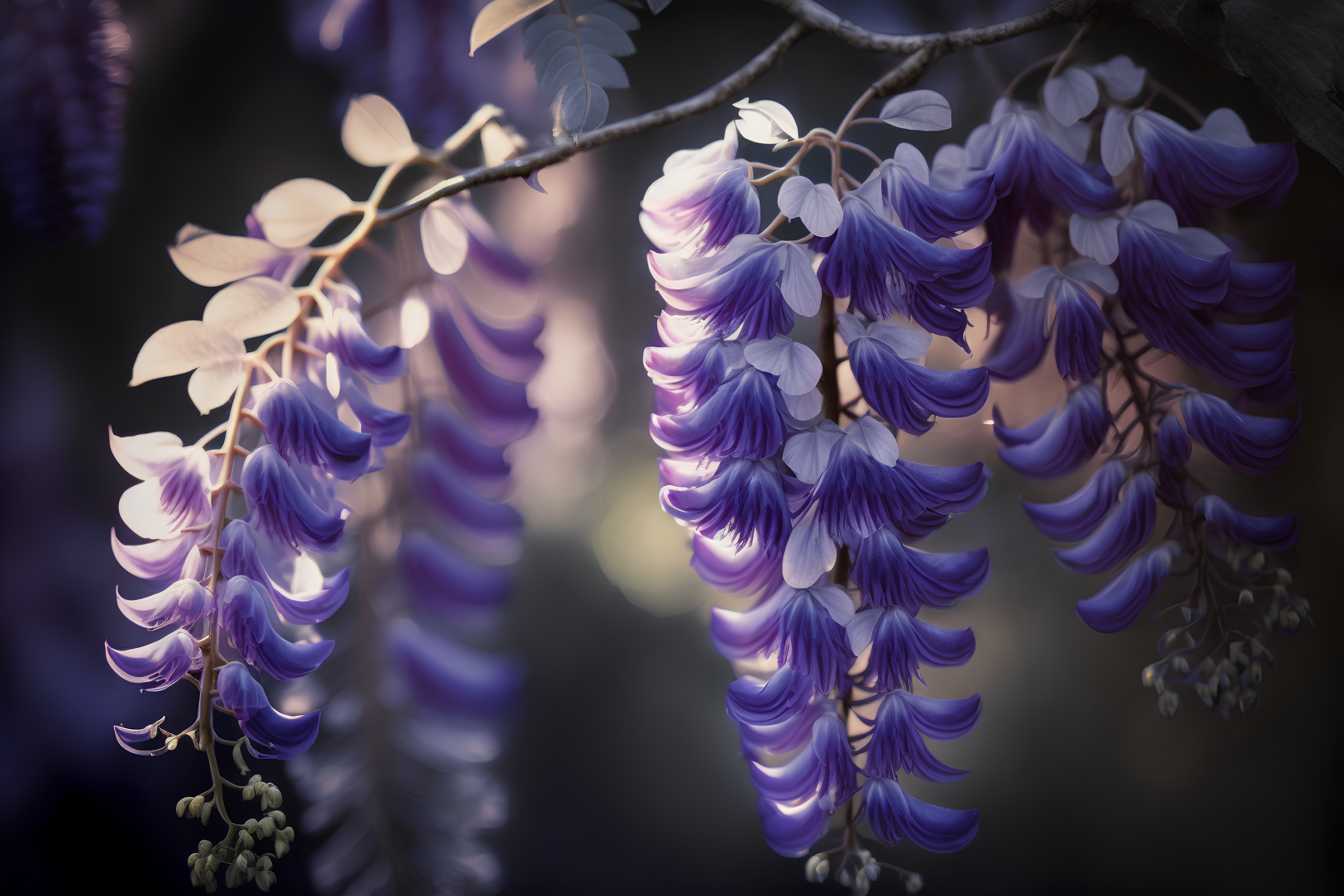
Wisteria is a beautiful vining plant which fascinates me, mostly because my surname means “among the wisteria”. However, I never knew how hardy wisteria was until very recently, so it holds even more symbolism for me now. The blossoms on a wisteria vine are absolutely gorgeous, but it turns out that the Chinese wisteria (Wisteria sinensis) and Japanese wisteria (Wisteria floribunda) are invasive when planted in gardens and forests in the United States. Evidently, the root system of a wisteria plant can extend up to one mile, which means that wisteria vines in yards across a neighborhood are most likely from a single specimen.
Here is a great video explanation of what non-native wisteria plants do in U.S. soil:
If you live in the United States and are considering planting wisteria, you might want to consider American wisteria (Wisteria frutescens), because it is far less aggressive than its Chinese or Japanese counterparts. Interestingly enough, the type of wisteria which is most commonly planted in American gardens is the Japanese version, and the wisteria plant which adorns the security gate where I live is the Japanese variety. That seems fitting for me, considering the meaning of my last name and the fact that it is a Japanese name!
I thought it might be fun to cover the trailing plants in my collection which have been the most rewarding in terms of growth. They all exhibit the longest trailing vines among my collection of close to 150 plants.
This Scindapsus pictus was purchased in January 2021, and this image was shot on January 23rd, 2021.In three months, the Scindapsus pictus I mentioned in the previous image has grown significantly, which you can see here (this image was taken on April 25th, 2021).
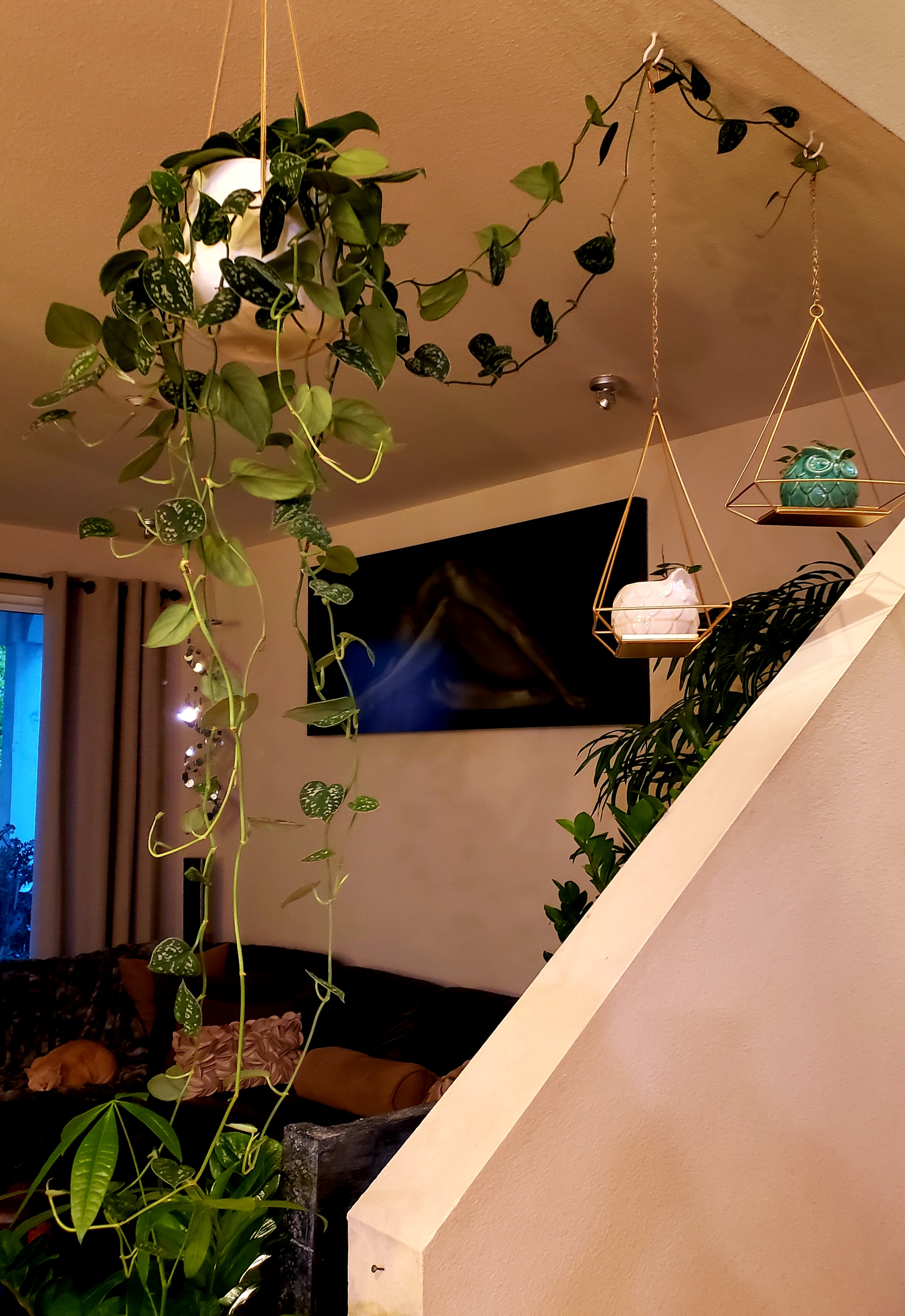
This is another Scindapsus pictus which was bought at the same time the one in the first image was acquired. The longest stem on this one measures 63 inches from the edge of the pot to the tip, and is seen running along the ceiling hooks along with another trailing vine. You can see that there are three other vines which are colliding with the Pachira (which is also growing like mad) which is underneath it. I can’t keep up with the growth on this one!
I got this Senecio radicans in June of 2020. Here it is pictured with the vines just starting to extend beyond the bottom of the pot. The longest vine on the Senecio radicans from above measures 46 inches in this image, which was taken on April 25th, 2021.
Image ID : 164070565 Source: 123rf.com Copyright : Olga Ionina
On more than one occasion, friends have asked me if my plants have been christened with names. For the most part, I have not gone to the trouble to name all of my plants, mainly because I personally feel that it is unnecessary and silly for me to do so. I’m not knocking anyone who chooses to name all their plants, but the desire is, for the most part, absent in me.
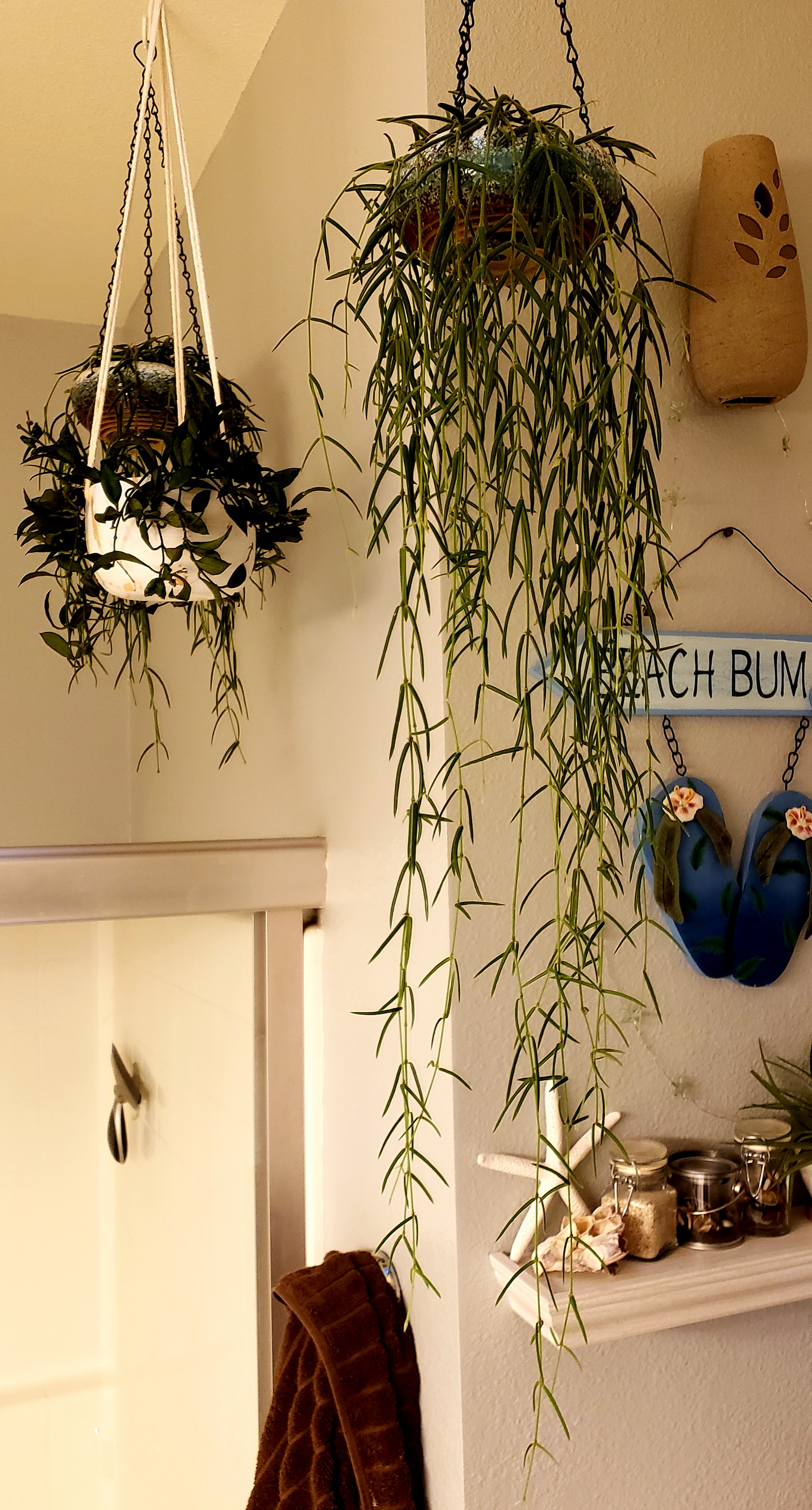
So how do I discern between the close to 150 indoor plants which surround me at home? I tend to use certain descriptors when I scribble my plant watering notes each week (yes, I keep track of which plants get watered in a given week), and those descriptors are pretty straight forward. Usually, I will use the species name as a label, and if I have numerous specimens, I will write down the location of the plant. For example, I have two Hoya shepherdii, both of which are suspended over the two sinks in my master bath, so I refer to the one as “L shepherdii” and the other as “R shepherdii”. I realize these labels aren’t exciting, but they are effective in helping me to keep track of my plants when I am watering them.
However, there are three plants with bona fide names which I bestowed upon them, one of which was named the day I received it, one which was christened with a name about a month after it joined the plant brood, and one which earned its name after it exhibited an astonishing rate of growth. While two of the names are quite fitting for the characteristics the two plant babies possess, one name is reflective of the species of the plant, and quite honestly reveals how lazy I was about using a lengthy German name when I could truncate it and use a fun name.
Sid: Sid is a Ferocactus emoryi, “Emory’s barrel cactus”
My dear friend Blanche was at my house when I received Sid in the mail as a freebie which arrived along with a much-coveted monkey cactus I had ordered. As soon as I saw this spiky cactus, a name just popped into my head, and I exclaimed to Blanche, “For some reason, I really feel like this little guy needs a name!”, to which Blanche responded with, “I do too, and I’m thinking of a name too! If you say the same name I’m thinking of, I’ll freak!” The name which had popped into my head was Sid Vicious, so I revealed this to Blanche, who immediately squealed and said, “That’s the EXACT name I thought of too!” Later that day, I ordered a Sex Pistols mug to house the Emory’s barrel cactus.
Fred: Monstera adansonii ‘Friedrichsthalii’
This Monstera adansonii Friedrichsthalii very quickly became “Fred” after I needed to find a way to distinguish it from my other Monstera adansonii.
Rapunzel: Senecio radicans “String of Bananas”
This Senecio radicans was quite short when I bought it in June of last year, and it struggled for about two months before I changed its hang spot to an area right near a bathroom window, and essentially let it dry out completely between waterings. From that point, this plant just took off, and got so incredibly lacy and long that I decided it deserved the name Rapunzel. The longest tendril on this plant was measured on April 23rd at 46 inches from the edge of the pot to the end, which is three inches longer than it was a month prior. This radicans has aptly earned its descriptive and accurate name.
For comparison, the plant pictured above is another Senecio radicans which I purchased in January of this year. Both the radicans which I purchased in January and Rapunzel were at the level which you see marked in yellow when I brought them into my home. I look forward to seeing Rapunzel’s sister grow as long as Rapunzel.
Since plant people are increasingly more committed to their plants, often considering them to be pets or family members, it’s no surprise that more people are naming their houseplants. I like Nicoletta Richardson’s idea of naming plants after travel destinations from her bucket list, but for me, and if I had the energy to put into naming ALL of my plants, I could definitely see myself becoming a copycat and doing the very same thing. But I’d rather stick with the assigned scientific nomenclature because it appeals strongly to my scientific nerdiness, as well as to my propensity for properly classifying and labeling things.