Rethinking Plant Watering: Why Light and Humidity Matter More Than Watering Schedules

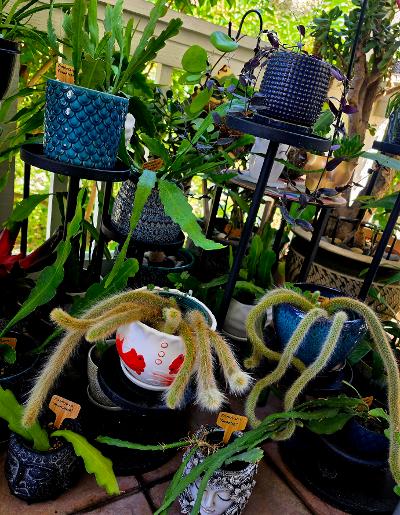
A glimpse of part of my balcony jungle…

People often think a plant’s watering needs are determined mostly by how often the soil dries out. In reality, light and humidity are the primary factors that determine how quickly a plant uses water. Watering is the response to those conditions—not an independent requirement.

Here’s why.

Light drives water consumption

Light is the energy source for photosynthesis. As light levels increase, plants become more active:

  • Photosynthesis speeds up.
  • Stomata (tiny pores on leaves) open to take in carbon dioxide.
  • Open stomata allow water vapor to escape through transpiration.
  • The roots replace that lost water by absorbing more from the soil.

This means:

  • A plant in bright light may need water every few days.
  • The exact same plant in low light may use only a fraction as much water and stay moist for weeks.

This is why overwatering is so common indoors. People keep watering on a schedule even though the plant isn’t using the water because it isn’t receiving enough light.

Humidity controls how fast plants lose water

Humidity determines the difference between the moisture inside a leaf and the surrounding air.

  • Low humidity creates a large difference, so water evaporates from leaves quickly.
  • High humidity slows evaporation because the air is already holding more moisture.

Think of it like hanging a wet towel:

  • It dries rapidly on a dry day.
  • It dries much more slowly on a humid day.

Plants behave similarly.

Higher humidity doesn’t necessarily mean a plant needs less water forever—it simply slows the rate at which it loses water.

Watering is a consequence, not a care category

Many care guides list separate requirements like:

  • Bright indirect light
  • High humidity
  • Water weekly

But these are not independent variables.

A better way to think about it is:

Light and humidity determine how quickly a plant uses water. Watering simply replaces what the plant has already used.

If the environment changes, the watering schedule should change too.

Why humidity and watering are often confused

Many tropical plants are described as “needing lots of water.”

What they often need is moist air, not constantly wet soil.

For example:

  • A plant with thin, delicate leaves may develop crispy brown edges in dry indoor air.
  • Many people interpret those brown edges as “the plant is thirsty.”
  • They water more frequently.
  • The soil stays wet because the roots weren’t actually short on water.
  • Eventually the roots may suffer from oxygen deprivation or rot, while the leaves continue browning because the real issue—low humidity—hasn’t changed.

This creates a cycle where the symptoms worsen despite more watering.

Similar symptoms, different causes

Several environmental stresses produce similar-looking leaf damage:

SymptomPossible cause
Brown leaf edgesLow humidity, underwatering, fertilizer buildup
Drooping leavesDry soil, overwatered roots, heat stress
Yellow leavesOverwatering, aging leaves, nutrient issues
Crispy leavesLow humidity, sun scorch, underwatering

Because these symptoms overlap, people often assume watering is the solution when the underlying cause is environmental.

A common example

Imagine a tropical houseplant moved from a greenhouse (around 70–80% humidity) into a home with winter humidity around 25%.

The owner notices:

  • Brown tips
  • Curling leaves
  • Slower growth

A common assumption is:

“It’s drying out faster. I should water more.”

But the soil may already be staying wet for a long time. The plant isn’t lacking soil moisture—it is losing water from its leaves faster than it can comfortably replace it because the air is much drier.

Increasing humidity or reducing environmental stress often addresses the problem more effectively than watering more often.

Light has an even larger effect than many people realize

A plant in strong light may use several times more water than the same plant in dim conditions.

For example:

  • Bright window + warm temperatures + low humidity = rapid water use.
  • Dim corner + cool temperatures + high humidity = very slow water use.

Yet many people continue watering both plants once a week because they think of watering as a fixed schedule instead of something that responds to environmental conditions.

A better mental model

Rather than asking:

“How often should I water this plant?”

It’s usually more useful to ask:

  1. How much light is the plant receiving?
  2. How warm is the environment?
  3. How humid is the air?
  4. How quickly is the soil actually drying?

The answers to those questions determine when watering is needed.

In other words, light determines how much water a plant uses, humidity determines how quickly it loses that water, and watering simply replenishes what has been lost. This is why two identical plants in different environments can have dramatically different watering schedules, even though they are the same species.
Are Your Plants Making You Crazy?

Source: 123rf.com
Image ID : 100542878
Copyright : lightfieldstudios


I know there must be a whole slew of you who have jumped aboard the plant-obsessed bandwagon, and who treasure your new jungles as much as if they were your children.  Trust me, I can relate, though this isn’t the first time in my life that I have gone plant crazy and filled my home with living green things.

The first time I went overboard with buying and maintaining plants was back in 2000, when I amassed a collection of over 70 indoor plants in a 2 bedroom cottage-style apartment, and I loved it.  The idea of being surrounded by lush greenery was incredibly appealing, and I was swept off my feet until I went through a divorce which shifted my priorities and pulled me away from my plant hobby.

I took such a sharp about-face that I only had six indoor plants for many, many years, leading into the spring of 2020.  Then shortly after lockdown hit, I found myself at a plant nursery in May and purchased three lovely plants.  Little did I know that I was about to fall deep into plant obsession.  By July, I had over 40 indoor plants, and now, I have about 60 indoor plants.  Some were purchased through Etsy, many were purchased from a local supplier (@Brandontheplantguy on IG), and I even bought some from eBay and Amazon.

Source:123rf.com
Image ID : 126788177
Copyright : Olga Yastremska


Though I feel a certain amount of embarrassment over the fact that my home now declares to everyone that I am a crazy plant lady, I take great comfort in knowing that such an obsession is almost trendy these days.  The truth is, houseplants are more popular than ever, especially in millennials who are pushing against the idea of having children, and who are instead opting for a collection of Hoya or Senecio plants which will never demand that the plant parent pony up for a college education.  That being said, having a plant habit can set one back quite a bit, not only in the cost of the plants, but also the planters, spring water, plant food, insecticides, etc.

Those of you who aren’t captured by the idea of collecting a bunch of potted living things might be scratching your heads and wondering why people have suddenly gone plant crazy.  The COVID-19 restrictions and lockdowns forced us all to stay at home, which meant that suddenly, our home environments took on a greater significance.  This is why there was a surge in home improvement projects which kept the big box home improvement stores packed during a time when many other businesses were floundering.  Plants certainly can beautify a home, and they also clean the air, but probably the most compelling feature about houseplants which appeals to most folks is the fact that they are living things, and with a bit of nurturing, they will grow and thrive.

That being said, plants don’t always thrive, and when they start to droop or otherwise show that they aren’t happy, plant owners may find themselves dealing with a lot of frustration.  Another thing I have noticed about now being responsible for a brood of 60 indoor plants is that I often get pissy when a plant decides to become finicky.  It can make a plant parent downright neurotic to try to determine what a failing plant needs. Maybe there’s too much sunlight and the leaves are getting scorched.  Or maybe there isn’t enough sunlight.  Could it be that the plant needs more/less humidity?  Is the plant getting too much/not enough water? Are there pests on the plant which need to be eradicated? What, what, WHAT does this plant want or need?

Even the task of taking care of the plants which are doing well (thankfully, 99% of my plants are doing extremely well) is a daunting one.  The one day per week when I look at all my plants and determine which need to be watered is a day I have begun to dread, because it takes a full hour or more for me to complete the task, all the while lugging jugs of spring water, plant fertilizer, orchid plant food spray, neem oil, my watering can, my plant log, and a stepladder all throughout the second and third floors of my home.  It’s exhausting.

I know that plant people can relate to what I am about to say regarding plants which stubbornly refuse to do well despite everything, especially popular plants which are supposedly “easy care” plants.  When a plant begins to show that it isn’t happy, I honestly feel like I have failed the plant.  I get frustrated and want to figure out the solution to the plant’s woes.  If the plant refuses to rebound, and is close to its demise, I adopt a very “fed up” attitude, and will very abruptly dump a plant in the trash or banish it outside.  It’s the best way for me to disconnect from that irksome creature and get on with my life.

I now have a trusted list of plants I gravitate towards so that I don’t tear my hair out in frustration.  Here are the plants which I truly do enjoy, because they are all doing well in my home:

  • all my Zamioculcas zamiifolias (including zenzi, raven)
  • all but one of my Hoyas (incuding shepherdii, pubicalyx, retusa, australis, multiflora, tricolor, carnosa compacta, lacunosa, and obovata)
  • my Monstera adansoniis
  • my Philodendron brasils
  • the one Scindapsus pictus which didn’t die
  • my Sansevieria starfish
  • my Pachira aquatica
  • my Beaucarnea recurvata
  • my large Senecio rowleyanus, my Senecio herrianus, and my Senecio radicans

In stark contrast, there are plants which I have had little to no success with despite all my efforts.  The plants which have stirred up a great deal of frustration include ALL peperomias, n’joy pothos, Tradescantia multiflora (quite possibly the messiest plant ever), Othonna capensis (tried two of these plants and finally gave up), and Begonia maculata.  I now avoid those plants in the same way I would avoid a person I didn’t like, and certainly would never welcome them into my home again.

In conclusion, the healthiest way to approach plant ownership is to educate yourself on the particular needs of the plants you have, and if a plant begins to falter, just let it go instead of beating yourself up for not being able to save it.  I actually found out that many nurseries will keep stocking certain plants because they know that the plants will be fussy.  Since many people are stubborn about trying to succeed in nurturing a plant, they will often purchase the same type of plant repeatedly in hopes of somehow figuring out its needs.  I know I did this with Scindapsus, Begonia maculata, Pilea peperomioides, Hoya wayettii, and every time one of these plants would die, I would take the loss personally, as if I was totally responsible.  I’ve learned that it is not worth the heartache, not to mention the financial expense, to keep buying those plants.