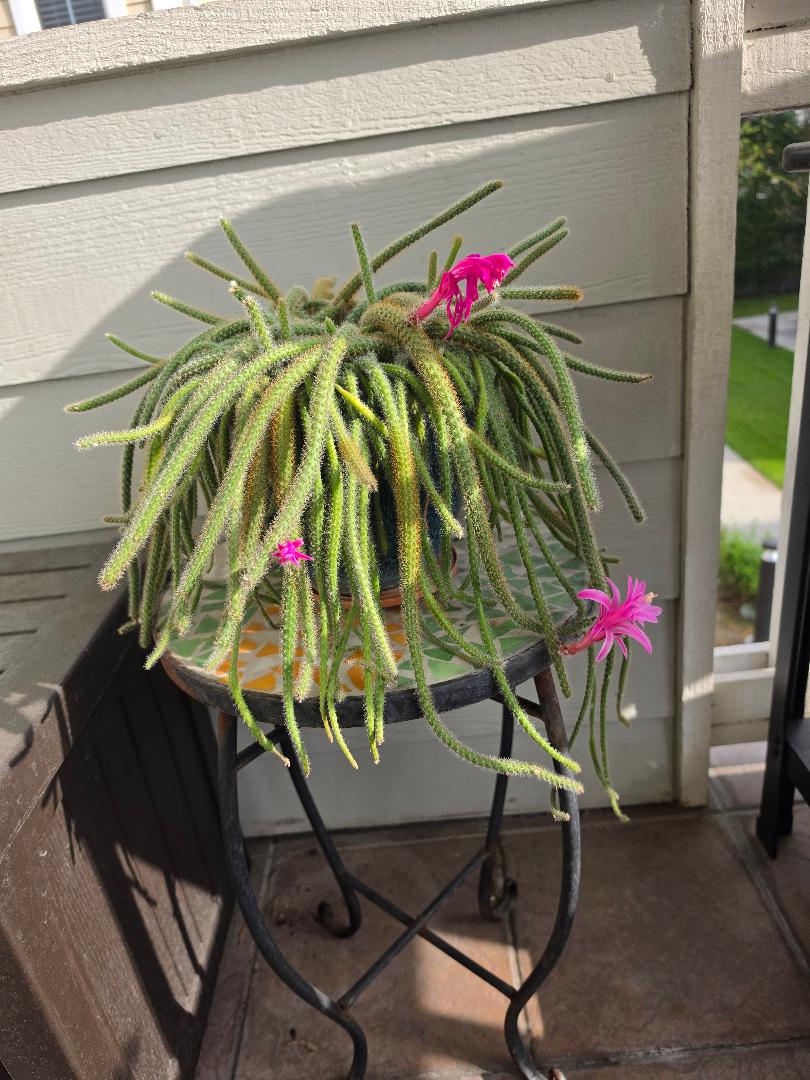
The first rat tail cactus I ever bought. This has been on my balcony for 6 years and finally bloomed this year.
The rat tail cactus—scientifically known as Aporocactus flagelliformis—is a striking, easygoing cactus that stands out because it doesn’t look like the typical upright desert plant. It’s actually a trailing, almost vine-like cactus that’s popular as a hanging plant. I have had two specimens for a number of years, and one in particular has been quite full and happy. When they both decided to bloom recently, I became a big fan of them and added two more to my balcony collection.
🌵 Appearance
Rat tail cactus has long, slender stems that can grow several feet in length. These stems:
- Are cylindrical and about ½–1 inch thick
- Covered in fine, soft-looking spines (not as intimidating as many cacti)
- Usually a medium to bright green color
As the plant matures, the stems spill downward, giving it that “rat tail” look—hence the name. It’s often grown in hanging baskets so the stems can cascade freely.
🌱 Growth Habit
Unlike many desert cacti, this one is naturally epiphytic or lithophytic, meaning it can grow:
- On rocks
- In crevices
- Or even on trees in its native habitat (mainly Mexico)
Instead of growing upright, it:
- Trails and drapes over containers
- Produces lots of branching stems over time
- Can become quite full and dramatic with age
It’s fast-growing compared to many cacti, especially during the warmer months.
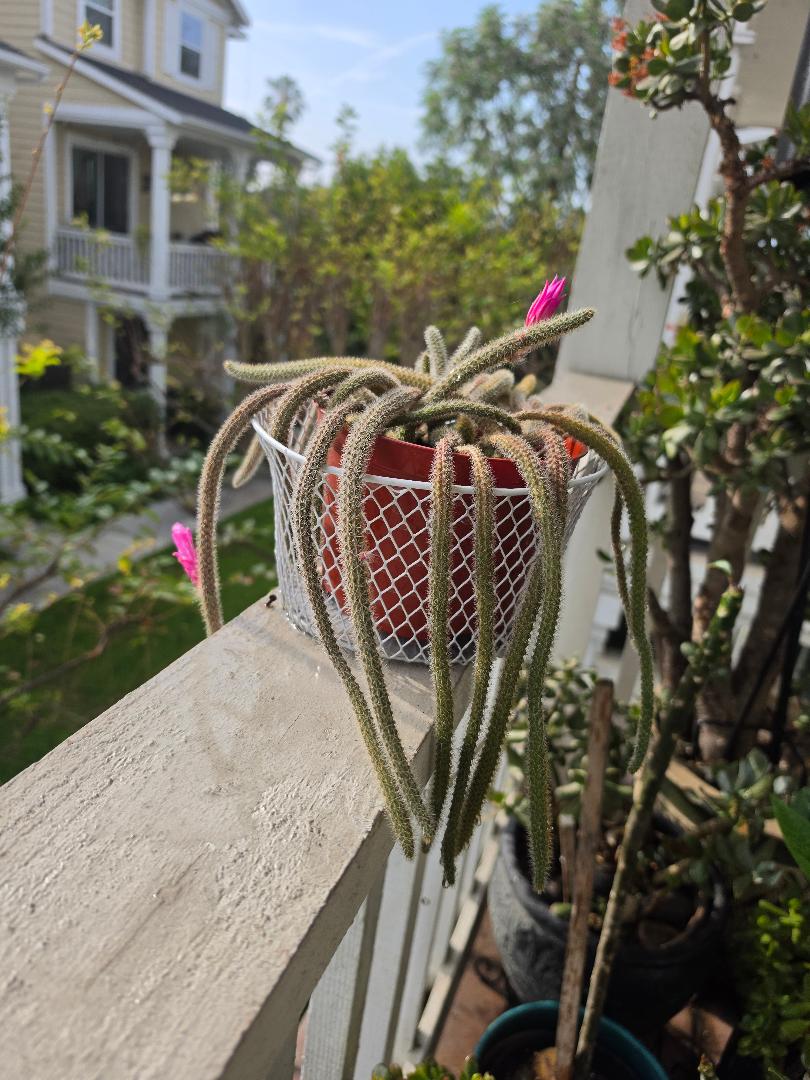
This is the second rat tail cactus, in bloom
🌸 Blooms
When the rat tail cactus blooms, it really steals the show.
- Flowers are bright pink to reddish-magenta
- About 2–3 inches long
- Tubular in shape, with layered petals that flare outward
- Often appear along the sides of mature stems
Blooming typically happens in spring to early summer. A healthy, mature plant can produce many flowers at once, creating a vibrant cascade of color against the green stems. The blooms don’t last forever individually, but the plant may produce them in succession.
☀️ Care Guide
Light
- Prefers bright, indirect light
- Can tolerate some direct sun, especially morning sun
- Too much harsh afternoon sun can scorch the stems
Water
- Water when the top inch or two of soil dries out
- During growing season (spring/summer): water regularly but don’t let it sit in water
- In winter: reduce watering significantly
Overwatering is the most common mistake—this cactus still needs good drainage.
Soil
- Use a well-draining cactus or succulent mix
- Adding perlite or sand improves drainage
Temperature
- Thrives in warm conditions (65–80°F / 18–27°C)
- Can tolerate slightly cooler temps in winter, but protect from frost
Humidity
- Unlike desert cacti, it appreciates moderate humidity
- Good airflow is still important
Fertilizer
- Feed with a diluted cactus fertilizer during spring and summer (about once a month)
- Avoid feeding in fall/winter
Potting & Placement
- Best grown in hanging baskets to show off trailing stems
- Repot only when necessary—slightly root-bound is fine
🌿 Bonus Tips
- To encourage blooming, give it a cooler, drier rest period in winter
- You can propagate it easily from stem cuttings
- If stems get too long or messy, they can be trimmed without harming the plant
Overall, the rat tail cactus is a great choice if you want something low-maintenance but visually dramatic—especially when those vivid pink flowers show up.
 dr. stacey naito's blog