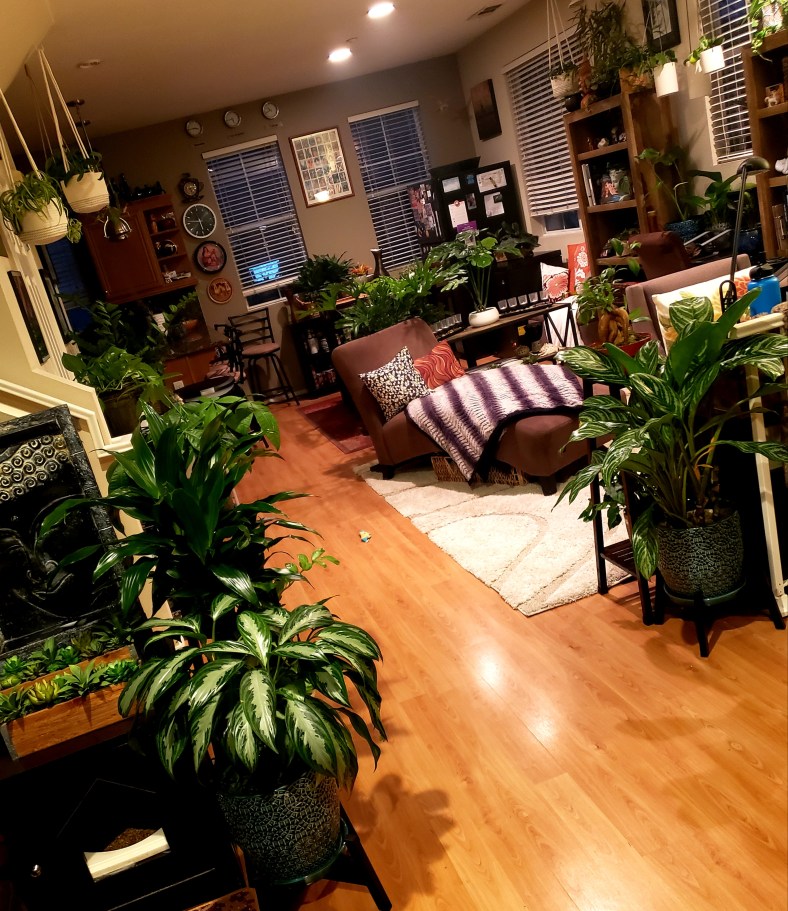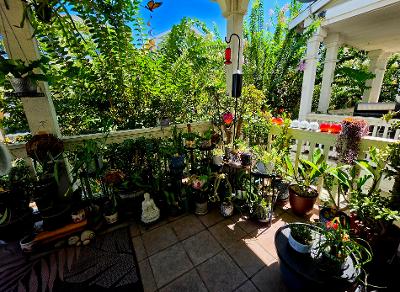
A view of my balcony.
There is something deeply comforting about caring for another living thing.
For me, that feeling has grown into a home filled with more than 140 indoor plants and another 130 or so outside. To some people, that may sound like a lot of work—and honestly, it is. There is watering, pruning, repotting, fertilizing, cleaning leaves, moving plants around, and paying attention to what each one needs.
But somewhere along the way, I realized that the care itself is part of the joy.
Plants Give Us a Reason to Slow Down
Life can be noisy. There are always messages to answer, errands to run, deadlines to meet, and things competing for our attention.
Plants don’t care about any of that.
When I’m taking care of them, I have to be present. I notice that a leaf is turning yellow. I see a new shoot emerging. I realize one plant needs more light while another has been happier in the shade. Even something as simple as watering becomes an opportunity to pause and pay attention.
Caring for plants pulls us out of our heads and into the moment.
And there is something therapeutic about that kind of quiet attention.
There Is Satisfaction in Watching Something Grow
One of the most rewarding things about having plants is witnessing progress that happens slowly.
A new leaf doesn’t appear overnight. A cutting may take weeks to root. A small plant can gradually become something much larger and more beautiful.
That slow growth can be a wonderful reminder that not everything has to happen immediately.
We live in a world that often celebrates instant results. Plants teach a different lesson: nurture something, give it the right conditions, be patient, and let time do its work.
Sometimes the reward is simply noticing that something is growing because you took the time to care for it.
Plants Give Care a Tangible Form
There is also something emotionally satisfying about care that produces visible results.
You water a thirsty plant, and its leaves perk up.
You remove damaged leaves, and the plant looks healthier.
You give a struggling plant better light, and eventually you see new growth.
These little moments can feel surprisingly meaningful.
Taking care of plants gives us opportunities to nurture without needing words. We can see that our attention matters. Even when the task is small, there is a tangible connection between what we do and what happens next.
A House Full of Plants Can Feel Alive
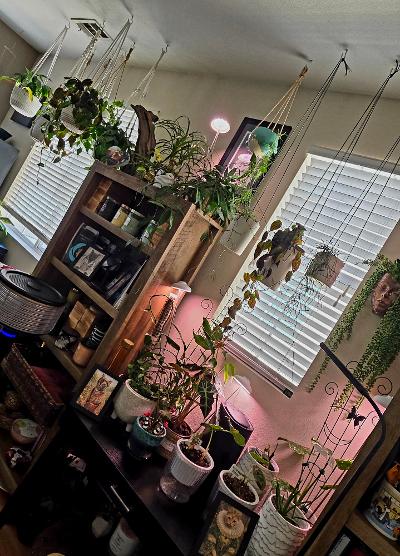
My plants have become much more than decorations.
They make my home feel alive.
There is always something happening. A new leaf is unfurling. A flower is blooming. A vine has suddenly reached across a shelf. A plant that seemed to be doing nothing for months decides it’s finally ready to grow.
With more than 140 plants indoors, there is almost always something to discover in my home.
And outside, with another 130 or so plants, that feeling continues. The garden changes with the seasons, the weather, and the plants themselves.
Instead of coming home to a static environment, I come home to a living one.
Caring for Plants Can Create a Sense of Purpose
Having a lot of plants means there is always something to do.
That might sound like a downside, but I find the opposite to be true.
There is comfort in having small responsibilities that matter. Water this one. Check that one. Move another closer to the window. Repot the plant that has outgrown its container.
These tasks may not seem significant in isolation, but together they create a rhythm.
And sometimes having a reason to get up and care for something is exactly what we need.
Plants Don’t Demand Perfection
One of the things I love most about plants is that they don’t require us to be perfect.
Despite all the care we give them, things still go wrong.
A leaf dies. A plant gets stressed. Something gets overwatered. A cutting doesn’t make it.
And that’s okay.
Plant care teaches us to respond rather than panic. We learn to observe, adjust, try again, and accept that not everything is within our control.
In that way, plants can teach patience not only with them, but with ourselves.
The Joy Is Bigger Than the Work
Yes, caring for more than 270 plants is work.
There are days when watering alone feels like an undertaking. There are unexpected problems to solve. There are moments when I wonder how I ended up with quite so many plants.
But then I notice a new leaf.
Or a flower opens.
Or I see a plant thriving that once looked like it wasn’t going to make it.
And suddenly, the work feels worthwhile.
That’s the beautiful thing about therapeutic hobbies: they don’t necessarily eliminate effort. Instead, they can make effort feel meaningful.
A Little More Green, A Little More Joy
I don’t think you need hundreds of plants to experience the benefits of caring for them.
One plant on a windowsill can be enough.
A small herb garden can be enough. A few houseplants can be enough. Even growing something from a seed and watching it develop can provide that same sense of connection.
For me, though, plants have become a significant part of how I experience home and everyday life.
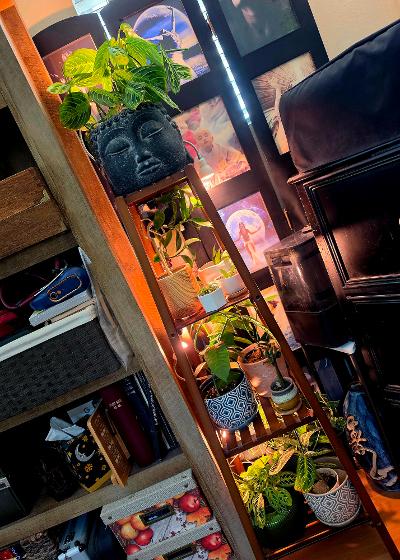
My 140-plus indoor plants and 130-plus outdoor plants require plenty of care. But they give back in ways that are difficult to measure.
They give me moments of quiet.
They give me something to look forward to.
They give me opportunities to nurture, observe, learn, and be patient.
Most importantly, they give me joy.
And perhaps that’s the real reason caring for plants can be so therapeutic: we aren’t simply taking care of plants. We’re creating little moments of connection with something alive—and, in the process, taking a little better care of ourselves.