Fit on the Fly: How to Work Out While Traveling

Check out this informative article by Sheila Olson of FitSheila.com

image via Pexels

Whether you have to travel for work or you are about to enjoy a vacation, spending time to improve your physical fitness while traveling should fit into your schedule. The more time you take off from your fitness regimen, the harder it will be to bounce back once you settle back into your normal life. That being said, traveling is a great opportunity to switch up your fitness routine and challenge your body to work in a new way. Exercise variety is key when it comes to burning fat and calories while improving other elements such as balance and flexibility.

Check out these tips on ways to incorporate workouts into your travel plans and itinerary so you can stay fit on the fly.

Try Out a Local Class

Boutique fitness studios are popping up everywhere nowadays; surely there are a few not too far from wherever you are staying. Scout out your options and walk in to see if they have any deals for first-time students. Often, these places offer the first class for free or at a discounted rate in hopes of encouraging the person to sign up for more.

When picking out a class to try, always lean toward the beginner’s level, even if you consider yourself fit. The latest fitness crazes always throw in some kind of twist to make them more difficult– like this Dallas studio that has you do basic bootcamp exercises, but on a suspended surfboard. You never know what you are going to get with a new class, so you might as well start out slowly.

Tour the Town

There is always something to explore, no matter where you are. And if there is something to explore, there is a way to do it while also breaking a sweat. If you have time to see the sights wherever you travel, get as much of them in as you can by running, skating, or biking around the area. Not only will you be fitting in a workout, but when you hit the pavement, you get a taste of what life is like for a local.

Even if you don’t have the time to burn running around the city, you can choose to be more active by walking wherever you need to go. While it doesn’t burn many calories, there are still health benefits to walking. Try to get at least 12,000 steps in each day– Plexus recommends tracking them with an app on your smartphone. Be sure to go the extra mile with the little things like taking the stairs instead of an elevator or getting off the subway one stop early if you have the time to stroll.

Eat Right

Diet is just as important as exercise, and don’t let anyone try to tell you differently. If you spend your travel time eating junk, it’s going to come back to haunt you once you are home. Maintaining a wholesome diet while you are on the road is really more important than fitting in exercise. If you walk a lot and eat well, you may lose some of your recent gym gains, but your bounce back will be swift.

● Avoid all processed foods and stick with snacks that are composed of a few ingredients at maximum. Some great options include fruit and nuts.

● Buy groceries and make your food rather than eating at restaurants. Food you make at home tends to have less fat, sugar, and sodium in it. Chefs tend to put those ingredients in their food to make you come back for more.

● If you are flying, bring an empty water bottle with you. Once you are through security, fill it up at the water fountain. Drink plenty of water throughout your trip to prevent dehydration.

***

Travel is no excuse to forgo fitness. Stay on top of your workout game by trying a new class and seeing the sights in a way that also breaks a sweat. Also, don’t neglect your diet while you travel. Eating a poor diet makes bouncing back that much more difficult when you get back on your fitness track at home.


“Fitness California Style” Is Available Through Amazon Prime!

I’m honored to be a part of this fantastic project which is now available through Amazon Prime Video! Best yet, Season 1 is available to watch for FREE to Amazon Prime members. Hosted by CSCS, IFBB Pro, martial artist and actor Ian Lauer.

Click on the link below to access all 13 episodes in Season 1!

https://www.amazon.com/Full-Workout-Dumbells-Bench-Babaganoush/dp/B07FVMN3FS/ref=sr_1_2?s=instant-video&ie=UTF8&qid=1532898241&sr=1-2&keywords=ian+lauer

Fifty-Two

This was me last summer at the age of 51…

Yesterday I turned 52. It just blows my mind that I have been around for more than a half-century now, because I simply don’t feel that old. I know when my mother hit 50, I thought she was ancient. And yet, here I am, over 50 and feeling like someone in her early 30’s.

Let’s be real though. My fingers, elbows, and neck ache from arthritis which has crept upon me over the past few years. My skin sags in places it never did before. My neck is beginning to resemble a Shar-pei (you can even see the folds in the headshot here). And though I am the same weight I was when I was competing, and still hitting the gym six days a week, my body proportions are shifting in such a way that clothing items I have had for a while fit differently.

Before you tell me to quit my whining, please understand that everything is relative, and because I still participate in very image-driven industries (modeling and fitness), I hold myself to a certain standard which is beginning to elude my grasp. I have had to change my angles while shooting to accommodate the changes in my physique. Modeling had forced me to come to terms with my ever-aging physical form, and it’s been pretty brutal.

I experienced a major wake-up call last month, when I was going through items in my wardrobe for a four day photo shoot. As I tried on bikinis and dresses, I realized that several items either didn’t sit well on my body, or just flat out didn’t look good on me. It was incredibly frustrating, especially since some of the pieces I tried on had never been worn before and were purchased specifically for photo shoots. I just assumed that my body wouldn’t make the micro techtonic shifts it had. My waistline is ever so slightly larger, my hips wider, and my glutes are slowly deflating, just enough to make a bikini which once looked all right look like a high school hand-me-down.

As a 52 year old woman, I am more concerned than ever about the progression of my medical career, and have thrown new challenges at myself to make me a better practitioner. I’ve been thinking more about what will happen when I reach retirement age, and how I will manage financially. And though I have always been in excellent health, I am often struck with thoughts of “What if something happens to me?”, and “How will I die?”, both of which may sound like morbid thoughts, but I regard them as necessary.

My parents are in their 80’s and of course they will eventually pass on. Both of them mention how disappointed they are in me for not giving them grandchildren, as if it was my filial duty to do so. It irks me to no end, but I also feel pangs of guilt whenever I am berated by them. It’s not like I was trying to defy them by remaining childless. And now that the window of opportunity is forever closed for me, I wonder why I wasn’t meant to have children.

Although 50 may be the new 30, it still marks 50-plus years of life experience. And since there is more societal pressure to be more dynamic and more successful, hitting one’s 50’s can be downright depressing. For all of you over 50, HANG IN THERE!

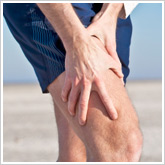
Understanding Delayed Onset Muscle Soreness

DOMS Have you ever adopted a new workout regimen, then ended up kicking your ass so hard that you became discouraged from the pain you experienced after your workouts? If so, you were probably taken by surprise when delayed onset muscle soreness (DOMS) set in. What often occurs is that people adopting new exercise regimens may become quickly discouraged, usually because they don’t understand why they are so sore, and will back off from exercising without ever getting a chance to maintain consistency. However, DOMS may be a beneficial signal that your workouts are challenging enough to make a difference.

DOMS typically develops between 24 to 72 hours after physical activity, and is considered a relatively normal and common result of activity that challenges muscle tissue. One popular but flawed theory is that the microscopic tears which occur in the muscle fibers after exercise, coupled with the release of lactic acid and protons, are responsible for the muscle soreness which characterizes DOMS. Mizumura and Taguchi determined in an important study that neurotrophic factors are produced by muscle fibers and satellite cells, and are critical for the development of DOMS symptoms. They also determined that damage to muscle fibers was not a necessary component of DOMS, further suggesting that a neurological cascade is what results in the post-exercise soreness.

For the most part, the aches and pains which characterize DOMS are assumed to be a sign that your muscles are adapting to the activity which caused them to develop in the first place. Rather than shying away from physical activity in the long term, the general recommendation is to take it easy for a few days, while still exercising, until the pain subsides. However, those of us who are gym rats and fitness freaks will tend to adopt the “Suck it up, buttercup!” mentality, powering through workouts as best we can while our bodies scream out in general agony.

So what can you do if you have DOMS and you want to lessen the severity and duration of the soreness? The truth is, not much. However, here are some suggestions which you might want to try. Keep in mind that none of these suggestions is proven to ameliorate DOMS, but none will worsen the symptoms either.

• consumption of plenty of water both during and after exercise
• consumption of a protein-rich meal after exercise
• glutamine
• cherry juice
• vitamin D supplementation
• compression garments
• Epsom salts
• application of heat

One thing to bear in mind is that if you are consistently working out at the same intensity, your muscles will become familiar with that intensity, essentially adapting to it. This phenomenon is called the repeated bout effect (RBE), and basically means that you will most likely notice a drop-off in DOMS episodes. If you suddenly increase the intensity or duration of your workouts, the chance of developing DOMS will return.

Obviously if you believe you have a specific injury, and not DOMS, then get it evaluated and rest up.

REFERENCES
Mizumura K, Taguchi T. Delayed onset muscle soreness: Involvement of neurotrophic factors. J Physiol Sci. 2016 Jan;66(1):43-52.