The Unmotivated Client

lazy client

If you have been working as a trainer for a while, you know that motivating some clients can be as challenging as pulling teeth. You know the type of clients I am talking about, who moan and complain about the training regimen, who lean heavily upon the phrase “I can’t”, and who make you want to rip your hair out in frustration. You became a fitness professional partially due to your passion for fitness and partially out of a deep need to inspire others and to guide them towards reaching their fitness goals, right? So why would some people resist your efforts to help them when it should be obvious that you have created a career around getting people fit? Sometimes clients can be so highly resistant that no trainer or coach will ever be able to get through to them, but sometimes the trainer may have a hand in the breakdown in communication.

One of the biggest rifts which can occur between a trainer and a client is one in which the trainer has forgotten how to relate to the average person. While a trainer’s immersion in the world of gyms and exercise equipment is a natural outgrowth of his interest in fitness, that immersion might cause him to forget somewhere along the way that fitness newbies might not understand or be able to relate to the “gym is life” mindset. Non-fitness people are often extremely intimidated by health club or gym environments for a multitude of reasons. They may find the experience of navigating through a plethora of exercise equipment completely terrifying. They may question their ability to perform exercises with the proper degree of coordination, balance and strength. Though clients hire trainers for their expertise and their ability to motivate, some of them are so reliant on their self-defeatist thoughts, simply because the pattern is familiar, that they often sabotage the trainers’ efforts. Such clients may even hold onto the notion that asking their trainers too many questions may be embarrassing, and if the trainers aren’t very perceptive, breakdowns in communication can easily occur.

The most successful trainers and coaches understand that there is a great deal of psychology behind personal training. For every gung-ho client who is ready to give 100%, there is a client who is indecisive and non-committal. You will have the best chance of building a rewarding trainer-client relationship with the latter type of client if you make an effort to address his or her concerns. Instead of focusing solely on the physical component of training, you will become far better as a trainer if you tap into the mental and spiritual components of your client’s transformation. Another important skill which you should develop is the willingness to adapt a client’s training regimen so that it accommodates any true physical limitations. If you practice a militant approach with all of your clients without taking into account valid physical restrictions, you run the risk of not only injuring your clients, but also of losing your clients’ interest and respect. Make sure to clearly define goals with your clients which are congruent with what they hope to achieve, not what you think they want to achieve.

Working For Free

bloggers-working-free

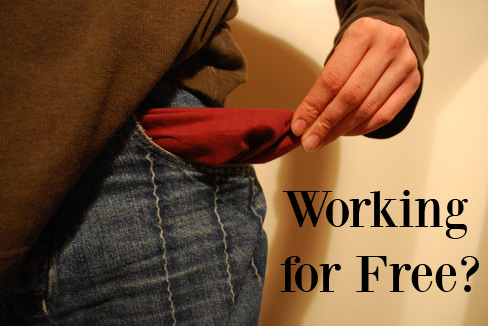
Have you ever completed a work project which offered no compensation except for a pat on the back? If so, did it bother you? It should have. By agreeing to slave away (pun definitely intended here) at an assignment with full awareness that you would receive absolutely no monetary compensation, you just devalued yourself.

I am not talking about volunteer work, or favors which you offer to do for a family member or friend. I am also not talking about getting your feet wet by taking on a task in an unfamiliar area so that you can gain valuable experience. I am instead referring to situations in which you are asked to provide your knowledge, expertise and service in an area in which you excel, and are coaxed into it with the promise that it’s a one-time favor, or that there will be compensation sometime in the future.

As a result of my abiding loyalty to companies, friends, family, and pets, I am the type of person who never leaves. You can count on me, and I honor my word. One of my faults is that I assume that other people are the same way, and even when I can plainly see that I am being taken advantage of, I often still hang on. This type of behavior spilled over into the world of medicine, wellness and fitness for a while, but I have recently done a 180 and have cut off all of the companies and individuals who got too much of a good thing for too long.

In one situation, one company asked me to provide professional services on a monthly basis, stating that it would be unpaid to start out with, but that compensation would be given after a few months. Next thing I knew, I had provided those services free of charge for eighteen months! When I fired a warning shot, essentially stating that I no longer wanted to work for free, the company responded by inferring that the “exposure” I was receiving from them was payment enough. The funny thing is, I didn’t need the exposure, nor was this company in a position to help me. I merely agreed to the arrangement as a temporary favor to them, sort of a good faith move. All it ended up doing was getting me stuck in a monthly obligation which I got zero benefit from doing.

I am not trying to toot my horn, but time is money, and because I hold two degrees, am a board certified physician and have worked in the fitness industry for three decades, I have value which deserves proper compensation. Would you like to work for free, especially if it is in an area in which you have expertise? Let’s face it, we all need to find a way to bring money in. We have skills, we have knowledge, and we deserve to get a financial return for services rendered in our chosen work environment.

As a result of my decision to rid myself of any unpaid assignments or other elements in my life which were eroding my sense of self-worth, I finally severed the ties with the company I mentioned above. Though I used very professional and polite language, it felt so good to tell them that I was done being an indentured servant. No longer did I have to put their assignments in my calendar, or resent the fact that each one of those assignments chewed up a good hour or two of my time.

If you are the type of person who has a tendency to take on more than your schedule can handle, perhaps it’s time to evaluate your obligations and see if any of them are a threat to your self-worth. If they are unpaid, uncontracted, require your skills in an area in which you are considered an expert, and are contributing to a decline in your quality of life because they are a time burden, then you should consider dropping those obligations.

Eating Clean Makes All The Difference

This abdominal definition truly comes from eating clean 98% of the time.  There are no tricks to this.  I also train abs only one day per week and keep my routine down to about 7 minutes.

This abdominal definition truly comes from eating clean 98% of the time. There are no tricks to this. I also train abs only one day per week and keep my routine down to about 7 minutes.

Last week a guy at the gym approached me and asked me a question I hear frequently, which was “What exercises would you recommend for me to get six-pack abs?”. My response didn’t have anything to do with specific abdominal exercises, but centered around nutrition. I asked the guy what his diet was like, and he revealed that he was of Italian descent and just HAD to have pasta several times per week. He also admitted that he spent many of his evenings drinking an appreciable amount of alcohol. So I told him that his eating and drinking habits guaranteed that he would never see a washboard across his midsection, no matter how many crunches or planks he did. He was so intent on finding a way to get a toned midsection without changing his eating habits that he repeated his question a second time, which made me shake my head and wish him luck as I walked away.

If you are committed to getting a lean midriff, you MUST change your eating habits! You simply cannot have your cake and eat it too when it comes to coaxing those lovely abdominal lines and cross cuts out of hiding. Don’t kid yourself into thinking that you can somehow get a quick fix by doing a cleanse to repair the damage of a poor diet, or that you can perform a plethora of abdominal moves to somehow melt all the fat that is sitting around your waist. The only effective way to etch those abs is to consume whole foods with minimal to no processing, such as lean meats, grains such as quinoa, rice, and oats, fresh vegetables, fruits, nuts, and eggs. If you are worried that these foods lack the flavor you crave from consuming processed foods, check out the various seasonings, flavored mustards, hot sauces, and other condiments which can add a new dimension to your food.

Once you make the switch to a healthy food regimen, you will probably notice a lot of subtle changes in your overall well-being, such as more energy and clearer skin. After a while, you might even notice your abs peeking out!

Oil and Water: Is Crossfit Detrimental For Developing Aesthetic Muscle? (repost)

I truly enjoyed writing this article which was featured on Sports Nutrition Supplement Guide. You can see the published post here: http://sportsnutritionsupplementguide.com/training/crossfit/item/1389-oil-and-water-is-crossfit-detrimental-for-developing-aesthetic-muscle#.V1HlOvmlyWg

Read on to find out what I think about Crossfit:

Could someone please tell me why this move is even necessary?  It's dangerous and incredibly damaging to the joints and soft tissues in the body.

Could someone please tell me why this move is even necessary? It’s dangerous and incredibly damaging to the joints and soft tissues in the body.

I will boldly state right now that I’m not a fan of Crossfit, and will be delighted when its novelty wears off. I’ve dedicated my life to supporting, empowering, inspiring, guiding, coaching and otherwise promoting any activity that gets people moving. This is one reason I waited to publicly write about my arguments against the principles of Crossfit. The other, more specific reason, is that it’s become more common to hear NPC and IFBB competitors ask if Crossfit will enhance their efforts to get into contest shape. If the latter is you, let me cut to the chase. Not only will Crossfit widen your waistline as a result of the constant heavy “functional” lifting, it will also cause cortisol spikes, which make your body hold onto belly fat for dear life.

Before I get into why Crossfit is counterproductive to developing aesthetic muscle, a word to those who have found Crossfit gets them active, and has not caused them injury. Keep it up. If it’s Crossfit you need to keep you moving and motivated to be fit, don’t stop on my account. If however, Crossfit just doesn’t feel right, or your goal is to create your best body, and give you the best chance to stay injury free, read on. You’ll find that you don’t have to become part of the latest fitness craze to reach all of your fitness goals and then some.

CrossFit’s Unnecessary Nine

We begin our class with a review of the nine fundamental exercises that CrossFit is built upon:

Air Squat
Front Squat
Overhead Squat
Shoulder Press
Push Press
Push Jerk
Deadlift Sumo
Deadlift High Pull
Medicine Ball Clean

Oh boy, I can only imagine how many lumbar disc herniations have occurred in weekend athletes as a result of performing most of these movements, not to mention the rotator cuff strains and tears from the stress on the shoulders. First off, it just annoys me to know CrossFit renamed the free squat or bodyweight squat to Air Squat in an effort to be catchy and original. Then again, I see no point in getting a client to perform 200 or 300 “air” squats in a row, not unless your objective is to drive your client to complete exhaustion and overtraining. Based on what I have witnessed with the design of CrossFit regimens, exhaustion and overtraining is the inevitable outcome.

CrossFit routines also incorporate other exercises such as pull-ups and pushups. What bothers me here is that these movements are performed in a high rep range, to the tune of 100 or more. Then the client may be pushed to do tire flips or one of the Olympic lifts that CrossFit has managed to make faddish, even though they were developed over 100 years ago.

One of the calling cards to CrossFit workouts is training at “super high intensity”, which taken in correct doses are fundamental to conditioning. As it is used in CrossFit programming, the benefits are far outweighed by the negatives they incur. In CrossFit context, they tax the central nervous system to an excessive degree. Crossfit fanatics may love the feeling of being pushed to the limit, but this borders on being DANGEROUS. When the body is fatigued to the extent that it is in a Crossfit routine, the risk for muscle breakdown and frank rhabdomyolysis is considerable. No physical discipline is worth the risk of landing in the hospital.

I understand that Crossfit offers a great social environment and a feeling of camaraderie, but at what price? Every single person I know who is a fan of Crossfit has been injured while doing it. The suggested Crossfit regimen of 3 days on, 1 day off is too rigorous when you consider the fact that Olympic lifts are part of the core of Crossfit training. The body simply cannot repair itself in enough time. To fatigue a Crossfit client by having him/her do a WOD (workout of the day for those of you not familiar with Crossfit) and then stack on deadlifts for reps or 5 foot high box jumps is insane.

Benefits drop dramatically when the body is completely depleted like that. The Crossfit ideology of deplete and endure is BS. In contrast, bodybuilders and physique enthusiasts, train hard and heavy, and yes, they often train to depletion or failure, but they certainly aren’t going to attempt 100 pull-ups after destroying a traditional back workout. They understand the law of diminishing returns all too well.

Proponents of Crossfit often state that the training is functional and enhances the day to day activities which people perform. When was the last time you had to do a clean and jerk while on the job? Unless you work as a firefighter, stock room clerk or some other physically demanding work role, I seriously doubt that you are performing movements which mimic what happens while in a Crossfit box. Besides, if you’re injured as a result of Crossfit (or should I say WHEN), you can’t possibly perform any challenging physical movement which strains your injured body part.

For those of you who compete in the NPC or IFBB (or INBA, WBFF, etc.), don’t expect to be able to incorporate Crossfit into your contest prep training and sculpt your physique in the manner required for bodybuilding. I actually had a client who begged me repeatedly to let her do Crossfit two days a week despite my recommendation that she abandon it and focus on traditional weight lifting. I finally acquiesced, and allowed her to incorporate Crossfit as part of her training.

As I had predicted, she sustained an injury, her waist widened from all the heavy complex movements which made her midsection boxy, and she became soft as a result of the cortisol spikes which the high intensity Crossfit training created. After 3 weeks of seeing all her efforts from pre-Crossfit training unravel, I asked her to reconsider her decision to engage in Crossfit. As soon as she stopped doing Crossfit, her waist began to nip in, and her body began to tighten up again. Amen for old school weightlifting!

If it sounds like I am saying you will have to decide between doing Crossfit and competing in any of the bodybuilding divisions, I am. You simply cannot create the nipped in waist and beautiful taper that defines every single bodybuilding division. If you do Crossfit, you will create a strong body (plus some injuries), but you will also widen your silhouette and carry a layer of fat as a result of all that cortisol you will release from constant high intensity training. Look at a typical Crossfit athlete. Shoulders are broad, quads and hams are thick, and the abdominal region is thick and boxy. That is what happens when compound Olympic lifts are performed on a regular basis. If that is your aesthetic ideal, by all means knock yourself out with Crossfit, but you will be destroyed on a bodybuilding stage. On the subject of Olympic lifts, even power lifters have the sense not to rep out on these movements. Yet Crossfitters, blinded by the so-called warrior mentality that leads them to do stupid things that invite injury, will rep out on movements which recruit a tremendous amount of muscle fibers and hence tax the central nervous system. I am willing to bet that the Crossfit nation contends with adrenal burnout, permanent muscle damage, and repetitive tendon and ligament ruptures on a relatively consistent basis, and that such negative aspects will eventually cause the demise of this fad sport.

I will always staunchly defend the focus and the principles behind bodybuilding. I know that NPC and IFBB competitors are true warriors and know how to push through grueling training. I also strongly believe that for the most part, most competitors are smart enough not to over train or invite injury by performing movements which are biomechanically unsound. The world of bodybuilding not only rewards strength, but it also recognizes the aesthetic ideal which all bodybuilders aspire to achieve, regardless of division. Bodybuilding is not about flipping a massive tire across a gym, it’s about sculpting and defining muscle.

Vegan Protein Options

277688793121a154f99d38c67e862b30

I am an unapologetic omnivore and would miss animal protein too much to ever cut it out of my meal regimen. However, I understand and respect the fact that other people may choose to avoid meat. Though it can be a challenge to consume sufficient protein if you’re vegetarian or vegan, it can be done, even if you compete in bodybuilding contests or other sports.

Daily protein intake for the average individual should be around 0.8 gram of protein per kilogram of body weight, but I recommend a MUCH higher intake for weightlifters. For example, though I am 116 pounds, I typically consume anywhere from 120 to 170 grams of protein per day, spread out over 5 to 7 small meals. If I were vegan, though, I would consume one or two additional meals per day to ensure that I got enough protein in my system to maintain muscle mass.

Vegans and vegetarians need to be careful with their consumption of nuts and seeds, because they have a high caloric density and are packed with fat. Another challenge is the fact that plant protein sources are notorious for being incomplete proteins, which means that they don’t provide all the amino acids the body needs to function. Soy is a main source of complete plant protein which I never recommend (exceptions are tofu and tempeh), and I advise my patients and clients to avoid soy protein powder, soy milk, and other soy based products like the plague for a multitude of reasons. That leaves grains like quinoa and amaranth on the very small list of complete plant proteins which I recommend to vegetarians and vegans.

A certain amount of creativity must exist in the diet of a vegetarian or vegan in order to ensure that all the amino acids the body needs are eaten. What I mean by this is that protein sources should be combined so that whichever amino acids are absent in one protein source will be provided by another. In general, grains, seeds or nuts can be paired with legumes to form complete proteins. One great example is nut butter on bread. Another great option is brown rice and chick peas.

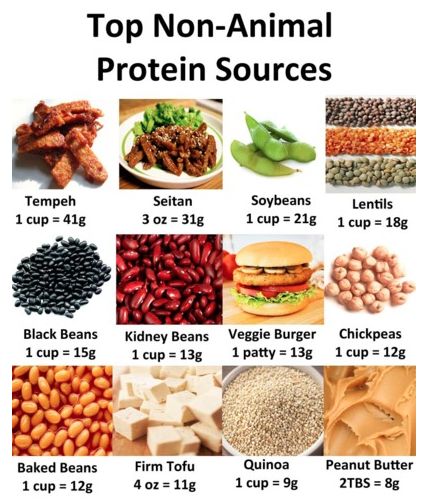
Below is a list of the best vegan protein sources.

Tofu

Tempeh

Soybeans

Lentils

Pinto, kidney, or black beans

Garbanzo beans

Quinoa

Almonds

Cashews

Walnuts

Peanuts

Sesame seeds

Avocado

Broccoli

Spinach

Kale

Sweet potatoes

Veggie burger

Veggie sausage

Draped In Gold…Ravish Sands Competition Suit MUST SELL

10363339_751936458170126_1023755265943085552_n

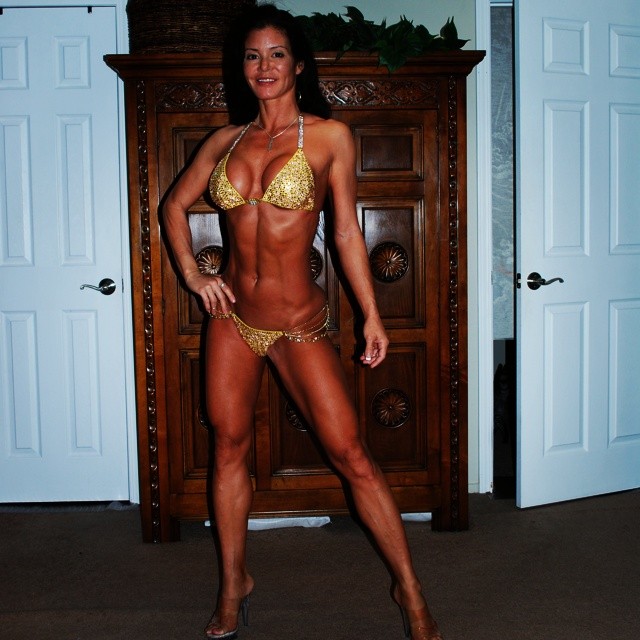
I love this GORGEOUS Ravish Sands suit, but it really needs to go, as it is a reminder for me of what I have decided to let go of, i.e., the world of competing. This is a custom made suit, and is perfect for the NPC or IFBB Bikini competitor who wants to be a golden goddess! The base of the suit is a hologram yellow, and the top and the front of the bottoms are heavily crystallized with Swarovski crystals. The gold and rhinestone chain connectors are flirty and sexy, and gently drape around and under the hips.

I paid $500 to have this suit made, and wore it on the IFBB Pro stage at two events in 2014. The suit is in fantastic condition, with no missing crystals or signs of wear, and there is only a minimal amount of staining on the inside of the suit from competition spray tan.

This suit will fit a 34 to 36 C or D cup, and the bottoms will fit a 34 to 35 inch hip. For reference, I am 5’5″, and I competed in this suit at 119 lbs., with 34-24-34 dimensions.

I am now willing to let go of this suit for $165 which includes shipping.

Please message me at stacey@staceynaito.com if you are interested. Serious inquiries only. I really want this beautiful suit to go to a good home!

Fitting Into Your Skinny Jeans Is ALWAYS A Victory

IMG_20160501_083051

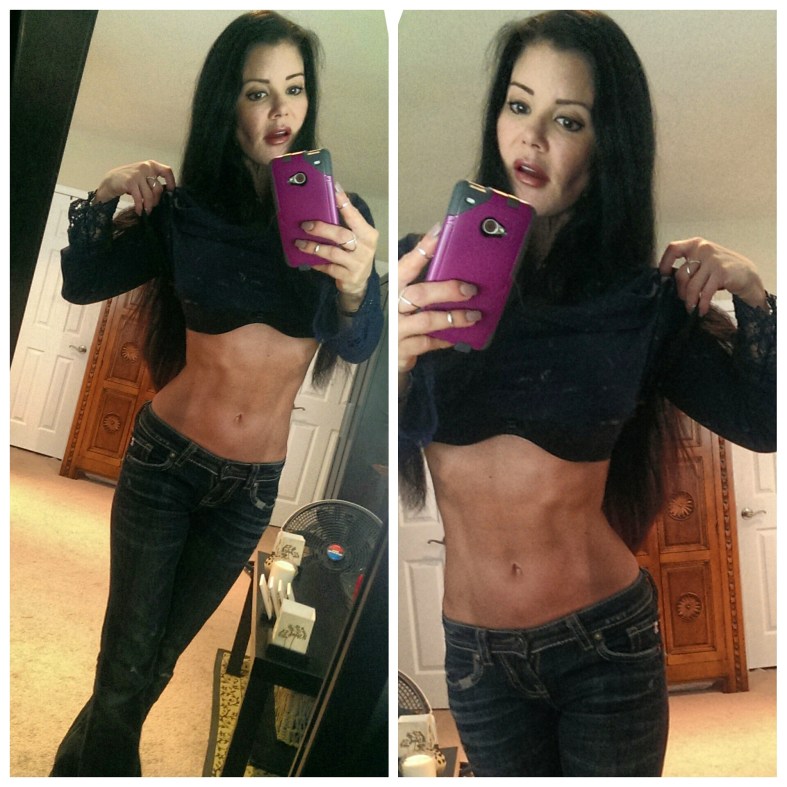
I have a pair of M.E.K. denim jeans in size 24 which I wasn’t able to wear for about 3 years due to my booty and leg building workouts and a battle with water retention issues in my midsection. I came very close to getting rid of them, since I could only fit into my 25’s all this time. Then a few weeks ago, I put on my 25’s and they were hanging on me, so I decided to give the 24’s a try.

TA-DA, they fit!

Fitting into Skinny Jeans

I was pretty happy when I could pull the 24’s over my butt, and when I was able to button them up without tugging, jumping up and down, or lying on the floor, I was ecstatic. I know that my hips look very narrow in the pic I posted, but it’s truly just the angle of the image. My hips measure about 33 inches (they were 34 inches for all of 2015), but every part of me has shrunken down, gotten leaner and more compact. The fact that a pair of jeans which I thought would only take up space in my armoire finally fit again made me almost giddy. I don’t feel “too skinny”, and at 115 pounds, I know for a fact that’s not true. I no longer feel like I want to pack on a bunch of muscle to build up my quads and glutes. I would rather let the natural ectomorphic tendencies of my body to take over a bit now. Since my body is doing it without me trying, why fight it?

It’s such an extraordinary feeling when you fit into your “skinny” jeans, isn’t it?

What Kind Of Body Do You Want This Summer?

IMG_1963

Summer is almost upon us, which means that more skin-baring outfits will appear, and the pressure to look as good as possible will be greater than ever. So what do you do if you’ve been cozily hiding under a layer of winter storage fat for the last few months or years? There isn’t much time to strip that away, but it definitely IS possible to reveal a trimmer, more toned you for the warmer weather that is right around the corner.

The first and most important thing to do in order to build a body transformation strategy for the summer is to define your goals. Make sure that they fit the SMART criteria: SPECIFIC, MEASURABLE, ACHIEVABLE, RELEVANT and TIMELY. Let’s look at each aspect more closely.

SPECIFIC: The more specific you are in defining your summer transformation goals, the more likely you are to be successful in reaching them. A good specific goal could be losing body fat.

MEASURABLE: Let’s look more closely at the body fat reduction goal that I mentioned above. What if you set a goal of losing 5% of your body fat? By doing this, you have now made that goal measurable.

ACHIEVABLE: Make sure that you can actually reach the goals you put in front of you. For example, if you have an excessive amount of storage body fat, it would be unreasonable for you to try to lose 15% of body fat by the beginning of July. However, an achievable goal of 5% is much more reasonable and completely attainable.

RELEVANT: The goals you set should match up to your abilities and interests. For example, if you have been a complete couch potato for years, it would not be relevant to your lifestyle or skill set to aim to prep for an Ironman competition by July. A relevant goal that would still enable you to successfully reach a higher level of fitness would be to prep for a 5k walk/run in July.

TIMELY: In the above examples, I mentioned early July as a timeline marker. By setting a target date, you will establish a framework upon which you will build an action plan.

When I perform nutrition and fitness assessments, I always advise my clients and patients to follow the SMART acronym. Another thing I love to suggest is the development of a vision board. A vision board can be as simple as having a photo of a celebrity or other person who has the kind of physique that a client covets. In some cases, the photo may be of the client from earlier, leaner days. In either case, the photo serves as a perfect carrot to chase after. I always suggest placing the photo on a bathroom mirror or a refrigerator door. Another clever and very effective place for an inspiring photo is to use it as a computer or phone wallpaper design.

If you really want to get creative and inspired, you can create a larger vision board, either digitally or via old-school printed photos and inspiring quotes and messages. Just make sure that whatever you create, you believe 100% in what is on the board, and that you can attain it all.

“Do You Still Compete?”

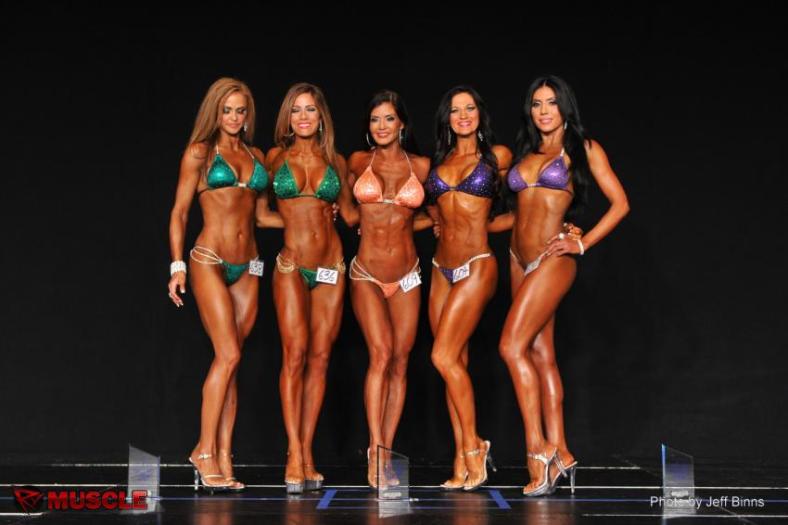
First Place Masters Bikini 35+ B Class, Team Universe, July 2013

First Place Masters Bikini 35+ B Class, Team Universe, July 2013

Whenever I hear that question now, I have mixed feelings, which range from a sense of longing for the stage, to complete relief that I have not stepped onto a bodybuilding stage for close to two years now. My short answer to the question, “Do you still compete?” is “Probably not.”

Though I competed in four Pro Bikini events, I was struggling so much with metabolic damage and perimenopause that I often think it wasn’t the best idea to jump onto the Pro stage only 4 months after I won my IFBB Pro Card. That sort of strategy might work for a twenty-something competitor who is at the top of the heap, but it didn’t work for my 47-year old body which had been beaten down physically, emotionally, and mentally. I honestly needed a break, but I pushed through, and as a result had ho-hum placings.

It has taken over three years for my body to return to a level of leanness which I feel comfortable with. I know you might assume that I was in a massive spiral with my weight and body fat, but it wasn’t THAT bad, at least not compared with many other competitors who spiral. Nevertheless, I spent over two years with excess fluff that I was not accustomed to at all, and I couldn’t stand how I looked or felt.

Here’s the breakdown of my stats throughout the years:

From age 21 through 43: Between 104-109 lbs., 11-13% body fat
2010 – Age 44: 112-113 lbs., 12% body fat
2011 – Age 45: 114 lbs., 12% body fat
2012 – Age 46: 115 lbs., 12% body fat
2013 – Age 47: FIRST HALF OF YEAR: 117 lbs., 11% body fat SECOND HALF OF YEAR: 119-126 lbs., 13-18% body fat
2014 – Age 48: 121-125 lbs., 14-18% body fat
2015 – Age 49: 119-123 lbs., 12-15% body fat
2016 – (soon to be 50): 115-119 lbs., 11-13% body fat

It has been a veritable see-saw for me over the years. I also firmly believe that I would not have gone through menopause as early as I have if it had not been for all the metabolic insults I made to my poor body as a result of competing. Since 2013, I have investigated every possible cause for the water retention issues which rather suddenly hit me. This year I have FINALLY been able to rid myself of the excess fluid around my midsection, but somehow that was at the cost of the fullness in my glutes which I had worked so tirelessly to achieve during the years in which I competed.

If you ask me what my plans are for competing, don’t be surprised if I evade the question. I realize with each passing day that competing is no longer something which I rely on to define who I am. I have paid my dues and proven my worth, and though I completely understand why people have a drive to compete, I am no longer chomping at the bit to throw on a ridiculously expensive, blingy bikini and stripper heels and put myself at the mercy of a panel of judges.

It Isn’t Just About Fitness: How Fitness Goals Impact Your Entire Life

My latest article for Sports Nutrition Supplement Guide is on the impact that fitness goals can have on every aspect of your life. You can see the original post via the link below, or read the article here as well.

FitnessGoals_310x250

http://sportsnutritionsupplementguide.com/inspiration-motivation/train-perform/item/1585-it-isn-t-just-about-fitness-how-fitness-goals-impact-your-entire-life

You may already be immersed in a fitness plan which enhances your physical strength and flexibility, improves performance, and keeps your physique in tip-top shape. But being physically fit confers a multitude of mental benefits which you might not be aware of. As a matter of fact, the link between physical health and mental health is so strong that people who brush off regular exercise as a time-consuming task are depriving themselves of optimal health and well-being.

Simply by engaging in 30 minutes of moderate intensity exercise 3 to 4 days per week, you can help manage or even prevent mild depression and anxiety through the release of endorphins in the brain. In addition, regular exercise increases energy levels, enabling you to power through a busy day more efficiently. Individuals who exercise regularly also tend to enjoy more restful sleep.

Those of you who hit the gym or engage in other types of physical activity several days per week may also have noticed that simply by being in an exercise environment, your worries and negative thoughts have a tendency to melt away, lending a lot of validity to the phrase “iron therapy”. The sense of community which exists within gym settings or other events (such as 5K races, mud runs, rock climbing events, and other activities) can also be a very effective means of eradicating any feelings of loneliness or isolation.

People who struggle with depression are more likely to be sedentary, and levels of GABA, serotonin, dopamine, and norepinephrine tend to be much lower than in people who work out regularly. Conversely, levels of stress hormones, such as cortisol, tend to be higher in sedentary individuals who suffer from chronic depression and anxiety. A study by the University of California San Francisco determined that women who exercised for 45 minutes over a 3-day period showed fewer signs of cellular aging compared to their inactive counterparts. Other studies have demonstrated that as little as three hours of regular exercise each week can reduce the symptoms of mild to moderate depression as effectively as pharmaceutical antidepressants.

Regular physical activity also benefits cognitive function. Researchers have discovered noticeable physical differences between the brains of people who engage in regular exercise when compared to inactive people. Several studies have found that the hippocampi in fit individuals is much larger. Why is this important? Because the hippocampus is largely responsible for spatial memory, and it is also one of the first regions in the brain to be affected by Alzheimer’s related damage. Exercise also boosts levels of growth factors in the brain which are responsible for higher cognitive functions such as concentration, attention, memory and learning.

Lastly, regular exercise boosts self-esteem and improves body image, contributing to a greater sense of well-being and confidence. Think of how exciting it is when you reach a training goal, such as increased strength or flexibility, weight loss, or a positive change in body composition.

In summary, when you train your body through regular exercise, you also boost brain health and create a greater sense of overall well-being.