
Let There Be Light: Circadian Rhythm

123rf.com image
Image ID186134910

Natural sunlight is one of the most powerful regulators of human biology. At the center of this system is the circadian rhythm—an internal, roughly 24-hour cycle that governs sleep, hormone release, metabolism, body temperature, and even cognitive performance. While this rhythm is generated internally, it is synchronized to the external world primarily through exposure to natural light.

Sunlight as the master “time-setter”

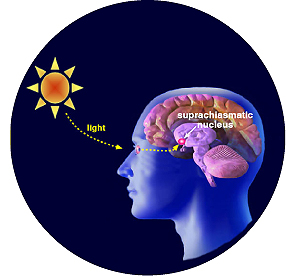
Specialized cells in the retina detect light—especially blue wavelengths present in morning sunlight—and send signals directly to the brain’s “master clock,” the suprachiasmatic nucleus (SCN) in the hypothalamus. This signal does two critical things:

  • Suppresses melatonin (the sleep hormone) in the morning
  • Reinforces wakefulness, alertness, and cortisol release at appropriate times

In the absence of consistent natural light cues, the circadian system begins to “free-run,” drifting away from the 24-hour day. This is why people in artificially lit environments—or those who spend most of their time indoors—often experience sleep disturbances, fatigue, or reduced mental clarity.

A famous example comes from isolation experiments, including one involving a medical student who lived for weeks in a sensory deprivation bunker without access to natural light or time cues. Over time, their sleep–wake cycle lengthened beyond 24 hours, demonstrating that while the body has an internal clock, it depends on sunlight to stay properly aligned.

Genetic basis of circadian regulation

At a deeper level, circadian rhythms are governed by a network of “clock genes” that operate through feedback loops in nearly every cell of the body. Key genes include:

  • CLOCK and BMAL1: activate transcription of other clock genes
  • PER (Period) and CRY (Cryptochrome): accumulate over time and then inhibit CLOCK/BMAL1 activity

This creates a self-regulating oscillation: genes turn on, proteins build up, then shut the system down, and the cycle repeats roughly every 24 hours.

These genetic rhythms are not limited to the brain. Peripheral tissues—like the liver, heart, and muscles—also have their own clocks, which are coordinated by the SCN and influenced by environmental signals such as light, food intake, and activity.

Disruptions to these genes or their expression have been linked to:

  • Sleep disorders
  • Metabolic diseases (e.g., obesity, diabetes)
  • Mood disorders
  • Increased risk of certain cancers

This highlights that circadian regulation is not just about sleep—it is a fundamental organizing principle of physiology.

Architecture and natural light: the Fuji example

The importance of sunlight extends beyond biology into the design of human environments. The Fuji Kindergarten is a well-known example of architecture intentionally designed to optimize natural light exposure. Its open, circular structure, expansive windows, and indoor–outdoor flow ensure that children are continuously exposed to daylight throughout the day.

This design aligns with circadian principles:

  • Bright daylight exposure supports alertness and learning
  • Gradual transitions in natural light help regulate energy levels
  • Reduced reliance on artificial lighting maintains a more biologically natural environment

Such spaces are increasingly seen as beneficial not just for children, but for workplaces, hospitals, and homes.

Putting it all together

Natural sunlight acts as the synchronizing force that keeps our genetically encoded circadian machinery aligned with the Earth’s day–night cycle. Without it, the internal clock drifts; with it, physiology, cognition, and behavior become more stable and efficient.

In modern life—where artificial lighting and indoor living dominate—this connection is often weakened. Understanding both the environmental (light exposure) and genetic (clock gene feedback loops) aspects of circadian regulation underscores a simple but powerful point: regular exposure to natural daylight is not just beneficial—it is biologically essential.

Melatonin

Originally published on RxGirl on Thursday, 19 June 2014

http://www.rxmuscle.com/rx-girl-articles/11102-melatonin.html
Sleep-girl
Melatonin is a hormone produced by the pineal gland in the brain which regulates the wake-sleep cycle. Production is turned on later in the evening when lights are turned off for bedtime. However, there are a number of poor habits which people commonly engage in which interfere with the body’s production of melatonin, with harmful results such as impaired immune response, increased rate of cellular aging, and increasing the risk of cancer formation.

Basically, those late nights you spend watching TV or reading are interfering with optimal health. As soon as a light is turned on at night, you send a signal to your brain that it is daytime. Production of melatonin ceases and does not resume when you turn the light off either.

Shorter wavelengths (red, orange, yellow) of light are less detrimental than white or blue light and should be used in the evening. I love the salt lamp I have in my bedroom and try to use that light as my sole illumination in the bedroom as much as possible at night.

Why is it so important to preserve the body’s natural production of melatonin? Because melatonin is a potent antioxidant and excellent for reducing inflammation throughout the body, including the brain.

Implement the following guidelines to optimize the body’s production of melatonin:

1. Try to get daily bright sun exposure. Production of melatonin approximates the contrast between bright sun exposure during the day and complete darkness in the evening.

SuprachiasmaticNucleus

2. Turn off your computer and TV at least one hour before going to bed. Both computers and televisions emit blue light which interferes with the body’s normal production of melatonin.

3. Sleep without any lights on. The darker your room is while you sleep, the better chance you have of allowing your body to produce melatonin without interruption.

4. Drop the thermostat to 60 to 70 degrees.

If you think your melatonin levels are low or you have lab work demonstrating low melatonin, and you also suffer from insomnia, you might want to supplement with melatonin tablets. Beware of the dosage, and keep it at 0.5 to 3 milligrams maximum dosage each night. At higher doses, melatonin can have hypnotic effects on some individuals, and on others, a paradoxical hyperaware state may manifest.

On a personal note, I had lab work early this year which demonstrated low melatonin, but I wasn’t suffering from insomnia. A colleague insisted I supplement with 3 milligrams of melatonin per night, which resulted in anxiety and a completely sleepless night for all of the nights I took melatonin.

Another caution: If you are trying to get pregnant, you must avoid taking melatonin supplements because they interfere with fertility.

Melatonin Article For RxGirl.com

Original post can be found here:

http://www.rxmuscle.com/rx-girl-articles/11102-melatonin.html

Melatonin is a hormone produced by the pineal gland in the brain which regulates the wake-sleep cycle. Production is turned on later in the evening when lights are turned off for bedtime. However, there are a number of poor habits which people commonly engage in which interfere with the body’s production of melatonin, with harmful results such as impaired immune response, increased rate of cellular aging, and increasing the risk of cancer formation. Basically, those late nights you spend watching T.V. or reading are interfering with optimal health. As soon as a light is turned on at night, you send a signal to your brain that is daytime, and production of melatonin ceases, and does not resume when you turn the light off either.
Shorter wavelengths (red, orange, yellow) of light are less detrimental than white or blue light and should be used in the evening. I love the salt lamp I have in my bedroom and try to use that light as my sole illumination in the bedroom as much as possible at night. Why is it so important to preserve the body’s natural production of melatonin? Because melatonin is a potent antioxidant and excellent for reducing inflammation throughout the body, including the brain.

Implement the following guidelines to optimize the body’s production of melatonin:

SuprachiasmaticNucleus1. Try to get daily bright sun exposure. Production of melatonin approximates the contrast between bright sun exposure during the day and complete darkness in the evening.

2. Turn off your computer and T.V. at least one hour before going to bed. Both computers and T.V.’s emit blue light which interferes with the body’s normal production of melatonin.

3. Sleep without any lights on. The darker your room is while you sleep, the better chance you have of allowing your body to produce melatonin without interruption.

4. Drop the thermostat to 60 to 70 degrees.

If you think your melatonin levels are low or you have labwork demonstrating low melatonin, and you also suffer from insomnia, you might want to supplement with melatonin tablets. Beware of the dosage, and keep it at 0.5 to 3 milligrams maximum dosage each night. At higher doses, melatonin can have hypnotic effects on some individuals, and on others, a paradoxical hyperaware state may manifest. On a personal note, I had labwork early this year which demonstrated low melatonin, but I wasn’t suffering from insomnia. A colleague insisted I supplement with 3 milligrams of melatonin per night, which resulted in anxiety and a completely sleepless night for all of the nights I took melatonin. Another caution is if you are trying to get pregnant, you must avoid taking melatonin supplements, because they interfere with fertility.