R.I.P. Dr. Oliver Sacks

Oliver Sacks

Dr. Oliver Sacks, eminent neurologist and brilliant author who explored strange neurological aberrations in books such as “The Man Who Mistook His Wife for a Hat,” died on August 30th at his home in Manhattan at the age of 82.

I was stunned when I read his post on Facebook in February which revealed that he had terminal liver cancer. The original source of the cancer was a melanoma in his eye which had been treated nine years ago.

Dr. Sacks was not only a highly respected neurologist and researcher, he was a prolific and incredibly gifted writer. More than a million copies of his books are in print in the United States, though the book he was most well known for was “Awakenings,” which was made into a movie starring Robin Williams. He was so popular that he received about 10,000 letters a year. Regarding the plethora of letters he received, he stated, “I invariably reply to people under 10, over 90 or in prison.”

I first met Dr. Sacks in 1986 during a book reading of “The Man Who Mistook His Wife For A Hat.” Though I had known for years that I wanted to become a physician, and that I had a specific passion for neurology, my meeting with Dr. Sacks re-ignited that passion. I devoured that book, and from that point on was a devoted fan, not only of his writing, but of him as a clinician and humanitarian. I have every book which Dr. Sacks wrote and thoroughly enjoyed reading them (I have yet to read “Hallucinations” and “On The Move” which were his most recent tomes). I was thrilled when Dr. Sacks had a book signing for “Oaxaca Journal” in 2002, and I made sure to attend that signing, speak with him, and have him sign my copy. I was a physician by then, and in the middle of residency training. Though I had ended up in family practice rather than neurology, my fascination for neurological cases was very much intact, and my admiration for Dr. Sacks only increased over the years.

In tribute to one of my medical idols, I am posting an essay which Dr. Sacks wrote in February of this year for the New York Times.

Original post can be found at:
http://www.nytimes.com/2015/02/19/opinion/oliver-sacks-on-learning-he-has-terminal-cancer.html

A MONTH ago, I felt that I was in good health, even robust health. At 81, I still swim a mile a day. But my luck has run out — a few weeks ago I learned that I have multiple metastases in the liver. Nine years ago it was discovered that I had a rare tumor of the eye, an ocular melanoma. The radiation and lasering to remove the tumor ultimately left me blind in that eye. But though ocular melanomas metastasize in perhaps 50 percent of cases, given the particulars of my own case, the likelihood was much smaller. I am among the unlucky ones.

I feel grateful that I have been granted nine years of good health and productivity since the original diagnosis, but now I am face to face with dying. The cancer occupies a third of my liver, and though its advance may be slowed, this particular sort of cancer cannot be halted.

It is up to me now to choose how to live out the months that remain to me. I have to live in the richest, deepest, most productive way I can. In this I am encouraged by the words of one of my favorite philosophers, David Hume, who, upon learning that he was mortally ill at age 65, wrote a short autobiography in a single day in April of 1776. He titled it “My Own Life.”

“I now reckon upon a speedy dissolution,” he wrote. “I have suffered very little pain from my disorder; and what is more strange, have, notwithstanding the great decline of my person, never suffered a moment’s abatement of my spirits. I possess the same ardour as ever in study, and the same gaiety in company.”

I have been lucky enough to live past 80, and the 15 years allotted to me beyond Hume’s three score and five have been equally rich in work and love. In that time, I have published five books and completed an autobiography (rather longer than Hume’s few pages) to be published this spring; I have several other books nearly finished.

Hume continued, “I am … a man of mild dispositions, of command of temper, of an open, social, and cheerful humour, capable of attachment, but little susceptible of enmity, and of great moderation in all my passions.”

Here I depart from Hume. While I have enjoyed loving relationships and friendships and have no real enmities, I cannot say (nor would anyone who knows me say) that I am a man of mild dispositions. On the contrary, I am a man of vehement disposition, with violent enthusiasms, and extreme immoderation in all my passions.

And yet, one line from Hume’s essay strikes me as especially true: “It is difficult,” he wrote, “to be more detached from life than I am at present.”

Over the last few days, I have been able to see my life as from a great altitude, as a sort of landscape, and with a deepening sense of the connection of all its parts. This does not mean I am finished with life.

On the contrary, I feel intensely alive, and I want and hope in the time that remains to deepen my friendships, to say farewell to those I love, to write more, to travel if I have the strength, to achieve new levels of understanding and insight.

This will involve audacity, clarity and plain speaking; trying to straighten my accounts with the world. But there will be time, too, for some fun (and even some silliness, as well).

I feel a sudden clear focus and perspective. There is no time for anything inessential. I must focus on myself, my work and my friends. I shall no longer look at “NewsHour” every night. I shall no longer pay any attention to politics or arguments about global warming.

This is not indifference but detachment — I still care deeply about the Middle East, about global warming, about growing inequality, but these are no longer my business; they belong to the future. I rejoice when I meet gifted young people — even the one who biopsied and diagnosed my metastases. I feel the future is in good hands.

I have been increasingly conscious, for the last 10 years or so, of deaths among my contemporaries. My generation is on the way out, and each death I have felt as an abruption, a tearing away of part of myself. There will be no one like us when we are gone, but then there is no one like anyone else, ever. When people die, they cannot be replaced. They leave holes that cannot be filled, for it is the fate — the genetic and neural fate — of every human being to be a unique individual, to find his own path, to live his own life, to die his own death.

I cannot pretend I am without fear. But my predominant feeling is one of gratitude. I have loved and been loved; I have been given much and I have given something in return; I have read and traveled and thought and written. I have had an intercourse with the world, the special intercourse of writers and readers.

Above all, I have been a sentient being, a thinking animal, on this beautiful planet, and that in itself has been an enormous privilege and adventure.

Correction: February 26, 2015
Because of an editing error, Oliver Sacks’s Op-Ed essay last Thursday misstated the proportion of cases in which the rare eye cancer he has — ocular melanoma — metastasizes. It is around 50 percent, not 2 percent, or “only in very rare cases.” When Dr. Sacks wrote, “I am among the unlucky 2 percent,” he was referring to the particulars of his case. (The likelihood of the cancer’s metastasizing is based on factors like the size and molecular features of the tumor, the patient’s age and the amount of time since the original diagnosis.)
Yes I AM A Doctor!

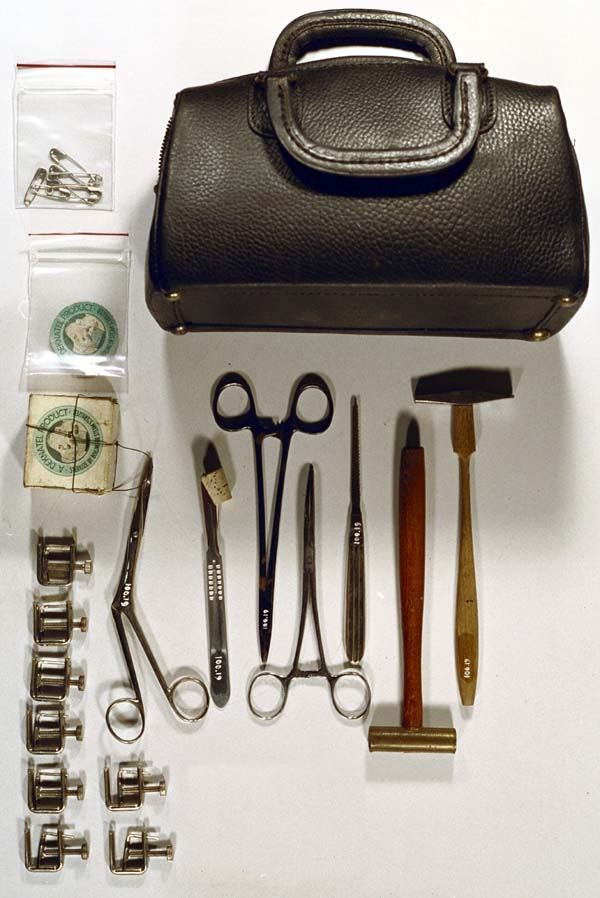
doctor-bag2It appears to be a lifelong curse for me to have to deal with people who never seem to take the fact that I am a bona fide medical doctor seriously. I can’t tell you how many times I have heard friends exclaim, “Oh wow, you’re like a DOCTOR doctor? I had no idea!”, as if my medical training and career are somehow not supposed to be taken seriously by those near and dear to me. I want to yell, “YES, I am a doctor! Why didn’t you believe me the first time I told you? Why do I have to somehow prove it to you?” What irks me is that I don’t see these people doubting the abilities of their friends who work in any other industry, be it certified public accounting, law enforcement, or any other respected profession. I honestly resent the insinuation that my credentials somehow don’t count because I don’t wear a white coat all the time (by the way, I can’t STAND wearing those polyester nightmares) or flaunt my professional title like a badge.

For those of you in the group which questions what my credentials are, I will be very clear. I completed four years of medical school which culminated in my medical diploma. After that, I completed my internship year (which was also my first year of family practice residency training) and became licensed as a physician. Two more years of residency training in family practice followed, then I sat for my specialty boards and became board-certified in family practice. I am not a nurse or a physician’s assistant (though those professions are highly respectable and draw some of the smartest and most compassionate people on the planet). Degreed. Licensed. Board-certified. Physician a.k.a. Medical Doctor. Yessir.

I may not be conservative or conventional, but I expect the same amount of respect as a physician who chooses to fit the mold and wear conservative attire and a white coat. My patients refer to me as Dr. Naito, not as Dr. Stacey or Stacey. I have worked VERY hard to become a physician, and I also recognize how hard my colleagues work as well. That is why when I am around other physicians, I err on the side of caution and refer to them as DOCTOR and not by their first names unless they specifically ask me to refer to them on a first name basis.

ALCAT Food Intolerance Testing

ALCAT-Logo-1

I URGE people to get the ALCAT Test done to determine what specific food intolerances they may have. The impact to one’s health from being exposed to such triggers can be significant! I am not talking about food allergy, which is an IgE immune system response that is rapid (seconds to hours) and is typically characterized by hives, shortness of breath, upset stomach and anaphylaxis in some cases. The most common food allergies are to nuts, shellfish, wheat and dairy. Interestingly enough, only about 4% of the United States population has a food allergy. The ALCAT Test does not detect food allergy, but it tests food INTOLERANCE which is far more widespread and insidious.

Food intolerance is characterized by digestive disorders, migraines, obesity, chronic fatigue, aching joints, skin disorders and behavioral issues. It has been stated that upwards of 70-80% of the US population has food intolerance. Unfortunately for many, those food intolerance symptoms are often identified as individual problems and treated as such, thus treating the symptoms and not the cause. The ALCAT Test is now considered the, “gold standard” laboratory method for identification of non-IgE mediated reactions to foods, chemicals, and other substances.

Some insurance plans will cover part or all of the expense of the testing…We at Urban Med recommend the Comprehensive Wellness Panels 1, 2, and 3, which include testing of 150 to 200 Foods, plus Food Additives/Colorings, Environmental Chemicals and Molds. These panels run from $675 to $850. Here’s the thing: though the testing is pricey, it is very specific. In addition, you get a detailed rotation diet for reintroduction of the foods which you have intolerance to after you have eliminated them for the recommended period (3 months for moderate intolerant foods, 6 months for severe intolerant foods). This information can be invaluable if you are suffering from unexplainable conditions or conditions which are resistant to medications or other interventions.

I finally got mine done in January for the first time despite the fact that I have counseled and tested patients using this technology for over three years. I had suspected that I had some intolerance to certain foods which the ALCAT test confirmed, but I was astonished by some of the other results.

These panels are extensive and specific, and only require a blood draw. You can explore your options for obtaining testing here: https://www.alcat.com/alcattesting.php

The different panels which are offered by ALCAT are listed here:
https://www.alcat.com/test_panels/

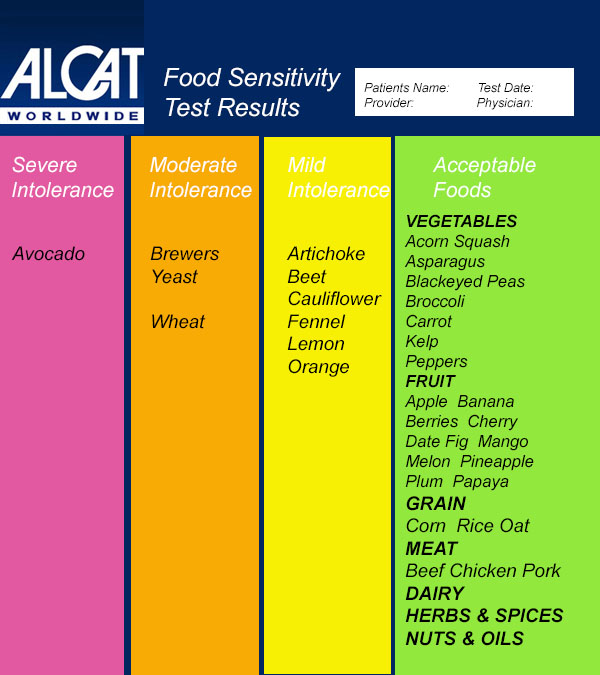
Here is a sample test result sheet:
ALCAT-Food-Allergy-Sensitivity-Test-Sample

Conformity In The Medical World

stethoscope-doctorBefore I dive into this topic, I want to make it very clear that I am proud and honored to be a physician. I endured four years of medical school and three years of residency training because I had a lifelong love of medicine and truly wanted to be a healer. That being said, I have never been nor will I ever be what is considered typical for a physician. Don’t expect me to talk about medical cases and read medical tomes when I am away from the office. Many of my colleagues are so unbalanced that they will eat, breathe and live medicine constantly, but that is not my style at all. Some of them are also social misfits and cannot talk about a non-medical topic without stumbling and bumbling. The social awkwardness of some physicians is so painful to witness that I find myself cringing and looking for a quick exit when social hour begins at a conference or medical dinner.

I keep my fitness background on low profile when in medical circles because I realize that some of my colleagues may regard what I do in the fitness world as highly irregular and downright scandalous. To be honest, I really don’t give a hoot what they think, but because I don’t enjoy being scrutinized by conservative types, I avoid discussing my fitness activities as much as possible when at medical events. I realize that aside from our medical backgrounds, my colleagues and I share almost NOTHING in common. What could I possibly say to a colleague who brings a stethoscope to a medical dinner (yes, I have seen colleagues do this!)? The lives of most docs are boring to an extreme and do not hold my interest. I am not saying that all doctors are like this, but I definitely keep my interaction those who act like medical snobs to a bare minimum. There are a few doctors who will make a point of pimping the other docs at a dinner table. Pimping refers to quizzing on medical topics and cases and is typically performed by a professor or proctor and directed at a student or resident during teaching forums or rotations. It is extremely tacky when a physician attempts to pimp his colleagues and is a clear sign of an inflated ego.
cardinals
I don’t mind standing out in the flock with plumage that is brighter. It honestly suits me. But it doesn’t mean I am less than the other doctors who are out there. I am licensed and board certified, a published medical researcher and see patients on a regular basis. Thank goodness I have a very full life, one that is so varied and exciting that I can easily escape the dry and often depressing climate of medicine and enjoy something that has twists and turns.