Yes I AM a Doctor!

doctor-bag2It appears to be a lifelong curse for me to have to deal with people who never seem to take the fact that I am a bona fide medical doctor seriously. Most recently, I was challenged by a hater who didn’t bother to check facts and find out WHY I had “board-certified physician” on my main Instagram profile. All she saw was B.A. in Exercise Science and stupidly assumed that I had no other credentials. I purposely left out all my medical certifications and titles because I had to include my fitness background, writing and modeling descriptions in a limited number of characters.

She attacked me by posting a challenging comment on MY Instagram post, so I wrote to her clarifying my background and then blocked her because her comment was rather scathing. She returned through a different IG profile and BLASTED me, hurling profanity at me via another public comment. So I threw all her filthy words back to her and blocked her again. I REFUSE to be bullied by haters, especially those who don’t bother to do some research before hurling false accusations and insults against people they don’t even know.

Even those who know me through social circles will exclaim, “Oh wow, you mean you’re a DOCTOR doctor? That’s amazing!”, as if my medical training and career are somehow not supposed to be taken seriously by those near and dear to me. I want to yell, “YES, I am a doctor! Why didn’t you believe me the first time I told you? Why do I have to somehow prove it to you?” What irks me is that I don’t see these people doubting the abilities of their friends who work in any other industry, be it certified public accounting, law enforcement, or any other respected profession. I honestly resent the insinuation that my credentials somehow don’t count because I don’t wear a white coat all the time (by the way, I can’t STAND wearing those polyester nightmares) or flaunt my professional title like a badge.

For those of you who question what my credentials are, I will be very clear. Several years after I obtained my Bachelor’s degree, I completed four years of medical school which culminated in a medical diploma. After that, I completed my internship year (which was also my first year of family practice residency training) and became licensed as a physician. Two more years of residency training in family practice followed, then I sat for my specialty boards and became board-certified in family practice. Eight years later I had to sit for board recertification, and that process will repeat itself every eight years until I retire from medicine.

I am not a nurse or a physician’s assistant (though those professions are highly respectable, and attract some of the smartest and most compassionate people on the planet). What I AM is:

Degreed.
Licensed.
Board-certified.
Physician…ahem, a.k.a. Medical Doctor.
Yessir.

I may not be conservative or conventional, but I expect the same amount of respect as a physician who chooses to fit the mold and wear conservative attire and a white coat. My patients refer to me as Dr. Naito, not as Dr. Stacey or Stacey. I have worked VERY hard to become a physician, and I also recognize how hard my colleagues work as well. That is why when I am around other physicians, I err on the side of caution and refer to them as DOCTOR and not by their first names unless they specifically ask me to refer to them on a first name basis.

Hot Female Doctors

VVVVVinoPhoto780-2

Over the past few years, several male physicians, including Dr. Travis Stork of The Doctors and Dr. Mike (aka doctor.mike on Instagram), have enjoyed some media attention as a result of their good looks. Never mind that these docs have endured years of medical training (in Dr. Mike’s case, he’s still going through it as a resident). Their followers are more interested in celebrating how hot they are. However, I want to know where all the hot lady doctors are?

As a fully credentialed, board certified physician who also happens to be deeply involved in fitness, bodybuilding and modeling, I know that I stand out a bit in a sea of medical professionals, and to be honest, I am proud of it. Yes, I get plenty of criticism for modeling in bikinis, but I don’t see why I should feel a drop of shame for doing so. Women all over the world wear bikinis, and go sans suits in some locales. It’s not a crime or a scandal to wear a bikini, or to show my legs or midsection. I have modeled my entire life, and I have no plans to stop at all, especially if I have a physique which is bikini-worthy. Because of this, I have become known as a “hot doctor”.

You would think that societal influences have relaxed enough to allow a female physician to flaunt her femininity without getting dinged for it, but I continue to see resistance all over social media. In fact, it recently came to my attention that there aren’t too many female docs who are confident enough to push the envelope and post images which may be considered more alluring. It is still considered “proper” and customary for a female doctor to remain covered up in social media posts. I’m not talking about jeans and a t-shirt. I’m talking about professional business attire and a white coat, or scrubs. So does that mean that women who are physicians aren’t allowed to reveal who they are outside of the clinical setting? That’s ridiculous.

My life is so varied, full and exciting that I can easily escape the dry and often depressing climate of medicine and enjoy something that has twists and turns. None of my other pursuits diminish what I bring to the table as a healer. If anything, they add a humanness and relatability which I think my patients appreciate. I have said before and will say again that I have never been, nor will I ever be, a “typical” physician (whatever that means). I don’t talk about medical cases and read medical tomes when I am away from the office. Many of my colleagues are so unbalanced that they will eat, breathe and live medicine constantly, but that is not my style at all. Some of them are also social misfits and cannot talk about a non-medical topic without stumbling and bumbling. The social awkwardness of some physicians is so painful to witness that I find myself cringing and looking for a quick exit when social hour begins at a conference or medical dinner.

In response to some criticism I received about posting professional swimsuit images on my main Instagram account, I established a medical Instagram profile to appease the haters somewhat, as well as legitimize my medical practice. However, I still post what I WANT to post on my main account, and if my posting habits continue to solidify the “hot doctor” label I have been given, then SO BE IT!

The Language Of Medicine

stethoscope

I often forget that my brain was heavily bombarded with tens of thousands of medical terms, because I have no use for about 95% of those words in my daily life. But there is a vast ocean of multisyllabic words swirling around in the depths of my memory which would make any logophile giddy with delight. Back when I was in grade school, I had already cultivated a strange fascination for long coils of letters, a fascination which became an advantage as I was able to spell difficult words with ease, and could edit my friends’ term papers fluidly.

Once I reached my college years, I immersed myself in the world of complex vocabulary by concentrating on the sciences. I thought the terminology used in chemistry, comparative anatomy, physiology, and microbiology was absolutely beautiful, and enjoyed learning it all. Even now, when I alight upon a scientific passage or book (a recent favorite was The Disappearing Spoon by Sam Kean), I almost get giddy with anticipation of what I am about to read. Though I appreciate the world of medical nomenclature and can pronounce the tongue-twisting jumbles of letters, I no longer have the same passion for them I once had.

I know that one of the reasons why I no longer adore words like cholelithiasis (gallstones) is because of my deep immersion in medical language for so long. I became tired of having to memorize massive amounts of information, and I realize there are esoteric medical terms taking up valuable real estate in my brain, terms which I will likely never use because they delve into subspecialties like hematologic oncology or cardiothoracic surgery, neither of which I discuss at length. I still remember most of the mnemonics which are a necessary part of the memorization process and am thankful for their existence. But there are only a few which stuck, the ones which have utility in my current practice of medicine, such as OOOTTAFAGVAH, SEXLAB, and “Some Lovers Try Positions That They Can’t Handle” (I will leave these undefined for those of you who like puzzles).

In some ways I guess I could say that I am bilingual, since medical speak is a completely different entity from regular, everyday speech. When my medical hat is on, I shift in to medical language effortlessly, and occasionally find it challenging to replace descriptive medical vocabulary with layperson terms. Usually the blank stare from a patient or friend is enough to jar me from my speech patterns and find more general words to describe a physiological process, a disease, or a treatment course. I suppose the science nerd in me will remain very much intact as a result of the vocabulary floating around in my noggin!

Let The Doctor Rest

doctor-on-call_10766651_250x250

One of the biggest grievances I have as a physician is the fact that people assume that I am on call all the time for every random medical question. People will ask me questions at the gym, the grocery store, and via email. Many people have even contacted me on Facebook with detailed medical questions which they expect me to answer, and some will even cop an attitude when I very nicely tell them that I cannot address their question via Facebook message. No other profession deals with the same amount of queries. Would you ask your tax person a detailed question via Facebook?

I have even gotten texts in the middle of the night (thank goodness I turn my ringer off while I sleep) with medical questions. Sometimes the questions don’t even pertain to the person asking, but to a friend or relative. That is when I get annoyed, because it isn’t my responsibility to dole out free medical advice to everyone.

I realize that by putting my foot down and setting boundaries, I will cause some individuals to seek diagnoses on their own, which is also quite frustrating. They will go online and attempt to find a diagnosis, despite the fact that they have no medical expertise whatsoever. These are the people who infuriate doctors, because they will march into doctors’ offices and behave as if they have all the answers. This type of attitude is not only frustrating to medical professionals, it can be downright dangerous when the wrong diagnosis is made.

Please understand that I will not diagnose your niece’s boyfriend’s strange skin condition, even if you send me five images of the condition, taken at different angles and at different stages of the flareup. Such requests take unfair advantage of all of my schooling and post-doctoral training, which I have every right to charge for. As a matter of fact, it would be irresponsible of me to respond to such requests.

If the medical malady is of an urgent or emergent nature, then I suggest that you avail yourself of the appropriate service. Urgent care centers and emergency rooms exist for a reason. I am not a stand-alone urgent care center, nor am I a doctor on call 24/7. Please respect my time off.

For those of you who are physicians or surgeons, I welcome responses to this post.

Antibiotic Resistance

antibiotic resistance

I cringe every single time I hear people say that they stopped taking an antibiotic after a day or two because they felt better. Those of you who are not trained in medicine, who flippantly decide that you won’t continue to take an antibiotic because you “feel much better”, should be aware that by engaging in this habit, you are making the issue of antibiotic resistance even worse.

Bacteria are quite crafty, because they constantly find ways to neutralize or block the effects of antibiotics. Most of the time, they acquire genetic mutations from the bacteria which have become resistant. So even if some of the more susceptible bacteria die, even one resistant bacterium can multiply rapidly and thus replace all the bacteria which were killed. Those new bacteria also have the same resistance which the original stubborn bacterium has. This is how things can get pretty ugly pretty quickly in the face of bacterial resistance.
it is a virus
Antibiotic resistance can occur even when patients follow instructions and take the full course of antibiotic therapy, but the chances are far greater when patients miss doses or stop taking the medication because a smaller proportion of the bacteria are killed or inhibited. Another situation in which antibiotic resistance can run rampant is when antibiotics are taken for viral infections such as the common cold. Specific antibiotics are used for specific types and strains of bacteria, and are not one-size-fits-all medications. Yet people continue to foolishly turn to an antibiotic (usually one which was prescribed for a bacterial infection, and which was abandoned before the full course was taken) when they have symptoms which they believe to be from a bacterial source. I have even heard friends freely admit that they took their child’s or spouse’s leftover antibiotic in hopes that it would make them feel better.

Please don’t be one of those people who contributes to antibiotic resistance by being irresponsible about antibiotic use!

What Killed Knut The Polar Bear

Knut sit
Please check out my original post at:

http://xactmind.com/xc/articles/what-killed-knut-the-polar-bear/

By: Dr. Stacey Naito – Physician and IFBB Pro

Zoo veterinarians were astonished and puzzled when Knut, the polar bear at the Berlin Zoo who rose to celebrity status, died suddenly in 2011 after suffering from a seizure and collapsing into the pool in his enclosure. Knut’s death at the young age of four was a complete surprise, since polar bears can live up to 20 years in the wild and even longer in captivity, so researchers were determined to find out the cause of his bizarre demise.

Mystery Solved

Researchers have finally discovered what killed Knut. The reason for his death was an autoimmune disorder called anti-NMDA receptor encephalitis, a type of brain inflammation in which the body attacks its own brain cells and causes them to malfunction. Anti-NMDA receptor encephalitis strikes one in 200,000 people and is the main cause of non-infectious encephalitis. Initial symptoms are nausea, fever, headaches and hallucinations, later progressing to motor abnormalities, seizures and death if untreated. Until Knut’s cause of death was discovered, scientists believed that this form of encephalitis only occurred in humans.

Knut’s Legacy

Anti-NMDA receptor encephalitis is treated in humans with high-dose steroids and plasma exchange. Now that scientists have determined that the disease affects other creatures in the animal kingdom, zoo veterinarians are optimistic that zoo animals who exhibit signs of encephalitis without a clear cause can be treated with the same medications. The knowledge of what killed Knut has also made scientists aware that anti-NMDA receptor encephalitis may be undertreated, which can aid in the development of earlier intervention and more effective treatments for this disease.
Knut hug

Life Is Never Boring

10353289_10202786714921210_2569317334354210816_o

Any time I hear someone complain about how predictable, steady and boring life is, I chuckle, because I have never been able to make that statement about my own life. This doesn’t mean that my life is unstable, but that I have always had so much going on that there hasn’t been time for boredom to set in. I truly am CONSTANTLY doing something, and I have a habit of packing a lot into each day. I understand that some people are stuck in boring jobs, so I am thankful that I love being a physician, and love the environments in which I work. I am fortunate to be involved in pursuits which I am passionate about, and which give me an incredible sense of fulfillment. Whether I am doctoring, writing articles, modeling, doing booth work, creating nutrition and workout regimens, or working on business strategies or branding, so much is going on inside my head that I couldn’t possibly get bored.

I will admit that aspects of my regular daily routine could be seen by others as a bit dull, since I head to the gym around the same time, and I usually spend weeknights writing. However, I typically cram so much stuff in between those activities that I spend the entire day rushing around, trying to get it ALL done. The overachiever in me can’t seem to let go of the notion that the best days are the ones in which all the important items on the to do list are checked off. Even on the weekends, I spend the majority of my time trying to catch up on articles and plans which I wasn’t able to get to during the week.

Another feature of my life is that I wear so many hats that I have to constantly shift gears. Though it puts a lot of pressure on me, I prefer to have a lot of variety in my day, talking about medicine, fitness, skincare, nutrition, and business. My nerves can get pretty frazzled from the endless list of things to do, but I know I wouldn’t be able to deal with sitting around all day with nothing to do. I think partially because I have chosen a number of very interesting fields to pursue, and partially because I seem to attract a lot of movement and energy, circumstances also seem to keep me on my toes, and also keep boredom at bay. About 25 years ago, I remember someone telling me that I moved at a high “burn rate”, that my spirit had a lot of karmic energy which would attract lots of activity and movement. Despite its mystical tone, the statement struck me, and I can honestly say that it fits the cadence of my entire life.

If you find that you are bored with your life, it’s time to examine what might be holding you in a rut. Maybe you watch a lot of television. If so, turn off the television and read a good book. If it has been months or even years since you exercised, join a gym and commit to a regular workout schedule. Go out with friends. If you have pockets of time in which you are looking for things to do, try exploring your city or town by visiting other neighborhood stores, parks and restaurants. Cultivate a new hobby. Volunteer.

You can turn a boring life into a fulfilling, fun, exciting one by doing new things. Have fun!

30 Actual Sentences Found In Patients Hospital Charts

Shocked-Doctor-26695685_l

I recently saw this post on a friend’s Facebook timeline, and was compelled to write a response to it. The thing is, most of these chart notes ARE funny, but some are taken out of context. In addition, the language used in several of the notes are completely appropriate when spoken within the medical world, so I clarified those notes in a comment which I posted. Here is the original list of chart comments, followed by my clarifying remarks.

http://www.tickld.com/x/jaw/30-actual-sentences-found-in-patients-hospital-charts

1. She has no rigors or shaking chills, but her husband states she was very hot in bed last night.
2. Examination of genitalia reveals that he is circus sized.
3. Since she can’t get pregnant with her husband, I thought you might like to work her up.
4. The patient is tearful and crying constantly. She also appears to be depressed.
5. The patient has been depressed since she began seeing me in 1993.
6. Discharge status: Alive but without my permission.
7. Healthy appearing decrepit 69 year-old male, mentally alert but forgetful.
8. The patient refused autopsy.
9. The patient has no previous history of suicides.
10. Patient has left white blood cells at another hospital.
11. Patient’s medical history has been remarkably insignificant with only a 40 pound weight gain in the past three days.
12. Patient had waffles for breakfast and anorexia for lunch.
13. Between you and me, we ought to be able to get this lady pregnant.
14. On the second day the knee was better, and on the third day it disappeared.
15. She is numb from her toes down.
16. While in ER, she was examined, X-rated and sent home.
17. The skin was moist and dry.
18. Occasional, constant, infrequent headaches.
19. Patient was alert and unresponsive.
20. Rectal examination revealed a normal size thyroid.
21. She stated that she had been constipated for most of her life, until she got a divorce.
22. I saw your patient today, who is still under our car for physical therapy.
23. Both breasts are equal and reactive to light and accommodation.
24. Patient has chest pain if she lies on her left side for over a year.
25. The lab test indicated abnormal lover function.
26. The patient was to have a bowel resection. However, he took a job as a stock broker instead.
27. Skin: somewhat pale but present.
28. The pelvic exam will be done later on the floor.
29. Patient was seen in consultation by DR. Blank, who felt we should sit on the abdomen and I agree.
30. Patient has two teenage children, but no other abnormalities.

As a physician, I know that some of these chart notes actually make perfect sense to those who work in the medical field and who are on the hospital wards.

For example, “Since she can’t get pregnant with her husband, I thought you might like to work her up.” refers to a physician referring a patient to a fertility specialist who would be able to “work up” a patients to see what the issue might be with respect to difficulty getting pregnant.

Here’s another one: “The patient is tearful and crying constantly. She also appears to be depressed.” Crying “constantly” does not automatically infer that someone is depressed. Ostensibly the patient is distressed over something, but the clinical diagnosis of depression has a set of criteria which must be met on evaluation of the patient.

“The patient has been depressed since she began seeing me in 1993.” Really, just stupid. This patient had depression beginning at the very latest in 1993, and this clinician had begun seeing the patient at that time. So snicker all you want, but the clinician’s presence in the patient’s life is NOT the causative factor in her depression.

“The patient was to have a bowel resection. However, he took a job as a stock broker instead.” If I could count the number of times a patient was advised to have a surgical procedure, only to evade medical advice, I’d be a millionaire by now.

“The pelvic exam will be done later on the floor.” The “floor” refers to a hospital ward. This patient was most likely evaluated in the emergency room, so the plan was to do a full work-up, including a pelvic exam, once the patient was transferred to a regular bed in the appropriate ward or section of the hospital.

“Patient was seen in consultation by DR. Blank, who felt we should sit on the abdomen and I agree.” The phrase, “sit on the abdomen” means that the clinicians who were evaluating the patient had decided to hold off on any interventions with respect to the abdomen, most likely because they were confident that there was no imminent danger, and no need for surgical intervention.

The remaining chart notes ARE funny, and I could see why lay people find them amusing.
Hope this clears up some of the confusion regarding some of the notes which were perfectly sound within the medical world.

Uncompromised

Breaking stereotypes!

Breaking stereotypes!

I am always being challenged to pick one career that defines me, and it drives me nuts. When people find out that I am a medical doctor, they struggle with the stereotype of what they expect doctors to be like, in other words, very conservative in dress and demeanor, and without any flavor or personality. Well, I’ve got news for you. I will NEVER be a typical doctor. And please don’t doubt my credentials or schooling. I am NOT a nurse (not that there is anything wrong with this highly respected profession), I am a fully licensed and board certified physician.

A huge project came my way recently, and I was selected for it, only to have the decision-maker flip out over my fitness and modeling images and reverse the decision. I was stunned and dejected, but after reflecting on the whole incident, I began to get angry. Part of the problem was that the decision-maker was a complete hypocrite, pretending to be squeaky clean, but who openly praised one of the dirtiest human beings to ever alight on the entertainment scene. To coin an analogy, at the root of this was a case of the bride being upstaged by another lady wearing white. Mind you, I never intentionally wore white, but hey, my doctor’s coat is white.

I am every bit as much about fitness as I am about medicine, and I shouldn’t have to choose one over the other. I am damned proud of what I have accomplished in fitness, especially because I took things to the next level in my forties, not when I was a young whipper-snapper. If people are confused by the sampler plate philosophy by which I live, too bad. Yes, I am a board certified physician AND a degreed fitness professional, IFBB Pro, certified nutrition coach, writer, sponsored athlete and contest prep coach. I know it’s unusual, but why is that so hard for people to grasp? I mean, here I am, doing all of that, sending a message to the world that no one should have to be one-dimensional and boring.
1538624_10202090935769442_1829315007_n
I don’t hide from myself. I am honest. I have sass, and I speak my mind. I am proud of what I have achieved in my life, and I will NOT hide parts of myself which some overly judgmental people may have a problem with. I am NOT going to apologize for having a sense of humor, for using cuss words here and there (though I don’t use them while seeing patients). I am not going to paint a false picture of who I am. If you don’t like what I am doing, no worries. Move on.

If you find that you are compromising your own vision, dreams, or goals, perhaps you need to re-examine why you are allowing that to occur. If you subscribe to the no limits philosophy, then you would never even consider pulling the reins back. I will always encourage driven people to go for whatever they want, and if it doesn’t fit in with the conventions of one of their chosen careers or hobbies, even better. Break stereotypes and show people what you are made of! Don’t hide all the facets which make you who you are!

The Joy of Old Age. (No Kidding.)

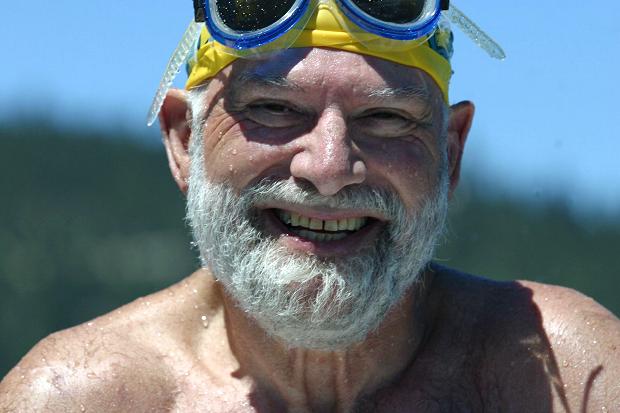
Oliver Sacks swimmer
I am sharing this essay which was written by the late Dr. Oliver Sacks for the New York Times. It is a delightful essay which honors old age.

Original post can be found at:
http://www.nytimes.com/2013/07/07/opinion/sunday/the-joy-of-old-age-no-kidding.html

LAST night I dreamed about mercury — huge, shining globules of quicksilver rising and falling. Mercury is element number 80, and my dream is a reminder that on Tuesday, I will be 80 myself.

Elements and birthdays have been intertwined for me since boyhood, when I learned about atomic numbers. At 11, I could say “I am sodium” (Element 11), and now at 79, I am gold. A few years ago, when I gave a friend a bottle of mercury for his 80th birthday — a special bottle that could neither leak nor break — he gave me a peculiar look, but later sent me a charming letter in which he joked, “I take a little every morning for my health.”

Eighty! I can hardly believe it. I often feel that life is about to begin, only to realize it is almost over. My mother was the 16th of 18 children; I was the youngest of her four sons, and almost the youngest of the vast cousinhood on her side of the family. I was always the youngest boy in my class at high school. I have retained this feeling of being the youngest, even though now I am almost the oldest person I know.

I thought I would die at 41, when I had a bad fall and broke a leg while mountaineering alone. I splinted the leg as best I could and started to lever myself down the mountain, clumsily, with my arms. In the long hours that followed, I was assailed by memories, both good and bad. Most were in a mode of gratitude — gratitude for what I had been given by others, gratitude, too, that I had been able to give something back. “Awakenings” had been published the previous year.

At nearly 80, with a scattering of medical and surgical problems, none disabling, I feel glad to be alive — “I’m glad I’m not dead!” sometimes bursts out of me when the weather is perfect. (This is in contrast to a story I heard from a friend who, walking with Samuel Beckett in Paris on a perfect spring morning, said to him, “Doesn’t a day like this make you glad to be alive?” to which Beckett answered, “I wouldn’t go as far as that.”) I am grateful that I have experienced many things — some wonderful, some horrible — and that I have been able to write a dozen books, to receive innumerable letters from friends, colleagues and readers, and to enjoy what Nathaniel Hawthorne called “an intercourse with the world.”

I am sorry I have wasted (and still waste) so much time; I am sorry to be as agonizingly shy at 80 as I was at 20; I am sorry that I speak no languages but my mother tongue and that I have not traveled or experienced other cultures as widely as I should have done.

I feel I should be trying to complete my life, whatever “completing a life” means. Some of my patients in their 90s or 100s say nunc dimittis — “I have had a full life, and now I am ready to go.” For some of them, this means going to heaven — it is always heaven rather than hell, though Samuel Johnson and James Boswell both quaked at the thought of going to hell and got furious with David Hume, who entertained no such beliefs. I have no belief in (or desire for) any post-mortem existence, other than in the memories of friends and the hope that some of my books may still “speak” to people after my death.

W. H. Auden often told me he thought he would live to 80 and then “bugger off” (he lived only to 67). Though it is 40 years since his death, I often dream of him, and of my parents and of former patients — all long gone but loved and important in my life.

At 80, the specter of dementia or stroke looms. A third of one’s contemporaries are dead, and many more, with profound mental or physical damage, are trapped in a tragic and minimal existence. At 80 the marks of decay are all too visible. One’s reactions are a little slower, names more frequently elude one, and one’s energies must be husbanded, but even so, one may often feel full of energy and life and not at all “old.” Perhaps, with luck, I will make it, more or less intact, for another few years and be granted the liberty to continue to love and work, the two most important things, Freud insisted, in life.

When my time comes, I hope I can die in harness, as Francis Crick did. When he was told that his colon cancer had returned, at first he said nothing; he simply looked into the distance for a minute and then resumed his previous train of thought. When pressed about his diagnosis a few weeks later, he said, “Whatever has a beginning must have an ending.” When he died, at 88, he was still fully engaged in his most creative work.

My father, who lived to 94, often said that the 80s had been one of the most enjoyable decades of his life. He felt, as I begin to feel, not a shrinking but an enlargement of mental life and perspective. One has had a long experience of life, not only one’s own life, but others’, too. One has seen triumphs and tragedies, booms and busts, revolutions and wars, great achievements and deep ambiguities, too. One has seen grand theories rise, only to be toppled by stubborn facts. One is more conscious of transience and, perhaps, of beauty. At 80, one can take a long view and have a vivid, lived sense of history not possible at an earlier age. I can imagine, feel in my bones, what a century is like, which I could not do when I was 40 or 60. I do not think of old age as an ever grimmer time that one must somehow endure and make the best of, but as a time of leisure and freedom, freed from the factitious urgencies of earlier days, free to explore whatever I wish, and to bind the thoughts and feelings of a lifetime together.

I am looking forward to being 80.