The Last Essay By Dr. Oliver Sacks

Dr. Sacks on porch

http://www.newyorker.com/magazine/2015/09/14/filter-fish

Filter Fish
At life’s end, rediscovering the joys of a childhood favorite

Gefilte fish is not an everyday dish; it is to be eaten mainly on the Jewish Sabbath in Orthodox households, when cooking is not allowed. When I was growing up, my mother would take off from her surgical duties early on Friday afternoon and devote her time, before the coming of Shabbat, to preparing gefilte fish and other Sabbath dishes.

Our gefilte fish was basically carp, to which pike, whitefish, and sometimes perch or mullet would be added. (The fishmonger delivered the fish alive, swimming in a pail of water.) The fish had to be skinned, boned, and fed into a grinder—we had a massive metal grinder attached to the kitchen table, and my mother would sometimes let me turn the handle. She would then mix the ground fish with raw eggs, matzo meal, and pepper and sugar. (Litvak gefilte fish, I was told, used more pepper, which is how she made it—my father was a Litvak, born in Lithuania.)

My mother would fashion the mixture into balls about two inches in diameter—two to three pounds of fish would allow a dozen or more substantial fish balls—and then poach these gently with a few slices of carrot. As the gefilte fish cooled, a jelly of an extraordinarily delicate sort coalesced, and, as a child, I had a passion for the fish balls and their rich jelly, along with the obligatory khreyn (Yiddish for horseradish).

I thought I would never taste anything like my mother’s gefilte fish again, but in my forties I found a housekeeper, Helen Jones, with a veritable genius for cooking. Helen improvised everything, nothing was by the book, and, learning my tastes, she decided to try her hand at gefilte fish.

When she arrived each Thursday morning, we would set out for the Bronx to do some shopping together, our first stop being a fish shop on Lydig Avenue run by two Sicilian brothers who were as like as twins. The fishmongers were happy to give us carp, whitefish, and pike, but I had no idea how Helen, African-American, a good, churchgoing Christian, would manage with making such a Jewish delicacy. But her powers of improvisation were formidable, and she made magnificent gefilte fish (she called it “filter fish”), which, I had to acknowledge, was as good as my mother’s. Helen refined her filter fish each time she made it, and my friends and neighbors got a taste for it, too. So did Helen’s church friends; I loved to think of her fellow-Baptists gorging on gefilte fish at their church socials.

For my fiftieth birthday, in 1983, she made a gigantic bowl of it—enough for the fifty birthday guests. Among them was Bob Silvers, the editor of The New York Review of Books, who was so enamored of Helen’s gefilte fish that he wondered if she could make it for his entire staff.

When Helen died, after seventeen years of working for me, I mourned her deeply—and I lost my taste for gefilte fish. Commercially made, bottled gefilte fish, sold in supermarkets, I found detestable compared to Helen’s ambrosia.

But now, in what are (barring a miracle) my last weeks of life—so queasy that I am averse to almost every food, with difficulty swallowing anything except liquids or jellylike solids—I have rediscovered the joys of gefilte fish. I cannot eat more than two or three ounces at a time, but an aliquot of gefilte fish every waking hour nourishes me with much needed protein. (Gefilte-fish jelly, like calf’s-foot jelly, was always valued as an invalid’s food.)

Deliveries now arrive daily from one shop or another: Murray’s on Broadway, Russ & Daughters, Sable’s, Zabar’s, Barney Greengrass, the 2nd Ave Deli—they all make their own gefilte fish, and I like it all (though none compares to my mother’s or Helen’s).

While I have conscious memories of gefilte fish from about the age of four, I suspect that I acquired my taste for it even earlier, for, with its abundant, nutritious jelly, it was often given to infants in Orthodox households as they moved from baby foods to solid food. Gefilte fish will usher me out of this life, as it ushered me into it, eighty-two years ago. ♦

The Joy of Old Age. (No Kidding.)

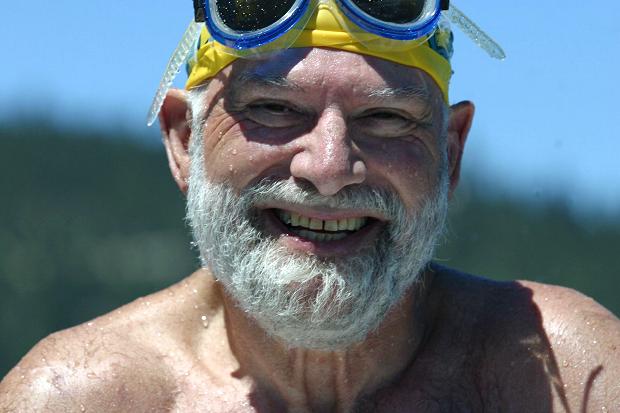
Oliver Sacks swimmer
I am sharing this essay which was written by the late Dr. Oliver Sacks for the New York Times. It is a delightful essay which honors old age.

Original post can be found at:
http://www.nytimes.com/2013/07/07/opinion/sunday/the-joy-of-old-age-no-kidding.html

LAST night I dreamed about mercury — huge, shining globules of quicksilver rising and falling. Mercury is element number 80, and my dream is a reminder that on Tuesday, I will be 80 myself.

Elements and birthdays have been intertwined for me since boyhood, when I learned about atomic numbers. At 11, I could say “I am sodium” (Element 11), and now at 79, I am gold. A few years ago, when I gave a friend a bottle of mercury for his 80th birthday — a special bottle that could neither leak nor break — he gave me a peculiar look, but later sent me a charming letter in which he joked, “I take a little every morning for my health.”

Eighty! I can hardly believe it. I often feel that life is about to begin, only to realize it is almost over. My mother was the 16th of 18 children; I was the youngest of her four sons, and almost the youngest of the vast cousinhood on her side of the family. I was always the youngest boy in my class at high school. I have retained this feeling of being the youngest, even though now I am almost the oldest person I know.

I thought I would die at 41, when I had a bad fall and broke a leg while mountaineering alone. I splinted the leg as best I could and started to lever myself down the mountain, clumsily, with my arms. In the long hours that followed, I was assailed by memories, both good and bad. Most were in a mode of gratitude — gratitude for what I had been given by others, gratitude, too, that I had been able to give something back. “Awakenings” had been published the previous year.

At nearly 80, with a scattering of medical and surgical problems, none disabling, I feel glad to be alive — “I’m glad I’m not dead!” sometimes bursts out of me when the weather is perfect. (This is in contrast to a story I heard from a friend who, walking with Samuel Beckett in Paris on a perfect spring morning, said to him, “Doesn’t a day like this make you glad to be alive?” to which Beckett answered, “I wouldn’t go as far as that.”) I am grateful that I have experienced many things — some wonderful, some horrible — and that I have been able to write a dozen books, to receive innumerable letters from friends, colleagues and readers, and to enjoy what Nathaniel Hawthorne called “an intercourse with the world.”

I am sorry I have wasted (and still waste) so much time; I am sorry to be as agonizingly shy at 80 as I was at 20; I am sorry that I speak no languages but my mother tongue and that I have not traveled or experienced other cultures as widely as I should have done.

I feel I should be trying to complete my life, whatever “completing a life” means. Some of my patients in their 90s or 100s say nunc dimittis — “I have had a full life, and now I am ready to go.” For some of them, this means going to heaven — it is always heaven rather than hell, though Samuel Johnson and James Boswell both quaked at the thought of going to hell and got furious with David Hume, who entertained no such beliefs. I have no belief in (or desire for) any post-mortem existence, other than in the memories of friends and the hope that some of my books may still “speak” to people after my death.

W. H. Auden often told me he thought he would live to 80 and then “bugger off” (he lived only to 67). Though it is 40 years since his death, I often dream of him, and of my parents and of former patients — all long gone but loved and important in my life.

At 80, the specter of dementia or stroke looms. A third of one’s contemporaries are dead, and many more, with profound mental or physical damage, are trapped in a tragic and minimal existence. At 80 the marks of decay are all too visible. One’s reactions are a little slower, names more frequently elude one, and one’s energies must be husbanded, but even so, one may often feel full of energy and life and not at all “old.” Perhaps, with luck, I will make it, more or less intact, for another few years and be granted the liberty to continue to love and work, the two most important things, Freud insisted, in life.

When my time comes, I hope I can die in harness, as Francis Crick did. When he was told that his colon cancer had returned, at first he said nothing; he simply looked into the distance for a minute and then resumed his previous train of thought. When pressed about his diagnosis a few weeks later, he said, “Whatever has a beginning must have an ending.” When he died, at 88, he was still fully engaged in his most creative work.

My father, who lived to 94, often said that the 80s had been one of the most enjoyable decades of his life. He felt, as I begin to feel, not a shrinking but an enlargement of mental life and perspective. One has had a long experience of life, not only one’s own life, but others’, too. One has seen triumphs and tragedies, booms and busts, revolutions and wars, great achievements and deep ambiguities, too. One has seen grand theories rise, only to be toppled by stubborn facts. One is more conscious of transience and, perhaps, of beauty. At 80, one can take a long view and have a vivid, lived sense of history not possible at an earlier age. I can imagine, feel in my bones, what a century is like, which I could not do when I was 40 or 60. I do not think of old age as an ever grimmer time that one must somehow endure and make the best of, but as a time of leisure and freedom, freed from the factitious urgencies of earlier days, free to explore whatever I wish, and to bind the thoughts and feelings of a lifetime together.

I am looking forward to being 80.

Running Out Of Steam

can't think woman and laptop

The frenetic pace at which most of us live these days has us lamenting the fact that it doesn’t seem like there are enough hours in the day to get everything done. It is exceedingly rare for me to get to the end of a day and think, wow, I got everything done that I wanted to get done, because somehow, the crazy pace of each day seems to derail me from checking off everything on my to-do list. Do I have too much on my list? Yes, absolutely. Do I have unreasonable expectations of myself that I will get everything done? Yes. However, I am pretty efficient and organized, and on most days, I take care of all the things which must be done on that particular day.

Here’s where I tend to fall flat on my face. I do a considerable amount of writing for my own blog and for a number of health, wellness, fitness and bodybuilding entities, so I ALWAYS have writing assignments on my plate. Occasionally, a day will open up schedule-wise, in which I don’t have to see patients or clients, and I always foolishly think that because of the so-called open schedule, I will have plenty of time to sit at my computer and write articles and posts. Invariably, some schedule destroyer will knock that idea completely out of the water, leaving me only a sliver of time in the late evening to write. The problem with late evening for me is that I have very little energy to write, and the creative thoughts fail to flow through my weary brain. I stare at my computer screen, hoping for some inspiration to hit me, but instead of being blessed with one great idea after another, I can feel the gears in my mind moving more slowly. Every once in a while, an idea might come to me, but as I begin to write on the topic, my interest wanes and I end up deleting the entry. Clearly I am NOT a night owl!

To Compete, Or Not Compete…That Is The Question

389009

The experience of being onstage at an NPC or IFBB bodybuilding contest is unique and exhilarating, and I miss it. What I don’t miss, though, is the maddening prep which precedes the event, and the constant self-scrutiny which always surfaces during prep. I remember when I couldn’t wait to step onstage again, and would always make sure that I had a contest lined up to prep for, but my priorities have shifted dramatically over the past year. One thing I grew tired of with prepping for contest after contest is that I had to be so disciplined all the time, and was unable to ever let loose and have fun for fear of messing up my prep. A few of my closest friends even remarked that I no longer knew how to have fun, and they were absolutely right. Though I understand that the sacrifice is essential for success onstage, I don’t want to live in a constant state of physical and spiritual deprivation. Life is short, and I certainly don’t want to look at my life and think, look at all that fun stuff I missed!

last Fall, I visited Hungary, Sydney, and Bali, and quickly realized during these trips that despite all my efforts to maintain clean eating and regular exercise, there was no way that I would be able to hold onto a goal of competing once I returned home. I had been struggling with significant metabolic issues, and though I ate relatively clean during my travels, I didn’t follow the seven daily meal regimen I had been accustomed to. Here’s another shocker: I had wine while in Hungary because that country is known for its wine, and I am a wine lover. I wasn’t about to deprive myself because of some orthorexic thought process which in previous years would have had me convinced that the fermented libation was evil. I also had little to no access to weight equipment, and though I made every effort to use exercise equipment whenever it was available to me, I didn’t follow the six-day workout regimen which I follow when at home. Was that a bad thing? I think not. I was able to see parts of the world which I had always wanted to see, and I had an amazing time. Thank goodness I didn’t obsess over what I was supposed to do and complain about the lack of resources in these countries.

arrival
Though I always want to win, I am not going to have a nervous breakdown over the fact that my placings as a Pro have been underwhelming. I don’t feel pressured to step onstage, and I honestly wouldn’t have a problem with retiring completely from competing if that is what I decide to do. Yet I still get that question, “When’s your next show?” One person (NOT a competitor) went so far as to say, “Hey girl, you need to step up your game!”, which I thought was extremely rude and presumptuous. I am tired of trying to balance a very busy schedule with two-a-day cardio sessions and double training. At the peak of my contest prep, I was training FIVE HOURS daily, six to seven days per week. Every part of my body hurt. I did plyometrics with a foot strain, and trained nonstop with hip bursitis, sciatica, a rotator cuff tear, tennis elbow, carpal tunnel, and a wicked skin reaction to the latex corsets which I would wear. I have been through the paces and have paid my dues. I AM good enough, I just choose to focus my efforts on showing off my brain now. So please don’t tell me that I need to keep running in the race when I already won.

In case you are wondering if working towards a personal best and finally winning my Pro Card was worth all the sacrifice, I can say without hesitation that it absolutely was worth it. Would I do it again? Absolutely. But I will no longer sacrifice balance in my life for the sake of getting to the next level. I have come to terms with the fact that I won’t ever qualify for Olympia, and to be honest, I wouldn’t want that pressure anyway. Life is good, and I have settled into a really nice groove.

Some very well-meaning people in the industry have warned me that the competition in the Pro ranks is getting even stiffer, and I have seen proof of that with my own eyes. Let me be very clear: I am NOT going to get myself all worked up and feel self-conscious because other Pros have raised the stakes. I am quite content to avoid the stage if need be. To be honest, the vast majority of IFBB Pros don’t even compete, so I feel no remorse over my casual attitude towards competing in future events.

Life is about balance, and the way I choose to maintain balance now is by working on my careers, passions and talents fully, without being distracted by notions of returning to the stage. Yes, I love the bodybuilding stage. But I also love my life and the freedom which I reclaimed after shifting my priorities.

Fall Down Seven Times, Get Up Eight

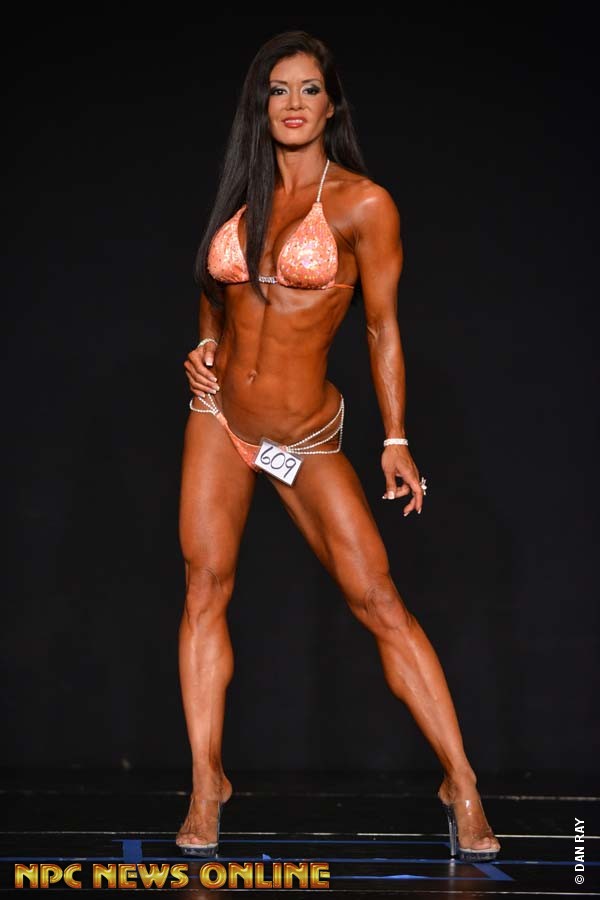
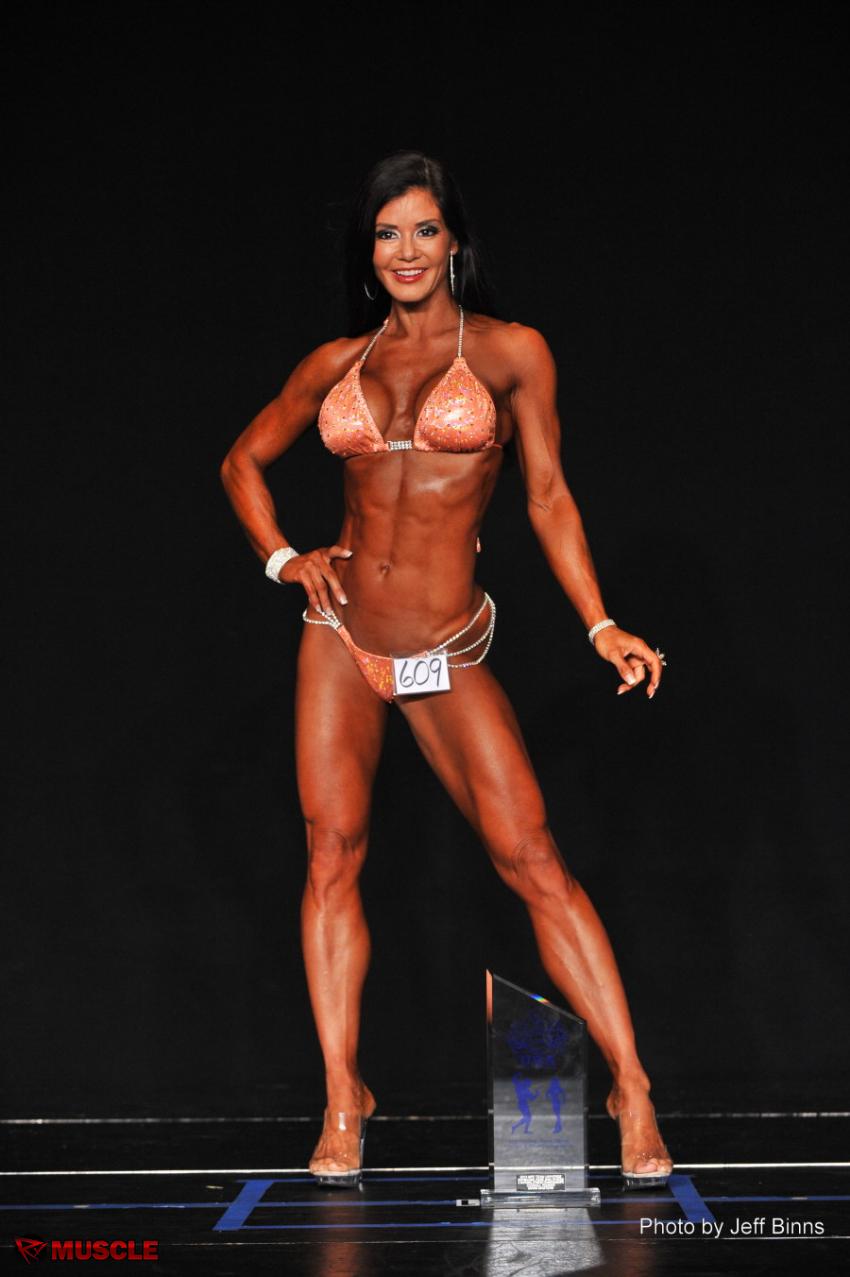
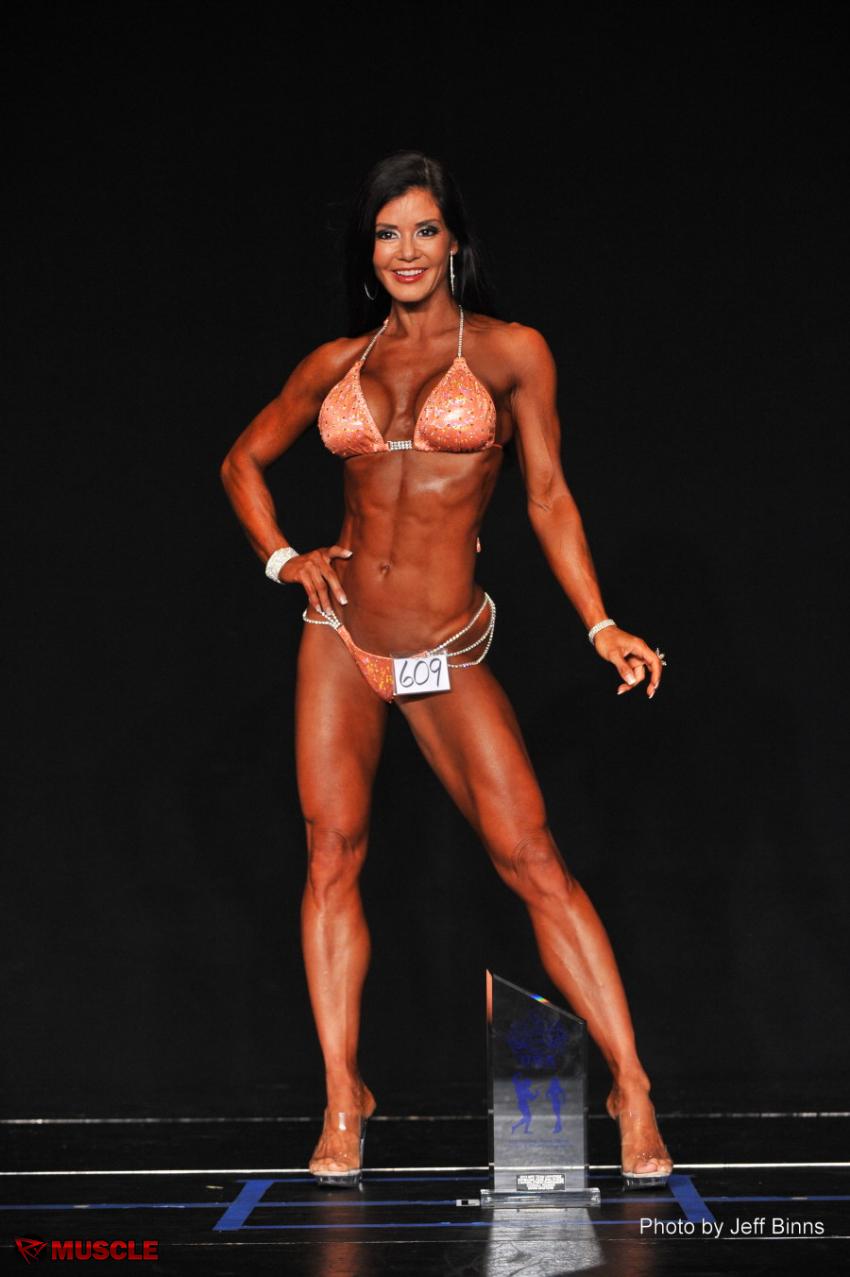
NPC Team Universe July 6, 2013.  The day I earned my PRO CARD!

NPC Team Universe July 6, 2013. The day I earned my PRO CARD!

The first time I heard the phrase that serves as this article’s title, I remember how it resonated with me. I come from a single-parent household and remember seeing how my mother struggled on a very limited income. Somehow she always managed to get by, though I remember every meal being stretched with large servings of Japanese white rice. In fact I remember being quite puzzled the first time I visited a classmate’s house and was served soup without a hunk of rice floating in it. I thought everyone was poor and had to stretch every meal. There were times my mom would splurge and bring home lamb shoulder chops, which I would eat very slowly so that I could prolong the sheer joy of eating such a delectable meat. My mother believed that education was the most important thing and was determined to keep me in private school despite the fact that it meant forgoing many creature comforts. We lived in an old apartment with many donated furnishings. I couldn’t have a car when I was sixteen so my mom and I shared her car. But I was truly happy, and knew that my mom gave me the most love and encouragement a parent could possibly provide.

My mother encouraged me to pursue all my interests, which ranged widely from medicine to illustration, modeling, fashion design, acting, music and foreign languages. She believed in me, made me feel like I was unstoppable, and also made sure my goals were challenging enough for me. Instead of choosing something from the list to pursue, I decided I wanted to tackle them all. I remember my mother struggling financially during my senior year of high school. She didn’t have the money for tuition, so she borrowed it from her siblings so that she could keep me in the same school I had been at for eight years. Her determination to keep me in the same school enabled me to graduate from high school at the age of sixteen at the same place I had established relationships and developed a comfort level. During that time I was able to design an entire clothing line for a company, study several foreign languages, learn to play the guitar, dabble in graphic design, act in several pilots and commercials, and do all kinds of modeling. I had no idea at the time that the pressure to achieve great things set the stage for an eating disorder.

The precipitating event which pitched me into full-blown anorexia nervosa was a rape at the age of nineteen. The event was violent, traumatic, and for whatever reason, I would see my attacker’s face every time I looked in the mirror. I never understood why this kept happening but was so tortured by this that I set about making him disappear. For me this meant starving myself and taking laxatives, which I did for close to a year. I felt fat (which at 5’5” and 103 pounds, was clearly not the case), unattractive, ashamed, and frightened. I was relentless about making this man’s face disappear, which fueled my starvation attempts. At my lightest I got down to 85 pounds and felt like I was in hell. Right around that point I recall an acquaintance telling me that at the age of 20 I looked like a 40 year-old. He was a celebrity fitness trainer and seemed to know a great deal about human performance, so his words jolted me. But I still didn’t see the point he was trying to make.

A couple of weeks later a good friend visited me and took a number of candid photos and sent copies to me. When I looked at the photos, I finally saw the children’s size 12 jeans hanging on my skeletal body, and for the first time I truly saw how emaciated and unhealthy I looked. It was like a slap in the face. Why would I do this to myself? I had hit rock bottom and it was time to turn my life around. As soon as I realized what I was doing to myself, I threw away the laxatives, started eating regularly, began weight training and declared a major in exercise science. During my studies I also decided to enter a Japanese-American beauty pageant and won the title for my region, fulfilling a dream I had since childhood. I had finally healed from the rape and from my eating disorder.

Shortly after that, I obtained my bachelor’s degree and began training clients as a fitness trainer.
For many years I worked as a trainer while also working as an optometric technician and a personal assistant to a stand-up comic. I wanted to keep my life as varied as possible because I had such diverse interests and talents. After a few years I realized that my childhood interest in medicine as a career was still very much alive, so at the age of 30 I applied to medical school. To my surprise, I was accepted, whereupon I began my medical training. During those years I became very discouraged and resentful of the fact that the balance in my life was disrupted so violently. However, I got through it all, somehow cramming in the plethora of medical terms that medical students must learn during their training. There were three things which helped me to endure the rigors of training: 1) my mother’s belief that I could accomplish anything I set my mind to, 2) the joy of helping patients, and 3) my exercise regimen.

I got such a rush from knowing I had made a patient feel more comfortable and understood why the Hippocratic oath is, “First, do no harm”. I felt great empathy for patients and learned I had a bedside manner which set patients’ minds at ease. Throughout all my training, including internship when I would work over 100 hours in a week, I was so determined to keep up with my exercise that I would drag myself to the gym 3 or 4 days a week and train, knowing I would feel better afterwards. Regular exercise kept me balanced, allowed me to have time for myself and also gave me extra energy to power through the most grueling days in the wards. Perhaps I wasn’t in competition shape, but I was in very decent shape at that time, and that was fine with me. I was certainly in much better shape than my colleagues because I never made excuses to keep me from going to the gym.

Being fit and engaging in regular exercise was always essential for me. It has always been there, like a good friend, keeping me aware of the magical instrument of my body, helping me to remain focused throughout all the challenges in my life. I had no idea that my relationship with fitness would be taken to the next level when I attended the NPC California State Bodybuilding, Figure and Bikini Championships in May of 2009. While sitting there watching the bikini competitors strut their stuff, I was approached by two people who encouraged me to compete in the bikini division. I pondered this idea for a couple of days. I was fast approaching my 43rd birthday. I had been laid off from my job as an outpatient physician and thought this would be the perfect “bucket list” item. Why not? I could say that I got onstage in front of hundreds of people in essentially my underwear.

I decided to register for the NPC Los Angeles on July 18th, 2009. I was completely clueless about how to prep my body for the competition and remember frantically looking up information online for tanning, suits and accessories. I remember being backstage before prejudging and thinking I was a complete fool for buying an off-the-rack suit, for sponging on my tan, and for having no clue about how to do my hair and makeup for stage. I still thought I would compete that day and just check off that “onstage in underwear in my 40’s” box, writing it off as an interesting experience in my life.

What happened instead was that I was bitten by the bug. My desire to reach a personal best, coupled with the inspiring energy of being surrounded by like-minded individuals, fueled me and helped me get over my stage fright. Any shred of shyness I may have had prior to that day melted away. I was also amazed by how many competitors had overcome eating disorders, molestation, obesity, disability, cancer and other major medical issues. I decided to do a second show and was shocked when I placed first in master’s bikini. It gave me the drive and determination to keep hanging another carrot in front of me and transform my body. I was given a platform by which I could reach a personal best which I had never reached before. And best of all, I could look at my 40-something body and say, “now this body could rival that of a 20-something!”

I ended up competing in 7 regional events, 14 Pro-qualifiers, and once I attained IFBB Professional Status in July of 2013, I competed in four Pro events. I became more polished in my presentation and learned something from every contest, whether it had to do with posing, tanning, suits, makeup, etc.

What I realize now as an IFBB Bikini Pro and fitness professional is that the transformation a competitor experiences is far more than physical. It is mental, emotional and spiritual. My spiritual journey has been encouraging, empowering and insightful. Through whatever challenge life throws my way, I now know I have the strength to overcome them all. What’s more, the fire in the belly that drives me to keep getting onstage to be scrutinized heavily by judges gives me concrete goals which lend great focus to what I want to achieve in life. I want to keep getting better and better, and am aware of that goal every time I hit the gym. I want to achieve the pinnacle of fitness and success. We are all infused with great strength because we can create goals and REACH them.

Get Out Of Your Own Way

success-churchill-550x240Have you ever considered the possibility that you are standing in your own way when it comes to achieving success in your life? Yes, you heard me right. You might not have even known that there was such a thing as a fear of success, and if not, you probably aren’t aware of how a fear of success can sabotage your efforts at getting ahead and put you on a short course to failure.

Though we may crave success deeply and feel driven to set specific goals to get us there, we may cripple ourselves by harboring a feeling that we don’t deserve to have success, or we may question our own abilities. Self-defeating thoughts like, “What if I fail?”, or “Maybe I don’t deserve to be successful” may fester in one’s mind. However, some people entertain an even more frightening thought which is “What if I succeed?” and may be so paralyzed by that fear that they talk themselves out of pursuing a goal which gives them purpose, joy and passion. Suddenly, the lure of success sours in the face of one’s own fears.

The fear of success is more powerful than the fear of failure because the former can trap individuals into established patterns which are comfortable and which prevent the movement and growth necessary to achieve success. The road to success, after all, is unpredictable and forces people out of their comfort zones. It demands tireless efforts which at times may be stalled by roadblocks, and those obstacles may stack up or appear at critical times when the temptation to give up is immense. As daunting as such challenges are in the pursuit of success, they must be overcome if the goal is to be attained.

A fear of success can manifest as procrastination, whereupon projects may be put on hold and excuses made about why there is no time to complete them. Feelings of guilt may take hold if you happen to attain a certain level of success which eludes your peers, friends or family. You may worry that success will in some ways change you and your environment. Though you may lament your current situation and crave big changes that would serve as markers of success, you might find the idea of all those changes incredibly distressing.

The road to success is also often a lonely one in which you may feel lost, perhaps because others may not understand your journey, or because you may be traveling in uncharted waters with no one to lead the way or guide you. There may be haters who try to derail you from your master plan, which is usually a good sign since it is an indication that you are doing something which is perceived as a threat to your competition. You might also think that once you become successful, somehow that success won’t be sustainable and that the proverbial coach will turn back into a pumpkin.

Success will usually put a spotlight on you and you will get attention. Some of you may believe that the attention is great, but when all eyes are on you, scrutinizing every move you make, you may find that it is incredibly distressing. Success comes with responsibilities which may frighten and intimidate you, and you may feel incredible pressure to prove your worth as a result of that boost in visibility. Contrast that with being ensconced in a comfortable pattern which provides a predictable environment, and you can see why so many people chicken out and drop their big goals. Once you achieve your goal and become a success, the goal you were chasing after becomes irrelevant because the beast has been vanquished. The taste of victory may be sweet, but life may lose its meaning and purpose in the aftermath of such an accomplishment.

There are a number of things you can do to maintain your enthusiasm and focus while carving a path to success:

Keep sight of your goals and purpose – Not only is it important to write down specific goals so that you have a blueprint of how you will achieve success, it is also essential to review those goals regularly to make sure that you stay on track and remember the purpose which drives your efforts. I recommend reviewing your master goals list at least once a week.

Gain knowledge – If you sense that your knowledge base is lagging, invest in educational pursuits which will add credibility and push you towards your goals faster. For example, talk to experts in the field you are trying to excel in, read books on pertinent subjects and take courses. Remember that your heroes can eventually become your rivals if you learn from them and pattern your behavior after them.

Become inspired by the people who believe in you – Chances are that you have people around you (spouse, family members, coworkers, fans) who completely believe in you, are inspired by you, and want to see you succeed. Though you may feel pressure to succeed and a sense of obligation as a result of this, you can focus on the enthusiasm which they have for you and allow it to wash over you and motivate you.

Keep a gratitude journal – It can be so easy to complain about one’s situation and play the victim when things aren’t going as planned, but such behavior only does harm when trying to stay motivated in achieving goals. Shift the focus instead onto all the wonderful things, people and other blessings you have in your life and allow them to fortify your resolve to move forward.

How To Choose Your Next Show

Originally published on RxGirl on Saturday, 03 August 2013

http://www.rxmuscle.com/rx-girl-articles/8937-how-to-choose-your-next-show.html
JB5_1413_XCIUITKCXU
If you compete then you know that prepping for a contest keeps you focused on a singular goal. But what happens when that show is over and your placings compel you to shift your strategy? Financial considerations, geographical logistics and time needed to improve on your physique are variables which can come into play. This is true regardless of whether you are an Amateur competitor or a Pro.

Whatever you do, refrain from jeopardizing your financial security or your job security and only do those shows which you can truly afford. If you need to work on building muscle, leaning out, or improving balance or symmetry, you need to be realistic and give yourself enough time to make those changes before you hit the stage again. If you know that you have weak points with your presentation (posing, competition color, suit selection, makeup, hair), make sure that you correct these issues so that you bring a noticeably improved package to the stage.

If you are competing locally and have yet to qualify at the national level,I always advise selecting a national qualifier for your next show. If you are near the bottom of the barrel, choose an event which is at least 12 weeks out so that you have enough time to make improvements. If you are nationally qualified but have never stepped on the national stage before, you might want to compete in a local or regional event in a metropolitan area so that you get more of a feel for how a large scale show is organized. It is important to bear in mind that national level events have stiff competition, so make sure you practice your posing and get everything lined up in time for the national stage.
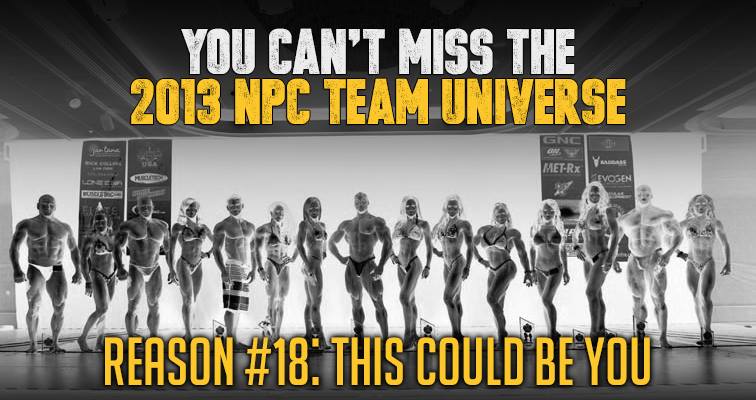
NPC Team U teaser
Master’s level competitors always face a bit of a disadvantage because of their age, so I always advise them to confine their national appearances to pro qualifiers which feature Master’s divisions. Keep in mind that a Pro Card is a Pro Card, regardless of whether you get it as an open or a master’s competitor. I also advise master’s competitors to enter as many divisions as possible to increase their chances.

For Pros, it might be a good idea to consider Pro events in different parts of the country so that you are seen by different IFBB judging panels. This also enables you to increase your exposure and fan base. If you or your sponsors can handle the expense of international contests, you may consider traveling out of the country. If you are chasing after an Olympia qualification, you could stack shows so that you increase your chances of getting into the top five and getting points.

Whatever level you compete at, remember to have fun and enjoy the journey!

Maintaining Focus In The Midst Of Chaos

Originally published on RxGirl on Thursday, 04 July 2013

http://www.rxmuscle.com/rx-girl-articles/8649-maintaining-focus-in-the-midst-of-chaos.html
When-you-focus-on-what-you-want-everything-else-falls-away
If there’s one thing I have learned during my life, it is that there will always be challenges to face and overcome. Such trials can be immense and carry the power to derail us from our daily routine. However, maintaining consistency in a daily routine, especially during the most difficult times, provides balance while also keeping an individual on track with contest prep or other fitness related goals. In some sense, such a structured routine can almost serve as a welcome haven when everything else is chaotic, provided it does not make excessive demands on one’s time or energy resources.

This year has been an extremely rough one for me, characterized by both my parents being hospitalized, the dissolution of a two year relationship with a man I was very much in love with, job loss, etc. I think most people would have buckled from the pressure, but I was so incredibly stubborn about staying on track that I pushed through the emotional and physical pain and became more creative about how to fit my ever increasing workout loads into the chaos that defined my life. If anything, the trials I went through made me all the more determined to get the job done with my contest prep. I put the horse blinders on and headed down the track at a full gallop. Ironically, though I have been working less in the past month, I am busier than ever and often go through my days in a bit of a fog. It is commonplace for me to forget whether I am at the gym for my third or fourth workout, or which office I was at yesterday. My attitude lately has been, “hold on tight!” which is indeed what I have been doing as I have ridden the crazy crests and troughs of each day.
Horse Blinders
I know that those of you who compete are Type A personalities, driven, committed, strong and stubborn. I also know that some of you will abandon your plans to compete in upcoming contests when life throws you a curve ball. I honestly think this is a mistake. Why forgo the pursuit of a goal (i.e., prepping for a contest and competing in it) when things get nuts? We are in a unique position to inspire and lead by example, so when we give up on achieving a competition or general fitness goal, we are sending a message that it is acceptable to adopt an off and on approach to the “can do” attitude which is common in the fitness world. I am not saying that we should be burdened by the responsibility to carry the hopes of others, but that we best serve ourselves and others when we adopt a tenacious determination to reach our goals. If you can remember why you are driven to compete and to reach your personal best, and make a decision to hold yourself to your regimen in the midst of adversity, your victories will be sweeter than ever.