New Pet, Suddenly Allergic?

Image 82105512 (123rf.com)

It’s a really interesting and somewhat frustrating phenomenon when people develop allergies to new pets, even if they’ve lived with pets for years without issue. This just happened to me when I introduced a new kitten into my home. All these years, I had lived peacefully with my pets with no issues, but all it took was one sweet kitten with her dander to spike my allergic response!

There are several factors that could explain sudden allergic responses when a new pet is introduced to the home.

1. Different Allergen Profiles

Each pet produces different types and amounts of allergens. For instance:

  • Cats and Dogs: These animals produce dander (tiny, often invisible flakes of skin) that can trigger allergic reactions. However, not all animals produce the same type or quantity of allergens. A person may have developed tolerance to the specific dander or protein in their existing pets, but a new pet may have a different protein structure that their immune system perceives as a threat.
  • Species Differences: Even between different breeds of dogs or cats, there can be differences in the types of allergens they release. For example, some dog breeds shed less fur or produce different amounts of dander than others. This might explain why someone living with one breed of dog doesn’t experience symptoms, but develops an allergy when adopting a new breed.

2. Immune System Changes

Over time, a person’s immune system can change. Allergies can develop at any age, and the immune system can become sensitized to new allergens at any point in life, even if the person hasn’t had problems before. This might explain why someone who has lived with pets for years can suddenly develop an allergy to a new pet.

  • Delayed Sensitization: It’s possible that the immune system, over time, becomes sensitized to certain proteins present in animal dander, and the person’s immune response triggers once it encounters a threshold. They might not have had a strong reaction to their old pet, but a new pet could have more potent allergens that push the immune system into overdrive.

3. Environmental and Lifestyle Factors

The environment plays a role in how allergens impact someone. If a person moves to a new home or changes their lifestyle, it could increase their exposure to allergens in a way that makes them more likely to develop a reaction.

  • New home, different allergens: If the new pet is introduced into a home with different ventilation, humidity, or dust levels, it could change how allergens accumulate and affect the person. For example, an increase in humidity could make allergens like mold or dust mites more problematic in conjunction with the pet’s dander.
  • Exposure levels: Someone may have had a lower overall exposure to allergens in the past, either due to fewer pets or less contact with them, and the new pet may push that exposure threshold.

4. Cross-Reactivity

There’s a phenomenon called cross-reactivity, where a person who is allergic to one animal might also react to allergens from a different animal. For example:

  • Cat and Dog Allergies: Some people allergic to cats might also react to dogs because the proteins responsible for causing allergies (like Fel d 1 in cats and Can f 1 in dogs) are similar. The immune system can mistake the proteins of a new pet for those of an older one.
  • Rodents, Birds, or Other Pets: People allergic to one type of pet might develop allergies to completely different animals (e.g., developing an allergy to birds after having had no issues with a dog). This is because certain proteins in saliva, fur, or feathers might have structural similarities, confusing the immune system.

5. Type and Age of the New Pet

Young pets (puppies, kittens) often shed more allergens, including fur and dander, than older pets. This could be due to the fact that they have more active skin cells or they may shed more frequently as they grow. So, even if someone was fine with an older pet, a younger one might have more dander circulating in the environment.

6. Sensitivity to Specific Proteins in Pet Saliva or Urine

It’s not just the skin dander that can cause problems. Proteins found in a pet’s saliva or urine can also trigger allergic reactions. For example:

  • Cats and Dogs Licking Fur: Both cats and dogs spread their saliva over their fur when they groom themselves, which means that their saliva proteins get transferred to their fur and skin. If a person has been exposed to the saliva of one pet for a long time without a reaction, the saliva of a new pet could be a different protein altogether, leading to an allergy.

7. Pet Care Products

It’s also worth noting that people might develop sensitivities to products used in caring for pets, such as shampoos, flea treatments, or cleaning supplies. These allergens could cause issues even if someone has lived with other pets without trouble, especially if the new pet is exposed to different brands or types of products.

8. Changes in Body’s Allergic Sensitization

As we age, our immune system changes. A person may have been exposed to the allergens of previous pets without a noticeable allergic response, but their immune system may have become more reactive over time. The introduction of a new pet might be the tipping point.


To sum it up: While someone might not have had issues with existing pets, the combination of new pet dander, proteins, environmental factors, and changes in the immune system can all contribute to the development of an allergy. If this happens, it’s important to consult with a healthcare professional for guidance on managing or alleviating symptoms.
Make Playtime With Your Cats A Regular Thing

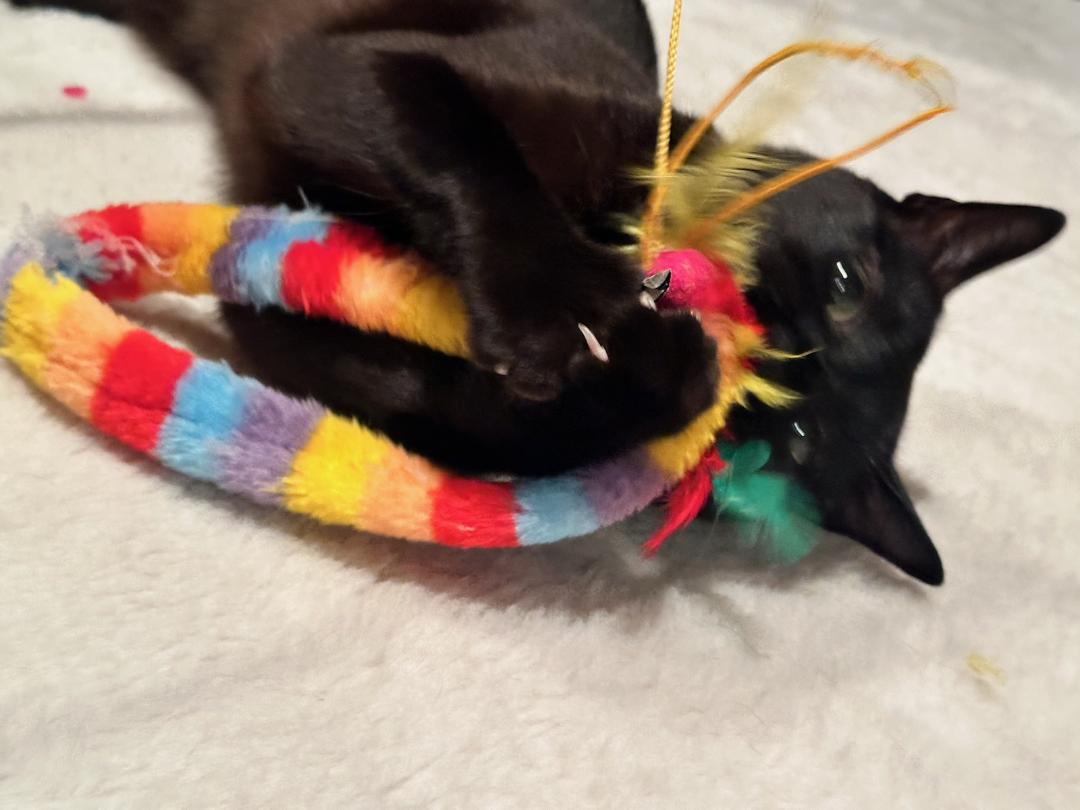
My boy Koji and one of his toys

I am willing to bet that many of you who have cats in your household don’t give much thought to the idea of engaging in playtime with your feline friends. However, doing so on a regular basis strengthens the bond between you and your cats, and also benefits everyone’s physical and mental well-being. I try to engage my cats in interactive play by using toys which are attached to poles, enabling me to direct and monitor interaction. My cats absolutely love playtime, so much so that my 3-year old, Koji, will yell at me whenever I pass by the closet in which I keep the interactive toys.

Here is a breakdown of the numerous benefits which both you and your cats will enjoy when participating in interactive play:

Benefits for Cats and Kittens

  1. Physical Exercise: Cats, especially indoor ones, need regular activity to maintain a healthy weight and prevent obesity-related issues. Play mimics natural hunting behaviors, helping them stay fit and agile.
  2. Mental Stimulation: Engaging in interactive play keeps a cat’s mind sharp, preventing boredom and destructive behaviors like scratching furniture or excessive meowing.
  3. Instinct Satisfaction: Cats are natural hunters. Toys that mimic prey—like feather wands or laser pointers—allow them to practice stalking, pouncing, and chasing in a safe environment.
  4. Stress Reduction: Play provides an outlet for pent-up energy and can reduce stress and anxiety, making cats more relaxed and well-adjusted.
  5. Socialization for Kittens: Kittens learn important skills through play, including coordination, bite inhibition, and appropriate interaction with humans and other animals.

Benefits for Cat Owners

  1. Stronger Bond: Playing with your cat helps build trust and deepen your relationship, especially with shy or newly adopted cats.
  2. Entertainment and Joy: Watching a cat chase a toy or do a playful leap can be highly entertaining and bring joy to owners.
  3. Encourages Routine and Responsibility: Regular playtime helps owners establish a routine, making it easier to provide structure and care for their pet.
  4. Stress Relief: Interacting with cats has been shown to reduce stress and anxiety in humans, providing emotional benefits similar to meditation or relaxation exercises.
  5. Better Behavior: A well-exercised cat is less likely to engage in unwanted behaviors like nighttime zoomies, furniture scratching, or aggression due to boredom.

Making Playtime Effective

To get the most out of interactive play, use a variety of toys like wand teasers, balls, and puzzle feeders. Rotate toys frequently to keep things interesting. Aim for at least two short play sessions a day, adjusting based on your cat’s energy level and age.

Incorporating interactive play into your daily routine creates a happier, healthier life for both you and your cat, ensuring a strong and loving companionship.

How Long Do Cats Live?

Have you ever wondered how old your cat was? There is an updated formula which replaces the outdated 7 human years per cat year which provides a more accurate assessment of a cat’s development. The first year of a cat’s life is equivalent to 14 human years, the second year is equivalent to 10 human years, and every year thereafter is equivalent to 4 human years. For example, a 18-year-old cat would be equivalent to an 80-year-old human.

In recent years, feline life-stages have been redefined as well to more accurately reflect their growth and development over the years. Kittenhood is defined as the period from birth to 6 months of age, a junior is between 7 months to 2 years of age, a young adult is between 3 to 6 years of age, a mature cat is between 7 to 10 years old, senior cats are between 11 to 14 years of age, and super senior or geriatric cats are 15 years old or older.

Mixed breed cats tend to live longer than purebred cats, with an average lifespan of 14 years compared to 12.5 years for purebred cats. The most common cause of death in cats over 5 years old is kidney disease, with over 13% of cats succumbing to kidney failure. Out of the 13 cats I have had over the span of 37 years, three of them passed away as a result of kidney disease, so I am acutely aware of this statistic.

However, I met two cats in the past who beat the averages, with one cat at 25 years of age, and another who was a ripe old 29 years of age. Both cats were extremely frail and only had the energy to sleep, eat, drink, and take care of excretory functions, but it was impressive to see that they were still alive at such advanced ages.

Supposedly, the oldest cat was Creme Puff, who lived 38 years, from August 3, 1967 until August 6, 2005. There are several cats who are still alive at this point, the oldest of whom is Great Grandma Wad who is 36 years old. The oldest cat who is still alive who was verified by Guiness Book of World Records is Flossie, who was born on December 29, 1995.

Rathergood.com

punk_kittens_thumb

About nine years ago, I encountered the amusing and rather irreverent music videos which characterized Rathergood.com. As soon as I saw punk rock kittens wailing on guitar and drums to The White Stripes “Fell In Love With A Girl”, I was a fan.

http://rathergood.com/punk_kittens/

After watching this video several times, I came across another amusing group of musical kittens playing music on a beach. The song (“We Like The Music”, by John B) became the inspiration for the very first Rathergood.com musical kittens video, and many more were subsequently created.

http://rathergood.com/kittens/

http://rathergood.com/independent_woman/

If you are interested in seeing more ridiculous music videos featuring kittens, hamsters and dogs mixed in with characteristic British wit, then check out the classic archives:

http://rathergood.com/2015/11/03/classic-rathergood-stuff

In addition to amusing music videos, rathergood.com also offers some clever keyboard programs. If you want a good laugh when you’re at work (make sure the boss has no problems with a rash of obscenities), then you can check out Buffy’s Swearing Keyboard or the Swear-O-Tron. They offer fantastic ways to vent frustrations! (WARNING: Extreme obscenities)

http://rathergood.com/buffy/

http://rathergood.com/swearotron/