Resistance Training: The Ultimate Anti-Aging Tool

Regular resistance training is one of the most powerful tools for maintaining youthfulness and slowing down the aging process. It benefits the body and mind in multiple ways, including preserving muscle mass and bone density, improving digestion, boosting cardiovascular fitness, and benefitting cognition and mental attitude. Let’s explore these in detail:

1. Muscle Mass Preservation and Growth

As we age, we naturally lose muscle mass—a process called sarcopenia—which can lead to frailty, loss of mobility, and metabolic decline. Resistance training:

  • Stimulates muscle protein synthesis, helping to maintain and build lean muscle.
  • Increases metabolic rate, making it easier to maintain a healthy weight.
  • Enhances insulin sensitivity, reducing the risk of type 2 diabetes.
  • Supports functional strength, improving balance and reducing the risk of falls and injuries.

2. Skin Integrity and Anti-Aging Effects

The skin’s health and appearance are directly affected by lifestyle choices, including exercise. Resistance training:

  • Improves circulation, ensuring better oxygen and nutrient delivery to skin cells.
  • Stimulates collagen production, which helps maintain skin elasticity and reduces wrinkles.
  • Reduces cortisol levels, lowering inflammation and minimizing stress-induced skin aging.
  • Increases human growth hormone (HGH) levels, which contributes to cell regeneration and youthful skin.

3. Digestive Health and Metabolism

Aging often slows digestion and can lead to issues like bloating, constipation, and poor nutrient absorption. Resistance training:

  • Speeds up metabolism, ensuring efficient digestion and energy utilization.
  • Stimulates gut motility, reducing the risk of constipation.
  • Helps regulate hormones like insulin and cortisol, which affect digestion and appetite control.

4. Cardiovascular Fitness and Longevity

While resistance training is not traditionally associated with cardio health, it plays a crucial role in keeping the heart young. It:

  • Lowers blood pressure and improves vascular flexibility, reducing strain on the heart.
  • Enhances circulatory function, improving blood flow and oxygen delivery to tissues.
  • Reduces inflammation, lowering the risk of heart disease.
  • Helps control cholesterol levels by reducing LDL (bad cholesterol) and increasing HDL (good cholesterol).

5. Joint Health and Mobility

Contrary to the myth that weightlifting damages joints, resistance training actually protects and strengthens them. It:

  • Increases the production of synovial fluid, which lubricates the joints.
  • Strengthens the muscles around joints, providing better support and stability.
  • Reduces inflammation associated with conditions like arthritis.
  • Improves flexibility and mobility, reducing stiffness and pain.

6. Bone Density and Strength

Osteoporosis and bone fractures become major concerns with aging. Resistance training combats this by:

  • Stimulating osteoblast activity, which helps build stronger bones.
  • Increasing bone mineral density, reducing the risk of fractures.
  • Enhancing posture and balance, minimizing fall-related injuries.
  • Supporting calcium and vitamin D absorption through hormonal regulation.

7. Hormone Regulation: Testosterone, HGH, and More

One of the most underrated benefits of resistance training is its ability to optimize hormone levels, which naturally decline with age. Strength training has been shown to:

  • Boost testosterone production, which is essential for muscle maintenance, fat metabolism, energy levels, and libido in both men and women.
  • Increase human growth hormone (HGH), which supports tissue repair, fat loss, and skin regeneration.
  • Improve estrogen balance in women, reducing the risk of osteoporosis and metabolic disorders.
  • Lower cortisol levels, reducing stress, inflammation, and belly fat accumulation.
  • Improve thyroid function, enhancing metabolism and energy levels.

8. Mental Attitude and Cognitive Health

Aging isn’t just physical—it’s mental. Resistance training improves cognitive function and emotional well-being by:

  • Releasing endorphins, reducing anxiety and depression.
  • Boosting dopamine and serotonin, improving focus, clarity, and happiness.
  • Enhancing memory and brain function, reducing the risk of dementia.
  • Increasing self-confidence, making you feel strong and capable at any age.

9. Resistance Training and Insomnia

Struggling with sleep? Resistance training can help improve sleep quality and reduce insomnia by:

  • Reducing cortisol levels, helping the body wind down for sleep.
  • Boosting deep sleep cycles (slow-wave sleep), which is crucial for recovery and memory consolidation.
  • Regulating circadian rhythms, ensuring better sleep-wake cycles.
  • Reducing stress and anxiety, making it easier to relax at bedtime.
  • Increasing energy during the day, leading to natural tiredness at night.

Conclusion

Regular resistance training is one of the most powerful ways to stay young, both physically and mentally. It preserves muscle, strengthens bones, supports joints, enhances skin health, regulates digestion, protects the heart, optimizes hormone levels, improves sleep, and boosts mental well-being. If you want to age with strength, vitality, and confidence, lifting weights should be a non-negotiable part of your lifestyle! 💪

Top Strategies for Seniors to Lead a Healthier, Happier Lifestyle

Image via Pexels

Here’s another great post, written by Camille Johnson of Bereaver.com

Embracing the later stages of life with vitality and enthusiasm is within reach for everyone. As we age, adopting healthy strategies can significantly enhance our quality of life, allowing us to savor each moment with vigor. From making informed decisions about nursing care to understanding the impact of stress on our sleep, these choices play a crucial role in maintaining our independence and well-being. By committing to a few habits and practices, you can cultivate a balanced and fulfilling lifestyle. 

Recognizing the Right Time for Memory Care Transition

Deciding when to transition into a skilled care community is a significant decision. It’s important to be attentive to signs such as noticeable behavioral changes, increased confusion, or a decline in physical health. These indicators might suggest it’s time to consider nursing care. By exploring options online, you can find detailed facility reports, pricing info, payment options, and reviews from other families, helping you make an informed choice. This ensures you receive care tailored to your needs.

Setting Realistic Fitness Goals for Sustained Motivation

Setting realistic fitness goals is key to staying motivated and tracking progress. By defining clear objectives, like exercising three times a week, you create a structured plan that’s easy to follow. This approach not only keeps you motivated but also allows you to celebrate small victories, reinforcing your commitment to a healthier lifestyle. Tailor your goals to your personal capabilities to avoid burnout and maintain a positive attitude towards your fitness journey.

Managing Stress for Better Sleep

Managing stress is vital for quality sleep, especially as you age. Major life changes, such as retirement can increase stress levels, disrupting sleep patterns. Research shows that a significant number of older adults experience chronic sleep issues due to stress. Adopting relaxation techniques like deep breathing and meditation can mitigate stress’s negative effects on sleep. These strategies improve sleep quality and enhance overall well-being, paving the way for a healthier lifestyle.

Practicing Mindfulness with Apps

Incorporating mindfulness into your routine can be transformative. Mindfulness apps offer structured meditations that you can use in your own time, making them ideal for seniors. These apps provide guided meditations and exercises, allowing you to choose the duration and focus that suits your needs. With features like progress tracking, these resources ensure mindfulness practices are accessible and engaging, enhancing emotional resilience and overall well-being.

Enhancing Safety at Home with Simple Modifications

To reduce the risk of falls, consider making strategic home modifications. Ensuring that all areas of your home are well-lit can also help prevent accidents, particularly in hallways and entryways. Installing grab bars in bathrooms and staircases provides essential support, while removing tripping hazards like loose rugs creates a safer environment. Adding non-slip mats in the shower and on other slippery surfaces further reduces fall risks. These changes not only improve safety but also support independence, allowing you to navigate your home with confidence.

Maximizing Financial Resources Through Discounts and Assistance

Exploring senior discounts and assistance programs can save you money, allowing you to better support your health. Various initiatives are designed to alleviate expenses like housing and healthcare. Programs that conduct energy audits and address heating and cooling inefficiencies can help manage costs. By leveraging these resources, you can stretch your finances further, ensuring a more healthy retirement.

Embracing these strategies can transform your later years into a period of growth and enjoyment. By focusing on health, safety, and financial stability, you create a foundation for a life filled with purpose and joy. These proactive steps not only enhance your daily experiences but also empower you to face the future with confidence and optimism.

Elevate your wellness journey with expert nutrition and fitness plans from Dr. Stacey Naito – your destination for transformative health solutions and premium gear!

Chronic Back Pain: How to Sleep Through It

Check out this great article by Karen Weeks on getting a good night’s sleep while battling chronic back pain.  Karen has more great content on her website, https://elderwellness.net/

Image via Unsplash

One of the comforts of going to sleep at the end of the day is the privilege of leaving behind your worries for eight hours. However, if you’re living with chronic back pain, that worry sticks around in addition to the fact that you won’t be able to fall asleep right away, compounding your problems. Getting a good night’s sleep can be difficult if you’re suffering from back pain, but there are ways to make it happen. Dr. Stacey Naito presents tips for learning to love falling asleep while living with chronic back pain.

Yoga Before Bed

Practicing yoga before you head to bed for the night can help stretch your sore muscles and give you a better chance of falling asleep right away. The ancient practice has numerous health benefits, and research has shown that practicing yoga regularly may even reduce the need for pain medication. There are many different poses you can do that are beneficial for back pain. Doing a few poses before bed will help strengthen your muscles and improve your posture, leading to less pressure on your back in your day-to-day life, resulting in less overall back pain.

Utilize Your Smartphone

Technology is there to help you in most areas of your life, including your sleep. There are a number of different apps available aimed at helping you sleep better at night. Sleep Cycle is an alarm clock app that monitors where you are in your sleep cycle each night and wakes you at an optimal time within your preferred time frame so you feel the most refreshed. White Noise allows you to play soothing sounds from your phone to help you either drown out outside noises or add sound to a too-quiet room. Calm is a leading meditation app for beginners, allowing you to try out the art of meditation in order to calm down your mind at night.


Note that some of these apps stay running throughout the night in order to monitor your sleep or to keep you from waking up sporadically. Make sure that your smartphone has enough battery life! You’ll also want to ensure that your home internet connection is running smoothly. Fast and reliable internet service will give you the freedom to run any of these apps overnight without worrying about being disconnected. 

Improve on Your Sleeping Position

We all have preferences when it comes to our sleep positions. Thankfully, there are different ways to improve your preferred sleeping position to help lower your back pain. For side-sleepers, add a pillow between your legs and pull your knees a little toward your chest to stretch out your lower back. If you prefer sleeping on your stomach, place a pillow under your pelvis and forgo the pillow under your head (or switch to a flatter one). For those who like sleeping on your back, place a pillow beneath your knees to add a slight curve to your spine.


Whatever the cause of your back pain, know that it doesn’t have to sentence you to a lifetime of insomnia. Chronic back pain can impact your daily life in a number of different ways, but don’t let it control how much sleep you get at night. Lack of sleep impacts your life even more, causing you to become disoriented, unfocused, and unable to finish your day’s tasks. Use these tips to sleep easier at night and reduce your chronic back pain one night at a time.

When Your Mind Won’t Wind Down


Where Is The Off Switch?

Have you ever been so wound up with thoughts or concerns that your brain refused to allow you to fall into blissful sleep? As long as your emotions are influenced by excessive amounts of stress, the pressure will continue to spark anxiety which will continue to rob you of sleep, even if your body is completely wiped out. A vicious cycle of insomnia not only prevents the body from getting the restorative sleep it needs, it can contribute to depression or panic disorder.

People are so busy these days that it can be a challenge to check off everything on to-do lists, so it is rather common to see folks working right up until bedtime. However, if you are having problems turning off your thoughts at night, you must break this habit and allow yourself to calm your mind in preparation for sleep. That means you need to avoid activities like housework, checking emails, paying bills, or any other activity which keeps your mind active, for at least an hour before your usual bedtime.

Anxiety and Sleep

What fuels the mind and makes it work overtime in the majority of cases is anxiety. The bed is supposed to be a place for sleep, yet many individuals lie in bed with thoughts spilling over, and are unable to get the thoughts to cease because they provoke anxiety. The chances of solving any problems while trying to fall asleep are slim, so the constant worrying only serves to interrupt much-needed sleep. Honestly, how often have you been able to solve an issue you were worried about, after you crawled in bed? Your mind will be better equipped to solve any issues which plague you if you shut off your thoughts and allow the restorative benefits of sleep to take over.

Go To Paradise

Try redirecting your thoughts by practicing guided imagery. While lying in bed, close your eyes and imagine a beautiful place, such as a tropical paradise. Breathe slowly and evenly, while imagining hearing the waves crash on the beach, and feeling the sand and the warmth of the sun. You can even play ambient sounds of the ocean to help you visualize the scene. This relaxation technique can be extremely effective in not only shutting off the endless chatter in your brain, but also in getting you to fall asleep.

If you are concerned that ideas or concerns will pop into your head in the middle of the night, keep a notebook and a pen next to your bed. Once you write something down, put the notebook away and let it go. Remember that it really can wait until tomorrow.

Macafem Video Review on YouTube

Please check out my review of Macafem which was shot in 2015. Macafem is a supplement designed to address the symptoms of perimenopause and menopause (hot flashes, night sweats, mood swings, etc.). I have not been approached, paid, or otherwise encouraged by the makers of Macafem to put a review together. This video is merely my unbiased review of the product from my personal experience taking it.

I am still taking Macafem, and my symptoms of night sweats and hot flashes have pretty much subsided. I also lost all the water weight I was carrying while I went through menopause.

Tired Body, Active Brain

Improve-Your-Sleep-806x393

Original post can be found at:

http://xactmind.com/xc/articles/tired-body-active-brain/

By: Dr. Stacey Naito – Physician and IFBB Pro

Where Is The Off Switch?

Have you ever been so wound up with thoughts or concerns that your brain refused to allow you to fall into blissful sleep? As long as your emotions are influenced by excessive amounts of stress, the pressure will continue to spark anxiety which will continue to rob you of sleep, even if your body is completely wiped out. A vicious cycle of insomnia not only prevents the body from getting the restorative sleep it needs, it can contribute to depression or panic disorder.

People are so busy these days that it can be a challenge to check off everything on to-do lists, so it is rather common to see folks working right up until bedtime. However, if you are having problems turning off your thoughts at night, you must break this habit and allow yourself to calm your mind in preparation for sleep. That means you need to avoid activities like housework, checking emails, paying bills, or any other activity which keeps your mind active, for at least an hour before your usual bedtime.

Anxiety and Sleep

What fuels the mind and makes it work overtime in the majority of cases is anxiety. The bed is supposed to be a place for sleep, yet many individuals lie in bed with thoughts spilling over, and are unable to get the thoughts to cease because they provoke anxiety. The chances of solving any problems while trying to fall asleep are slim, so the constant worrying only serves to interrupt much-needed sleep. Honestly, how often have you been able to solve an issue you were worried about, after you crawled in bed? Your mind will be better equipped to solve any issues which plague you if you shut off your thoughts and allow the restorative benefits of sleep to take over.

Go To Paradise

Try redirecting your thoughts by practicing guided imagery. While lying in bed, close your eyes and imagine a beautiful place, such as a tropical paradise. Breathe slowly and evenly, while imagining hearing the waves crash on the beach, and feeling the sand and the warmth of the sun. You can even play ambient sounds of the ocean to help you visualize the scene. This relaxation technique can be extremely effective in not only shutting off the endless chatter in your brain, but also in getting you to fall asleep.

If you are concerned that ideas or concerns will pop into your head in the middle of the night, keep a notebook and a pen next to your bed. Once you write something down, put the notebook away and let it go. Remember that it really can wait until tomorrow.

Hot and Cold

Hot-Flashes-2

Many women who are in their early 40’s and beyond experience a roller coaster ride with their internal thermostats which is absolutely maddening. They can go from sitting comfortably one minute, to a sudden sweat and flush which makes them feel like they are standing next to a fiery blaze the next minute. Such a roast-fest can last from seconds to minutes, after which a woman may feel pretty comfortable. But the pendulum can swing the other way, and the woman may suddenly feel very cold once the air conditioning has kicked in, prompting her to put on a sweater. Guess what? Chances are that sweater will be peeled off in a matter of minutes when the woman has another hot flash. Hot, cold, hot, cold, hot, cold. Fun times. Such fluctuations in a woman’s perception of temperature, coupled with her constant putting on and taking off layers of clothing, are often perceived as pretty nutty by people who don’t have a clue about the torture these women go through.

I can relate to the constant temperature fluctuations because I have been suffering from it for over a year now. I fully realize that my body doesn’t know what temperature it is. Thanks to hormonal imbalance and the decline associated with peri-menopause, I am very familiar with the sweating which is sudden and intense, and I know that feeling of desperation which has me peeling off clothes, fanning myself, and sticking my head in freezers and in front of blowing fans. However, I only recently began experiencing the feeling that I am suddenly freezing my butt off, and I truly can’t stand it. My perception of the ambient temperature can go from upper 70’s, to 120 degrees, to 60 degrees, within 5 minutes flat.

woman with chills

On my worst days I will have maybe five or six of these episodes, so the daytime hours aren’t too bad, but my evenings make up for the relative break I get during the day, because I am hot and sweaty for many hours and cannot cool down at all, even if I wear a cooling towel around my neck, lie on the floor under my ceiling fan (the darned thing is positioned right over the foot of the bed and doesn’t cool me off at all when I am in bed), and lie over the covers. My bedroom feels like it is 100 degrees and I cannot get away from the heat because, of course, the heat is emanating from ME. My hypothalamus is tricked every night into perceiving that my body needs to release excess heat. I know that this is the result of low estrogen levels, but my professional knowledge of estrogen therapy is enough to keep me from ever supplementing with estrogen, so I will continue to suffer as long as my hypothalamus triggers the way it does. At least I know I am not alone: about 85% of women who are peri-menopausal experience hot flashes. Hot flashes can last from several months up to 15 years, with an average of 2 years. I hope and pray that I fall into the average! Seriously, hot flashes and night sweats are absolutely miserable. I often get as little as two hours of sleep at night when my night sweats are in full effect!

Melatonin

Originally published on RxGirl on Thursday, 19 June 2014

http://www.rxmuscle.com/rx-girl-articles/11102-melatonin.html
Sleep-girl
Melatonin is a hormone produced by the pineal gland in the brain which regulates the wake-sleep cycle. Production is turned on later in the evening when lights are turned off for bedtime. However, there are a number of poor habits which people commonly engage in which interfere with the body’s production of melatonin, with harmful results such as impaired immune response, increased rate of cellular aging, and increasing the risk of cancer formation.

Basically, those late nights you spend watching TV or reading are interfering with optimal health. As soon as a light is turned on at night, you send a signal to your brain that it is daytime. Production of melatonin ceases and does not resume when you turn the light off either.

Shorter wavelengths (red, orange, yellow) of light are less detrimental than white or blue light and should be used in the evening. I love the salt lamp I have in my bedroom and try to use that light as my sole illumination in the bedroom as much as possible at night.

Why is it so important to preserve the body’s natural production of melatonin? Because melatonin is a potent antioxidant and excellent for reducing inflammation throughout the body, including the brain.

Implement the following guidelines to optimize the body’s production of melatonin:

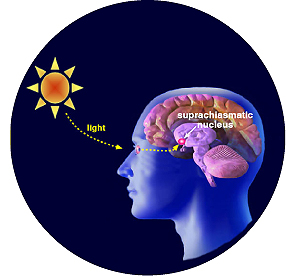
1. Try to get daily bright sun exposure. Production of melatonin approximates the contrast between bright sun exposure during the day and complete darkness in the evening.

SuprachiasmaticNucleus

2. Turn off your computer and TV at least one hour before going to bed. Both computers and televisions emit blue light which interferes with the body’s normal production of melatonin.

3. Sleep without any lights on. The darker your room is while you sleep, the better chance you have of allowing your body to produce melatonin without interruption.

4. Drop the thermostat to 60 to 70 degrees.

If you think your melatonin levels are low or you have lab work demonstrating low melatonin, and you also suffer from insomnia, you might want to supplement with melatonin tablets. Beware of the dosage, and keep it at 0.5 to 3 milligrams maximum dosage each night. At higher doses, melatonin can have hypnotic effects on some individuals, and on others, a paradoxical hyperaware state may manifest.

On a personal note, I had lab work early this year which demonstrated low melatonin, but I wasn’t suffering from insomnia. A colleague insisted I supplement with 3 milligrams of melatonin per night, which resulted in anxiety and a completely sleepless night for all of the nights I took melatonin.

Another caution: If you are trying to get pregnant, you must avoid taking melatonin supplements because they interfere with fertility.

Melatonin Article For RxGirl.com

Original post can be found here:

http://www.rxmuscle.com/rx-girl-articles/11102-melatonin.html

Melatonin is a hormone produced by the pineal gland in the brain which regulates the wake-sleep cycle. Production is turned on later in the evening when lights are turned off for bedtime. However, there are a number of poor habits which people commonly engage in which interfere with the body’s production of melatonin, with harmful results such as impaired immune response, increased rate of cellular aging, and increasing the risk of cancer formation. Basically, those late nights you spend watching T.V. or reading are interfering with optimal health. As soon as a light is turned on at night, you send a signal to your brain that is daytime, and production of melatonin ceases, and does not resume when you turn the light off either.
Shorter wavelengths (red, orange, yellow) of light are less detrimental than white or blue light and should be used in the evening. I love the salt lamp I have in my bedroom and try to use that light as my sole illumination in the bedroom as much as possible at night. Why is it so important to preserve the body’s natural production of melatonin? Because melatonin is a potent antioxidant and excellent for reducing inflammation throughout the body, including the brain.

Implement the following guidelines to optimize the body’s production of melatonin:

SuprachiasmaticNucleus1. Try to get daily bright sun exposure. Production of melatonin approximates the contrast between bright sun exposure during the day and complete darkness in the evening.

2. Turn off your computer and T.V. at least one hour before going to bed. Both computers and T.V.’s emit blue light which interferes with the body’s normal production of melatonin.

3. Sleep without any lights on. The darker your room is while you sleep, the better chance you have of allowing your body to produce melatonin without interruption.

4. Drop the thermostat to 60 to 70 degrees.

If you think your melatonin levels are low or you have labwork demonstrating low melatonin, and you also suffer from insomnia, you might want to supplement with melatonin tablets. Beware of the dosage, and keep it at 0.5 to 3 milligrams maximum dosage each night. At higher doses, melatonin can have hypnotic effects on some individuals, and on others, a paradoxical hyperaware state may manifest. On a personal note, I had labwork early this year which demonstrated low melatonin, but I wasn’t suffering from insomnia. A colleague insisted I supplement with 3 milligrams of melatonin per night, which resulted in anxiety and a completely sleepless night for all of the nights I took melatonin. Another caution is if you are trying to get pregnant, you must avoid taking melatonin supplements, because they interfere with fertility.

I Sleep Like A Rock

Sleep-GarfieldI feel sorry for everyone who suffers from insomnia and can only imagine how exhausting it must be to have the desire to sleep with a body that won’t allow slumber to occur. Though I have had a few very brief bouts of insomnia in my life, I have always slept VERY deeply from the time I was an infant. My mother found it humorous that I could sleep through alarms and small earthquakes without a single response. This actually was problematic for me in my teens and early adulthood because it always required a gargantuan effort on my part to try to wake up at a decent hour.

Even now, after suffering from several days of sleep deprivation, my body completely rebels and insists on a full eight hours of sleep, pinning my eyelids together and making it impossible for me to progress from a state of slumber to a wakeful state until the full eight hour rest stretch is completed. I can hear insomniacs around the globe groaning as they read this blogpost, but this is honestly a problem! I can also drink a large mug of caffeinated coffee right before going to bed and sleep like a baby. Believe me when I say I wish I could bottle this up for insomniacs because I would be filthy rich by now!