70609849
Cat litter comes in a variety of types, each with its own advantages and disadvantages. Below is a discussion of the main types of cat litter and an exploration of why some may be better than others for both your cat’s health and your own. I have a strong opinion regarding litter types which I will share at the end of this article.
Types of Cat Litter:
- Clumping Clay Litter:
- Made from sodium bentonite, a type of clay that absorbs moisture and forms solid clumps when it comes into contact with urine.
- Pros: Easy to scoop and clean because of the clumping action, effective at controlling odor.
- Cons: Dust can be an issue, and it’s typically not environmentally friendly. The production of clay-based litter can be environmentally harmful, and the clay is often mined from areas that cause significant ecological damage.
- Non-Clumping Clay Litter:
- Made from clay, but instead of forming clumps, it simply absorbs moisture and the liquid spreads throughout the litter.
- Pros: Often cheaper than clumping litter, and less dust may be produced. Easier to replace the entire litter box because you don’t have to worry about clumping.
- Cons: May not control odors as well, and can require more frequent changes. Less convenient since you can’t just scoop out urine clumps.
- Silica Gel Crystals:
- Made from silica dioxide, these litter granules absorb moisture and odor.
- Pros: Good at controlling odor and moisture; often lasts longer than clay-based litters before needing a full replacement. It is low-dust and non-tracking.
- Cons: More expensive, and not biodegradable.
- Natural/Plant-Based Litters:
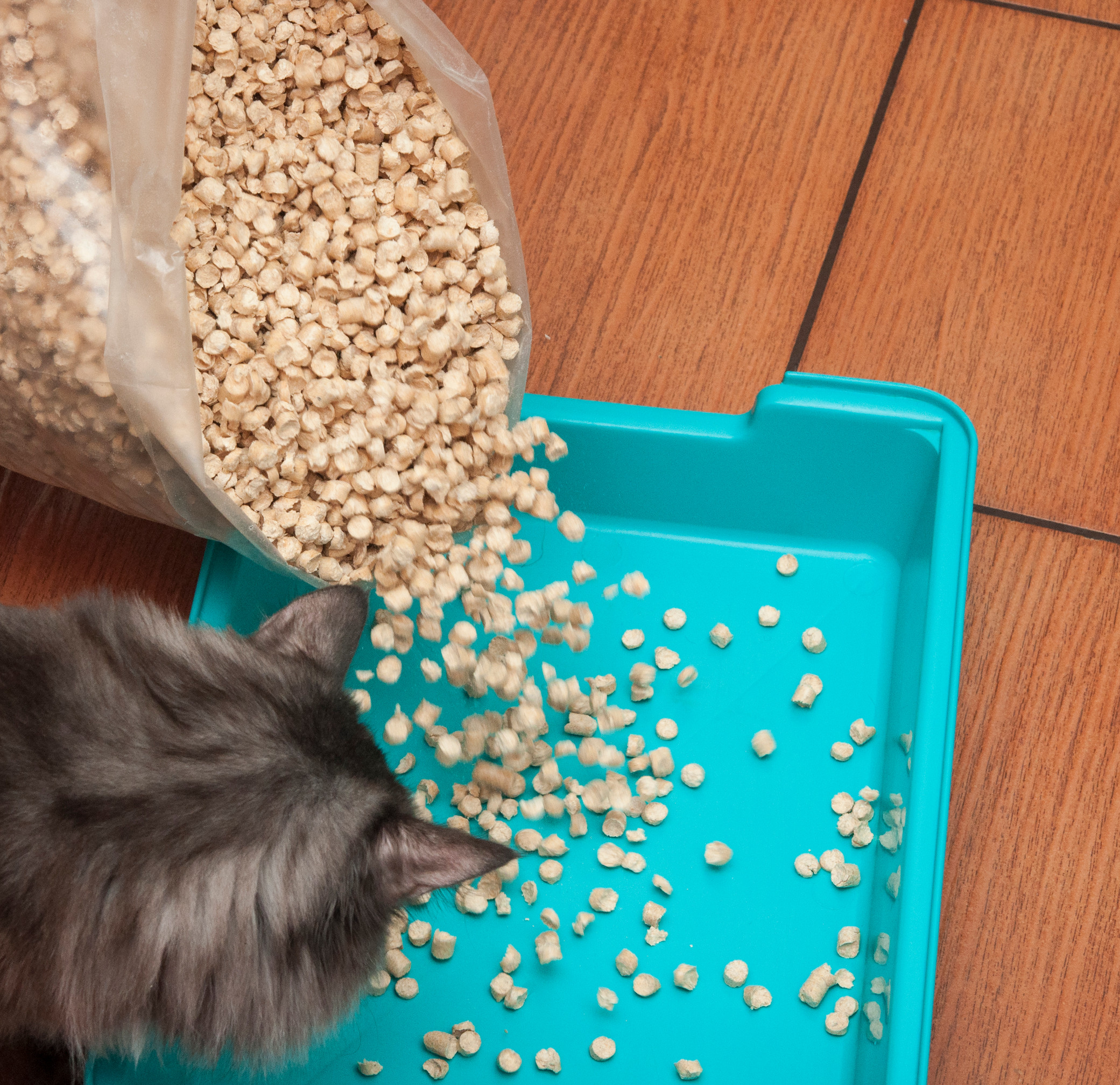
- Includes options made from corn, wheat, pine, or coconut shells. These litters are often marketed as more eco-friendly. Wood pellets are low dust and thus are great for cats and humans who have respiratory issues.
- Pros: Typically biodegradable and made from renewable resources. More economical than clumping clay litters and silica crystals.
- Cons: Some natural litters may not control odor as well as other litter types.
- Recycled Paper Litter:
- Made from recycled paper, this litter is soft and lightweight.
- Pros: Environmentally friendly, low dust, gentle on a cat’s paws, and good for cats with respiratory issues.
- Cons: Can be less effective at controlling odors and may not clump as well.
Why Non-Clumping Litter Can Be Better:
Non-clumping litter has several advantages over clumping litter, though these benefits depend on the context and the specific needs of your cat. Here’s why some people prefer non-clumping litter:
- Less Dust: Non-clumping litters often produce less dust, which is better for both cats and humans with respiratory issues.
- Easier to Dispose Of: Because non-clumping litters don’t form solid clumps, you need to replace the entire litter more frequently. While this may sound like a disadvantage, it can be seen as an advantage because you’re ensuring that your cat’s environment is more hygienic with fresh litter each time you change it.
- No Chemicals or Additives: Some non-clumping litters (especially natural varieties) do not contain the chemicals or fragrances that can sometimes be added to clumping varieties for odor control.
- Less Waste: Some non-clumping litters are biodegradable or made from renewable resources, making them a better environmental choice in some cases.
However, non-clumping litter does come with its drawbacks, including less effective odor control, and the need for more frequent full replacements of the litter box.
Why Clay-Based Litter Can Be Harmful:
Clay-based litter, particularly the clumping kind, has come under scrutiny for a few reasons, mainly due to the dust it produces and the environmental impact of its production:
- Inhalation of Dust: When cats (or humans) inhale dust from clay-based litter, it can cause respiratory issues. The fine particles in the dust can irritate the lungs and exacerbate pre-existing conditions like asthma. This can be particularly dangerous for both cats and humans with compromised respiratory systems.
- Heavy Metals: Some clay-based litters, particularly those using sodium bentonite, may contain trace amounts of heavy metals, such as silica dust, which are harmful when inhaled over long periods. Prolonged exposure to this dust can lead to respiratory disease in both humans and animals.
- Environmental Harm: The extraction of clay for cat litter has a significant environmental impact. Mining processes can cause habitat destruction and contribute to soil erosion. Furthermore, the litter itself is not biodegradable, which means that it can contribute to landfill waste.
- Toxicity to Cats: If a cat ingests clay litter (for example, by licking it off their paws), the minerals and chemicals in the litter can be toxic. This is particularly a concern with certain types of clumping clay litters.
Conclusion:
While clumping cat litter is often preferred by many cat owners for its convenience and superior odor control, non-clumping litter has its own advantages, particularly when it comes to reducing dust and being more eco-friendly, especially in natural or biodegradable varieties. However, when using any litter—particularly clay-based litters—it’s important to be aware of the potential risks associated with dust inhalation, the environmental impact, and the health concerns related to long-term exposure.
If you’re particularly concerned about the dust or environmental impact of clay-based litter, consider switching to a natural, plant-based option or silica gel crystals, which are often less dusty and more sustainable. I steer clear of all clumping litters, and I also do not use clay-based litters. There are two types of cat litter which I use in my home: silica gel crystals, and plant-based wood pellets. I use silica gel crystals in 2 boxes, and have found that the crystals are extremely effective in combating odor. Crystal litter also doesn’t have to be changed very often, which is especially nice since this type of litter tends to be the most expensive. I use wood pellets for the other boxes in my home, and strongly favor them for a multitude of reasons which I mentioned above, including their low cost, their eco-friendly aspect, and the fact that I don’t have to worry about my babies breathing in harmful dust.
 dr. stacey naito's blog