One Step Forward Two Steps Back: Fighting Muscle Loss As You Age

Originally published on mensphysique.com on Monday, 07 April 2014
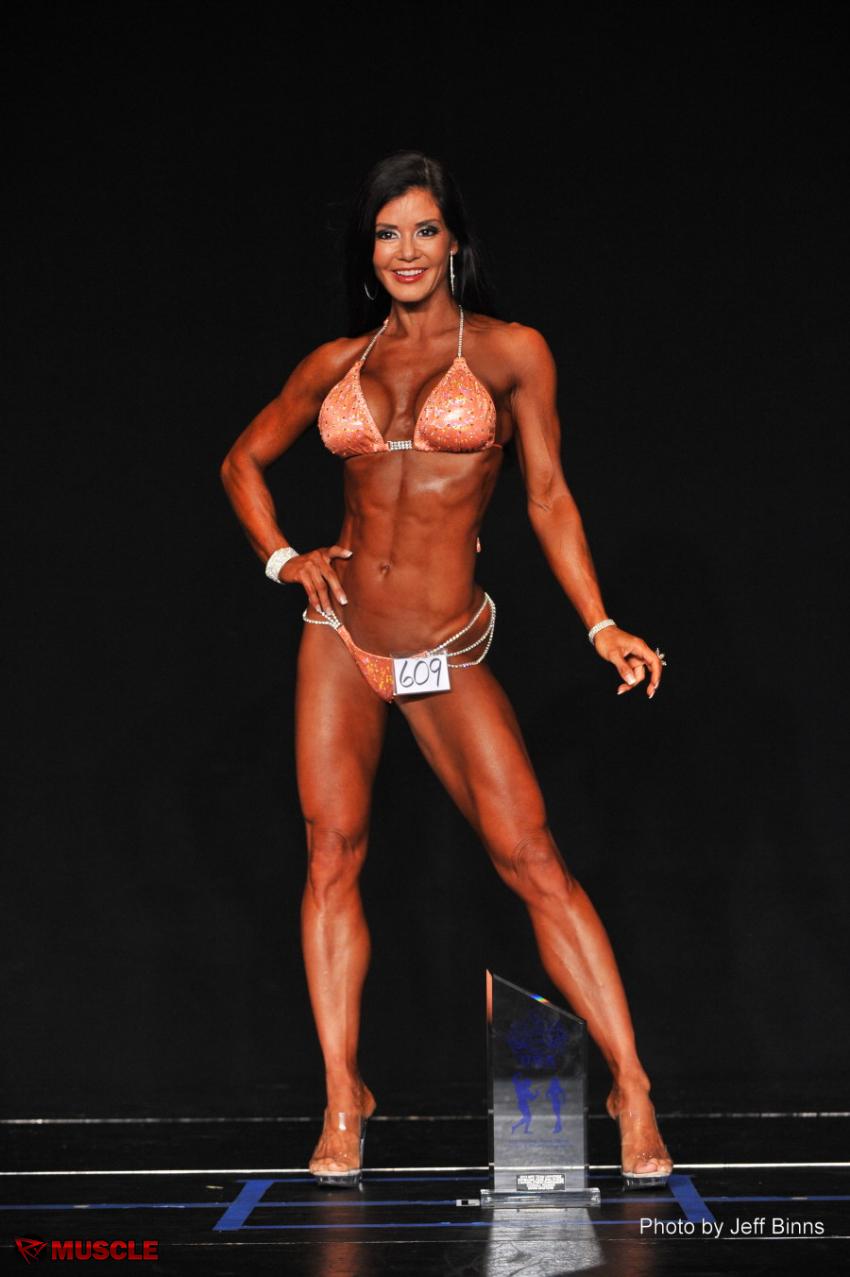
fit at older age
http://www.rxmuscle.com/blogs/the-news-the-newest-in-mp/10590-one-step-forward-two-steps-back-fighting-muscle-loss-as-you-age.html

The sad truth about getting older is that it becomes more and more difficult to hold onto the plentiful lean muscle mass and low body fat we tend to take for granted during our younger years. An inevitable consequence of growing older is the increasing struggle to maintain lean muscle mass as the years pass. Even if you have been blessed with a genetic propensity for the optimal balance of lean tissue and body fat, be prepared to work harder over time to keep what you have. This also means that master’s competitors usually have to train harder to build muscle mass, and are also more sensitive to dietary fluctuations and digressions than their younger counterparts.

The good news is that there are steps which can be taken to combat the unfavorable shift in body composition which makes its appearance after one’s mid-thirties. Perhaps the MOST important intervention which the vast majority of you are already practicing is weight training. You can continue to challenge yourself and lift heavy, but you might want to consider adding glucosamine and turmeric to your supplement regimen to protect the joints and minimize inflammation. Another adaptation in the weight room which older athletes respond especially well to is unilateral training. Unilateral movements improve balance and coordination and make it possible to correct strength imbalances.

Another way to naturally boost the body’s ability to combat aging which you are most likely already practicing is to consume adequate protein. When protein is consumed, a steady stream of glucose is released via glucagon without spiking insulin levels in the body. Conversely, a diet low in protein but high in carbohydrates results in high levels of insulin, which over the course of time can result in widespread inflammation, diabetes, and obesity. Surprisingly, the protein needs of people from middle age on (40’s and over) increase as a result of diminished protein synthesis in the aging body. Protein intake must be increased in order to offset the deficiency.

If you are already weight lifting regularly and taking in sufficient protein, you may want to consider boosting your intake of glutamine and branched-chain amino acids, particularly leucine. These building blocks help to optimize the body’s ability to utilize dietary protein to build new muscle and repair damaged muscle fibers.

Though animal sources of protein are excellent options for people of any age, whey protein in particular is a remarkable protein source in older people. It is highly absorbable, contains all 18 amino acids, immunoglobulins and lactoferrin, and all the building blocks for a powerful antioxidant called glutathione. Glutathione deficiency is linked to Alzheimer’s disease, cardiovascular disease, arthritis, asthma and cancer, and because of this, it is considered a key substance in combating the process of aging. Natural glutathione production in the body declines with age, but with whey protein on board, the amino acids necessary for glutathione production are supplied to the body and optimal levels can be attained as a result.

Though athletes and competitors are aware of the health and muscle building benefits of whey protein, I am astonished by how it is not utilized nearly enough by the average person. All too often I see patients who regularly skip meals and eat fast foods and other processed foods, and who assume that whey protein is only for athletes. If you are an average person who wants to change poor eating habits and optimize cellular function, then you need to boost protein intake and add whey as one of your protein sources. You are doing yourself a disservice if you insist on eating junk carbs like simple sugars and processed foods, skipping meals, and consuming insufficient protein, especially if you are over the age of 35 and trying to fend off disease and aging.

If you are proactive and consistent about taking the necessary steps to battle age-related muscle loss, you will reap the benefits of better health and vitality and will rival those half your age with a muscular physique to be envied.

Sleep Deficit And Muscle Loss

Originally published on mensphysique.com on Wednesday, 05 March 2014

http://www.rxmuscle.com/blogs/the-news-the-newest-in-mp/10329-sleep-deficit-and-muscle-loss.html
sleep equals muscle
Those of you who insist on burning the midnight oil and carving into time during which you should be sleeping are doing yourselves a disservice. When you build up a sleep deficit, not only do you adversely affect your attention and overall energy, you also diminish the potential muscle gains you would obtain if you consistently got a good night’s rest.

A good portion of the slump in muscle repair and growth which occurs from inadequate sleep is due to inadequate secretion of growth hormone (GH). GH is only secreted during deep sleep, so people who don’t sleep for more than a few hours will spend less time in deep sleep and cause GH secretion to drop. In addition, there is some evidence that testosterone secretion also drops, creating a double whammy which cripples the body’s ability to utilize fat and build muscle.

Cravings can also become a significant issue with sleep deficits as a result of hormonal effects. Leptin, a hormone which signals that you are full from a meal, is inhibited during sleep deprivation, resulting in increased food cravings (especially for carbohydrates). Conversely, ghrelin, a hormone which signals hunger, increases by as much as 30 percent after only a two night sleep deficit.

The body also produces more cortisol during the late afternoon, which is exactly when the body’s production should be tapering down to prepare the body for sleep. Higher cortisol levels promote deposition of more fat and utilization of muscle for energy during a sleep-deprived state.

When you cheat yourself out of a full night’s sleep, you also deplete neurotransmitters in the brain which are in charge of regulating mood. The result is irritability and, over the long term, depression, both of which can impact the intensity of your workouts and hinder your efforts to pack on muscle.

Sleep deficits also result in a decrease in alertness and concentration which often translates into submaximal workouts. And Sleep deficit affects strength. A study in Ergonomics examined the effects of sleep deprivation on weightlifting, with compelling results. As expected, there was a significant decrease in maximal lift for bench press, leg press, and dead lift after a three-day sleep deficit was established.

If you are in the habit of cutting into your sleep time, or you practice erratic sleeping patterns which are creating a sleep deficit, try to get into a rhythm in which you get enough sleep every night, especially if you are hitting a plateau with your training. Once you start getting adequate sleep, you will notice a big difference in your strength and muscle gains.

Selecting The Right Suit Cut For Your Body

Originally published on RxGirl on Wednesday, 04 December 2013

http://www.rxmuscle.com/rx-girl-articles/9788-selecting-the-right-suit-cut-for-your-body.html
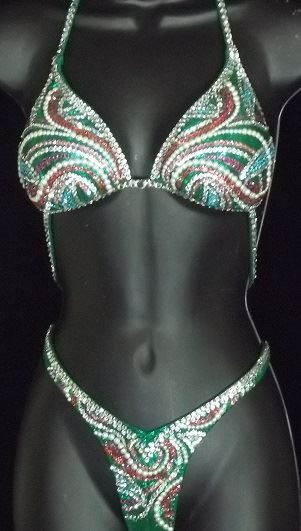
Figure Suit, Suits You Swimwear
Competition suit designs can vary widely depending on the suit designer, fabric type, body measurements and proportions of the competitor. Though you may be tempted to go the cheaper route and either borrow or rent a suit or purchase an off the rack suit that is not made to fit your particular body, I always recommend having a suit custom made which is cut to your measurements. Trust me, it makes a huge difference when you wear a suit that compliments your body!

Here are some basic guidelines which work for any division in which you compete.

Narrow chest: If you have a naturally narrow chest, make sure the triangle cups are spaced farther apart to give the illusion of a wider chest. You can use a crystal center connector, but make sure it is not too bulky so that the eye goes to the triangle cups and not to the center of the suit top. If you have a crystal pattern on your suit, you should select a pattern which draws the eye up and out, perhaps with lighter colored crystals on the lateral portions of the cups.

Wide chest: If your chest is extremely wide, make sure to select triangle cups which are wide enough to cover your entire breast area. If your breasts are augmented and they sit very far apart, you might want to consider a molded cup which will push your implants towards the midline and create a bit of cleavage.

Large implants: Some competitors have extremely large implants which can be distracting onstage. Your best bet is to select a full coverage top which encases your breasts completely, allowing for no side boob or under boob.

Sagging breasts: Though I am not a big fan of molded cups, sagging breasts will require some support, so molded cups are the best option in this case. Once again, if you have a lot of breast tissue, you need to make sure that your breasts are mostly covered by the suit material and are well supported by the molded cups. It looks very sloppy when a competitor with sagging breasts wears a flimsy triangle top which does not support her. Sagging breast tissue can hang over the ribcage and often obscure any serratus anterior development. Support your girls!

Small breasts: I know that many women feel rather self-conscious if they are very small-chested and usually opt to wear padded suit tops. If you are a small B to a C cup, you can purchase silicone triangle push-up pads which work beautifully in the pockets of a competition suit top. Just make sure that your suit maker puts pockets in the triangles so that you can insert the pads easily. If you are an A or AA cup or completely flat-chested, you might want to have a suit cup design which is fully padded. If you go with this option, make sure that the cups sit properly, neither too far apart nor too close together, since fully padded suit tops can easily look fake if this is not taken into consideration.

Long torso: If you have a long torso, chances are that your leg line is shorter in proportion to your torso. If this is the case, have the suit bottoms cut very high so that they sit at your waistline (unless you are a Bikini competitor, in which case you should have the bottoms sit just above your hip bones). This will give the illusion of a shorter torso and longer legs.

Short torso: If your torso is short, chances are that your legs are either of normal length or quite long. A suit bottom which sits low on the hips, below the hip bones, will create illusion of a longer torso, as will a steeper V-cut in the center of the bottoms. Bikini competitors can select a lower scooped rise in the bottoms to lengthen the torso line.
Wide trunk: If you have a very wide midsection, avoid horizontal cuts on the front of the suit bottoms and opt instead for a V-cut. The sides of the suit bottoms should sit very high to further create the illusion of a nipped-in waist.

998805_665046383515546_812080141_n
C-section scars or saggy abdominal skin: If you have a C-section scar or saggy abdominal skin, choose a slightly higher rise in the suit bottoms to tuck the scar or skin in. Once you add suit adhesive at the contest, you should feel secure in the suit.

Long legs: Choose a suit bottom which sits low on the hips, below the hip bones, in order to create illusion of a longer torso and more proportionate legs.

Short legs: If you have a shorter leg line, have the suit bottoms cut very high so that they sit at your waistline (unless you are a Bikini competitor, in which case you should have the bottoms sit just above your hip bones). This will give the illusion of a shorter torso and longer legs.

Flat glutes: Some competitors have flatter glutes which can be lifted by a suit. Basically, the suit should be cut so that it holds and lifts up most of the glute area. This is usually done with the strategic placement of elastic in the bottoms so that the garment hoists everything up instead of just lying on top of the area.

Narrow hips: If you have narrow hips, you will need to select a suit bottom with a more horizontal cut which will give the illusion of a wider hip line. For a typical V-cut suit bottom, a flatter or wider cut can still be accomplished without losing the standard suit design. For the Bikini Division, you can select a suit bottom which is completely horizontal. If your hips are excessively narrow, you should opt for fabric at the hips instead of crystal or string connectors. However, many ladies who have slightly narrow hips look fantastic with crystal connectors at the sides.

Wide hips: Wider hips are best camouflaged by an exaggerated V-cut and sides which sit about an inch above the hip bones.
When you order a custom suit, make sure to send all your measurements to the suit maker along with photos to help him or her determine the most flattering cut for your body. Make sure to also bring up any body issues or concerns in advance so that they can be factored into the design of the suit.

What To Do After You Have Slayed The Dragon

Originally published on mensphysique.com on Saturday, 08 February 2014

http://www.rxmuscle.com/blogs/the-life-inspiration-and-dedication/10154-what-to-do-after-you-have-slayed-the-dragon.html
Pro Card (2)
The enticing waters of the competition world can truly rule a competitor’s life, especially when a national qualification is won at local and regional shows and the national stage beckons. In fact, most of you probably already have your national contest strategy in place and are prepared to hit contest after contest to maximize your chances of getting a Pro Card.

Every year competitors continually squirm through that national level bottleneck in an effort to go Pro, accommodating and prioritizing the NPC national contest schedule and scheduling work and vacations around it. Believe me, I can relate. The national contest lineup was so etched in my brain over the last few years that I would maneuver my work schedule and everything else around it, year after year.

A profound shift seems to occur for many competitors as they pass into the Pro ranks. When I went Pro in July of 2013 at Team Universe, everything in my life took a radical shift. I am sure many of you who are IFBB Pros understand what I am talking about. Suddenly you are cast into a wide ocean, with more contests, more opportunities, and more ventures. It can be downright confusing, overwhelming and a bit depressing once you realize that the battle you waged to slay that dragon is now over, and that unless you wish to slay a bigger dragon by earning a spot on the Olympia stage, you might not know what to do now.

Probably the best advice I can give to new IFBB Pros is to enjoy the moment and float on the cloud for a while, then be prepared to roll up your sleeves and get to work. I honestly believe that becoming a Pro actually means you have to work harder to reinvent yourself and make your mark in the world. You are in an elite group, surrounded by many driven and incredibly talented people. How will YOU stand out?

Maybe competing is still very much in your blood and you want to collect wins and points, or you want to remain relevant in the competition world. That’s fine, but just make sure to look at the bigger picture. The people who didn’t give you a second glance when you were an amateur might suddenly be fussing over you, but don’t let the attention get to your head. You need to leverage your Pro status and your unique talents and position yourself in such a way that you truly make an impact on your followers and potentially build business and a name for yourself. Think beyond the stage, push your brand and your message, and you may indeed become one of those Pros who really stands out.

Get out there, PRO!

How To Choose Your Next Show

Originally published on RxGirl on Saturday, 03 August 2013

http://www.rxmuscle.com/rx-girl-articles/8937-how-to-choose-your-next-show.html
JB5_1413_XCIUITKCXU
If you compete then you know that prepping for a contest keeps you focused on a singular goal. But what happens when that show is over and your placings compel you to shift your strategy? Financial considerations, geographical logistics and time needed to improve on your physique are variables which can come into play. This is true regardless of whether you are an Amateur competitor or a Pro.

Whatever you do, refrain from jeopardizing your financial security or your job security and only do those shows which you can truly afford. If you need to work on building muscle, leaning out, or improving balance or symmetry, you need to be realistic and give yourself enough time to make those changes before you hit the stage again. If you know that you have weak points with your presentation (posing, competition color, suit selection, makeup, hair), make sure that you correct these issues so that you bring a noticeably improved package to the stage.

If you are competing locally and have yet to qualify at the national level,I always advise selecting a national qualifier for your next show. If you are near the bottom of the barrel, choose an event which is at least 12 weeks out so that you have enough time to make improvements. If you are nationally qualified but have never stepped on the national stage before, you might want to compete in a local or regional event in a metropolitan area so that you get more of a feel for how a large scale show is organized. It is important to bear in mind that national level events have stiff competition, so make sure you practice your posing and get everything lined up in time for the national stage.
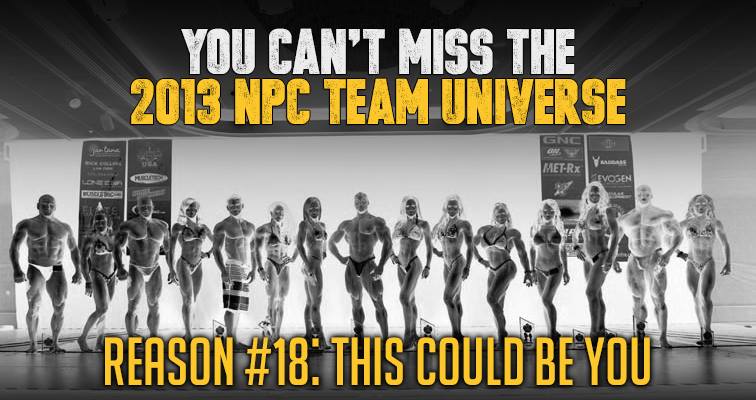
NPC Team U teaser
Master’s level competitors always face a bit of a disadvantage because of their age, so I always advise them to confine their national appearances to pro qualifiers which feature Master’s divisions. Keep in mind that a Pro Card is a Pro Card, regardless of whether you get it as an open or a master’s competitor. I also advise master’s competitors to enter as many divisions as possible to increase their chances.

For Pros, it might be a good idea to consider Pro events in different parts of the country so that you are seen by different IFBB judging panels. This also enables you to increase your exposure and fan base. If you or your sponsors can handle the expense of international contests, you may consider traveling out of the country. If you are chasing after an Olympia qualification, you could stack shows so that you increase your chances of getting into the top five and getting points.

Whatever level you compete at, remember to have fun and enjoy the journey!

Fit For Stage: There Is A Difference

Originally published on mensphysique.com on Wednesday, 20 November 2013

http://www.rxmuscle.com/blogs/the-life-inspiration-and-dedication/9699-fit-for-stage-there-is-a-difference.html

We all know that the general population is pretty resistant to the idea of packing on the massive amounts of muscle which are seen in men’s and women’s bodybuilding. This has made the men’s physique and bikini divisions incredibly enticing since these divisions are represented by a lesser degree of muscularity. However, it drives me nuts when I hear people proclaim that they are going to jump onstage and compete simply because they are reasonably fit.

I am not referring to people who have realistic expectations and who understand that there is a tremendous amount of work and prep that must go into delivering a great package onstage. I am referring to the self-assured, short-sighted individual who thinks that he or she represents the division without recognizing areas which need to be fine-tuned.

I have recently heard a number of fit individuals tell me that they feel they are ready to hit the stage without any preparation or fine-tuning since, in their minds, there is no distinction between what they have to offer and what competitors work so hard to achieve. To me this is an extremely disrespectful approach to the sport.

Those of us who compete are constantly aware of the need to achieve a personal best and take being onstage and representing our divisions very seriously. We understand that the work needs to be put in if we need to round out pec development, work on taper, or fine tune our level of conditioning. So when some newbie comes along expecting to grab a spare pair of board shorts, slap on a Mystic tan and rock the stage, I can’t help but snicker. I know that the newbie who adopts such a cocky attitude can be found dejected post-contest, shocked that his fit body didn’t take down the rest of the competition.

If you have yet to compete and have yourself convinced that you have nothing to learn about the division or the culture, you need to abandon such an attitude and instead learn some humility. There are so many outstanding representatives of the sport who are willing to guide new competitors and offer constructive criticism that you would be foolish not to avail yourself of their experience and knowledge. Make the journey one in which you LEARN and GROW.

Maintaining Focus In The Midst Of Chaos

Originally published on RxGirl on Thursday, 04 July 2013

http://www.rxmuscle.com/rx-girl-articles/8649-maintaining-focus-in-the-midst-of-chaos.html
When-you-focus-on-what-you-want-everything-else-falls-away
If there’s one thing I have learned during my life, it is that there will always be challenges to face and overcome. Such trials can be immense and carry the power to derail us from our daily routine. However, maintaining consistency in a daily routine, especially during the most difficult times, provides balance while also keeping an individual on track with contest prep or other fitness related goals. In some sense, such a structured routine can almost serve as a welcome haven when everything else is chaotic, provided it does not make excessive demands on one’s time or energy resources.

This year has been an extremely rough one for me, characterized by both my parents being hospitalized, the dissolution of a two year relationship with a man I was very much in love with, job loss, etc. I think most people would have buckled from the pressure, but I was so incredibly stubborn about staying on track that I pushed through the emotional and physical pain and became more creative about how to fit my ever increasing workout loads into the chaos that defined my life. If anything, the trials I went through made me all the more determined to get the job done with my contest prep. I put the horse blinders on and headed down the track at a full gallop. Ironically, though I have been working less in the past month, I am busier than ever and often go through my days in a bit of a fog. It is commonplace for me to forget whether I am at the gym for my third or fourth workout, or which office I was at yesterday. My attitude lately has been, “hold on tight!” which is indeed what I have been doing as I have ridden the crazy crests and troughs of each day.
Horse Blinders
I know that those of you who compete are Type A personalities, driven, committed, strong and stubborn. I also know that some of you will abandon your plans to compete in upcoming contests when life throws you a curve ball. I honestly think this is a mistake. Why forgo the pursuit of a goal (i.e., prepping for a contest and competing in it) when things get nuts? We are in a unique position to inspire and lead by example, so when we give up on achieving a competition or general fitness goal, we are sending a message that it is acceptable to adopt an off and on approach to the “can do” attitude which is common in the fitness world. I am not saying that we should be burdened by the responsibility to carry the hopes of others, but that we best serve ourselves and others when we adopt a tenacious determination to reach our goals. If you can remember why you are driven to compete and to reach your personal best, and make a decision to hold yourself to your regimen in the midst of adversity, your victories will be sweeter than ever.

Common Diet Myths

Originally published on RxGirl on Tuesday, 28 May 2013

http://www.rxmuscle.com/rx-girl-articles/8325-common-diet-myths.html
bigstock_Myth_truth_1199244
MYTH: You should avoid eating fat.
FACT: Despite the fact that fat carries more than twice the amount of calories per gram when compared with carbohydrates and protein, fat takes longer to empty from the stomach and thus keeps you feeling fuller for a longer period of time. Fat also adds flavor to foods and heightens the dining experience. In addition, you must consume some fat in order to maintain proper cellular health. Omega fatty acids, monounsaturated and polyunsaturated fats, all of which are healthy forms of dietary fat, actually lower LDL cholesterol in the blood.

Healthy Meal Image
MYTH: Healthy foods are more expensive.
FACT: Many unprocessed foods such as grains, fresh vegetables and fruit are extremely cheap. Think about it. You can purchase a five pound bag of potatoes for a couple of dollars, or you can buy a bag of potato chips for $3.49 or more. And I don’t need to tell you that the bag of potatoes will provide sound nutrition and far more food bulk than the chips. I am not a big fan of certain natural food markets because they are grossly overpriced, so I visit other markets which have very reasonable prices on their unprocessed foods. Processed and fast foods may be more convenient, but they are more costly over time, especially if you eat them frequently.
Double Arches Meal
MYTH: Late night meals will make you fat.
FACT: Your body doesn’t process food differently once the sun comes down. The problem that many people have is that they restrict their caloric intake too much during the day, usually by skipping meals. By the time they get home from a busy day, they are starving, and will eat an excessive amount of calories to satisfy their hunger. Another issue is the mindless munching on snack foods which people often do while watching TV or sitting at the computer.

As long as you eat a reasonably sized, healthy meal, nighttime eating shouldn’t result in weight gain.

MYTH: You can eat any foods you want as long as you do it in moderation.
FACT: It’s okay to indulge in a calorie dense or unhealthy food item once in a while, but if you make it a regular practice to eat junk foods every day, you are doing your body and your health a huge disservice. Trust me, a chiseled physique can never be built on a pizza diet (I know, wishful thinking, right?). Your body requires high quality protein, healthy fats, and unprocessed or minimally processed carbohydrates to function optimally and to support a healthy metabolism.

MYTH: Skipping meals is a good way to lose weight.
FACT: Spacing your meals throughout the day will keep your metabolism running in high gear. It is true that breakfast is an important meal because it provides essential nourishment, regulates mood and energy levels and boosts mental clarity. People who skip meals are notorious for eating excessive amounts of food when they actually do eat, and those meals are usually unhealthy and of poor nutritional value. If you are prone to skipping meals, try keeping a food journal to monitor your meal consumption throughout the day.

MYTH: Carbohydrates will make you fat.

The truth is,carbohydrates are usually consumed in excess by many people. What this does is cause a sharp increase in blood glucose, which triggers insulin release so that the glucose can be converted to glycogen for storage in the liver and muscles. Only a certain amount of this glycogen can be stored, with the excess being stored as body fat. Once the blood glucose level falls below normal, carbohydrate cravings are triggered which many individuals succumb to.

When you cut carbohydrate intake, you will experience a rapid weight loss initially as the body drains glycogen stores for energy. What also occurs is that water is released as the glycogen is utilized, resulting in weight loss from the increased urination which results. But after about two weeks, the increased urination ends, and along with it, the rapid weight loss.

That Ever-Elusive Pro Card

Originally published on mensphysique.com on Friday, 09 August 2013

http://www.rxmuscle.com/blogs/the-life-inspiration-and-dedication/8988-that-ever-elusive-pro-card.html
Pro Card (1)
There have been many occasions in which I have heard a freshly nationally ranked NPC competitor declare that he or she will hit the national stage and easily snap up an IFBB Pro Card. While I applaud the competitor’s enthusiasm and drive, I cannot help but snicker to myself when I hear such a statement. Honestly, if it were that easy to earn a Pro Card, there would be Pros populating the country in droves. Alas, there are only a finite number of Pro Cards given out each year, and the competition for them is fierce.

I will often see competitors who have made such a declaration months later who are shocked that they have not yet achieved Pro status. They mention being stunned, frustrated and dejected, and often will state that they are considering leaving the sport altogether. Let me tell you something: I stepped on the national stage fourteen times before I earned my Pro Card.

There certainly were times that I was discouraged, and there were moments during which I had pondered the possibility of walking away from the sport. Yet I kept getting back on the stage, improving my game each time and proving to myself that I was strong enough to overcome the roadblocks that kept Pro status at bay. Thankfully, all of my dedication and stubbornness finally paid off, but it was a long and arduous journey.

I think it is very important to bear in mind how competitive national NPC bodybuilding contests are. There are over 100 national qualifying NPC local contests across the nation each year, with some events in large metropolitan areas bringing in more than 100 competitors in each of the most popular divisions (Men’s Physique, Figure and Bikini). Since only the top five competitors in these divisions are given national qualification, such contests can be brutally competitive.

These nationally qualified competitors then hit the national stage, usually competing against an average of thirty other competitors (there were a record 72 competitors in one Men’s Physique class in 2011) who are considered the best in the nation. So what makes you think you can easily snap up a Pro Card? You may prove me wrong, but it is foolish to boast that you will easily get one from your first foray into a national NPC contest.

By no means am I trying to discourage anyone from competing. What I hope to do is to encourage competitors to be realistic yet unrelenting in their pursuit of personal excellence as they reach for Pro status. It is always a good idea to talk to the judges after a contest to obtain valuable feedback. It is also important to look at your contest photos, especially the comparison photos. If there are changes which need to be made, make them before you hit the stage again. Most importantly, do not get discouraged. Good things come to those who persevere!