I Earned My IFBB Pro Card. Here’s Why I’m Happier Being “Normal.”

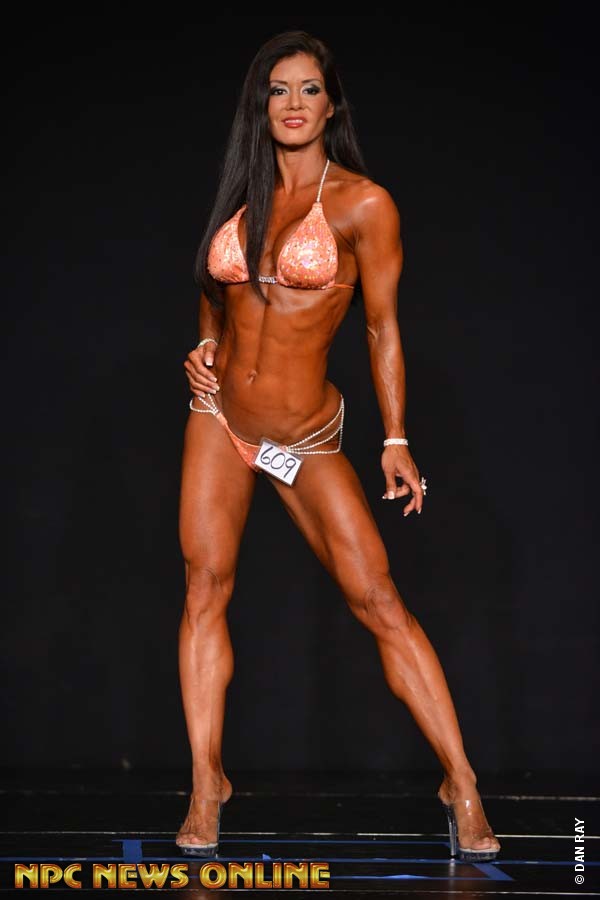
July 6th, 2013…the day I earned my IFBB Pro Card in Paramus, New Jersey

For years, bodybuilding was a huge part of my life. I trained hard, dieted harder, competed, and eventually accomplished something I was incredibly proud of: earning my IFBB Pro status.

So when people ask me why bodybuilding contests don’t excite me the way they once did, the answer isn’t that I regret competing. Quite the opposite. I am genuinely grateful for every year I spent in the sport, every contest I entered, every sacrifice I made, and every lesson I learned. If I could go back and do it all over again, I wouldn’t change that part of my life.

But I’ve also reached a point where I look at the competitive bodybuilding lifestyle differently.

When you’re competing at a high level, “being in shape” isn’t really the goal. Everything revolves around getting to that last fraction of a percent of body fat, squeezing every ounce of muscle out of your physique, and showing up on one particular day looking as close to perfect as humanly possible. On top of that, you repeatedly put yourself in front of a panel of judges who won’t hesitate to tell you if you’re even a tad below what they consider to be perfect.

That requires a regimen that most people would consider extreme—and, honestly, they should.

The training becomes a job. The food becomes a schedule. Your life gets organized around meals, cardio, workouts, recovery, posing, supplements and preparation. As a contest gets closer, the diet can become incredibly restrictive, the training becomes exhausting, and your entire world starts shrinking around the competition.

And it doesn’t stop with your body.

There is the financial side. Food, supplements, gym expenses, coaching, posing, tanning, travel, entry fees, competition suits and all the other costs can add up quickly. There is also the emotional cost. When your entire life is structured around preparation, it can put tremendous strain on relationships. Your spouse, family and friends may understand what you’re doing, but that doesn’t mean the lifestyle is easy for them to live alongside.

I’ve experienced enough of that world to understand exactly what it takes.

That’s probably why, today, I find myself appreciating something that I never appreciated quite as much when I was competing: being a normal person.

There is something incredibly freeing about being able to eat dinner without calculating every calorie. To go out with friends without wondering whether the meal fits perfectly into your diet. To miss a workout occasionally without feeling like you’ve committed some kind of crime. To have your day revolve around your life instead of having your life revolve around your physique.

And maybe most importantly, there’s something to be said for having the freedom to enjoy the people around you.

I still love training. I still appreciate muscular physiques and the incredible discipline required to build one. I still have tremendous respect for anyone who steps onstage and puts themselves through that process. I know firsthand how difficult it is.

But when I watch competitors today going through the brutal dieting, the endless cardio, the obsessive training, the mounting expenses and the stress that can spill over into their personal lives, I sometimes have to shake my head.

I understand why they’re doing it, because I was that person.

And I’m not judging them. I’m simply looking at it from the other side now.

There was a time when I needed that challenge. I needed to know how far I could push myself. Competing taught me discipline, persistence, sacrifice and what it means to commit completely to a goal. Earning my IFBB Pro status will always be one of the accomplishments I’m proudest of.

But life changes.

Eventually, you realize that there is more to being healthy than being stage-ready. There is more to strength than how much you can lift. And there is more to life than seeing how conditioned you can become for one day under bright lights.

Today, I’d rather have balance. I’d rather enjoy a meal with people I care about than worry about whether it fits into a contest diet. I’d rather have the freedom to live spontaneously than have every hour dictated by a bodybuilding schedule.

I don’t regret the years I spent chasing the stage.

I’m actually thankful I did it.

But I’m also thankful that I don’t have to do it anymore.

For me, being a “normal” person has become its own kind of victory. And after spending years learning how to push my body to its absolute limits, there is something pretty satisfying about finally learning how to simply enjoy living in it.

There is one thing I want to make clear, though: I will never be a “regular person” when it comes to fitness. That part of me isn’t going anywhere.

I still weight train an average of six days a week. I still eat clean the majority of the time. In fact, I have always genuinely craved clean food. It’s not something I force myself to do anymore; it’s simply how I prefer to eat. Training is still a major part of my life, and I don’t see that changing.

What’s changed is the reason behind it.

I’m no longer training because I have to look a certain way on a certain day. I’m not counting down to a contest, trying to squeeze out another pound of body fat, or structuring my entire existence around stepping onstage. I train for life.

And here’s the funny part: I’m actually several pounds lighter today than I was when I won my IFBB Pro Card, and just as lean.

So I haven’t become some sedentary person who abandoned bodybuilding and started eating whatever I wanted. Far from it. The discipline is still there. The work ethic is still there. The love of training is still there.

What I’ve gained is perspective.

I can train hard without destroying myself. I can eat clean without being consumed by dieting. I can stay muscular and lean without needing to reach an extreme condition for a competition. And I can take a day off, enjoy a meal, spend time with people I care about, or simply live my life without feeling guilty about it.

Maybe that’s the biggest difference between then and now. I still have the discipline of a bodybuilder. I just don’t live like a competitive bodybuilder anymore.

And honestly, I think that’s a pretty good place to be.
One Pro Card Is Enough: It’s Time for the NPC to Stop Wasting Opportunities

There was a time when the NPC understood a simple concept: a competitor only needs one IFBB Pro Card to become a professional.

Today, that common sense seems to have disappeared.

We’re now watching competitors collect multiple Pro Cards as if they’re trophies to stack on a shelf. While it’s undeniably impressive to dominate multiple national shows or divisions, the reality is this: once you’ve earned your IFBB Pro status, every additional Pro Card is redundant. You’re already a pro. There is no such thing as being “twice as professional.”

The real question is why the system continues to reward the same athlete over and over while denying another deserving competitor the opportunity to advance.

Years ago, the NPC had a better solution.

My 1st place finish in Bikini 40+. I also ended up winning the Overall title in Bikini 40+.

If a competitor who had already secured professional status won another Pro Card-qualifying class, that Pro Card didn’t simply stay with them. It rolled down to the second-place finisher. The winner still received the title, the recognition, and the prestige of winning the class—but another athlete earned the chance to become an IFBB Professional.

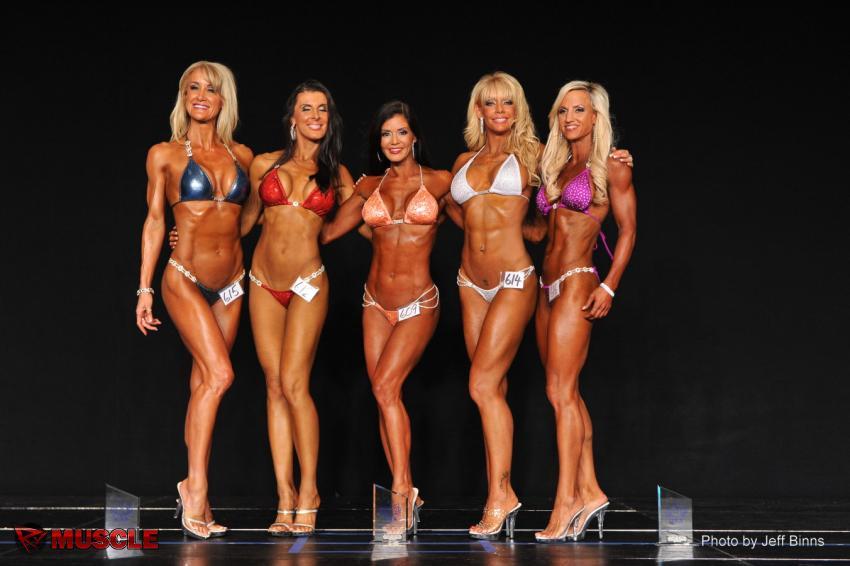
This actually happened on the day when I won IFBB Pro Status. I had taken the 1st place spot in my height class in Bikini 40+, securing my spot in the IFBB league. Then about 30 minutes later, I also won 1st place in Bikini 35+. The second-place finisher ended up getting the Pro card spot since I had already won a spot in 40+.

My 1st place finish in Bikini 35+. Competitor 636 placed 2nd and ended up being awarded a spot in the IFBB as well.

It was a system that rewarded excellence without wasting opportunity.

Somewhere along the way, that philosophy disappeared.

Now we’re celebrating athletes earning their second, third, and sometimes even fourth Pro Card, while competitors standing right beside them—who may have delivered the performance of a lifetime—leave empty-handed. That doesn’t strengthen bodybuilding. It bottlenecks it.

Let’s be clear: this isn’t criticism of the athletes. If the rules allow someone to compete for multiple Pro Cards, they’re simply playing by those rules. Most competitors would do exactly the same thing.

The issue is the rule itself.

Bodybuilding is already one of the most demanding and expensive sports in the world. Athletes spend years chasing this dream, investing thousands of dollars in coaching, food, supplements, travel, entry fees, posing instruction, and countless hours of sacrifice. For many, earning an IFBB Pro Card is the culmination of a decade of relentless work.

Why should that opportunity effectively disappear because someone who is already qualified wins again?

The old roll-down system recognized that bodybuilding isn’t just about identifying the best athlete in the room—it’s also about building the future of the professional ranks. Every available Pro Card represented a chance to introduce a new professional into the sport.

Today, too many of those opportunities are simply being absorbed by athletes who have already crossed the finish line.

Supporters of the current system argue that competitors should simply beat whoever shows up. Fair enough. But that misses the point entirely. The winner still wins. Nobody is taking away the class title, the overall title, or the accomplishment. The question is whether a second or third Pro Card has any meaningful value.

It doesn’t.

A Pro Card isn’t like winning another national championship. It’s a qualification. Once you’ve qualified, you’ve qualified.

Imagine if an Olympic Trials winner could keep claiming multiple spots on the Olympic team while everyone else stayed home. Or if a driver who had already qualified for the Daytona 500 continued occupying additional qualifying positions that could have gone to someone else. Every other major sport understands that once an athlete has secured qualification, additional qualifying positions move down the field.

Bodybuilding used to understand that too.

If the NPC wants to grow the IFBB Pro League and reward the athletes who dedicate their lives to this sport, it should revisit the system that worked for years. Keep recognizing dominant winners—but let duplicate Pro Card qualifications roll down to the next eligible competitor.

One competitor. One Pro Card.

That isn’t lowering the standard.

It’s making sure every Pro Card actually serves its purpose.

“Do You Still Compete?”

First Place Masters Bikini 35+ B Class, Team Universe, July 2013

First Place Masters Bikini 35+ B Class, Team Universe, July 2013

Whenever I hear that question now, I have mixed feelings, which range from a sense of longing for the stage, to complete relief that I have not stepped onto a bodybuilding stage for close to two years now. My short answer to the question, “Do you still compete?” is “Probably not.”

Though I competed in four Pro Bikini events, I was struggling so much with metabolic damage and perimenopause that I often think it wasn’t the best idea to jump onto the Pro stage only 4 months after I won my IFBB Pro Card. That sort of strategy might work for a twenty-something competitor who is at the top of the heap, but it didn’t work for my 47-year old body which had been beaten down physically, emotionally, and mentally. I honestly needed a break, but I pushed through, and as a result had ho-hum placings.

It has taken over three years for my body to return to a level of leanness which I feel comfortable with. I know you might assume that I was in a massive spiral with my weight and body fat, but it wasn’t THAT bad, at least not compared with many other competitors who spiral. Nevertheless, I spent over two years with excess fluff that I was not accustomed to at all, and I couldn’t stand how I looked or felt.

Here’s the breakdown of my stats throughout the years:

From age 21 through 43: Between 104-109 lbs., 11-13% body fat
2010 – Age 44: 112-113 lbs., 12% body fat
2011 – Age 45: 114 lbs., 12% body fat
2012 – Age 46: 115 lbs., 12% body fat
2013 – Age 47: FIRST HALF OF YEAR: 117 lbs., 11% body fat SECOND HALF OF YEAR: 119-126 lbs., 13-18% body fat
2014 – Age 48: 121-125 lbs., 14-18% body fat
2015 – Age 49: 119-123 lbs., 12-15% body fat
2016 – (soon to be 50): 115-119 lbs., 11-13% body fat

It has been a veritable see-saw for me over the years. I also firmly believe that I would not have gone through menopause as early as I have if it had not been for all the metabolic insults I made to my poor body as a result of competing. Since 2013, I have investigated every possible cause for the water retention issues which rather suddenly hit me. This year I have FINALLY been able to rid myself of the excess fluid around my midsection, but somehow that was at the cost of the fullness in my glutes which I had worked so tirelessly to achieve during the years in which I competed.

If you ask me what my plans are for competing, don’t be surprised if I evade the question. I realize with each passing day that competing is no longer something which I rely on to define who I am. I have paid my dues and proven my worth, and though I completely understand why people have a drive to compete, I am no longer chomping at the bit to throw on a ridiculously expensive, blingy bikini and stripper heels and put myself at the mercy of a panel of judges.

IFBB Pro Status And What It Means For You

IFBBpro_logo

As an IFBB Pro I can definitely say that it is pretty wonderful to have accomplished such a goal. IFBB Pro status is highly respected and an incredible honor. However, many individuals who are enchanted by the idea of chasing after Pro Status in the bodybuilding world are under the erroneous impression that their lives will change dramatically upon winning a Pro card. If you think that once you get your Pro Card, all your problems will melt away and people will be beating down your door simply because of your new, shiny status, think again. The majority of new IFBB Pros still have to hustle to get sponsorships lined up, and they still have to figure out how finance upcoming competitions. With the slump in print magazine readership it has become more difficult than ever to secure a cover or a feature article, even as a Pro.

It is far more important to showcase your particular talents and strengths and build your career and your brand well BEFORE even attaining Pro status. I planted the seeds for a true career in fitness well before I got my Pro Card (it began with me getting my Bachelor’s Degree in Exercise Science back in 1992), and competing aided in my efforts to increase branding and exposure. Though I was more “on the map” after going Pro, I worked harder than ever since then to prove my worth in a very competitive and saturated industry. So for those of you who hunger for that Pro card, don’t forget about what you are doing right now. The path you are walking in that race for the Pro card is your foundation for a great future in fitness and bodybuilding. Don’t risk messing up that foundation by forgetting about all the details which will get you to the Pro ranks.

One final note: I am aware of a large number of people who have jumped ship and joined other federations in their quest for Pro status. While some have made the switch in a diplomatic way, others have been so dazzled by the Pro status prize that they opted for an easier route. If switching federations is a better fit for you, then fine. But if you just want a Pro title so badly that this is the ONLY reason for switching, you might shift your focus on building your brand instead and hang up your competition hat. Remember, competing should be FUN. When you stop enjoying it, you really should retire from the stage.