One Pro Card Is Enough: It’s Time for the NPC to Stop Wasting Opportunities

There was a time when the NPC understood a simple concept: a competitor only needs one IFBB Pro Card to become a professional.

Today, that common sense seems to have disappeared.

We’re now watching competitors collect multiple Pro Cards as if they’re trophies to stack on a shelf. While it’s undeniably impressive to dominate multiple national shows or divisions, the reality is this: once you’ve earned your IFBB Pro status, every additional Pro Card is redundant. You’re already a pro. There is no such thing as being “twice as professional.”

The real question is why the system continues to reward the same athlete over and over while denying another deserving competitor the opportunity to advance.

Years ago, the NPC had a better solution.
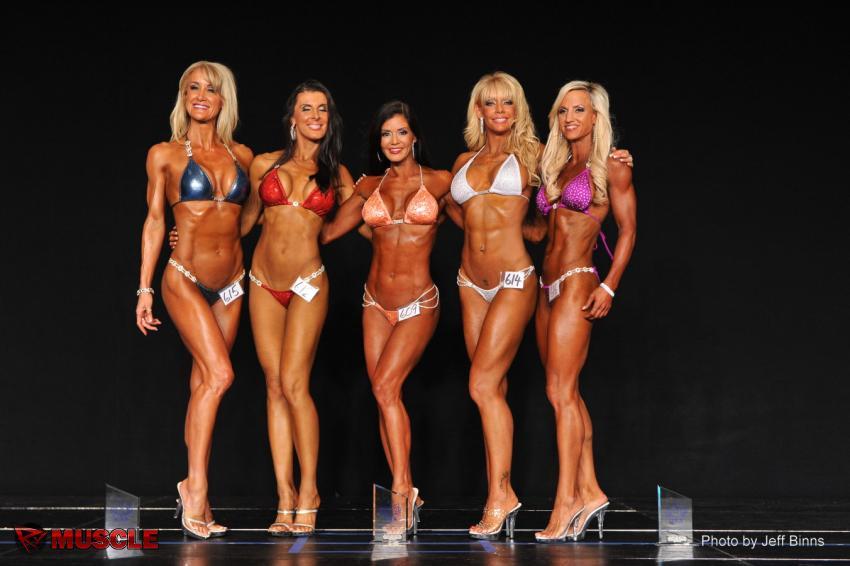
My 1st place finish in Bikini 40+. I also ended up winning the Overall title in Bikini 40+.

If a competitor who had already secured professional status won another Pro Card-qualifying class, that Pro Card didn’t simply stay with them. It rolled down to the second-place finisher. The winner still received the title, the recognition, and the prestige of winning the class—but another athlete earned the chance to become an IFBB Professional.

This actually happened on the day when I won IFBB Pro Status. I had taken the 1st place spot in my height class in Bikini 40+, securing my spot in the IFBB league. Then about 30 minutes later, I also won 1st place in Bikini 35+. The second-place finisher ended up getting the Pro card spot since I had already won a spot in 40+.

My 1st place finish in Bikini 35+. Competitor 636 placed 2nd and ended up being awarded a spot in the IFBB as well.

It was a system that rewarded excellence without wasting opportunity.

Somewhere along the way, that philosophy disappeared.

Now we’re celebrating athletes earning their second, third, and sometimes even fourth Pro Card, while competitors standing right beside them—who may have delivered the performance of a lifetime—leave empty-handed. That doesn’t strengthen bodybuilding. It bottlenecks it.

Let’s be clear: this isn’t criticism of the athletes. If the rules allow someone to compete for multiple Pro Cards, they’re simply playing by those rules. Most competitors would do exactly the same thing.

The issue is the rule itself.

Bodybuilding is already one of the most demanding and expensive sports in the world. Athletes spend years chasing this dream, investing thousands of dollars in coaching, food, supplements, travel, entry fees, posing instruction, and countless hours of sacrifice. For many, earning an IFBB Pro Card is the culmination of a decade of relentless work.

Why should that opportunity effectively disappear because someone who is already qualified wins again?

The old roll-down system recognized that bodybuilding isn’t just about identifying the best athlete in the room—it’s also about building the future of the professional ranks. Every available Pro Card represented a chance to introduce a new professional into the sport.

Today, too many of those opportunities are simply being absorbed by athletes who have already crossed the finish line.

Supporters of the current system argue that competitors should simply beat whoever shows up. Fair enough. But that misses the point entirely. The winner still wins. Nobody is taking away the class title, the overall title, or the accomplishment. The question is whether a second or third Pro Card has any meaningful value.

It doesn’t.

A Pro Card isn’t like winning another national championship. It’s a qualification. Once you’ve qualified, you’ve qualified.

Imagine if an Olympic Trials winner could keep claiming multiple spots on the Olympic team while everyone else stayed home. Or if a driver who had already qualified for the Daytona 500 continued occupying additional qualifying positions that could have gone to someone else. Every other major sport understands that once an athlete has secured qualification, additional qualifying positions move down the field.

Bodybuilding used to understand that too.

If the NPC wants to grow the IFBB Pro League and reward the athletes who dedicate their lives to this sport, it should revisit the system that worked for years. Keep recognizing dominant winners—but let duplicate Pro Card qualifications roll down to the next eligible competitor.

One competitor. One Pro Card.

That isn’t lowering the standard.

It’s making sure every Pro Card actually serves its purpose.

The Evolution of IFBB Bikini Pros Since 2009

Sonya Gonzalez 2012, shot by Bill Comstock, Muscle and Fitness

Isa Pecini 2022, image from Fitness Volt

Introduction

Since its inception in 2009, the International Federation of Bodybuilding & Fitness (IFBB) Bikini division has undergone remarkable transformation. What was once a relatively new category has now become one of the most popular and competitive segments in the world of bodybuilding. Over the years, the athletes competing in the IFBB Bikini Pro division have displayed an impressive evolution in terms of physique, presentation, overall aesthetic, and even competition attire. In this article, I will discuss the changes that have defined IFBB Bikini Pros from 2009 to 2023.

Physique Transformation

In the early days of the IFBB Bikini division, the emphasis was on a balanced, lean, and toned physique. As a bikini athlete who jumped onboard the competition circuit in 2009 (the inception year for the bikini division), I noticed that competitors who were too muscular or conditioned were urged to switch to the figure division. This was because bikini athletes were expected to have well-defined but not overly muscular physiques, maintaining a feminine appearance. Since then, there has been a noticeable shift towards a more sculpted and athletic look which is more muscular than ever, and rivals the look of figure competitors from earlier years. Today’s IFBB Bikini Pros display a much higher level of muscle development compared to those from my era (2009-2014), particularly in the shoulders, glutes, and legs, while still maintaining an overall feminine silhouette.

Training and Nutrition Advances

With the progression of sports science and nutritional knowledge, athletes have access to more effective training methods and specialized dietary plans. This has allowed IFBB Bikini Pros to achieve levels of conditioning and muscle development that were not as attainable in the early years of the division. Training techniques have become more sophisticated, with a greater focus on targeted muscle groups and tailored workout routines. In addition, judges have pushed for more muscularity as the division has evolved, placing greater pressure on bikini athletes to pack on muscle.

Posing and Presentation

Another notable evolution has been in the area of posing and stage presentation. In 2009, poses were simpler, with an emphasis on showcasing overall physique balance and grace. Today, IFBB Bikini Pros have refined their posing techniques to highlight full glutes, a well-shaped V-taper, well developed quads and hamstrings, and shapely delts. Although the art of stage presentation was always a crucial aspect of competition, posing is now much more polished, and it is even more imperative for athletes to exude confidence and charisma on stage while also presenting the most desirable physical characteristics of the division.

I remember how we used to pose onstage, with the front pose characterized by both legs straight, with one leg out to the side and slightly forward, with the opposite hip pushed towards the back of the stage. In stark contrast, the current front pose standard features feet and legs pointed towards one side, with the upper torso twisted at the waist so that the shoulders are squared towards the judges. You can see both types of poses in the images which are featured at the top of this blog post. The back pose has remained relatively unchanged, with the booty hiked up and the lower back arched. One posing feature which has been consistent throughout the years is the rear end pitched up and back, like a cat in heat. I will never forget how much my lower back would hurt after practicing posing or after a contest!

Suits and Competition Attire

The evolution of competition suits is another noteworthy aspect of the IFBB Bikini Pros’ journey. As the division gained popularity, athletes and designers began to experiment with different fabrics, cuts, and styles. Today, competition suits are more intricate and tailored to each athlete’s unique physique, often featuring embellishments, crystals, and personalized touches that enhance the overall presentation on stage. In 2009, suits tended to be simpler, with standard designs and limited embellishments. Each year, suit cuts evolved, with the bottoms getting skimpier and skimpier, resulting in the current suit bottom design, which is a daring V-shape, but not a thong.

Conclusion

The evolution of IFBB Bikini Pros from 2009 to 2023 reflects the dynamic nature of the sport and the dedication of the athletes involved. With advancements in training, nutrition, posing, and competition attire, the IFBB Bikini division has become a diverse and thriving segment of the bodybuilding world. As we move forward, it will be fascinating to see how the division continues to evolve, setting new standards of excellence in physique, presentation, and athleticism, while pushing the boundaries of competition attire.