Bidets have surged in popularity over the past four years, primarily due to COVID lockdown restrictions and the toilet paper shortage. But while over 80% of households in Japan have bidets, the United States only boasts about 6% of households which feature bidets, even post-COVID. As someone who has a bidet, and had basic bidet attachments since 2016, I strongly believe that they are far superior to toilet paper and wipes for cleaning the area down under, and they result in a dramatic decrease in toilet paper use. Bidets are environmentally friendly, hygienic, and generally better for your bottom.
Since most American households don’t have bidets, I thought I would share the following video so that you will know what to do if you find yourself perched on a bidet toilet while visiting friends, and are curious about how to use one:
I encourage those of you who haven’t used a bidet before to try one when you get the chance. I know the sensation of having water shooting up your keister hole is very strange, but once you get over the initial shock, I promise that you will feel so clean after you use it. No amount of wiping with toilet paper will ever get you completely clean, but water will definitely wash all the residue away.
The history of the bidet is also quite interesting, as bidets were originally an upgrade from a chamber pot. For more information on the history of the bidet, check out this great article:
I am a huge fan of bidets, and truly believe that they are far superior for cleaning the nether regions than toilet paper. When I first got a bidet attachment back in 2016 (pictured below), I ordered two basic units for two different toilets. Because the attachments were very basic, I eventually became accustomed to the jet of cold water which would shoot out.
My first bidet toilet attachment, 2016
Then I visited Japan for the first time in 2020, and all the fancy bidet toilets there completely dazzled me. They were a far cry from the odd-looking bidets I saw in the late 1970’s in the bathrooms of affluent people. In fact, I used to think that only rich people ever bothered to have bidets in their homes, since they had separate plumbing and were not integrated into a toilet design. The bidet toilets in Japan had warm water, dryers, privacy music, and motion-detectors in the lid, and many of them greeted with a welcoming, opening toilet lid and privacy music.
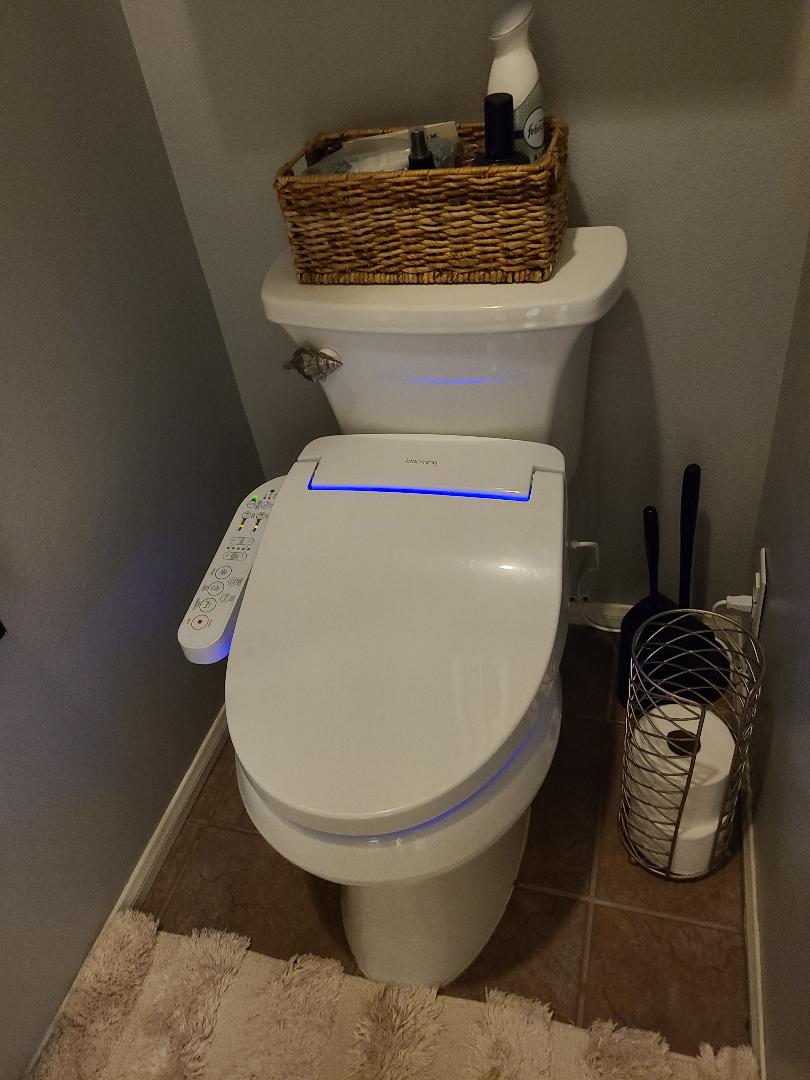
After that Japan trip, I vowed that I would eventually get a fancy Japanese style bidet toilet. I finally got my chance to have an electric bidet toilet seat installed when the toilet in my master bath had to be replaced last November. I bought a model that doesn’t have a motion detector in the lid or privacy music, but all of the other bells and whistles are on the model I have, and I couldn’t be happier. I can’t even imagine life without one of these modern bidet toilet seats.
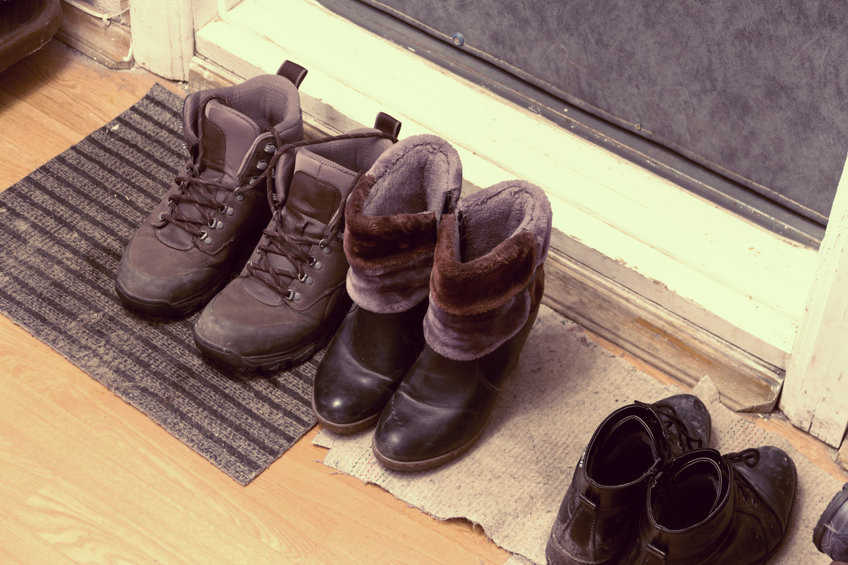
I grew up in a shoes-off household, which meant that as soon as anyone stepped into my home, they had to remove their shoes and leave them at the front door. Throughout my childhood, I noticed that none of my friends removed their shoes while in their homes, but then again, none of whom were Asian. In stark contrast, I noticed that the habit of removing shoes, sandals, and boots was always followed by my mom’s Asian friends, as well as by my relatives (also Asian) in Hawaii. I soon noticed that the floors in my friends’ homes didn’t feel nearly as clean on my bare feet as the ones in my own apartment, since they didn’t practice the same ritual my Japanese-American mother and I did. What I ended up doing in my friends’ homes was either keep my shoes on, or I would keep my socks on if I was wearing any when I visited them. To be honest, I always felt that it was so much cleaner to be in the habit of removing shoes once entering a residence, and this is something I continue to practice to this day. Since I am also the person who usually cleans the floors, rugs and carpets in my house, I have become a stickler for ensuring that no one enters in shoes which have traversed sidewalks, driveways, lawns which are teeming with all kinds of nasty gunk.
These days, I even go so far as to ask service technicians who enter my home to either remove their work boots, or to wear shoe covers, if they intend to conduct work inside the house. Before you accuse me of being extreme in my desire to keep my abode clean, keep in mind that back in July of 2021, a central air service technician tracked so much dirt and oil into my bedroom that it took me two sessions to remove all the stains from my bedroom carpet. Shortly after that, I ordered disposable shoe covers and have them right at the foyer for convenience.
Even with the shoes-off policy in my home, I still notice dust and dirt on my floors, and since I have pets, there is also the issue of shedding hair which accumulates. The last thing I want is to worry about when I clean the floors every week is chemicals, dog feces, and various microbes being introduced to my house via outdoor footwear. A study conducted by the University of Arizona discovered that 96% of soles of shoes were found to harbor fecal matter, which is picked up from the floors of public restrooms, as well as bird droppings and dog feces from asphalt, concrete, grass and soil. When you wear your shoes inside your house, you are spreading all of that bacteria, most notably E. coli, over all of your floors. Not only do you have to worry about germs, you also need to be aware of how many chemicals we track into our homes with our shoes, from gasoline which we pick up while pumping gas at a gas station, to carcinogenic chemicals which are used on lawns, and the list goes on.
Why not improve your indoor environment with a simple step and implement a no-shoes policy when you are inside your house? You’ll be rewarded with a cleaner home and will decrease your exposure to potentially harmful substances.



 dr. stacey naito's blog