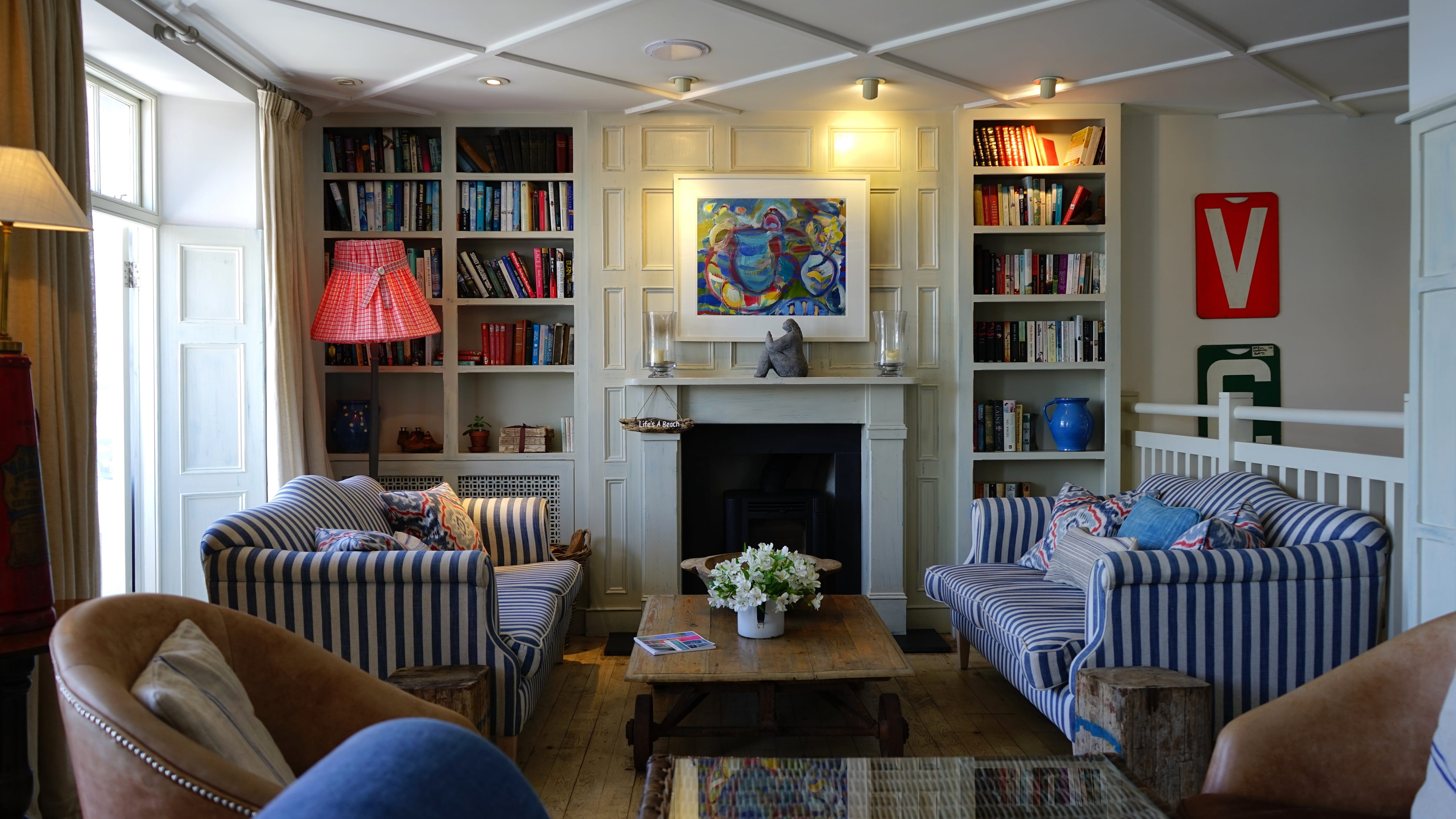
When most people hear the word decluttering, they may picture overflowing closets, junk drawers that can barely close, or piles of belongings that have accumulated over the years. Decluttering is often viewed as something we do when our homes have become noticeably messy or disorganized.
But what if your home is already tidy? As a personal example, I am a very tidy and organized person by nature, and I get anxious whenever I am in a home which is disorganized or cluttered. Nevertheless, I make sure to perform regular scheduled decluttering sessions throughout my home.
Even for someone who is naturally organized, keeps things in their place, and generally maintains a clutter-free home, there is still tremendous value in regularly scheduled decluttering. In fact, when your spaces are already well organized, the process can be less about getting rid of things and more about reorganizing, reassessing, and refining the way your home functions.
I have noticed that when I have a decluttering session, items which I might have forgotten about will be brought to the forefront in my mind. Another thing which occurs is that I will encounter items which have become obsolete, which means they can be donated, sold, or thrown in the trash. Every decluttering session makes my home more efficient, and I get great satisfaction from optimizing my living space.
Organization Is Not a One-Time Project
One of the biggest misconceptions about organization is that once a space has been organized, it will stay that way indefinitely. Over time, areas which were once quite tidy can spread out and occupy more space, and other added items may prove to be obsolete after a period of time.
Our lives change. Our needs change. Our belongings change.
Something that made perfect sense in a kitchen cabinet two years ago may no longer be the best use of that space today. A closet that was perfectly arranged last season may need to be reconsidered as our wardrobe changes. Books accumulate, drawers acquire new contents, and items that once had a specific purpose may quietly become unnecessary.
Even a beautifully organized space can become less functional over time.
That is why decluttering should be thought of as maintenance rather than a one-time event.
Just as we regularly clean our homes, we can periodically review the things inside them. I make sure to schedule my decluttering and deep cleaning sessions throughout the year to ensure that they are performed.
The Benefit of Reorganizing What Already Works
Decluttering doesn’t always mean throwing things away.
Sometimes, the biggest benefit comes from simply looking at a familiar space with fresh eyes.
Take a closet, for example. You may have everything neatly arranged, but perhaps the items you wear most frequently aren’t as accessible as they could be. Or maybe your storage system worked beautifully when you first created it, but your habits have changed.
The same principle applies to cabinets and drawers.
A kitchen drawer might be perfectly tidy but contain tools you rarely use. A bathroom cabinet may be organized but hold products you no longer reach for. A desk drawer may have everything neatly separated while still containing items that haven’t been used in years.
There is something surprisingly satisfying about opening a familiar drawer and realizing, This could work better.
Reorganization can make everyday life just a little easier.
Our Homes Should Reflect Our Current Lives
One of the most useful reasons to declutter regularly is that our possessions can quietly become a record of who we used to be.
We hold onto clothes for a lifestyle we no longer have. We keep books we bought with the intention of reading someday. We save decorative objects because they once meant something to us. We keep duplicate items because they might be useful eventually.
None of these things are inherently problematic. But collectively, they can occupy valuable physical and mental space.
Regular decluttering gives us an opportunity to ask a simple question:
Does this still belong in my life as it is today?
That question can apply to practically everything in our homes.
Don’t Forget the Things on Display
Decluttering isn’t limited to what is hidden behind closed doors.
The things we see every day matter, too.
Bookshelves, coffee tables, mantels, countertops, open shelving, and other visible areas can gradually become crowded. Because these items are part of our everyday surroundings, we can become accustomed to seeing them and stop noticing how much visual information they create.
Every so often, it can be refreshing to remove everything from a shelf or display area and start again.
Maybe a collection would look better with fewer pieces. Perhaps the books could be rearranged by color, size, subject, or simply according to what you enjoy looking at most. A decorative object that once felt special may no longer resonate with you.
There is no need to completely reinvent the room.
Sometimes removing just a few things allows the pieces you truly love to stand out again.
The Mental Benefits of a Well-Edited Home
Our physical surroundings can influence how we feel.
A home doesn’t have to look minimalist to feel calm, and there is certainly nothing wrong with having collections, decorative objects, or sentimental belongings. The goal isn’t to create an empty space. It is to create a space that feels intentional.
When our surroundings are thoughtfully edited, there can be less visual noise and fewer small decisions competing for our attention.
There is also a certain mental relief that comes from knowing that the things around you have been deliberately chosen.
A well-organized home says, in a quiet way: Everything here has a place, and everything here has a reason to be here.
Regular decluttering helps maintain that feeling.
Schedule It Before You Need It
Perhaps the most effective way to make decluttering part of your lifestyle is to schedule it.
Waiting until you feel overwhelmed can turn the process into a major undertaking. Instead, consider setting aside a little time throughout the year to revisit different areas of your home.
You might dedicate a weekend to closets, an afternoon to kitchen cabinets, or an hour to bookshelves and visible displays.
It doesn’t have to be an enormous project.
In fact, regular small resets are often much easier than occasional massive cleanouts.
Think of it as a seasonal check-in with your home.
What is working? What isn’t? What has changed? What do I no longer need? What could be arranged differently?
Those questions can be surprisingly powerful.
Decluttering Is Also About Appreciation
There is another benefit to regularly going through our belongings: it reminds us of what we already have.
When we reorganize a closet, we rediscover clothes we love. When we revisit a bookshelf, we come across books we’ve forgotten about. When we go through a cabinet, we may realize we don’t need to buy another version of something because we already own exactly what we need.
Decluttering can therefore be less about acquiring less and more about seeing and appreciating what we already have.
It can encourage more thoughtful consumption because we’re more aware of our belongings and the space they occupy.
A Home Doesn’t Have to Be Perfect
Regular decluttering isn’t about creating a picture-perfect home or constantly rearranging everything.
It is about staying connected to your space.
Even people who are naturally tidy and organized can benefit from occasionally stepping back and asking whether their systems still serve them. Organization is not a finish line. It is an ongoing process that evolves alongside us.
And perhaps that is the greatest benefit of scheduled decluttering: it allows our homes to evolve intentionally rather than simply accumulating change over time.
A home should support the life you’re living now—not simply preserve the way you lived several years ago.
So even if your closets are neat, your drawers are organized, and your countertops are clear, take a moment every so often to look again.
Open a cabinet.
Pull everything out of a drawer.
Rearrange a bookshelf.
Edit a display.
Revisit the things you’ve kept.
You may discover that nothing needs to go—and that’s perfectly fine. Sometimes the reward is simply finding a better arrangement, appreciating what you have, and creating a space that feels fresh again.
Because decluttering isn’t necessarily about getting rid of things.
Sometimes, it’s simply about making room for the life you’re living now.

