As a child, I was absolutely intoxicated by words. Not just the ordinary, pedestrian ones — I mean the labyrinthine, tongue-twisting, sesquipedalian marvels that felt like verbal acrobatics. I collected them the way other kids collected trading cards.
I didn’t just know the longest word in the English language – pneumonoultramicroscopicsilicovolcanoconiosis — I reveled in it. I made sure to memorize it at the age of 8, savoring each syllable like a procession: pneu-mo-no-ul-tra-mi-cro-scop-ic-sil-i-co-vol-ca-no-co-ni-o-sis. Twenty-three letters? Please. That was merely a warm-up. This beefcake carried 45 letters, and it denoted a coal miner’s lung disease, which was even better since it also appealed to the medical nerd portion of my personality. I wanted words with gravitas, with architectural complexity.
My mom recognized early on that spelling wasn’t just a skill for me — it was a vocation. When I told my mother that there would be a major spelling bee at the end of the 6th grade year, she took it upon herself to quiz me daily in order to fortify my chances of taking home the coveted title and medal. Every afternoon she would sit across from me at the kitchen table with a list. Not pedestrian little morsels like “apple” or “chair.” No. She would lob in “chiaroscuro,” “defenestration,” “antidisestablishmentarianism.” It was our ritual — my daily lexical calisthenics in preparation for the apotheosis: the 6th-grade spelling bee.
And when that day came, I was incandescent with anticipation.
One by one, students were shot down, failing in their efforts to deliver impeccably spelled words, until there were only two of us left: Martha Phelps and me. Martha Phelps was supremely confident, practically effervescent with self-assurance. Then she was given the word facetious. I remember thinking how deliciously ironic it was, because it contains all five vowels in order. She began: F-A-C-E-I-O-U-S… and stopped. Smug. Triumphant.
Except.
Except there was no t.
Mrs. Mackenzie — stately, unflappable — adjusted her glasses and said, without saying a word, turned to face me.
Mrs. Mackenzie repeated the word: facetious.
The room shifted. Martha’s smile curdled.
Oh, I had been waiting for this.
F-A-C-E-T-I-O-U-S.
Each letter placed with surgical precision. The t nestled perfectly where it belonged — the quiet hero of the word.
And just like that, victory. Not by accident. Not by guesswork. By devotion. By daily drills at the kitchen table. By loving words enough to memorize even the absurdly magnificent ones.
I didn’t just win with facetious. I won because I understood that words have bones and ligaments and hidden symmetries. And I adored every single one of them.
Since one of my biggest interests lies in houseplants, I thought I should cover the health benefits of growing greenery within a household. Houseplants offer a range of health benefits, both physical and mental, making them a great addition to any home or office space. Here are some of the key benefits:
1. Improved Air Quality
One of the most well-known benefits of houseplants is their ability to purify indoor air. Plants absorb carbon dioxide and release oxygen through photosynthesis. Additionally, certain houseplants, such as peace lilies, spider plants, and snake plants, are known to remove toxins from the air, including formaldehyde, benzene, and trichloroethylene. This can lead to cleaner, fresher air indoors, which may help reduce respiratory issues and improve overall health.
2. Stress Reduction
Several studies have shown that being around plants can help reduce stress and anxiety. The presence of greenery has a calming effect, potentially lowering heart rates and blood pressure. Simply interacting with plants—whether it’s watering them, trimming leaves, or just admiring their beauty—can trigger a relaxation response, helping you feel more grounded and less overwhelmed. Houseplants offer a range of health benefits, both physical and mental, making them a great addition to any home or office space. The best part of having a large collection of houseplants is that my home has a Bohemian, Zen-like feel to it which people find relaxing and welcoming.
I will say that watering the plants in my collection is a bit of a hassle, even considering the fact that I only water half of the plants each week. Part of the issue is that I have over 100 plants inside my home, and many of them are suspended from ceiling hooks, making it necessary for me to cart around a stepladder on plant watering day. However, as long as you have a manageable assortment of plants in your residence, the task shouldn’t be too strenuous.
3. Enhanced Mood and Mental Health
Houseplants can have a positive impact on mental well-being. Studies suggest that spending time around plants can improve mood, reduce feelings of fatigue, and increase feelings of calm and contentment. The act of caring for a plant, and the sense of responsibility that comes with it, can also boost feelings of accomplishment and purpose. For people experiencing mild depression or anxiety, the nurturing of plants can offer therapeutic benefits, acting as a form of mindfulness or relaxation practice.
4. Improved Productivity and Concentration
Research has shown that having plants in the workspace or at home can improve focus, cognitive function, and productivity. Plants can increase attention span, enhance memory retention, and even promote creativity. In offices, employees with plants in their workspaces often report higher satisfaction, fewer sick days, and improved mental clarity. The presence of plants can help people feel more connected to nature, even in an urban setting.
5. Better Humidity and Temperature Regulation
Houseplants naturally release moisture into the air through a process called transpiration, which can help maintain a more balanced level of humidity in the home. This is particularly helpful in environments where air conditioning or heating systems dry out the air. Proper humidity can reduce the risk of dry skin, sore throats, and respiratory irritation. Additionally, plants can help moderate temperature fluctuations by absorbing sunlight and releasing moisture, leading to a more stable and comfortable living environment.
6. Better Sleep
Certain plants, like lavender and jasmine, have been shown to promote better sleep. The calming scents emitted by these plants may help to lower anxiety levels and encourage relaxation before bedtime. Moreover, the act of caring for plants and spending time in nature can also help you develop healthier sleep habits by reducing stress during the day.
7. Boost to Immune System
Some research suggests that exposure to plants and nature can have a positive effect on the immune system. Spending time in green spaces, even within your home, can increase the production of white blood cells, which help defend against illness. Additionally, houseplants can encourage you to spend more time in your living space, which could lead to healthier habits, such as better hydration, nutrition, and sleep, all of which support a stronger immune system.
8. Reduction in Noise Pollution
Houseplants can also absorb sound, which helps reduce noise levels in indoor environments. In a busy home or office, the presence of plants can create a more peaceful atmosphere by dampening echoes and muffling background noise. This can lead to improved concentration and overall well-being, particularly in noisy urban environments.
9. Connection to Nature
Having plants in your home helps foster a sense of connection to the natural world. In urban environments, where access to parks and green spaces may be limited, indoor plants can provide a touch of nature, helping to counteract the effects of “nature-deficit disorder” (a term coined by Richard Louv to describe the negative impact of disconnection from nature). This connection can improve your mental and emotional well-being, helping you feel more grounded and centered.
10. Aesthetic and Environmental Benefits
In addition to the direct health benefits, houseplants also improve the aesthetic value of a space, making it feel more welcoming and vibrant. A well-decorated home or office with plants can enhance your environment, making it feel more lively and positive. This positive visual impact can indirectly boost your mood and contribute to a healthier mindset.
Final Thoughts
Integrating houseplants into your environment can be a simple yet effective way to enhance both physical and mental well-being. Whether you’re looking to improve air quality, reduce stress, boost productivity, or just make your home more inviting, the presence of plants can have far-reaching benefits for your health. And the best part is that they require relatively little effort to maintain, making them an easy and accessible way to improve your overall quality of life.
I had no idea that I would become fully obsessed with Voluspa candles, to the point where I have the majority of their 56 scents. Though I am not a fan of every single Voluspa candle fragrance, I own and enjoy over 40 of them. Voluspa candles are made with eco-friendly coconut wax, burn well, and most of the aromas have good throw, meaning that they permeate at least part of the room nicely.
In the span of three weeks, my Voluspa candle collection grew from 10 Voluspa candle varieties to over 40, thanks to the purchase of a candle warmer which increases the throw of smaller candles. I ended up purchasing many smaller candles in an attempt to accumulate the bulk of the Voluspa line. Obviously, my love for candles expanded into an earnest hobby which I enjoy immensely.
There are smaller candles in the wooden boxes on this shelf…
To give you an idea of which fragrances I have in my collection now, here’s the list:
I always make sure to have my candles displayed in such a way that they aren’t too conspicuous, and actually look like they are part of the decor. This is critical to me, because I abhor the idea of having clutter which isn’t organized in a clever way. The images on this post feature the main candle groupings I have scattered throughout the second floor of my home. As you can see, I have established candle mini zones so that I can display/store my collection in a manageable way. You can’t tell that I have over 40 Voluspa candles in my home! Incidentally, I also have several other candles from other candle companies as well.
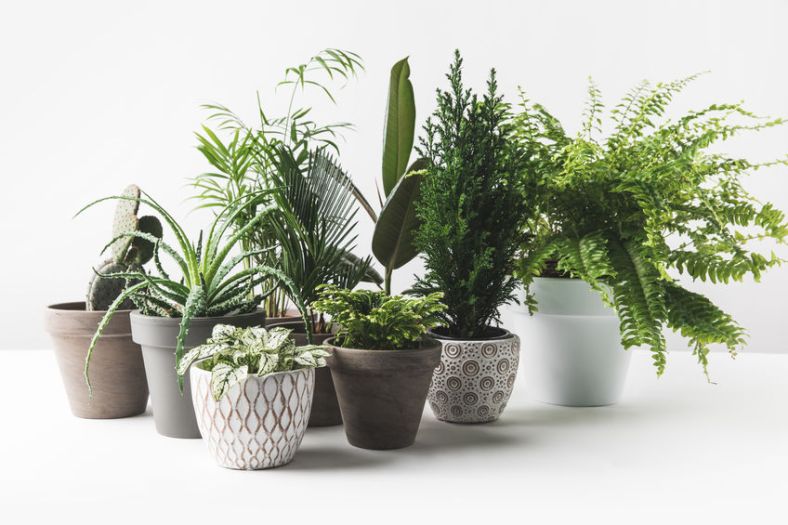
Source: 123rf.com Image ID : 100542878 Copyright : lightfieldstudios
I know there must be a whole slew of you who have jumped aboard the plant-obsessed bandwagon, and who treasure your new jungles as much as if they were your children. Trust me, I can relate, though this isn’t the first time in my life that I have gone plant crazy and filled my home with living green things.
The first time I went overboard with buying and maintaining plants was back in 2000, when I amassed a collection of over 70 indoor plants in a 2 bedroom cottage-style apartment, and I loved it. The idea of being surrounded by lush greenery was incredibly appealing, and I was swept off my feet until I went through a divorce which shifted my priorities and pulled me away from my plant hobby.
I took such a sharp about-face that I only had six indoor plants for many, many years, leading into the spring of 2020. Then shortly after lockdown hit, I found myself at a plant nursery in May and purchased three lovely plants. Little did I know that I was about to fall deep into plant obsession. By July, I had over 40 indoor plants, and now, I have about 60 indoor plants. Some were purchased through Etsy, many were purchased from a local supplier (@Brandontheplantguy on IG), and I even bought some from eBay and Amazon.
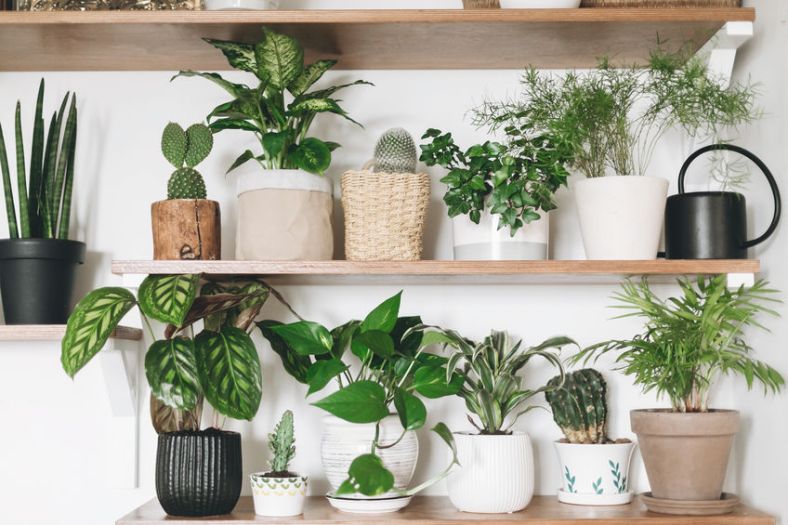
Source:123rf.com Image ID : 126788177 Copyright : Olga Yastremska
Though I feel a certain amount of embarrassment over the fact that my home now declares to everyone that I am a crazy plant lady, I take great comfort in knowing that such an obsession is almost trendy these days. The truth is, houseplants are more popular than ever, especially in millennials who are pushing against the idea of having children, and who are instead opting for a collection of Hoya or Senecio plants which will never demand that the plant parent pony up for a college education. That being said, having a plant habit can set one back quite a bit, not only in the cost of the plants, but also the planters, spring water, plant food, insecticides, etc.
Those of you who aren’t captured by the idea of collecting a bunch of potted living things might be scratching your heads and wondering why people have suddenly gone plant crazy. The COVID-19 restrictions and lockdowns forced us all to stay at home, which meant that suddenly, our home environments took on a greater significance. This is why there was a surge in home improvement projects which kept the big box home improvement stores packed during a time when many other businesses were floundering. Plants certainly can beautify a home, and they also clean the air, but probably the most compelling feature about houseplants which appeals to most folks is the fact that they are living things, and with a bit of nurturing, they will grow and thrive.
That being said, plants don’t always thrive, and when they start to droop or otherwise show that they aren’t happy, plant owners may find themselves dealing with a lot of frustration. Another thing I have noticed about now being responsible for a brood of 60 indoor plants is that I often get pissy when a plant decides to become finicky. It can make a plant parent downright neurotic to try to determine what a failing plant needs. Maybe there’s too much sunlight and the leaves are getting scorched. Or maybe there isn’t enough sunlight. Could it be that the plant needs more/less humidity? Is the plant getting too much/not enough water? Are there pests on the plant which need to be eradicated? What, what, WHAT does this plant want or need?
Even the task of taking care of the plants which are doing well (thankfully, 99% of my plants are doing extremely well) is a daunting one. The one day per week when I look at all my plants and determine which need to be watered is a day I have begun to dread, because it takes a full hour or more for me to complete the task, all the while lugging jugs of spring water, plant fertilizer, orchid plant food spray, neem oil, my watering can, my plant log, and a stepladder all throughout the second and third floors of my home. It’s exhausting.
I know that plant people can relate to what I am about to say regarding plants which stubbornly refuse to do well despite everything, especially popular plants which are supposedly “easy care” plants. When a plant begins to show that it isn’t happy, I honestly feel like I have failed the plant. I get frustrated and want to figure out the solution to the plant’s woes. If the plant refuses to rebound, and is close to its demise, I adopt a very “fed up” attitude, and will very abruptly dump a plant in the trash or banish it outside. It’s the best way for me to disconnect from that irksome creature and get on with my life.
I now have a trusted list of plants I gravitate towards so that I don’t tear my hair out in frustration. Here are the plants which I truly do enjoy, because they are all doing well in my home:
all my Zamioculcas zamiifolias (including zenzi, raven)
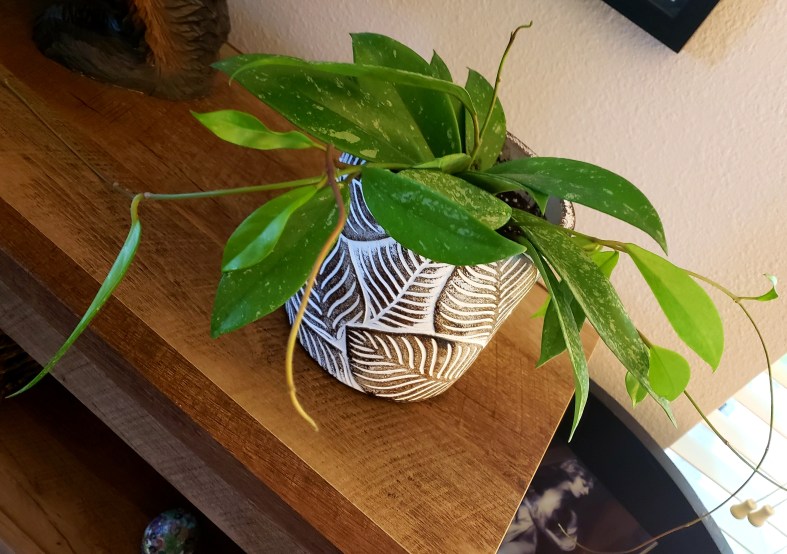
all but one of my Hoyas (incuding shepherdii, pubicalyx, retusa, australis, multiflora, tricolor, carnosa compacta, lacunosa, and obovata)
my Monstera adansoniis
my Philodendron brasils
the one Scindapsus pictus which didn’t die
my Sansevieria starfish
my Pachira aquatica
my Beaucarnea recurvata
my large Senecio rowleyanus, my Senecio herrianus, and my Senecio radicans
In stark contrast, there are plants which I have had little to no success with despite all my efforts. The plants which have stirred up a great deal of frustration include ALL peperomias, n’joy pothos, Tradescantia multiflora (quite possibly the messiest plant ever), Othonna capensis (tried two of these plants and finally gave up), and Begonia maculata. I now avoid those plants in the same way I would avoid a person I didn’t like, and certainly would never welcome them into my home again.
In conclusion, the healthiest way to approach plant ownership is to educate yourself on the particular needs of the plants you have, and if a plant begins to falter, just let it go instead of beating yourself up for not being able to save it. I actually found out that many nurseries will keep stocking certain plants because they know that the plants will be fussy. Since many people are stubborn about trying to succeed in nurturing a plant, they will often purchase the same type of plant repeatedly in hopes of somehow figuring out its needs. I know I did this with Scindapsus, Begonia maculata, Pilea peperomioides, Hoya wayettii, and every time one of these plants would die, I would take the loss personally, as if I was totally responsible. I’ve learned that it is not worth the heartache, not to mention the financial expense, to keep buying those plants.
Source: 123rf Image ID : 119619406 Copyright : sonjachnyj
Like many others who have been sequestered at home for the last few months and have gained a new appreciation for the homestead, I found myself gravitating towards cultivating plant species which I had never grown before. At first, I thought it would be nice to add a collection of vegetables, fruits and herbs to my side yard, so that is where I started. I ended up with a small collection of edible plants which are a nice addition to the succulents I have out there.
Evidently, the side yard project wasn’t enough for me, and I slowly began adding numerous new houseplants into the interior of my home towards the end of May. In the span of less than a month, my indoor plant collection grew from 6 to 35.
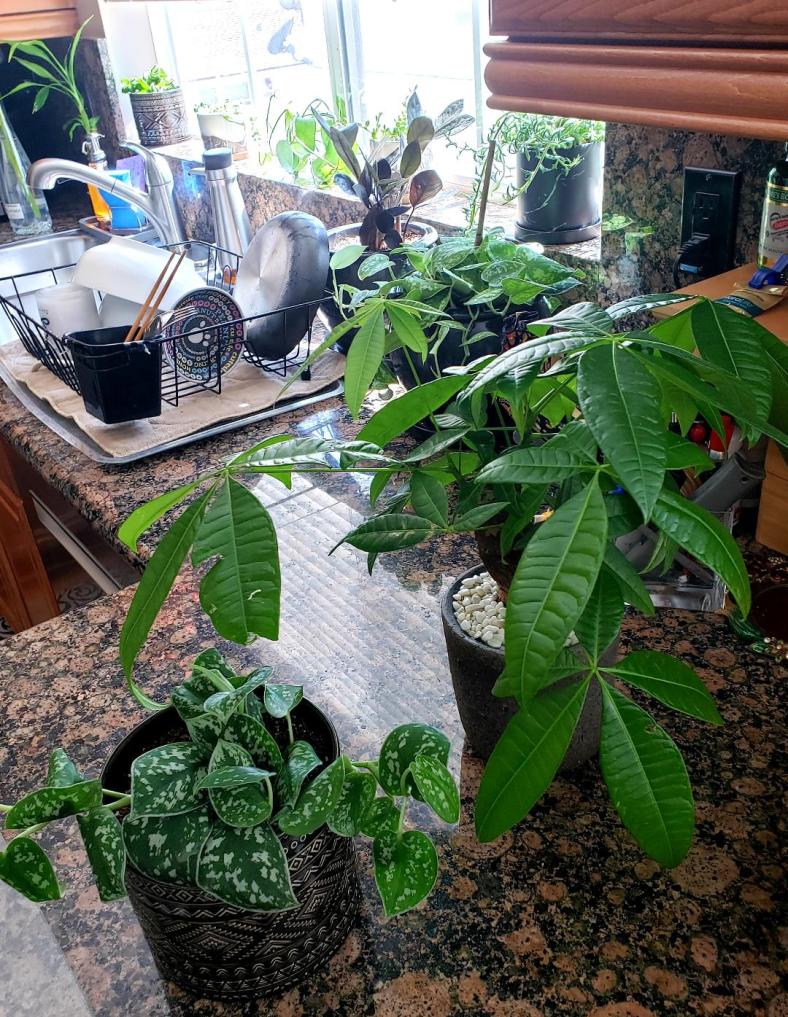
A view of my kitchen plants
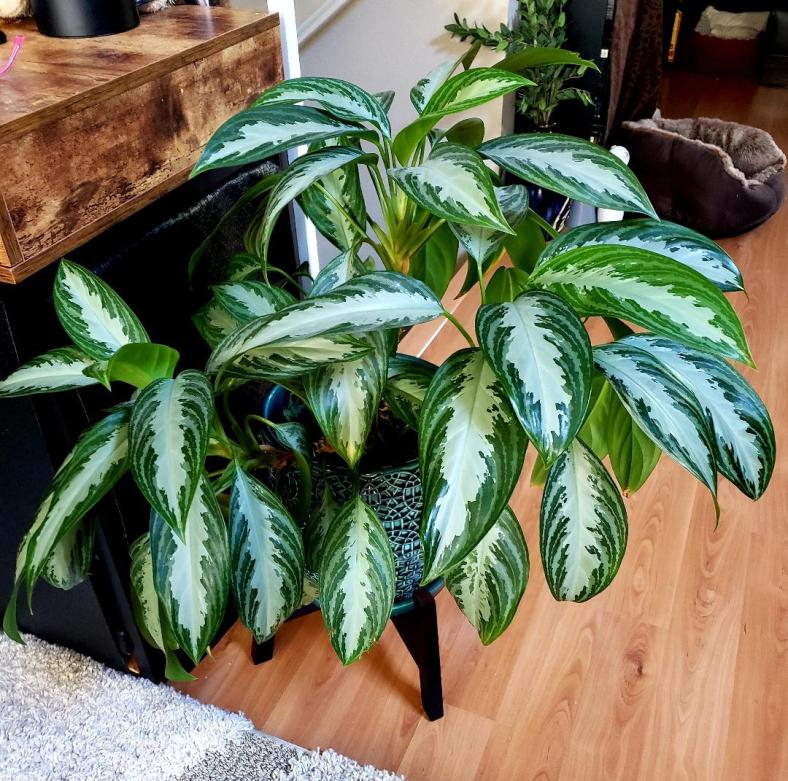
I’ve had this Aglaonema commutatum “Silver Bay” for many years. I bought it in 2003!
Before you start thinking that I had suddenly taken on more than I could handle, I once had over 70 plants inside a 1,320 square foot cottage-style apartment back when I was in the midst of my medical training, as well as a whole patio full of outdoor plants, and rosebushes at my front door. During that time, I proved to myself that I did indeed have a decent green thumb, and thought nothing of allowing my vining and creeping plants to encroach the walls of the place and assert their presence. Entering my abode was like entering a lush jungle, and people would remark constantly on how many plants I managed to squeeze in that space.
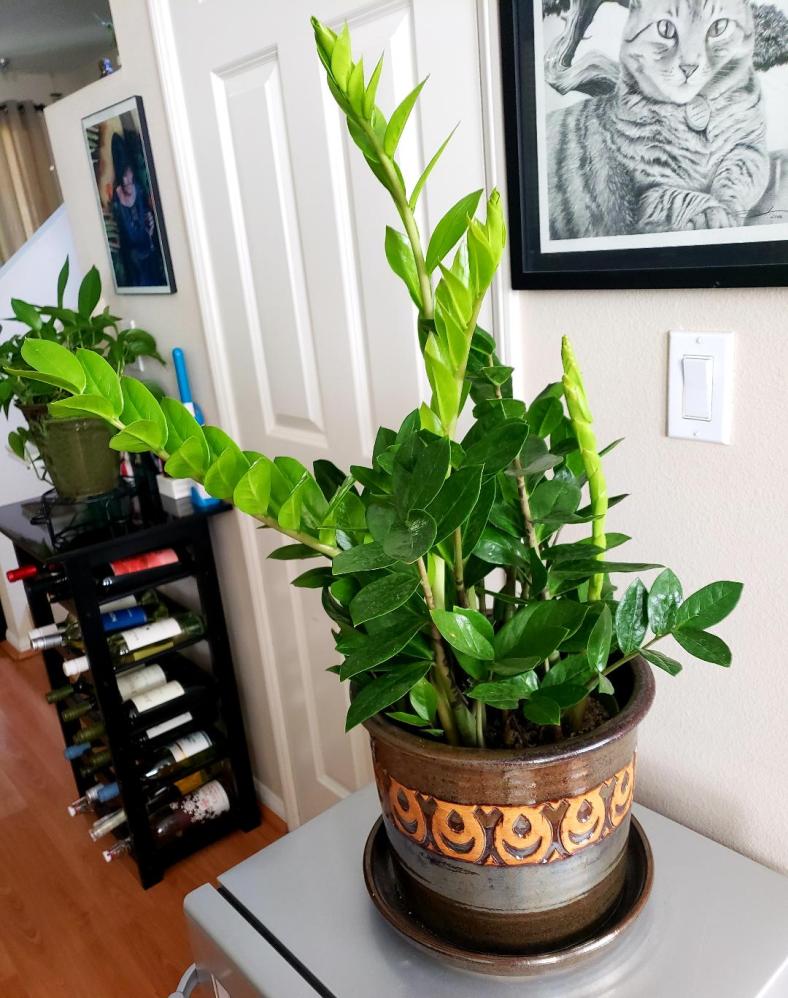
My largest Zamioculcas zamiifolia plant, which threw out all this growth less than one month after I purchased it.
My Peperomia shelf…Peperomia scandens, Peperomia caperata rosso, Peperomia obtusifolia variegata
Now I am in a 1,632 square foot townhouse, with less than half the number of plants I once nurtured. These days, I favor more hardy plants like Hoyas, Senecios, and Zamioculcas zamiifolia (aka ZZ plant) which won’t beg to be watered constantly. Not that I plan to traipse all over the globe anytime soon, but 1) you never know, and 2) I don’t want the responsibility of taking care of petulant plant babies.
Lovely Hoya shepherdii in the master bath…
Hoya obovatas are so cool…I’m training this one on a loop…
Hoya pubicalyx…I loved this plant so much, I bought a second one!
To be honest, I cringe at the phrases “plant mom” and “plant dad”, but I can see how people would be compelled to fuss over plants in the same way they fuss over pets or children. Whenever I see new growth on a plant, I get a bit giddy, and tend to monitor it to see how it is progressing. I now also juggle a staggered watering schedule, which means that some plants are watered weekly, some every two weeks, a few every three weeks, and once every six weeks, my largest ZZ plant gets a drink. However, other than watering and fertilizing, the needs of my plants don’t interfere with my normal daily life. I also don’t worry about light needs, because I have intentionally chosen prime spots for the plants which require more sunlight.
The science nerd in me also enjoys learning all the nomenclature, which is no surprise coming from someone who memorized the longest word in the English language (pneumonoultramicroscopicsilicovolcanoconiosis) at the tender age of nine, and who was forced to learn about 15,000 terms while in medical school. There is something about scientific language which absolutely thrills me and satisfies my constant thirst for learning.
Who has developed a new interest in gardening since the lockdown started? I’d love to hear what other people have been drawn to plant-wise.
Most people who know me would never guess that I have flirted with the world of acting for decades, because it just isn’t something I talk about very much. But from the time I was a child, I have been surrounded by actors, producers, writers and directors. While I don’t live, breathe and eat acting, I respect it and have a keen interest in it.
It had been so long since I had taken any acting classes or workshops that I decided to take an on-camera audition skills class during the months of November and December. In order to go to these classes, I have had to sit through two hours of rush hour traffic to travel 20 miles from my house to the class. The classes run until 10:30 pm, but always go late (usually 10:45 or 10:50 pm), which means that I don’t get home until 11:30 pm. Yet I am completely committed, have showed up on time, and have completed every exercise even if I felt incredibly uncomfortable doing so.
There are many areas I want to study: scene study, cold reading, on-camera, and voice-over study. I am also considering an improv techniques class further down the road. Because of my interests, I plan to spend the early part of 2016 auditing classes to see which ones grab me. Then I will narrow things down and figure out which classes fit my busy schedule.
For those of you who think I may be abandoning my medical or fitness careers to pursue a career in acting, don’t worry. I am simply exploring an interest I have had for a long time, and feel that the experience will make me grow as a person, and will take me out of my comfort zone.
Not all of us are able to play musical instruments well, but the challenge of learning to play one can be a fun hobby. Recent research suggests that people who play a musical instrument regularly, even if they aren’t musically gifted per se, are reinforcing their brain’s function at the same time.
Musical training is thought to increase neural connections in the brain which are associated with decision making, complex memory, and creativity. Musical education can even boost cognitive function in people who have suffered from strokes, and equip the brain to adapt by using intact brain regions.
Musical Brains
Numerous studies have proven that the brains of musicians differ functionally and structurally from the brains of non-musicians. Skilled musicians are like athletes, because they need to coordinate multiple senses, and focus on complex elements like melody and tempo, while performing a piece.
There is also research which suggests that the areas used in musical performance are closely linked with other important cognitive functions. One study by Schaug discovered that musical disorders such as tone deafness affect about 4 to 10 percent of the population, which is the same percentage range seen with disabilities such as dyslexia and dyscalculia (math difficulties).
Another study, performed by Wang, examined the brains of 48 young adults who had studied music for at least one year between the ages of 3 and 15. The subjects who had begun musical training before the age of 7 had greater development in the areas of the brain associated with language and executive function.









 dr. stacey naito's blog