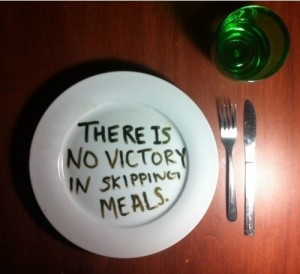
Yes, you read that title correctly. If you have been on one diet after another in an effort to try to lose those last 5, 10, 15, or however many pounds, perhaps losing some weight only to gain all of it back plus some bonus weight, then it is highly likely that you have damaged your metabolism via severe calorie restriction. There is a very good reason why the weight loss industry is so successful and why certain well-known weight loss programs keep their customers coming back. The reason has everything to do with severe caloric restriction which squashes metabolism.
Another common practice among those trying to lose weight is to skip meals in an effort to cut calories. As stated before, you wreak havoc on your metabolism when you skip meals by causing it to slow down. Why does this happen? When there is no food to break down, the body’s furnace slows down and becomes so sluggish that when you actually do eat something, your body is less equipped to break down the food quickly, so much of it is stored as fat. Depriving yourself of food also causes sharp drops in blood sugar, robbing you of energy and increasing insulin resistance. Increased insulin resistance over time can precipitate the development of diabetes.
Other consequences of skipping meals include the following:
• Malnutrition – If you do not feed your body regular, balanced meals, it is highly likely that you are depriving it of essential nutrients. Malnourished states can lead to weight gain, poor health and progression of disease over time.
• Poor concentration – This is due to the depletion of glycogen stores which occurs. The brain simply does not have enough fuel to run on, resulting in fogginess.
• Hunger pangs – When you skip meals, you may experience intense feelings of hunger along with anxiety, dizziness or nausea. In addition, such feeling may lead to overeating when you finally sit down to eat something. Loading the body with a large meal is overkill, and leads to poor digestion and absorption as well as increased storage in body fat stores.
Do yourself a favor and practice the following guidelines. If you do, you will be rewarded with a healthy weight for a lifetime.
1. Don’t skip meals.
2. Make sure to eat enough protein to sustain your energy levels and satisfy your hunger.
3. EAT BREAKFAST.
4. Commit to healthy meals.
5. When you turn to snacks, make sure healthy alternatives are available so you aren’t tempted to reach for a nutrient-poor convenience food.


 dr. stacey naito's blog