Eggs Are Superfoods

eggs
If you haven’t already incorporated eggs into your regular meal plan, you should. Eggs are an excellent source of protein, and also provide all eight essential amino acids which are necessary for optimal muscle gains. Eggs are also packed with the following nutrients:

· Vitamin A
· Vitamin E
· Vitamin K
· Vitamin B12
· Riboflavin
· Folic acid
· Iron
· Zinc
· Calcium
· Selenium
· Choline

You may have been duped into believing that eggs should not be eaten due to the fat content in the yolks. However, there are only 2 grams of saturated fat and a total of 5 grams of fat in an average egg. The body actually requires a certain amount of saturated fat for proper function, which translates to about 20 grams of saturated fat on a 2,000 calorie per day diet. If you add only four whole large eggs to your daily diet, you will get 20 grams of quality protein with only 8 grams of saturated fat. As for the cholesterol content in egg yolks, it has been determined that dietary cholesterol does not raise blood cholesterol levels. In fact, consumption of eggs can improve blood lipid panels.

Here is a macronutrient breakdown of one large egg:

· 71 calories
· 6 grams protein
· 5 grams fat
· Zero carbohydrates
· 211 milligrams cholesterol
· 70 milligrams sodium
· 37 milligrams Omega 3 fatty acids
· 574 milligrams Omega 6 fatty acids

As a general rule, I purchase large or extra-large eggs for our household so that I can get the most protein possible. The larger eggs cost only a bit more than small or medium eggs and are a very cheap and high quality protein source which can be consumed during contest prep.

Individuals who want to gain muscle, especially during a bulking phase, should incorporate egg yolks in order to meet the high energy requirements that such a phase demands. Eggs are very easily digested and absorbed and can help to ensure a balanced diet. They are also quite versatile and can be eaten with other foods in omelets and high protein pancakes. If you want a quick snack which provides a good amount of protein, you can hard-boil eggs, making them a portable food source which can easily be packed in a food cooler for the day.

One of the best ways to ensure proper nutrition on a daily basis is to take a multivitamin. Though many multivitamins are dosed as one pill daily, the body cannot utilize all the nutrients in one large dose, so it is more beneficial to the body to take a multivitamin several times a day to optimize absorption. What I love about SWAT Fuel’s .40 Caliber Multivitamin is that it has high bioavailability of nutrients along with a three time per day dosing recommendation. This is my personal choice of multivitamin, and yes, I do take it three times daily. This formulation is very clean and doesn’t cause the intestinal upset that some multivitamins can cause.

You can order .40 Caliber directly from the website: http://swatfuel.com/products.aspx

How To Succeed With Your Fitness Goals

For those of us who are in the fitness world, especially those of us who compete, there is so much structure to our regimens that it is easier to keep ourselves in line. We are conditioned to keep our blinders on and stay the course with food and training. But those who are not immersed in the world of fitness and bodybuilding tend to struggle more with a regular regimen. If no specific fitness or health goal is defined, people tend to zigzag with their regimens, adding more unscheduled fun meals, more alcohol, and more missed trips to the gym.

If you are one of those people who tend to fall off track more easily, there are some guidelines which you can follow (listed below) which will help to keep you in line. More importantly, however, you need to remind yourself WHY holding yourself accountable is beneficial. When you hold yourself accountable, you stoke a fire that propels you towards your health goals. By staying on track, you develop a “can-do” attitude which extends into all areas of your life.

Do somethingHere are some tips on how to keep you on track with your eating habits and exercise plan.

1. Train with a trainer. When you work out with a trainer, you become accountable to that trainer. You need to show up and do the work!
2. Train with a friend. Similar to training with a trainer, when you and a friend agree to meet for a workout, you hold each other accountable. I always recommend setting a day and time and then prohibiting each other from cancelling, no-showing or rescheduling.
3. Prep and pack your food in advance. Prepare your day’s food the night before and store it in individual serving containers so that you can easily pack them into a bag the next morning.
4. Keep junk foods and snacks out of your kitchen. If you have tempting foods in your kitchen, you risk sabotaging your own efforts to stay on a healthy eating plan.

Remember that you can maintain focus on healthy patterns. Keep your eye on the prize!

A Couple Of Nuts

Most people love nuts, especially those of us in the fitness industry who will actually fantasize about the calorie dense morsels. Since I usually take a stance from the fitness end, I want to explore one very popular nut as well as another which had until recently been considered more forbidden. Meet the peanut and the cashew.

Peanut products
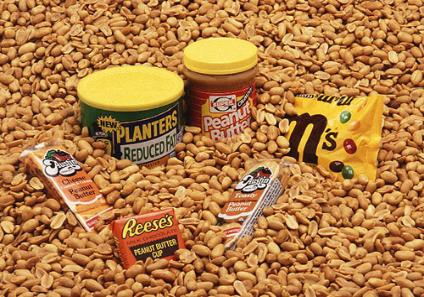
Peanuts have become popularized by baseball stands, candies which feature them, and clever labeling on peanut butter jars which, through their colorful and whimsical labels, have won great favor by children and adults alike. The problem with consumption of large amounts of peanuts and peanut products is that androgen dominance develops, which is closely tied to inflammation and insulin resistance. Individuals who are more sensitive may find that they have more acne breakouts when they consume peanuts, peanut oil, or peanut butter. So in a sense, peanuts can wreak some hormonal havoc on the body.

In contrast, cashews may be considered a hormonal ally. Cashews contain compounds referred to as anacardic acid which has a demonstrated anti-estrogen effect in which it blocks the activation of estrogen receptors once they have attached to estradiol. Anacardic acid also kills hormone sensitive breast cancer cells in vitro and may have a beneficial effect in human subjects. If you consume one half cup of cashews, you will ingest approximately 20 milligrams of anacardic acid. The jury is still out on how much of an impact the anti-estrogen effect has, but it certainly won’t hurt either.
cashews
By no means am I suggesting that you eliminate peanuts or peanut products from your diet (provided you aren’t allergic to them). But if you consume excessive amounts of peanuts and are noticing that you are suffering from acne breakouts, the peanuts may be the culprit. You might want to stop eating peanuts for a couple of weeks to see if your skin clears up. If you simply cannot live without a nut butter, you can consume almond butter or cashew butter as an alternative. If you have any interest in blocking estrogen through consumption of key foods, adding cashews to your meal plan may be just the boost you need to balance estrogen levels.

Whey And Casein In Lactose Intolerant Individuals

cows
If you are lactose intolerant, then you are quite accustomed to checking to see if dishes contain dairy. You might also be wary of whey and casein protein powders due to their derivation from milk. However, if you have only a mild lactose intolerance, you may not have an issue with whey and casein. Why is this?

Many individuals with a mild lactose intolerance are fine with whey protein isolate as well as with casein. Both whey and casein are separated from the lactose during processing. There are small concentrations of lactose which bypass the separation, but usually this is not enough to mount a reaction in a mildly lactose intolerant individual. Only the most sensitive individuals will have a problem with these forms of protein. Bear in mind that whey concentrate is not the same as whey isolate, and that individuals who are more lactose intolerant or who have other gut issues might not tolerate the concentrate form of whey.

You may be asking what the big deal is with whey and casein, and whether they are better than other forms of protein. Why take a chance of mounting a reaction in the belly when there are other forms of protein?
whey scoop
Whey is a complete protein, meaning that it provides all the amino acids the body requires. It is also relatively cheap. Casein protein is also a complete protein, and is digested very slowly, making it a great option for bedtime.

While soy is also a complete protein, it undergoes considerable processing, and it contains phytoestrogens which are estrogen mimics. I am definitely not a fan of soy protein and will not advocate its use. Rice, hemp and pea proteins are good alternatives for the vegan or vegetarian crowd, but since they are not complete proteins, they must be combined to fill out the amino acid profile. Rice protein is very easily digested, while pea protein has glutamic acid, which helps convert carbs into energy instead of being stored as fat. Hemp protein is rich in omega-6 fatty acids and has a high fiber content.

As long as you mix plant based proteins to get a complete profile, you will not be at a disadvantage if you cannot tolerate whey or casein. However, when it comes to cost, nutrition profile, and convenience, whey will always win the prize for being the king of protein powders.

Leaky Gut

food-allergy-leaky-gut-inflammation
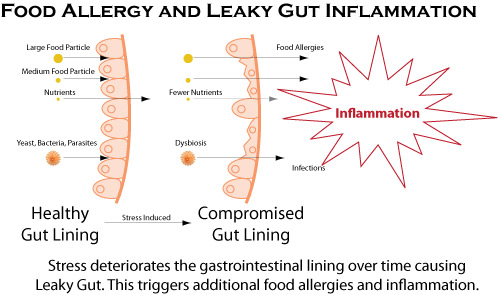
If you suffer from sudden food sensitivities, aching joints, digestive upset, fatigue or weight gain, you may be suffering from leaky gut, which is also referred to as increased intestinal permeability. Leaky gut is characterized by the opening of pores in the small intestine, resulting in undigested food particles, bacteria, and toxins traveling to the bloodstream. The presence of these substances in the bloodstream triggers an immune response, whereby the body builds antibodies to the foreign substances but also attacks itself, creating food allergies and autoimmune disorders.

You are probably wondering how something like this occurs and if you are at risk. Let’s look at the main causative factors leading to leaky gut syndrome:

1. Chronic constipation – If you are usually constipated, toxins will often build up in stool, irritating the intestinal lining and causing inflammation, which then causes the pores in the small intestine to expand. In severe cases, Crohn’s Disease, irritable bowel syndrome,or colitis can occur.

2. Chronic stress – The immune system really takes a beating when subjected to chronic stress. If the immune response is compromised, pathogenic bacteria can cause widespread inflammation in the intestines, and leaky gut is a common result.

3. Dysbiosis – This is an imbalance between beneficial and harmful bacteria which can result from antibiotics or poor diet. Inflammation develops, causing the pores to widen.

4. Toxins – We are exposed to many thousands of toxins, but the worst offenders are found in our water supply, pesticides, and in certain medications.

leaky-gut
What Is The Solution If You Have A Leaky Gut?

I have several dietary recommendations for treating a leaky gut.

1. Glutamine – I am already a big fan of glutamine in general, but especially for those who suffer from leaky gut. This amino acid has specific activity in the intestine, and restores healthy soft tissue in the region. Over time, regular supplementation with glutamine has a protective effect against intestinal disease. I tend to be fairly aggressive with glutamine and recommend 6 to 8 grams per day, or more if you engage in frequent exercise.

2. Fish oil – Try to find a formula which contains primarily omega-3 fatty acids. You can also increase your consumption of salmon.

3. Digestive enzymes – Digestive enzymes will aid in the breakdown of food substances, especially in older individuals and those suffering from leaky gut. Try taking them with every meal.

4. Betaine hydrochloric acid – Some people produce insufficient amounts of hydrochloric acid, which is needed to break down food in the stomach. If that is the case, betaine hydrochloric acid optimizes the process.

5. probiotics – Most individuals will benefit from adding probiotics into their daily regimen. Make sure to take at least 25 billion units per day for optimal gut health.

Why I Love My Slow Cooker

My chicken comes out drier than this which is what I prefer.

My chicken comes out drier than this which is what I prefer.


Slow cookers are incredible time savers, but I have always struggled with the texture of foods which results from this method of cooking. Red meat cooks incredibly well, but the cuts which work best are higher in fat and tend not to fit into my meal plans. That isn’t much of an issue since I tend to buy 90% lean ground beef patties and just broil them when I need them.

Chicken and yams are another story entirely. I consume both of these food items regularly, and find prepping them to be incredibly tedious. My favorite method of cooking chicken is to grill them outside, so that I get that crispy char, but the intense summer heat has discouraged me from doing this. I was tempted to use my slow cooker but I didn’t like the mealy texture that slow cooking imparted to chicken, so I decided to experiment a bit, and finally hit a winning prep method that works for me. Until the mercury drops to acceptable levels, I will use my slow cooker to cook chicken, employing an incredibly simple prep method.

Here’s what I do: I take about 8 pounds of boneless, skinless chicken breast and place it in the slow cooker, then I season HEAVILY with salt free seasoning and lots of black pepper, white pepper and parsley. I then add two to three coarsely chopped onions (usually a mix of red and yellow) and a few cloves of garlic. Sometimes I will also add a few stalks of chopped celery. I DO NOT ADD WATER. I used to add water and never liked the almost mealy consistency which resulted, but then I read Ashley Kaltwasser’s tip about not adding water and tried it, with great results. I allow this mixture to cook for 10 hours on low. The only issue I have with slow cooker chicken is that I need to add a LOT of seasonings to make it tasty, but then again, I like stronger flavors in my meats.

Once I had my chicken slow cooker method down I was pretty happy, but I wanted to figure out a way to make yams with the same marinade I usually use, but in the slow cooker. Typically I will marinate my yams, then throw them on a cookie sheet and bake them, but the summer heat once again got me thinking about cooking methods that didn’t require me to stand near a strong heat source. I turned to my slow cooker once again, but added only a small amount of liquid (contrary to what the manufacturer recommends), resulting in yams which had the perfect degree of softness.

Here’s my slow cooker yam recipe: I wash about ten pounds of yams, then cut them into large cubes. Then I place them in a clean plastic bag. In a bowl, I combine about 1/4 cup olive oil, 1/4 cup pomegranate vinegar, 1/4 cup balsamic vinegar, 1 tablespoon pure vanilla extract, 1 tablespoon pumpkin pie spice, 1 teaspoon cinnamon, 1 teaspoon ground cloves, and 1 teaspoon ground nutmeg. I mix this well, then toss into the bag with the yams and shake vigorously until the yams are completely coated. I let this sit overnight. Then the next morning, I simply place the yam mixture into the slow cooker, add 1/2 cup water. I set cooker to 10 hours and let it do its thing. I LOVE the flavor in my yams because it is highly seasoned, and the yams are soft yet not mushy.

Try these recipes and let me know if you like them!