WOW, these bars are delicious!
Tag healthy foods
The Importance Of Digestive Enzymes
Originally published on mensphysique.com on Wednesday, 06 February 2013
http://www.rxmuscle.com/blogs/the-lab-supplement-school/7476-the-importance-of-digestive-enzymes.html

Digestive Enzymes are amazing protein molecules which speed up chemical reactions in the body involved in everything from digestion to breathing, cell growth and molecular transportation. The reason why digestive enzymes have been developed and marketed is that many people eat such horrible foods in their diets that they need assistance in processing those foods. In addition, enzyme production drops as we get older compromising our optimal body function. Processed foods are notorious for challenging the digestive tract because enzymes which are found naturally in foods are destroyed when they are processed. Even cooked foods rely on the body’s digestive enzymes, and since there is a shrinking pool of enzymes as we get older, digestive problems may arise.
The main digestive enzymes are protease (digests protein), lipase (digests fat) and amylase (digests carbohydrates). It is believed that if insufficient enzyme levels are available to digest foods, toxins and undigested substances can linger in the body and precipitate illness. Other enzymes are available to aid in processing milk products and beans and are widely marketed.
There is no conclusive evidence to support a beneficial effect per se when general digestive enzyme supplements are taken, but enough benefit from them seems to be present that they maintain their popularity. I can tell you from personal experience that I notice a pronounced difference in my ability to digest foods, particularly proteins, when I take a combination digestive enzyme supplement which has protease, lipase and amylase. Beware if you have diabetes and are taking medication for it, or if you take blood thinners, as digestive enzymes can interfere with such medications.
In conclusion, if you notice that you experience digestive upset, you might want to try digestive enzymes for a few weeks to see if your digestive issues improve or resolve. Take one tablet with three of your meals. One of my favorites is MRM Digest-All because it has a comprehensive formulation of digestive enzymes.
Proclaiming My Love For the Vanilla Peanut Butter Flavor Of B-Up Bar
SmartShake vs. Cyclone Cup Challege
ALCAT Food Intolerance Testing

I URGE people to get the ALCAT Test done to determine what specific food intolerances they may have. The impact to one’s health from being exposed to such triggers can be significant! I am not talking about food allergy, which is an IgE immune system response that is rapid (seconds to hours) and is typically characterized by hives, shortness of breath, upset stomach and anaphylaxis in some cases. The most common food allergies are to nuts, shellfish, wheat and dairy. Interestingly enough, only about 4% of the United States population has a food allergy. The ALCAT Test does not detect food allergy, but it tests food INTOLERANCE which is far more widespread and insidious.
Food intolerance is characterized by digestive disorders, migraines, obesity, chronic fatigue, aching joints, skin disorders and behavioral issues. It has been stated that upwards of 70-80% of the US population has food intolerance. Unfortunately for many, those food intolerance symptoms are often identified as individual problems and treated as such, thus treating the symptoms and not the cause. The ALCAT Test is now considered the, “gold standard” laboratory method for identification of non-IgE mediated reactions to foods, chemicals, and other substances.
Some insurance plans will cover part or all of the expense of the testing…We at Urban Med recommend the Comprehensive Wellness Panels 1, 2, and 3, which include testing of 150 to 200 Foods, plus Food Additives/Colorings, Environmental Chemicals and Molds. These panels run from $675 to $850. Here’s the thing: though the testing is pricey, it is very specific. In addition, you get a detailed rotation diet for reintroduction of the foods which you have intolerance to after you have eliminated them for the recommended period (3 months for moderate intolerant foods, 6 months for severe intolerant foods). This information can be invaluable if you are suffering from unexplainable conditions or conditions which are resistant to medications or other interventions.
I finally got mine done in January for the first time despite the fact that I have counseled and tested patients using this technology for over three years. I had suspected that I had some intolerance to certain foods which the ALCAT test confirmed, but I was astonished by some of the other results.
These panels are extensive and specific, and only require a blood draw. You can explore your options for obtaining testing here: https://www.alcat.com/alcattesting.php
The different panels which are offered by ALCAT are listed here:
https://www.alcat.com/test_panels/
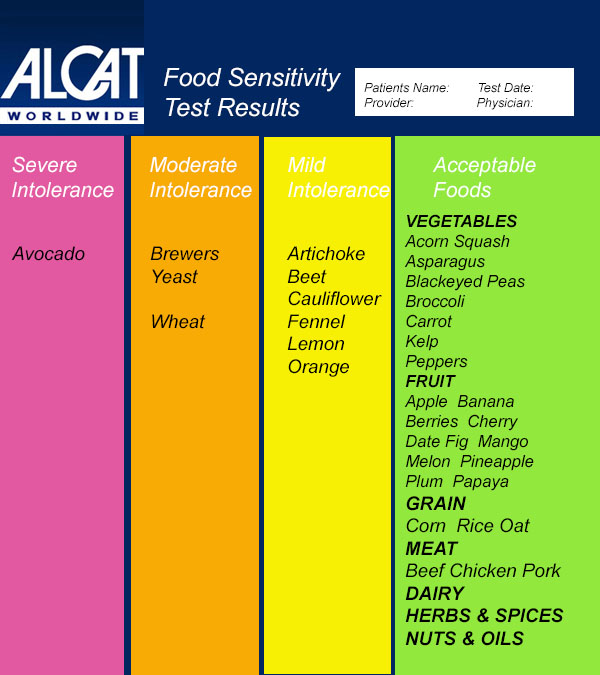
Here is a sample test result sheet:
Are You A Sponsored Athlete Or An Unpaid Salesperson?
Originally published on mensphysique.com on Wednesday, 12 November 2014
This was the most popular article I ever wrote for the site, getting over 2,700 likes.

Most sports supplement companies and other fitness related companies aggressively promote their products through athletes who can sing the praises of their benefits. Who could be better at describing the efficacy of a product and how it enhances training or recovery than an athlete who not only already uses those types of products, but someone who has a following and who can convince new customers to purchase from the company which they represent?
Here’s where things get problematic. The pool of bodybuilding and fitness athletes is pretty massive, and the waters are teeming with athletes who are anxious to get their so-called “big break”. As a result of this, savvy marketing teams from fitness related companies often sweep up these individuals because they are enthusiastic and can propel a brand’s exposure. All the company needs to do is to offer some free product to the athlete and provide instructions on how to use social media to get the word out that these products exist. Then the athletes post images of themselves holding or using products, and add affiliate codes so that any orders which are generated through that athlete’s post are credited to the athlete. This can be a great way for an athlete to make some extra money while competing or chasing down fitness related gigs and projects.
It is important to bear in mind that such athletes really aren’t sponsored, but are instead unpaid salespeople who provide free advertising and generate sales via social media posts which direct followers to product websites. Yes, they get commissions if they have affiliate codes, but such commissions are nothing to write home about unless someone is really blowing the roof off in sales. This is in stark contrast to a true athlete sponsorship, in which an athlete is paid to represent the brand as a brand ambassador.
The sponsored athlete is chosen for his or her physique, performance history and awards, facial good looks, charisma, enthusiasm, and often the size of his or her social media following. Usually a sponsored athlete signs a contract which stipulates that he or she will receive a certain amount of free product, and in most cases will also receive financial compensation which is either paid via a monthly salary or via a contest stipend. Though the athlete usually agrees to a set requirement or recommendation to provide social media posts for the company at regular intervals, the company pays the athlete for his or her trouble. Personal appearances and events are also part of the sponsored athlete agreement and clearly described in the written contract. The sponsored athlete is compensated for use of his or her likeness on advertising materials as well.
Obviously it is a far better deal to become an official sponsored athlete for a company. Otherwise, you are just providing free advertising and cheap labor in exchange for products which are sold at a significant markup from what they are manufactured at. If you post a selfie with product that somehow goes viral, the company will certainly love the boost, but I doubt you will ever see any type of compensation if you aren’t a sponsored athlete, which means you provided your likeness for free.
The truth of the matter is that there are only a handful of athlete sponsorships to go around, with a massive surplus of athletes vying for those spots. The athletes who end up getting sponsorships stand out from the crowd in some way, or fit a brand’s look and philosophy so well that it makes sense to bring them on board to represent a brand. The rest of the athletes must navigate through all the companies out there to try to find an arrangement which benefits them in some way. Sometimes it is easy to sell a product, usually because the athlete enjoys using it so much that he or she doesn’t mind providing free advertising or labor.
Sometimes a supplement company will launch a contest which is based on social media posts. One company, which shall remain unnamed, launched a huge campaign this year that was patterned on this idea, and decided to award 5 of the entrants $10,000. Sure, that sounds like a good chunk of change, but if there were 8,000 entrants, then 7,995 walked away with nothing. At the end of the campaign, the company got tons of free advertising and all those hashtags they requested for “tracking” purposes also propelled their brand in a huge way. To be honest, this is a brilliant marketing tactic, but not the best move for the majority of athletes who participated.
I have also seen companies launch contests in which entrants must purchase a product, then post on social media with hashtags to enter the contest. This is another form of free advertising for the company, a great way to generate sales, a brilliant means for them to boost exposure, and yet another way for athletes to be suckered into doing free advertising. I don’t see much harm in taking part in such a contest if you truly love a product and want to proclaim it, but just remember that it works wonders as an advertising tool for the company without any benefit for you.
One thing I will never advocate is purchasing products, even at a steep discount, while also representing a brand as one of its “sponsored” athletes. If you are asked to pay for a product while also providing free advertising on social media channels, run quickly in the other direction! Basically you are dealing with a company which doesn’t value you enough as an athlete to provide compensation for your advertising efforts. This isn’t the same as purchasing a product, finding out you like it, THEN posting something on social media which lets people know how much you like it. I know of several athletes who had done this, which sparked the attention of the company which manufactured the product, eventually leading to a sponsorship deal. But do not, I repeat, DO NOT PAY for products as a way to get false sponsorship for a company.
It isn’t a bad thing to work as an unpaid salesperson in the fitness industry as long as you know your place and value. Once your following builds, the smart thing to do is to leverage your visibility into getting an athlete sponsorship. The main thing is to make sure that you don’t get taken advantage of in the process.
The If-It-Fits-Your-Macros Trend
Originally published on mensphysique.com on Thursday, 09 October 2014
http://www.rxmuscle.com/blogs/the-kitchen-eating-strategies/11653-the-if-it-fits-your-macros-trend.html

You have probably heard about the “If It Fits Your Macros” (or IIFYM) trend which has been increasing in popularity within the fitness and bodybuilding world. It’s not surprising that the concept was embraced and developed by people within the industry who were sick and tired of adhering to monotonous, restrictive meal plans in which the vast majority of foods were labeled as evil and forbidden. On a personal note, I jumped on the IIFYM bandwagon as well because I was fed up with avoiding certain so-called “bad” foods and also dealing with metabolic burnout from years of caloric restriction. What surprised me was the positive manner in which my body responded to taking in maintenance calories as opposed to constantly functioning at a caloric deficit which only served to slow down my metabolism.
The term macro refers to the principal nutrients which the body requires: protein, fat, carbohydrates. IIFYM dictates that as long as you fulfill the energy needs of your body, you can obtain calories from any food source. Let’s face it: your body needs a certain amount of protein, carbohydrate and fat, along with fiber and micronutrients such as vitamins and minerals in order to function optimally, but it doesn’t scrutinize every macronutrient gram as it is thrown into the body. On the other side of the coin, it is also important to bear in mind that most proponents of IIFYM do not consume large amounts of junk food either. As long as quality protein is consumed in adequate amounts to contribute to muscle growth and repair, along with micronutrients and dietary fiber to support normal digestion, it shouldn’t matter if a small percentage of caloric daily intake is obtained from discretionary or junk food items.
My personal opinion is that the quality of carbs still should come into play if you are employing an IIFYM approach. However, if the majority of carbs comes from quality sources such as oats, sweet potatoes and brown rice, a small amount of junk carbs (cookies, Pop Tarts) shouldn’t tip the balance too much. I am a fan of carb BACKloading and believe the largest insulin spike should come at night before you sleep, since you will be fasting for several hours.
I know some of you are still reading this with great skepticism and want to hold onto your six boring meals of tilapia and green beans every day, refusing to accept the concept of loosening the reins a bit and actually enjoying a variety of foods. IIFYM doesn’t mean that you lose control and eat whatever you want, whenever you want. What it DOES mean is that foods will no longer be forbidden or “bad”, and that you can actually consume them on a fairly regular basis as long as you keep track of your daily nutrient intake.
The main drawback of IIFYM is that you must track your food intake, which in a sense is another form of food fixation. However, there is a greater chance that you will meet your body’s nutrient needs than if you follow a cookie cutter, calorie restricted, orthorexia lover’s contest prep meal plan. When clean eating is followed 100% and the majority of food sources are banned, caloric restriction is almost inevitable. Such caloric restriction, when practiced for an extended period of time, will cause fat loss to stall and metabolism to slow down.
How about if you met your macronutrient needs without having to banish most foods from your diet? So many people in the world of fitness suffer from orthorexia, a psychopathological condition in which foods are labeled as “good” or “bad”, and in which individuals become socially isolated over their need to eat “correctly”. I have seen so many competitors struggle with an increasing difficulty in losing fat, so their coaches restrict their calories even more and ban more foods from their meal plans. Fruit, healthy fats, and healthy carbs are stripped away in an effort to lean the competitor out. Another thing to consider is what food deprivation does to people. If a food is “bad”, suddenly the temptation to indulge in that bad food is intensified.
You might want to consider trying IIFYM if you are in a slump with your current meal plan. You may feel like a hamster on a very boring and restrictive “clean eating” wheel in which you are only allowed to eat very specific foods in certain combinations. For some of you who have been doing this incessantly for years, you may have noticed over time that it has become more and more difficult to lose weight. Your meal plan is probably VERY rigid and VERY boring, consisting of foods you are probably so sick of that if you never had to eat them ever again, you would rejoice in the streets for days. Give IIFYM a try. You might be pleasantly surprised at how your body responds.
One More Thought On Muscle Loss And Aging
I posted an article several days ago which discussed the interventions which can be practiced by older individuals to maintain muscle mass. In that article I discussed the importance of weight training, consuming adequate protein, and adding certain supplements which can reduce inflammation. A critical component in maintaining optimal function of the body at the cellular level is ensuring that micro-nutrient needs are met, i.e., meeting the body’s vitamin and mineral requirements. Given the fact that numerous nutrient deficiencies are increasingly common (such as magnesium, vitamin D3, calcium), supplementation with high quality products can often make the difference between a healthy state and one riddled with illness.
One sure way to meet micro-nutrient needs each day is to take a multivitamin/mineral supplement. I recommend taking a multivitamin which is dosed several times a day because the chance of optimal absorption is much greater than once-daily dosing. My favorite is SWAT Fuel’s .40 Caliber, because it delivers high bioavailability on a three time dosing regimen each day and is suitable for everyone, but it is especially great for individuals who tend to experience intestinal discomfort from multivitamin formulas.
You can order .40 Caliber directly from the website: http://swatfuel.com/products.aspx

Worth Your Weight In Salt: Why Some Dietary Salt Is Good
Originally published on mensphysique.com on Wednesday, 28 May 2014
http://www.rxmuscle.com/blogs/the-kitchen-eating-strategies/10971-worth-your-weight-in-salt-why-some-dietary-salt-is-good.html

Salt has gotten a bad rap due to its rampant overuse in the food and restaurant industries and its potential to elevate blood pressure in susceptible individuals. However, it is responsible for the generation of nerve impulses, electrical conduction of the heart, and the contraction of all other muscles in the body.
The human body contains 4 to 8 ounces of salt and requires this to regulate body water, proper blood volume and normal blood pressure. It’s quite remarkable how the body can rid itself of excess sodium via the production of sweat and urine. Perhaps you have noticed instances in which you have retained water after a brief spike in dietary sodium intake, but this is rather short-lived in healthy individuals. What happens is that the high concentration of sodium causes fluid to travel from body tissues into the bloodstream to dilute the sodium influx. Blood volume increases, then blood pressure also increases, triggering the kidneys to increase urine output in order to excrete the excess sodium and water.
I’m not suggesting that you consume massive amounts of sodium in your daily meal plan, but I have met many competitors and athletes who are so terrified of the idea of consuming any sodium that they do themselves a disservice by pulling their daily sodium intake down significantly. When you keep sodium intake at very low levels for the long term, the kidneys will conserve serum sodium as a safeguard. When contest day approaches, no amount of water manipulation will work to give you that dry and peeled look if sodium was not on board in the weeks preceding the event. It is a far better strategy to maintain a sodium intake of approximately 2 to 3 grams per day, so that when you drop sodium and water intake right before a contest, it will be much easier to shed that subcutaneous fluid.
If you still aren’t convinced of the importance of sodium in your daily diet, remember that your body needs sodium to function properly in general. You also lose a considerable amount of sodium through the profuse sweating that most, if not all, of you fellas experience during your intense lifting sessions. If you consume very little sodium, and also lose a great deal of sodium through sweat, muscle contractility will become impaired and cramping will often develop. That’s reason enough to grab a little sea salt and add it to a few meals each day.
You might want to experiment a bit to see when it is best for you to cut sodium for a contest. For most competitors, cutting sodium intake in half for four to seven days before the event, then cutting water the day before showtime seems to work well.
Celiac Disease: A Blessing In Disguise For Competitors?
Originally published on RxGirl on Thursday, 13 March 2014
http://www.rxmuscle.com/rx-girl-articles/10435-celiac-disease-a-blessing-in-disguise-for-competitors.html

Celiac disease is an autoimmune response to gluten which results in inflammation in the small intestines and may include symptoms such as abdominal pain, constipation, nausea, fatigue, and diarrhea. This disease can be extremely debilitating for some people, and for this reason, sufferers need to adopt a gluten-free diet for a lifetime.
Gluten is found in so many different food items that it can be quite a challenge to avoid it. For example, gluten is found in grains such as rye and barley, and certain grains like oats can become contaminated with wheat during their production. Wheat is the most ubiquitous gluten-containing grain, hiding in bulgur, farina, kamut, semolina, spelt, beer, breads, baked goods, candies, cereals, crackers, cookies, croutons, French fries, imitation meat, pastas, luncheon meats, salad dressings, soy sauce, potato chips, tortilla chips, soups, modified food starch, and even some supplements and medications. Gluten-free items include fresh eggs, meats, poultry, fish, vegetables, fruits, dairy products, buckwheat, flax, corn and cornmeal, amaranth, millet, quinoa, soy, tapioca, sorghum, and gluten-free soy, corn, rice and potato flours.

The good news is that the dietary restrictions of celiac disease complement the restrictions practiced during contest prep. The only commonly used grain in contest prep which might cause an issue in those suffering from celiac disease (oats) can be found in a gluten-free version now. Gluten free items tend to be very contest friendly and provide sound nutrition for building muscle and optimizing metabolism. In addition, the practice of avoiding the commonly designated forbidden foods which usually serve as nuisances for most competitors is a requirement for the celiac sufferer, because delving into such foods carries significant health consequences for her.

Perhaps you have been competing for a while and were just recently diagnosed with celiac disease. If so, you are most likely practicing eating habits which are consistent with the diet you need to follow in order to manage your disease. Perhaps you have lived with celiac disease for some time and have been considering stepping onstage to compete. If you have been managing your disease with dietary modifications, those modifications will be remarkably similar to what you will be practicing with contest prep.
It may indeed be a blessing in disguise for competitors to have celiac disease, since it can turn a weak will into an iron will. Celiac sufferers must make lifestyle adjustments for a lifetime in order to avoid the potentially devastating complications which can manifest over time when a gluten free diet is not followed. I have noticed that competitors who have celiac disease tend to be the most consistent with their meals and contest prep regimen. It certainly makes sense to underscore the health impact of a meal plan which is gluten free and which centers around whole food sources. Such a strategy will also maximize one’s chances of success onstage.
 dr. stacey naito's blog