How To Shop For Healthy Foods

From Sports Nutrition Supplement Guide Article I wrote which was posted on their site.

From Sports Nutrition Supplement Guide Article I wrote which was posted on their site.

Grocery stores in the U.S. can be nutritional traps for uneducated shoppers, because processed foods are placed prominently in the center aisles, while nutrient-dense whole foods are pushed to the periphery. It’s a smart marketing ploy, since many shoppers are easily lured by the colorful and appealing packaging which processed foods feature. There’s even a whole science devoted to the psychology behind food labeling! Because of this, I always advise patients and clients to do the majority of their shopping around the perimeter of a grocery store, even in places like Whole Foods, in order to maximize chances of making the healthiest food choices.

Think about it. If a food item can be stored in a box, bag or can at room temperature, it means that it probably has preservatives which keep it from spoiling. Start reading ingredient labels and you might be shocked at what you find. If ingredient labels are excessively long or have long names which you can’t pronounce, you probably should steer clear. Remember that the least processed foods will be assimilated by your body the most readily.
Grocery store junk

Supermarkets and grocery stores are designed to lure you in like a rat in a maze, but instead of getting a reward at the end of the maze, you might be signing up for health issues if you are distracted by all the colorful advertising found on the most popular food items. Keep in mind that these stores are designed to tempt shoppers to make impulse purchases. Such impulse buys can be especially tempting if you are ravenous with hunger when you shop.

Here are some guidelines which will help you to make healthy food choices when perusing a grocery store.

1. Shop around the perimeter of the store – Most processed foods are found in the aisles of a grocery store, while whole foods like fresh produce and meats are found around the perimeter.

2. Read food labels – Be aware of hidden sugar, sodium, artificial flavors and colors, and preservatives.

3. Keep purchases of packaged foods to a minimum – Beware of foods which are packaged in boxes, bags, or cans, as these foods tend to be filled with preservatives.

4. Prepare a shopping list and stick to it – Making a list will ensure that you do not forget any necessary items and will also help prevent impulse purchases if you adhere strictly to the items which are on your list.

5. Eat a meal before you shop – If you shop for groceries when you are satiated, you will be less likely to make impulsive purchases or buy more than what you need.

6. Fill your cart with fruits, vegetables, whole grains, lean meat, fish, poultry, nuts and beans.

7. Try a new fruit or vegetable each week – This will add variety to your meal plan.

8. Spend the most time during your shopping trip in the produce section.

9. When choosing whole grain cereals, aim for at least 4 grams of fiber per serving– Make sure the sugar content is minimal.

10. Choose lean cuts of meat – Good beef cuts are round, top sirloin and tenderloin. When buying poultry, purchase the skinless variety.

11. If you can’t purchase fresh fruit, choose frozen fruits and vegetables over the canned variety.

12. Avoid food items that contain more than five ingredients, artificial ingredients, or ingredients you can’t pronounce.

13. Be careful when choosing bread – Many refined breads are dark from added molasses, caramel or other coloring. Look for breads which contain 100% whole wheat or other grain as their first ingredient. Try to avoid enriched wheat flour as it is actually made with processed white flour. Make sure the bread you select has at least 2 grams of fiber per slice.

14. Select fish which is high in omega-3 fatty acids – Best selections are salmon, rainbow trout, lake trout, and tuna. (Below is a list of seafood lowest in Mercury)
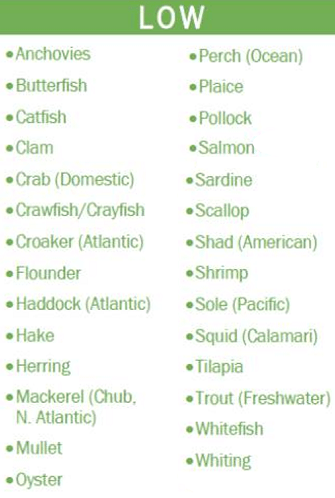
low mercury foods
15. Choose strong-flavor chesses – Sharp cheddar, feta and Parmesan have strong flavors which means you will need to use less to flavor your foods.

16. Purchase Greek yogurt – Greek yogurt is thicker and creamier than other varieties, and the protein content is much higher. My favorite is Fage Total 0-Percent Greek Yogurt.

17. If you must buy frozen entrees, make sure they contain less than 400 calories, 4 grams of saturated fat, and 600 milligrams of sodium, with at least 14 grams of protein and 2 grams of carbohydrate.

18. Add vegetables and/or cooked brown rice or quinoa to your frozen entrée to increase the size and nutrition level of the meal.

19. Add fresh or frozen fruit to cooked oatmeal to provide sweetness without added sugar.

20. Eat oatmeal – Make sure to buy regular oatmeal, not the instant variety.

Here’s to happy and healthy shopping!

Too Many Cooks (Repost)

Adult female with personal trainer at gym.I am getting pretty tired of clients who think they are suddenly fitness authorities, or who think nothing of following the advice of 52 different people on what to do about diet, exercise after signing up for a comprehensive training and meal plan which I customize for them. Honestly, why hire me if you’re just going to follow whatever your whim decides is cool at the moment? I don’t get easily insulted, but it’s more that I put time into customizing plans and don’t appreciate it when a client reads some silly excerpt in Shape magazine, and decides that it must be better than my advice because it was in a popular women’s magazine.

I deal with know-it-all attitudes both as a fitness professional and as a physician. Let me be very clear. I have a four year college degree in Exercise Science from a well respected college. I have almost thirty years of experience with weight training, and have done contest prep coaching since 2010. I am also an IFBB Professional Athlete. On top of that, I have worked as a board-certified and fully licensed physician for over a decade. Yet I am challenged on a regular basis by people who think that because they looked up something on WebMD or Google, they are suddenly more knowledgeable than I am. In fact, I am not sure which bothers me more: the disrespect I get as a doctor, or the disrespect I get as a fitness professional. Both are infuriating.

The BEST advice I can give to anyone who is looking for a comprehensive plan in fitness, nutrition, or hormone balancing is to pick ONE expert and stick with that person’s knowledge, instead of second guessing the individual by throwing other mostly uneducated opinions on what to do. I give people a lot of credit for knowing their own bodies. However, it is important to remember that contradicting your coach, physician or mentor is a study in animosity that will pitch you in poor stead with the very person who is trying to help you.

Hot Logic Is Amazing

Please check out my review of the Hot Logic Mini on YouTube!

It’s a portable mini oven which you can take everywhere with you! All you need is a power source, and you can heat up pre-made meals or even cook something from scratch.

Another HUGE selling point about the Hot Logic Mini is that your food heats up evenly, and is the perfect temperature whenever you’re ready to eat it. You’ll get that fresh baked oven flavor, not that nasty microwave heated flavor. Another great feature about the Hot Logic Mini is that it enables you to heat up a meal in a hotel room (many hotel rooms no longer have microwave ovens), board room, or any room where you have access to a power source.

Go to http://www.hot-logic-mini.com/staceynaito to order, and you’ll save 20% off your order.

Which Protein Powder If You’re Lactose Intolerant?

If you are lactose intolerant, then you are quite accustomed to checking to see if dishes contain dairy. You might also be wary of whey and casein protein powders due to their derivation from milk. However, if you have only a mild lactose intolerance, you may not have an issue with whey and casein. Why is this?

Many individuals with a mild lactose intolerance are fine with whey protein isolate as well as with casein. Both whey and casein are separated from the lactose during processing. There are small concentrations of lactose which bypass the separation, but usually this is not enough to mount a reaction in a mildly lactose intolerant individual. Only the most sensitive individuals will have a problem with these forms of protein. Bear in mind that whey concentrate is not the same as whey isolate, and that individuals who are more lactose intolerant or who have other gut issues might not tolerate the concentrate form of whey.

You may be asking what the big deal is with whey and casein, and whether they are better than other forms of protein. Why take a chance of mounting a reaction in the belly when there are other forms of protein?
whey scoop
Whey is a complete protein, meaning that it provides all the amino acids the body requires. It is also relatively cheap. Casein protein is also a complete protein, and is digested very slowly, making it a great option for bedtime.

While soy is also a complete protein, it undergoes considerable processing, and it contains phytoestrogens which are estrogen mimics. I am definitely not a fan of soy protein and will not advocate its use.

Rice, hemp and pea proteins are good alternatives for the vegan or vegetarian crowd, but since they are not complete proteins, they must be combined to fill out the amino acid profile. Rice protein is very easily digested, while pea protein has glutamic acid, which helps convert carbs into energy instead of being stored as fat. Hemp protein is rich in omega-6 fatty acids and has a high fiber content.

As long as you mix plant based proteins to get a complete profile, you will not be at a disadvantage if you cannot tolerate whey or casein. However, when it comes to cost, nutrition profile, and convenience, whey will always win the prize for being the king of protein powders.

On a personal note, I discovered that I had a mild intolerance to whey and a moderate intolerance to casein, and though I only have a mild case of lactose intolerance, the whey and casein proteins themselves cause my body to react. As a result, I keep whey protein intake to a minimum, consuming only a small amount (about 20 grams) a few times per week. This is a drastic drop from the 60 to 70 grams of whey protein which I was ingesting during my competing days in the off-season.

These days, I opt for soy-free plant-based proteins. Since the combination of pea and rice proteins delivers a complete amino acid profile, I tend to look for those blends. Healthy Skoop has a very tasty version which mixes beautifully:

Protein

I also use MitoXcell’s new Plant Protein formula, which also features hemp protein and the original MitoXcell formula for mitochondrial optimization. I think it’s a superior protein, but it’s a bit chalky for my tastes:

MitoXcell Plant Protein

Some Foods Just Don’t Like Me

broccoli

As one who loves most types of foods and who isn’t particularly finicky, I look back fondly on the days when I could eat whatever I wanted without any digestive or reactive consequence. Sadly, the past three years have been defined by a number of food intolerances which have required me to monitor what I eat. I honestly believe that the extreme and repetitive meal plans which I consumed while competing were major factors in the development of my food intolerance issues. During one particular contest prep regimen, I began to notice that every single time I ate broccoli, I would get severe abdominal cramps and a headache which persisted for an entire day (now they last for 3-5 days if I am stupid enough to eat even one small floret).

After my last Pro contest in June of 2014, I noticed that other foods were aggravating my gut, my skin, my head and my mood, so I decided to eliminate them. In January of 2015, I had an ALCAT food intolerance test , and was pretty stunned by the results. Not only was broccoli on the list of offending foods for me, but I also apparently had SEVERE gluten intolerance, as well as intolerance to coconut, mangos, casein, blueberries, and a number of other foods considered healthy. In an effort to allow my body to calm down, I eliminated every food which I had any intolerance to (there were about 30 foods) for close to a year.

Because I am hoping and assuming that my body has reset from the elimination of offending foods, I currently allow myself to have blueberries, coconut, mango, lobster, cashews, bison, and spinach on occasion, and have noticed no reactions. However, every single time I eat broccoli or any food which has barley in it, I regret doing so within 30 minutes. This means that pizza (which I actually don’t consider a favorite food) is no longer a cheat meal option, not unless it is a gluten free version. Food combinations also wreak havoc on me. For example, if I have pizza and wine, I might as well forget about functioning like a normal person for a couple of days.

If you suspect that you have food intolerance, try eliminating the suspect food to see if it makes a difference. Trust your body’s signals. And if you want to get a food intolerance test, check out ALCAT.com and Everlywell.com for the kits they offer.

White Rice

white rice
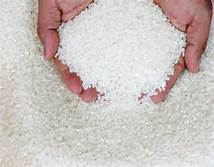
Anyone who grew up in a household which was managed on a shoestring budget can relate to the concept of adding an inexpensive, bulky carbohydrate to meals to increase their volume. My entire childhood was punctuated by the ubiquitous presence of glutinous Japanese sticky rice. In fact, the only times I did not consume white rice with dinner were when my mom decided to heat up Stouffer’s Macaroni and Cheese, Stouffer’s Lasagna, or pot pies (Swanson and Banquet were the two brands she bought…she ended up purhcasing whatever was on sale). When we had the mac and cheese or the lasagna, we would split the dinner, and she would serve frozen veggies on the side.

All of our other meals featured a mound of white rice which occupied the majority of the plate’s surface. If we had broiled hot dogs, there was rice. Scrambled eggs and rice. Broiled chicken and rice. Vienna sausage and rice. Pan fried SPAM and rice. The occasional steak or lamb chop treat and rice. Sukiyaki (one of only two dishes my mother knew how to cook) and rice. Meatloaf (the other dish my mom could make from scratch) and rice. I even had Campbell’s soup with rice, and was so accustomed to eating soup with rice, that I was always thrown off when I would go to a classmate’s house and encounter soup being served as a precursor to the main course, not the actual main course, and sans rice.

Despite the fact that I was raised in a very low income household, and ate processed foods almost constantly, I was a very happy child and never felt that I was being deprived. I was more astonished and disgusted by the ultra wealthy children I went to school with, because I thought they lived in a false world, one which was based almost exclusively on possessions and financial wealth. A number of my classmates were pretentious, unpleasant brats who were so brainwashed with a sense of entitlement that they probably got kicked around by life when they had to navigate through it on their own.

White rice was such an important part of my life that once I moved out of my mom’s as an adult, I quickly got a rice cooker. I was so unhappy with the small Hitachi cooker I got, that I almost ran cartwheels when someone gifted me with an 8-cup National cooker (that cooker is still with me, almost 30 years later). For those of you who are Japanese, you can probably relate to that need to have a National, Tiger, or Zojirushi cooker! The nicest Zojirushi rice cookers are quite fancy now, as you can see here:

zojirushi fancy

And yes, I still covet a Zojirushi rice cooker!

Now that I am very carb conscious, I avoid white rice on most days, but there are carb spike days in which I allow myself to indulge in jasmine white rice. Why? Because white rice is one of my main comfort foods. It ties me to my Japanese heritage, and it reminds me of my humble upbringing.

Eating Clean Makes All The Difference

This abdominal definition truly comes from eating clean 98% of the time.  There are no tricks to this.  I also train abs only one day per week and keep my routine down to about 7 minutes.

This abdominal definition truly comes from eating clean 98% of the time. There are no tricks to this. I also train abs only one day per week and keep my routine down to about 7 minutes.

Last week a guy at the gym approached me and asked me a question I hear frequently, which was “What exercises would you recommend for me to get six-pack abs?”. My response didn’t have anything to do with specific abdominal exercises, but centered around nutrition. I asked the guy what his diet was like, and he revealed that he was of Italian descent and just HAD to have pasta several times per week. He also admitted that he spent many of his evenings drinking an appreciable amount of alcohol. So I told him that his eating and drinking habits guaranteed that he would never see a washboard across his midsection, no matter how many crunches or planks he did. He was so intent on finding a way to get a toned midsection without changing his eating habits that he repeated his question a second time, which made me shake my head and wish him luck as I walked away.

If you are committed to getting a lean midriff, you MUST change your eating habits! You simply cannot have your cake and eat it too when it comes to coaxing those lovely abdominal lines and cross cuts out of hiding. Don’t kid yourself into thinking that you can somehow get a quick fix by doing a cleanse to repair the damage of a poor diet, or that you can perform a plethora of abdominal moves to somehow melt all the fat that is sitting around your waist. The only effective way to etch those abs is to consume whole foods with minimal to no processing, such as lean meats, grains such as quinoa, rice, and oats, fresh vegetables, fruits, nuts, and eggs. If you are worried that these foods lack the flavor you crave from consuming processed foods, check out the various seasonings, flavored mustards, hot sauces, and other condiments which can add a new dimension to your food.

Once you make the switch to a healthy food regimen, you will probably notice a lot of subtle changes in your overall well-being, such as more energy and clearer skin. After a while, you might even notice your abs peeking out!

Vegan Protein Options

277688793121a154f99d38c67e862b30

I am an unapologetic omnivore and would miss animal protein too much to ever cut it out of my meal regimen. However, I understand and respect the fact that other people may choose to avoid meat. Though it can be a challenge to consume sufficient protein if you’re vegetarian or vegan, it can be done, even if you compete in bodybuilding contests or other sports.

Daily protein intake for the average individual should be around 0.8 gram of protein per kilogram of body weight, but I recommend a MUCH higher intake for weightlifters. For example, though I am 116 pounds, I typically consume anywhere from 120 to 170 grams of protein per day, spread out over 5 to 7 small meals. If I were vegan, though, I would consume one or two additional meals per day to ensure that I got enough protein in my system to maintain muscle mass.

Vegans and vegetarians need to be careful with their consumption of nuts and seeds, because they have a high caloric density and are packed with fat. Another challenge is the fact that plant protein sources are notorious for being incomplete proteins, which means that they don’t provide all the amino acids the body needs to function. Soy is a main source of complete plant protein which I never recommend (exceptions are tofu and tempeh), and I advise my patients and clients to avoid soy protein powder, soy milk, and other soy based products like the plague for a multitude of reasons. That leaves grains like quinoa and amaranth on the very small list of complete plant proteins which I recommend to vegetarians and vegans.

A certain amount of creativity must exist in the diet of a vegetarian or vegan in order to ensure that all the amino acids the body needs are eaten. What I mean by this is that protein sources should be combined so that whichever amino acids are absent in one protein source will be provided by another. In general, grains, seeds or nuts can be paired with legumes to form complete proteins. One great example is nut butter on bread. Another great option is brown rice and chick peas.

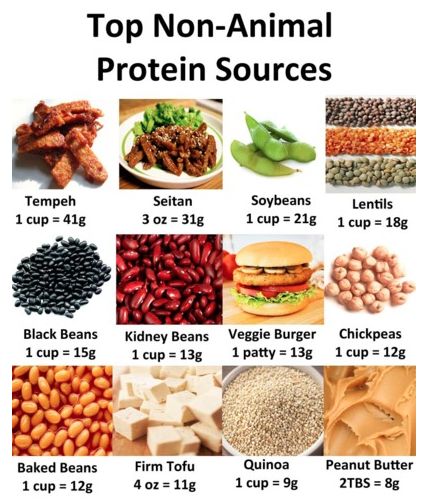
Below is a list of the best vegan protein sources.

Tofu

Tempeh

Soybeans

Lentils

Pinto, kidney, or black beans

Garbanzo beans

Quinoa

Almonds

Cashews

Walnuts

Peanuts

Sesame seeds

Avocado

Broccoli

Spinach

Kale

Sweet potatoes

Veggie burger

Veggie sausage

What Kind Of Body Do You Want This Summer?

IMG_1963

Summer is almost upon us, which means that more skin-baring outfits will appear, and the pressure to look as good as possible will be greater than ever. So what do you do if you’ve been cozily hiding under a layer of winter storage fat for the last few months or years? There isn’t much time to strip that away, but it definitely IS possible to reveal a trimmer, more toned you for the warmer weather that is right around the corner.

The first and most important thing to do in order to build a body transformation strategy for the summer is to define your goals. Make sure that they fit the SMART criteria: SPECIFIC, MEASURABLE, ACHIEVABLE, RELEVANT and TIMELY. Let’s look at each aspect more closely.

SPECIFIC: The more specific you are in defining your summer transformation goals, the more likely you are to be successful in reaching them. A good specific goal could be losing body fat.

MEASURABLE: Let’s look more closely at the body fat reduction goal that I mentioned above. What if you set a goal of losing 5% of your body fat? By doing this, you have now made that goal measurable.

ACHIEVABLE: Make sure that you can actually reach the goals you put in front of you. For example, if you have an excessive amount of storage body fat, it would be unreasonable for you to try to lose 15% of body fat by the beginning of July. However, an achievable goal of 5% is much more reasonable and completely attainable.

RELEVANT: The goals you set should match up to your abilities and interests. For example, if you have been a complete couch potato for years, it would not be relevant to your lifestyle or skill set to aim to prep for an Ironman competition by July. A relevant goal that would still enable you to successfully reach a higher level of fitness would be to prep for a 5k walk/run in July.

TIMELY: In the above examples, I mentioned early July as a timeline marker. By setting a target date, you will establish a framework upon which you will build an action plan.

When I perform nutrition and fitness assessments, I always advise my clients and patients to follow the SMART acronym. Another thing I love to suggest is the development of a vision board. A vision board can be as simple as having a photo of a celebrity or other person who has the kind of physique that a client covets. In some cases, the photo may be of the client from earlier, leaner days. In either case, the photo serves as a perfect carrot to chase after. I always suggest placing the photo on a bathroom mirror or a refrigerator door. Another clever and very effective place for an inspiring photo is to use it as a computer or phone wallpaper design.

If you really want to get creative and inspired, you can create a larger vision board, either digitally or via old-school printed photos and inspiring quotes and messages. Just make sure that whatever you create, you believe 100% in what is on the board, and that you can attain it all.

The Importance Of Iodine

detoxadine-magento_1

There is a rather insidious mineral deficiency which happens to run rampant in our society, and which negatively impacts the function of an endocrine gland which gets a lot of attention: the thyroid. The mineral I am talking about is iodine, and chances are that you are deficient in it.

The thyroid gland cannot synthesize thyroid hormones without iodine, so if your iodine stores are negligible, you have been doing your thyroid gland a major disservice. Add a stressful lifestyle to the mix, and you pretty much have locked in significant issues with thyroid function.

You might argue that you use sea salt, and since the sea contains most of the earth’s iodine, doesn’t that count? The problem is that most of the iodine is lost during the crystallization process. And forget about Morton’s Iodized Salt. The amount of iodine in that product is so small that it wouldn’t even begin to address a deficiency.

If you’re a health “nut” and have banned gluten-containing foods from your diet, that means that breads which may offer a decent source of iodine are no longer options for you. Those of you who are exercise fanatics (and yes, I am one of those people for sure) excrete quite a bit of iodine through your sweat, and if that iodine isn’t somehow replaced, you are going through each day in a state of severe iodine depletion. Another significant factor in the development of iodine deficiency (which, by the way, affects about 75% of the population) is the fact that people with cardiovascular issues are advised to limit their intake of salt. If you are a fitness person, especially if you compete, you probably avoid salt like the plague, which is not a good thing for your iodine stores or your thyroid function.

Dr. David Brownstein, who wrote a brilliant study called Iodine – Why You Need It And Why You Can’t Live Without It, claims that optimal health is not possible if someone has an iodine deficiency. Over time, the suffering thyroid gland can impact heart health, and can be implicated in the progression of certain types of cancer.

Symptoms of iodine deficiency include fatigue, dry skin, brittle hair, constipation, or depression. If you have a few stubborn pounds that you can never lose despite every intervention, or if you have water retention issues, low iodine levels may be the culprit.

Whatever you do, though, don’t pay attention to the RDA guidelines, because they are too tiny to make any difference in your iodine stores. The best dosage I recommend is 6.25 milligrams daily for several weeks, then taper off gradually (every other day for a week or two, then every two days, then stop). Beware of any bowel overactivity or acne breakouts, as those can be indicative of iodine intolerance. If you have any major medical issues, seek the advice of your physician before embarking on an iodine replacement regimen.

If you don’t want to take supplements, you can eat kelp snacks or seafood. Another important thing you can do to maximize the availability of iodine stores in your body is to avoid consumption of soy products, which block iodine absorption.