Leaky Gut

food-allergy-leaky-gut-inflammation
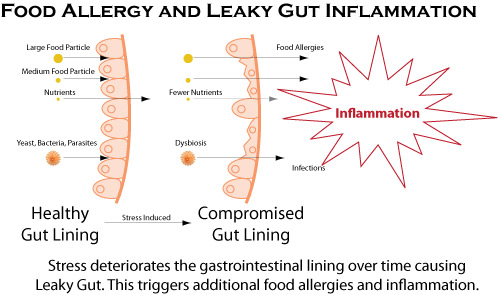
If you suffer from sudden food sensitivities, aching joints, digestive upset, fatigue or weight gain, you may be suffering from leaky gut, which is also referred to as increased intestinal permeability. Leaky gut is characterized by the opening of pores in the small intestine, resulting in undigested food particles, bacteria, and toxins traveling to the bloodstream. The presence of these substances in the bloodstream triggers an immune response, whereby the body builds antibodies to the foreign substances but also attacks itself, creating food allergies and autoimmune disorders.

You are probably wondering how something like this occurs and if you are at risk. Let’s look at the main causative factors leading to leaky gut syndrome:

1. Chronic constipation – If you are usually constipated, toxins will often build up in stool, irritating the intestinal lining and causing inflammation, which then causes the pores in the small intestine to expand. In severe cases, Crohn’s Disease, irritable bowel syndrome,or colitis can occur.

2. Chronic stress – The immune system really takes a beating when subjected to chronic stress. If the immune response is compromised, pathogenic bacteria can cause widespread inflammation in the intestines, and leaky gut is a common result.

3. Dysbiosis – This is an imbalance between beneficial and harmful bacteria which can result from antibiotics or poor diet. Inflammation develops, causing the pores to widen.

4. Toxins – We are exposed to many thousands of toxins, but the worst offenders are found in our water supply, pesticides, and in certain medications.

leaky-gut
What Is The Solution If You Have A Leaky Gut?

I have several dietary recommendations for treating a leaky gut.

1. Glutamine – I am already a big fan of glutamine in general, but especially for those who suffer from leaky gut. This amino acid has specific activity in the intestine, and restores healthy soft tissue in the region. Over time, regular supplementation with glutamine has a protective effect against intestinal disease. I tend to be fairly aggressive with glutamine and recommend 6 to 8 grams per day, or more if you engage in frequent exercise.

2. Fish oil – Try to find a formula which contains primarily omega-3 fatty acids. You can also increase your consumption of salmon.

3. Digestive enzymes – Digestive enzymes will aid in the breakdown of food substances, especially in older individuals and those suffering from leaky gut. Try taking them with every meal.

4. Betaine hydrochloric acid – Some people produce insufficient amounts of hydrochloric acid, which is needed to break down food in the stomach. If that is the case, betaine hydrochloric acid optimizes the process.

5. probiotics – Most individuals will benefit from adding probiotics into their daily regimen. Make sure to take at least 25 billion units per day for optimal gut health.

One Step Forward Two Steps Back: Fighting Muscle Loss As You Age

Originally published on mensphysique.com on Monday, 07 April 2014
fit at older age
http://www.rxmuscle.com/blogs/the-news-the-newest-in-mp/10590-one-step-forward-two-steps-back-fighting-muscle-loss-as-you-age.html

The sad truth about getting older is that it becomes more and more difficult to hold onto the plentiful lean muscle mass and low body fat we tend to take for granted during our younger years. An inevitable consequence of growing older is the increasing struggle to maintain lean muscle mass as the years pass. Even if you have been blessed with a genetic propensity for the optimal balance of lean tissue and body fat, be prepared to work harder over time to keep what you have. This also means that master’s competitors usually have to train harder to build muscle mass, and are also more sensitive to dietary fluctuations and digressions than their younger counterparts.

The good news is that there are steps which can be taken to combat the unfavorable shift in body composition which makes its appearance after one’s mid-thirties. Perhaps the MOST important intervention which the vast majority of you are already practicing is weight training. You can continue to challenge yourself and lift heavy, but you might want to consider adding glucosamine and turmeric to your supplement regimen to protect the joints and minimize inflammation. Another adaptation in the weight room which older athletes respond especially well to is unilateral training. Unilateral movements improve balance and coordination and make it possible to correct strength imbalances.

Another way to naturally boost the body’s ability to combat aging which you are most likely already practicing is to consume adequate protein. When protein is consumed, a steady stream of glucose is released via glucagon without spiking insulin levels in the body. Conversely, a diet low in protein but high in carbohydrates results in high levels of insulin, which over the course of time can result in widespread inflammation, diabetes, and obesity. Surprisingly, the protein needs of people from middle age on (40’s and over) increase as a result of diminished protein synthesis in the aging body. Protein intake must be increased in order to offset the deficiency.

If you are already weight lifting regularly and taking in sufficient protein, you may want to consider boosting your intake of glutamine and branched-chain amino acids, particularly leucine. These building blocks help to optimize the body’s ability to utilize dietary protein to build new muscle and repair damaged muscle fibers.

Though animal sources of protein are excellent options for people of any age, whey protein in particular is a remarkable protein source in older people. It is highly absorbable, contains all 18 amino acids, immunoglobulins and lactoferrin, and all the building blocks for a powerful antioxidant called glutathione. Glutathione deficiency is linked to Alzheimer’s disease, cardiovascular disease, arthritis, asthma and cancer, and because of this, it is considered a key substance in combating the process of aging. Natural glutathione production in the body declines with age, but with whey protein on board, the amino acids necessary for glutathione production are supplied to the body and optimal levels can be attained as a result.

Though athletes and competitors are aware of the health and muscle building benefits of whey protein, I am astonished by how it is not utilized nearly enough by the average person. All too often I see patients who regularly skip meals and eat fast foods and other processed foods, and who assume that whey protein is only for athletes. If you are an average person who wants to change poor eating habits and optimize cellular function, then you need to boost protein intake and add whey as one of your protein sources. You are doing yourself a disservice if you insist on eating junk carbs like simple sugars and processed foods, skipping meals, and consuming insufficient protein, especially if you are over the age of 35 and trying to fend off disease and aging.

If you are proactive and consistent about taking the necessary steps to battle age-related muscle loss, you will reap the benefits of better health and vitality and will rival those half your age with a muscular physique to be envied.

Leaky Gut

food-allergy-leaky-gut-inflammation
If you suffer from sudden food sensitivities, aching joints, digestive upset, fatigue or weight gain, you may be suffering from leaky gut, which is also referred to as increased intestinal permeability. Leaky gut is characterized by the opening of pores in the small intestine, resulting in undigested food particles, bacteria, and toxins traveling to the bloodstream. The presence of these substances in the bloodstream triggers an immune response, whereby the body builds antibodies to the foreign substances but also attacks itself, creating food allergies and autoimmune disorders.

You are probably wondering how something like this occurs and if you are at risk. Let’s look at the main causative factors leading to leaky gut syndrome:

1. Chronic constipation – If you are usually constipated, toxins will often build up in stool, irritating the intestinal lining and causing inflammation, which then causes the pores in the small intestine to expand. In severe cases, Crohn’s Disease, irritable bowel syndrome,or colitis can occur.

2. Chronic stress – The immune system really takes a beating when subjected to chronic stress. If the immune response is compromised, pathogenic bacteria can cause widespread inflammation in the intestines, and leaky gut is a common result.

3. Dysbiosis – This is an imbalance between beneficial and harmful bacteria which can result from antibiotics or poor diet. Inflammation develops, causing the pores to widen.

4. Toxins – We are exposed to many thousands of toxins, but the worst offenders are found in our water supply, pesticides, and in certain medications.

leaky-gut
What Is The Solution If You Have A Leaky Gut?

I have several dietary recommendations for treating a leaky gut.

1. Glutamine – I am already a big fan of glutamine in general, but especially for those who suffer from leaky gut. This amino acid has specific activity in the intestine, and restores healthy soft tissue in the region. Over time, regular supplementation with glutamine has a protective effect against intestinal disease. I tend to be fairly aggressive with glutamine and recommend 6 to 8 grams per day, or more if you engage in frequent exercise.

2. Fish oil – Try to find a formula which contains primarily omega-3 fatty acids. You can also increase your consumption of salmon.

3. Digestive enzymes – Digestive enzymes will aid in the breakdown of food substances, especially in older individuals and those suffering from leaky gut. Try taking them with every meal.

4. Betaine hydrochloric acid – Some people produce insufficient amounts of hydrochloric acid, which is needed to break down food in the stomach. If that is the case, betaine hydrochloric acid optimizes the process.

5. probiotics – Most individuals will benefit from adding probiotics into their daily regimen. Make sure to take at least 25 billion units per day for optimal gut health.