Why Long-Term Care Coverage Is Vital

The chances of you being in a position in which you can no longer take care of yourself are staggering. Seventy percent of people over the age of 5 will need some type of long-term care at some point, with 20 percent of them requiring it for a period of more than five years. If you have disability insurance, that doesn’t cover long-term care. I have heard some people grumble about the cost of long-term care insurance, which averages about $2,000 for a healthy, single 55-year old. The policy I have had in place since 2004 has premiums which will total $2,700 for 2017, and the premiums will increase to almost $2,900 next year. However, that’s a fraction of what I would have to pay if I didn’t have the insurance. The Genworth (the company I have my policy under) 2016 Cost of Care Survey reported that median annual cost of an assisted living facility is almost $44,000, and the median monthly cost of a private nursing home room is over $90,000.

I signed up for my policy shortly after my mother suffered from, and survived, a brain aneurysm in 2004. She was in a skilled nursing facility from 2006 until 2013, then was transferred into an assisted living facility. In a way, luck was on her side, because she had no financial resources and qualified for Medicaid and Medicare. She is now a participant in the ALW program. However, the bulk of her monthly Social Security benefit (less than $1,200) goes to the facility in which she resides. In no way was I willing to take the chance of relying on a government agency to rescue me in my elderly years if I find myself in need of long-term care.

I HIGHLY recommend securing long-term care insurance if you are over the age of 30. You cannot rely on the government to come to your aid if you end up requiring long-term care, and it’s unfair of you to expect loved ones to carry the financial burden of your care.

Living Solely On Social Security

I just ran across an article which I was compelled to share. This should serve as a major wake-up call for those of you who assume that you will be able to support yourselves completely with Social Security benefits when you become old enough to draw those benefits. I have included the link to the article, as well as copied and pasted the body of Barbara Friedberg’s article here.

The sad reality is that though the person in this example is able to make ends meet with her Social Security check, people who live in cities like Los Angeles will probably spend the bulk of their Social Security check on rent alone, with very little money left for groceries and healthcare.

Regardless of where you live, put money aside for retirement so that you don’t find yourself in a precarious financial situation when you are older. Roth IRA’s are an excellent way to set aside funds for your retirement, and they grow tax-free over the years.

https://www.gobankingrates.com/retirement/buy-average-social-security-check/

By Barbara Friedberg | September 26, 2016

Somewhere, an older American — let’s call her Alison — is going to retire soon. She anticipates a Social Security check of $1,349.59, the national average as of July. She regrets not saving more for retirement, but has accepted the reality of her situation.

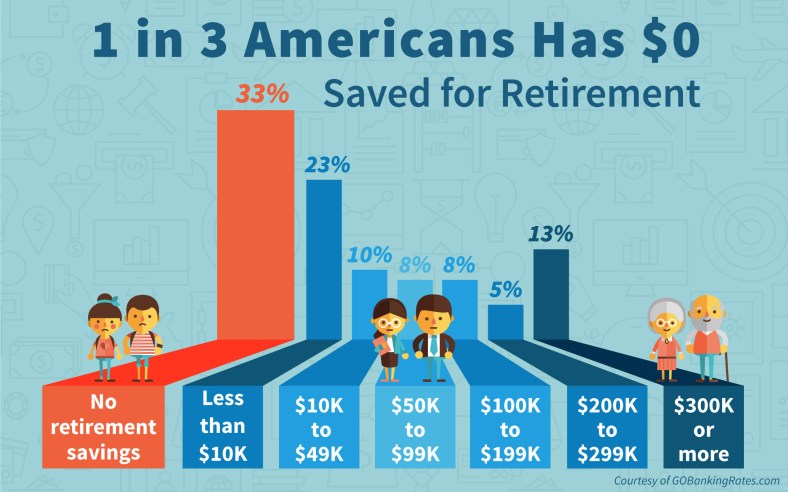
If you’re like Alison — facing retirement without a cash cushion — you’re in good company. In January, GOBankingRates.com surveyed a representative sample of Americans and found that among people 60 and older, just 26 percent felt they were financially on track for retirement. The remaining 74 percent within this age group lacked sufficient retirement savings. And among Americans of all age groups, a sobering 33 percent had nothing saved for retirement.

Anyone who tries to get by on Social Security income faces a lean retirement lifestyle. Here are questions to ask yourself before trying to stretch benefits as far as possible — and what you’ll realistically be able to afford.

1. How Much Home Can You Afford on Social Security?

Your Social Security check will stretch further if you find a cheap place to retire. Housing is the biggest expense most Americans face, according to BLS statistics.

Sun-loving Alison hopes to retire to an apartment in Tucson, Ariz. The median rent for a one-bedroom apartment is $575, according to Zillow. But let’s say Alison lucks out and finds an apartment for $540. She will spend 40 percent of her check on rent and will need to kick in a few extra bucks for utilities. So, rounding up, her monthly housing cost to $600 — leaving her with $749.59 of her Social Security check.

2. What Can You Eat on Social Security?

Dining at four-star restaurants is out if you’re living on Social Security. On average, roughly 12.5 percent of a consumer unit’s spending money goes toward food. In Phoenix — close enough to Tucson for our purposes — the average family spent $594 per month to eat in 2013-14, the most recent figures available from the BLS.

Phoenix averages 2.6 members per household, so we can estimate that the average person spends $228 per month to eat. Although Alison can splurge occasionally at a modest restaurant, living on Social Security means she will be eating at home most of the time.

Add up housing costs of $600 and $228 for food, and Alison is left with $521.59 of her Social Security check — a small sum for the remaining spending categories.

3. Can You Afford Healthcare on Social Security?

Alison might qualify for assistance in paying for her Medicare Part B premiums. Such aid would help her cover medical expenses, the No. 1 financial burden in the U.S. According to the government’s Medicare website, Alison’s monthly $1,349.59 check is beneath the income ceiling of $1,357 that qualifies her for assistance.

Medicare assistance benefits vary by state, so Alison should visit Medicare.gov and sign up for a conversation with someone from her state.

It will help if Alison can find ways to save on healthcare costs, such as purchasing generic drugs and using walk-in clinics instead of visiting emergency rooms. Assuming Alison qualifies for government help and is diligent about her medical spending, she can budget $150 per month toward medical costs. Alison now has $371.59 left in her budget.

4. What Type of Transportation Can You Afford While on Social Security?

Owning a car is expensive, especially on Social Security. The cost of operating a car can easily run into hundreds of dollars a month. With that price tag in mind, Alison has joined many other retirees by giving up her car.

Alison relies on public transportation services to get to doctor appointments. When going to the grocery store or meeting with friends, Alison uses the bus. On rare occasions, she splurges for a cab. She chose an apartment located near shops and restaurants. As long as her health holds out, she can walk to the grocery store and pharmacy.

Alison keeps transportation costs low at $100 per month. So, she’s now down to $271.59.

5. Can You Afford to Travel on Social Security?

After paying for necessities, Alison has $271.59 left for extras, which we describe in the next two categories. As you can already see, it is not easy to live on the average Social Security check.

With a tight budget, Alison and other retirees living on Social Security aren’t going on lavish vacations. Maybe Alison can afford a train or bus ticket to visit family, but cruises are out.

If travel is important to you, there are ways to squeeze it into the budget. Pairing up with family and friends can make travel a possibility. Camping vacations in state parks are economical. There are also many free events across the country.

6. Will You Earn Enough in Social Security to Cover Other Costs?

Remember, after spending for necessities, Alison was left with just $271.59 in her monthly budget. The amount of money she can spend in this final category — which includes entertainment — will largely depend on how much cash she earmarks for travel. She might be able to afford the occasional $1 movie at Redbox, but it’s unlikely she’ll be able to pay for the newest iPhone 7.

Finally, Alison will need a small cash cushion to cover emergencies. If she’s especially frugal, she might even have a little money left over to give to her favorite charity.

While Alison can make ends meet on her Social Security check, it won’t be easy. So, if you are a little younger than Alison, try to learn from her mistakes. Save a bit more today so you will have a greater sense of financial security in retirement.

Waves In My Hair

3t6a4898-ex-web

From the time I was an infant, I always had very straight hair, and like many girls with straight locks, I always longed for waves. My desire for beachy waves was so pronounced that I spent my twenties and thirties habitually swirling my hair into an up-do with a clip while it dried in hopes that waves would form and remain there. However, because my hair is so thick and heavy, the sheer heft would uncoil my attempt at making soft curls, leaving me with the straight hair my DNA locked me into.

My hair became even thicker after I began competing in 2009. While many other women my age were lamenting the loss of their locks, I experienced such a surge in fullness that for about a year, I shaved the nape of my neck to lessen the mass of hair I had. A lot of it had to do with the increased protein intake (up to 180 grams a day at one point) which I had to incorporate into my regimen while I prepped for competitions. My hair also grew much more rapidly, and in 2010, my hair grew ten inches in eleven months. How do I know this? Because the area I had shaven grew a full eleven inches in that span of time, and the overall length of my hair kept me visiting my hairstylist for trims every six weeks.

Then I entered peri-menopause. What a joyous time, when a commercial can send you into a fit of tears, layering clothing becomes essential because of the hot flashes and night sweats, and your skin decides that it no longer wants to fight against the pull of gravity. About a year after I began sailing on the rocky seas of menopause, I had a haircut by an amazing stylist who remains my regular stylist to this day.

By some very odd coincidence, I noticed a pronounced wave throughout my hair when I washed my hair several days later. I thought perhaps I hadn’t washed out the styling products completely, but my hair began to look wavier and wavier with every subsequent wash. This persisted for over a year, and continued to perplex and annoy me. I went from never styling my hair, to developing a blow-drying and flat-ironing regimen which I still haven’t perfected, even to this day.

The rogue waves in my hair don’t seem to have rhyme or reason either. The waves on the right side of my head which frame my face are much wavier than on the left side, and for whatever bizarre reason, the right side is resistant to my efforts to obliterate the kinks with a flat-iron, even if I treat small sections and repeatedly iron the sections.

The sudden nature of the change in my hair texture was alarming. I remember hearing women tell tales, which I figured were tall tales, about how the texture of their hair changed overnight. And here I experienced the exact thing.

While hormones play a large role in hair texture (thyroid, progesterone, estrogen, testosterone), it can be rather strange to wake up with waves you never had, or to go from uber-curly hair to arrow straight hair overnight. It’s like the hormone fairy has a special hair wand which she uses to transform a woman’s strands like magic. The other funny thing is that hair follicles may return to their original state after a few years. My hair is starting to calm down somewhat, and there are times when my hair will be almost arrow straight after drying naturally.

I love the theory which Jonathan Torch, the founder of Toronto’s Curly Hair Institute, has devised. He maintains that changes in the tone of the muscles at the base of the hair follicles are the culprits in hair texture changes over time.

All I know is that my hair seems to have a mind of its own now!

Why Fifty Is Great

3t6a4877-ex-web

So far, I have really enjoyed being fifty years old. It isn’t nearly as alarming or horrific as I had made it out to be. In keeping with the slogan which was on my most recent birthday cake, I truly feel like “50 IS THE NEW 20” and am thrilled that my physical appearance has also kept up with my spirit, mind, and intentions.

After spending a half-century on the planet, I no longer have the patience to deal with people who can’t honor their word. My tolerance has completely dissolved, and I think nothing of tossing flaky people to the curb. I guess the old adage, “with age comes wisdom” has a lot of truth to it. My gut instinct has proven consistently to be a foolproof guardian, so I no longer try to fight it. I trust it completely.

I cannot and will not wait for things to happen. I need to generate my own momentum and know that I can only truly depend on myself. Challenges will continue to hit me, but I feel stronger than ever about my ability to handle anything that comes my way. I also know that situations will always find their own resolution eventually. I also trust the process by which situations must unfold, and I also put tremendous faith in the universe. I maintain a connection with the universe by meditating daily and by keeping energy flowing through me.

My Oldest Patient

Shortly after I completed my residency training in family medicine in 2004, I worked briefly for a company which offered mobile physician home visits. Though I soon realized that driving to patients wasn’t my thing, I definitely met some very interesting people during that time.

My favorite and most memorable patient from my mobile medicine days was an elderly woman, aged 105. During my hospital days, I had seen and treated a number of centenarians, but this woman was the oldest. I was called upon to visit this woman’s home (I’ll call her Mary) to perform a blood pressure check and manage her hypertension. She lived in a charming duplex which was erected circa 1905. I knocked on the door and when the door opened, a friendly middle-aged man greeted me and introduced me as Mary’s caregiver (let’s name him Tim).

The interior of the duplex was a time capsule. I honestly felt like I had stepped into the 1920’s, because everything in the place was from that era: lamps, paintings, coffee cups, pens, furniture, curtains, pillows, etc. As my eyes scanned the room, I saw Mary sitting in a large chair with a walker in front of her. Mary’s face certainly was old and her body was frail, but she possessed fire in her eyes and a sassy attitude to match. I thought of how this woman, born in 1899, was witness to three different centuries, as a result of the year she was born as well as the longevity which extended her time on planet Earth far beyond that of the average person.

Mary smiled at me and motioned for me to come over.
MARY: “Well you’re a pretty young lady…what’s your name?”
ME: “Hello Mary, I’m Dr. Naito.”
MARY: “DOCTOR??? DOCTOR??? Tim, what have you tricked me into? Why do we have a doctor here?” Mary’s brow was furrowed.
TIM: “Well Mary, since you refused to take your blood pressure medicine, and since your blood pressure reading was very high today, I had to call the mobile doctor service to come see you. Now be nice to the doctor, will you please?”

20161206_161832

At this point I asked Mary if I could take her blood pressure again, and she consented. I took her blood pressure reading: 175/95. I began to ask Mary questions: was she in pain anywhere, did she have a headache, was she dizzy, was she nauseous, was her heart racing, was her vision blurry? I took her pulse: 78 and steady. Mary had no complaints. I then conducted a physical exam on her, which was completely normal. I then asked Mary if she would please take her blood pressure medication immediately, to which she also consented. Once Mary took the medication, I informed her that we would wait about 30 minutes to assess her response to it. She responded by saying, “Well I like you, young doctor! We’re going to have a nice chat!”

The next 30 minutes were incredibly fascinating and funny as Mary settled into a stream of vignettes about her life, focusing mostly on her days as a true flapper, wild and carefree, wearing short dresses, “necking” with handsome young men, hanging out in jazz clubs, and being a general troublemaker. One of those young men managed to steal her heart, and they married in 1922. She spoke about how she became an actress quite by accident when her husband, who was a Hollywood film producer, began to cast her in his films. Mary and her husband were more interested in traveling the world and investing their money than buying an expensive home, so they lived in their modest duplex from 1922 until his death almost 60 years later, and Mary refused to move into an assisted living facility when she became an invalid. It was the same duplex I was visiting that day.

After thirty minutes of hearing the most engaging stories about Mary’s life, I didn’t want to interrupt her. But I was working, after all, so I told her I needed to re-take her blood pressure. This time it was 138/72 and Mary was still completely asymptomatic. I told Mary that it was time for me to go and began gathering my supplies.
MARY: “Oh no you don’t! You’re going to drink a martini with me. It’s my nightly ritual. Been doing it since I was 20 years old.”
ME: “Every night since 20?”
MARY: “Yes indeed. It’s kept me sane all these years, and I enjoy it.”
ME: “But I need to drive over the hill, and it’s rush hour.”
MARY: “Oh please! Now stop complaining and just sit. Tim, make my usual times two.”

After several minutes Tim emerged from the kitchen with two double gin martinis. I don’t like gin, but I wasn’t about to complain or refuse to drink the martini. Mary and I (actually, she talked and I listened) continued to talk for another 30 minutes while sipping on our cocktails. The martini was STRONG but well made, so I continued sipping. Mary polished off her entire martini like the martini drinking expert she was, and motioned to me when she took her last sip. “Well, dear? You’ve got some left in there.” I had to finish the last couple of sips of my martini while Mary watched me, making sure I did so. Once I did, she smiled warmly. “That’s my girl!”, she beamed.

I gathered my belongings and said goodbye to her, and when she motioned for a hug, I walked over to her and wrapped my arms around her. She hugged me and patted my back with her hand.

I never saw her after that.

Musings From A Happy Half-Centurian

3t6a4923-ex-web

Now that I have been in the 50 zone for a few months, I can honestly say that I actually like it! Here are a few reasons why I am completely comfortable with being 50 years old…

* I still get carded. In fact, I have been asked for ID when purchasing alcohol more frequently now than a year ago. And it’s not because I am purchasing booze with more frequency either. I have even gotten carded while with younger friends who did NOT get carded. It’s bizarre and very cool.

* I can still rock an outfit and not only be a head-turner, but a neck-BREAKER. Gotta have goals!

* I can take care of myself and don’t panic if I am faced with a challenge. However, I am completely grateful when someone comes to my aid or shows concern for my welfare. I am so blessed to have wonderful, true friends who have my back as much as I have theirs!

* I can usually discern very quickly which opportunities and situations are legit and which ones are a waste of my time. With age comes wisdom, and my gut instinct has proven consistently to be a foolproof guardian.

* I don’t wait for things to happen…I MAKE them happen. When I was younger, I had a tendency to put more faith in others coming through for me. Over the past few years, I have adopted the attitude that I can only depend on myself, so I have pushed myself to become a solo mover and shaker. It’s pretty tough navigating alone, but at least I trust the person at the helm!

* I trust that time will always makes things unfold organically. This makes struggling through difficult times much more manageable. I know that situations will always come to a resolution eventually. Whenever I have any doubt, I think of what my grandmother used to tell my mom and her siblings when times were rough: “Don’t worry, after bad comes good.” What a wise woman.

* I no longer care if someone has a problem with me sporting a miniskirt, a bikini, or a curve-hugging dress. My thought is, I still have it, and I have every intention of flaunting it. Sorry if that offends some people, but the folks who have a problem with such attire can’t take away my resolve to celebrate what I have worked so hard to maintain.

* I realize that life isn’t over just because I hit a certain chronological marker. If anything, I am just getting started!

1 in 3 Americans Has $0 Saved for Retirement

I recently came across this article and was shocked by the statistics. In an effort to make people aware of the importance of saving for retirement, I am reposting Elyssa Kirkham’s article below.

To see the original article, please go to: http://www.gobankingrates.com/retirement/1-3-americans-0-saved-retirement/
main_overall
By Elyssa Kirkham March 14, 2016

Saving for retirement is not an area of financial strength for Americans. Too often, meeting the financial demands of today means delaying, diminishing or simply never starting to save for tomorrow.

“There are plenty of obstacles Americans claim are in their way when it comes to saving for retirement: credit card debt, student loan debt, low wages, the need to save for a child’s college education, and the list goes on,” said Cameron Huddleston, Life + Money columnist for GOBankingRates. “Although all of these things can put a strain on our budgets, they don’t necessarily make it impossible to save for retirement.”

GOBankingRates asked Americans how much money they have saved for retirement and found that most people are behind on their retirement savings. These survey findings also provide a helpful benchmark against which readers can compare their own retirement savings balances and progress.

Survey: How Much Americans Have Saved for Retirement

The GOBankingRates survey was conducted as three Google Consumer Surveys, each targeted at one of three age groups: millennials, Generation Xers, and baby boomers and seniors. Each age group was asked the same question, “By your best estimate, how much money do you have saved for retirement?” Respondents could select one of the options as displayed below:

Less than $10K
$10K to $49K
$50K to $99K
$100K to $199K
$200 to $299K
$300K or more
I don’t have retirement savings.

GOBankingRates analyzed the survey results to reveal key insights into how Americans of all ages are saving for retirement. Whether due to various economic factors or not correctly prioritizing finances, many people are not on track to have enough money to cover their expenses during retirement.

56% of Americans Have Less Than $10,000 Saved for Retirement
Most Americans are falling short of the amount of savings required for a comfortable retirement ― if they are saving at all. The most common responses to the question of what people have saved for retirement across all age groups are “I don’t have retirement savings” and “less than $10K,” breaking down as follows:

One-third of Americans report they have no retirement savings.
23 percent have less than $10,000 saved.
Survey: 1 in 3 People Has $0 Saved for Retirement

This lack of savings indicates that just getting started on retirement planning is a significant obstacle for many people. This difficulty can be due to a lack of education on the importance of retirement savings, said Kristen Bonner, the GOBankingRates research lead for this survey. “Americans might also be feeling as though their employer match ― or lack of ― is not enough to make it worth it to open an account, as well the growing trend of changing jobs every couple years and not wanting to deal with rolling over funds from one account to another,” Bonner said.

It’s not all bad news, however:

After “less than $10K,” the most common balance Americans have saved for retirement is “$300K or more.”
A significant 13 percent of Americans’ retirement savings balances are in the top bracket.
“The fact that so many Americans do have $300,000 or more saved for retirement goes to show just how easily the amount of money in your retirement fund can grow over time if you are dedicated to contributing regularly,” Bonner said.


Women More Likely Than Men to Have No Retirement Savings

The gap between men’s and women’s retirement savings is cause for concern for anyone planning for retirement. It’s as much as 26 percent, according to the 2015 Gender Pay Gap in Financial Wellness report from financial education company Financial Finesse. Overall, GOBankingRates’ survey findings show that women are significantly less likely to be sufficiently saving for retirement:

Women are 27 percent more likely than men to say they have no retirement savings.
Two-thirds of women (63 percent) say they have no savings or less than $10,000 in retirement savings, compared with just over half (52 percent) of men.
Survey: Retirement Savings Gap Reveals How Far Behind Women Are

The gap between men’s and women’s retirement savings widens as balances get higher: Whereas men and women are about as likely to have $10,000 to $99,000 saved for retirement, men are twice as likely as women to have savings balances of $200,000 or more.

One reason women fall behind is the gender pay gap. “Women cannot save as much for retirement because they are not earning as much,” Bonner said, citing 2015 U.S. Census Bureau data that shows women earned $0.79 for every $1 men earned in full-time positions. Families trying to prepare for retirement need to factor such deficits into their financial plans.

“Women also are more likely to have gaps in employment to raise children and might not be contributing to retirement accounts during those periods when they’re not working,” Huddleston said.

Women’s retirement savings needs are also greater than men’s. “Women not only need to catch up with men but they also need to save more because their medical costs tend to be higher in retirement,” Huddleston said. Women are also more likely to live longer, increasing their chances of outliving retirement funds.

To make up for anemic earnings and plan for their higher retirement costs, women need to be proactive and save aggressively. “Financial experts typically recommend saving 10 percent to 15 percent of your annual pay, so women should aim for that higher percentage to close the retirement savings gap,” Huddleston said.

Retirement Savings Correlate Closely to Age

Retirement savings are closely tied to savers’ stages of life. For young people just starting their careers, simply saving at all could be a sufficient goal, while those nearing retirement will likely want to have at least a few hundred thousands of dollars in their retirement accounts.

GOBankingRates conducted this survey in three different parts aimed at specific generational age ranges ― millennials ages 18 to 34, Gen Xers ages 35 to 54, and baby boomers and seniors ages 55 and over ― to get an accurate picture of how Americans’ savings differ by life stage:

Millennials are 40 percent more likely to not have retirement savings than Gen Xers and 50 percent more likely than people age 55 and over.
About half of Gen X is making a significant effort to save for retirement ― 48.2 percent have saved over $10,000, including 26.7 percent who have saved $100,000 or more.
Boomers and seniors are 85 percent more likely than Gen Xers to have $300,000 or more in retirement accounts and 4.6 times more likely than millennials to have saved this amount.
Survey: Comparison of How Much Millennials, Gen Xers, Boomer and Seniors Have Saved for Retirement

3 of 5 Millennials Have Started a Retirement Fund
As the youngest group surveyed, millennials are the least likely to have substantial retirement savings. Three in four (72 percent) of millennials have saved less than $10,000 or nothing at all.

Survey: Majority of Millennials Are Saving for Retirement

Additional findings show how millennials’ retirement savings reflect their life stage:

42 percent of millennials indicated they have no retirement savings.
The number of millennials with no retirement savings yet is 52 percent for younger millennials ages 18 to 24 but a more reasonable 36 percent for older millennials ages 25 to 34.
The most common balances that younger millennials have saved are “less than $10K,” at 30 percent, and “$10K to $49K,” at 11 percent.
Older millennials are twice as likely as younger millennials to have saved $10,000 to $49,000, at 14 percent versus 7 percent, respectively.
Related: Retirement Planning Checklist for Millennials

Overall, fewer millennials are saving for retirement than should be, but many millennials’ retirement savings are actually on track, especially among the those ages 25 to 34. For this group, saving now and saving regularly will make all the difference.

“The earlier you start saving, the easier it is ― really,” Huddleston said. “Thanks to the power of compounding, if you start regularly setting aside even small amounts as soon as you start working, you could easily have enough for a comfortable retirement.”

Saving as little as 5 percent of your income can make a big difference long term, Bonner added. “Make sure to always take advantage of any employer matches, and automatically transfer funds from your paycheck to your retirement fund so that you do not even think of that money as disposable income,” she said.

Gen X Still Playing Catch-Up on Retirement After Great Recession
Survey: Most Gen Xers Are Behind on Retirement Savings

Although some Gen Xers are hitting their retirement savings goals, just over half (52 percent) still have less than $10,000 in retirement savings. A big contributor to this low amount could be the Great Recession, which hit Gen X the hardest, costing members of this generation 45 percent of their net wealth on average, according to The Fiscal Times. This loss was a major setback for a generation that is saddled with a wide range of financial obligations, from mortgages to aging parents and children entering adulthood.

Younger Gen Xers are falling further behind on retirement savings than their older counterparts, who are twice as likely to have retirement savings with high balances:

Both younger Gen Xers (ages 35 to 44) and older Gen Xers (45 to 54) are equally as likely to not have a retirement account, at 31 percent.
Among younger Gen Xers who have a retirement account, most have lower balances of less than $50,000.
Older Gen Xers’ balances reflect good starting contributions that could earn considerable compound interest over time:

An impressive 40 percent of older Gen Xers have managed to save $50,000 or more in retirement accounts.
Over half of those older Gen Xers in that 40 percent have balances of $200,000 to $299,000 (7 percent) or $300,000 or more (15 percent).
“These figures are encouraging,” Huddleston said, “but this generation still could be setting aside a lot more if they actually want to have a comfortable retirement.”

Only 1 in 4 People Age 55 and Over Has More Than $300K Saved
As respondents get older, the gap between the savers and the save-nots widens. Although a larger portion of people age 55 and over report high-balance retirement funds, there remains a significant subgroup that has little to no retirement savings:

About 3 in 10 of respondents age 55 and over have no retirement savings.
26 percent report retirement savings with balances of under $50,000, an amount that is insufficient for people nearing retirement age.
Over half (54 percent) of people age 55 and over have balances far behind typical retirement fund benchmarks for their age group.
Survey: Nearly 30% of Boomers and Seniors Have No Retirement Savings

Some of those 55 and over who lack savings might not need them, Huddleston pointed out. “[They] might be among the dwindling group of Americans who will get a pension and will benefit from having an employer who set aside retirement funds for them.”

More likely, however, those without retirement savings couldn’t or didn’t make saving for retirement a financial priority. “Without savings of their own, they’ll have to rely solely on Social Security,” Huddleston said. Baby boomers most often cited Social Security as their expected primary source of retirement income (35 percent), according to a 2015 report from the Transamerica Center for Retirement Studies, whereas Gen Xers and millennials expected retirement accounts like 401ks or IRAs to be their main source of retirement income.

On the other end of the spectrum, many baby boomers and seniors have successfully socked away substantial savings in retirement accounts:

26 percent of baby boomers nearing retirement (ages 55 to 64) report healthy retirement savings with balances of $200,000 or more.
31 percent of seniors at or above the retirement age (65 and over) have balances of $200,000 or more.
“Those who have saved more than $300,000 have clearly made saving for retirement a priority and want a more comfortable lifestyle in retirement than what Social Security benefits will afford them,” Huddleston said.

About 75% of Americans Over 40 Are Behind on Saving for Retirement
Using this survey data as a snapshot of Americans’ retirement savings progress ― or lack thereof ― GOBankingRates sought to get a better look at how many people are actually on track to retire comfortably. To do so, GOBankingRates compared survey responses to key retirement savings benchmarks based on a savings rate of 5 percent of income and checkpoints sourced from J.P. Morgan Asset Management, as well as Census Bureau data on median incomes by age range. Based on those data sets, GOBankingRates determined that people of the following ages, representative of the survey age groups, are on track or behind at the following rates:

Age Median Income Retirement Savings Benchmark Percentage on Track Percentage Behind
24 $34,605 Started a retirement fund 48% 52%
30 $54,243 $16,272.90 33% 67%
40 $66,693 $100,039.50 20% 80%
50 $70,832 $212,496.00 22% 78%
60 $60,580 $260,494.00 26% 74%

A little less than half of people ages 18 to 24 are on track simply by having started a retirement fund. Among the people just a few years ahead of them, around age 30, significantly more ― two-thirds ― are already behind on saving for retirement.

Younger people are in the best position to recover if they’ve fallen behind because they have more time to use compound interest to their advantage. “Those who are in their 20s and 30s with $10,000 or less in retirement savings still have time to catch up if they make saving a priority,” Huddleston said.

For those age 40 and over, however, the picture is bleaker: Among those in their 40s and 50s, four in five savers have balances that fall behind the benchmarks for their age groups, which means only about 20 percent are on track for retirement. Among those 60 and over, about a quarter have sufficient retirement savings, but the other 74 percent are still behind.

“The real problem is procrastination,” Huddleston said. “People naturally tend to focus on the bills that are due today ― and the things they want now ― and assume they’ll have time to save for retirement later. But, before you know it, 20 or 30 years have passed; you’re approaching retirement age but you don’t have enough saved to retire.”

How to Catch Up If You’re Behind on Retirement Savings

With less time to save as each year passes, these older age groups need to reevaluate their financial priorities. The large majority of Americans age 40 and over who are behind on retirement savings can potentially catch up or compensate for their anemic retirement accounts by making changes to their savings plans now.

1. Stick to a Routine
The first step is to start saving regularly. Consistent savings, even in just small amounts, is the best way to ensure a retirement fund is growing. “Day to day, it might not seem as if the balance in your 401k or IRA is increasing significantly, but 10, 20, 30 years from now, your future self will be thanking you,” Bonner said.

If money is put into high-yield accounts or invested wisely, compound interest on small savings can help produce a sizable nest egg. “If you wait until you’re 40 or so to start saving, you’d have to save three or four times as much ― or more ― each month to accumulate the same amount as those who start saving earlier,” Huddleston said.

2. Prioritize Changes That Have Long-Term Benefits
Upping retirement savings contributions is also necessary to catch up. People age 50 and over can make catch-up contributions of $6,000 to a traditional 401k, for example, in addition to the regular $18,000 annual 401k contribution limit, according to the IRS.

Those nearing retirement can also help prepare for retirement by reducing spending and paying down debt, which will trim monthly expenses and enable them to stretch their savings further once they retire.

3. Save Like You’ll Retire Tomorrow
Lastly, those nearing retirement might need to adjust their expectations, Huddleston said. “Older Americans with little saved will have to work a lot harder to set aside more and likely will have to work longer ― or never fully retire,” she said.

Many Americans do not recognize retirement savings should be an urgent priority in their lives, according to Bonner. “The trending attitude today is to ‘enjoy life to the fullest,’” she said. “However, even though retirement seems far away to many people, and they think that there is still plenty of time to begin saving, Americans must make their future selves a priority and take all necessary steps to set themselves up for a comfortable financial future.”

People who view retirement as something that is just around the corner can help themselves stay on top of their retirement contributions so that they don’t fall behind. By keeping retirement at the top of the financial priority list, it can become less of a far-off dream and more of a soon-to-be reality.

Scheduled Calls With The Bestie

talk-clipart-jba0871

My best friend and I met in 1975 and immediately clicked, not just because we were in the same class, but we were also both only children, bookworms, and sported a long cascade of hair (blonde for her, brunette for me). As we went through our school years, we were inseparable, and got into a fair amount of trouble together, mostly due to her propensity for bending the curfew rules her parents and my mother tried so desperately to enforce.

Two decades later, Diane married and had two children, and I was occasionally asked to babysit the kids. We remained close and though we lived in different counties, we made an effort to visit each other as much as possible. Then in 1997, she and her family relocated to northern Washington state, and I went off to medical school. The geographic shift reduced our visits to once a year, when Diane would come to Southern California to visit her parents and spend some time with me. I was able to make it up to Washington in 2010, when I competed in the NPC Emerald Cup Bodybuilding event. It was so important for me to see my best friend that I spent several extra days up there.

The last time Diane came down to visit was in 2011, right before both of her parents fell ill. Since that time, her father passed away, and both of our mothers became ill and were placed in care homes. Diane’s daughter moved into her own place. I became completely immersed in the world of competing, and spent so much time traveling to other parts of the country that my time and financial resources prevented me from traveling to Washington.

Over the past several years, Diane and I have catch-up conversations about once every 8 to 10 months. Our most recent conversation was scheduled via email, then rescheduled twice due to the fact that we both now contend with having far too much to do and insufficient time in which to get it all done. We had a wonderful chat two weeks ago which lasted for over an hour, which is a big deal for me because I ordinarily can’t stand being on the phone for more than a few minutes. Yet with Diane, I find that we need a good chunk of time on the phone to dig into all the topics we tend to discuss.

Sadly, we will have to schedule another call through email exchanges. We agreed to mark our calendars to contact each other regarding scheduling the call for sometime in May. I still remember when I would just pick up the phone (rotary dial land line) and call my best friend and classmate to chat. Times have certainly changed!