ALCAT Food Intolerance Testing

ALCAT-Logo-1

I URGE people to get the ALCAT Test done to determine what specific food intolerances they may have. The impact to one’s health from being exposed to such triggers can be significant! I am not talking about food allergy, which is an IgE immune system response that is rapid (seconds to hours) and is typically characterized by hives, shortness of breath, upset stomach and anaphylaxis in some cases. The most common food allergies are to nuts, shellfish, wheat and dairy. Interestingly enough, only about 4% of the United States population has a food allergy. The ALCAT Test does not detect food allergy, but it tests food INTOLERANCE which is far more widespread and insidious.

Food intolerance is characterized by digestive disorders, migraines, obesity, chronic fatigue, aching joints, skin disorders and behavioral issues. It has been stated that upwards of 70-80% of the US population has food intolerance. Unfortunately for many, those food intolerance symptoms are often identified as individual problems and treated as such, thus treating the symptoms and not the cause. The ALCAT Test is now considered the, “gold standard” laboratory method for identification of non-IgE mediated reactions to foods, chemicals, and other substances.

Some insurance plans will cover part or all of the expense of the testing…We at Urban Med recommend the Comprehensive Wellness Panels 1, 2, and 3, which include testing of 150 to 200 Foods, plus Food Additives/Colorings, Environmental Chemicals and Molds. These panels run from $675 to $850. Here’s the thing: though the testing is pricey, it is very specific. In addition, you get a detailed rotation diet for reintroduction of the foods which you have intolerance to after you have eliminated them for the recommended period (3 months for moderate intolerant foods, 6 months for severe intolerant foods). This information can be invaluable if you are suffering from unexplainable conditions or conditions which are resistant to medications or other interventions.

I finally got mine done in January for the first time despite the fact that I have counseled and tested patients using this technology for over three years. I had suspected that I had some intolerance to certain foods which the ALCAT test confirmed, but I was astonished by some of the other results.

These panels are extensive and specific, and only require a blood draw. You can explore your options for obtaining testing here: https://www.alcat.com/alcattesting.php

The different panels which are offered by ALCAT are listed here:
https://www.alcat.com/test_panels/

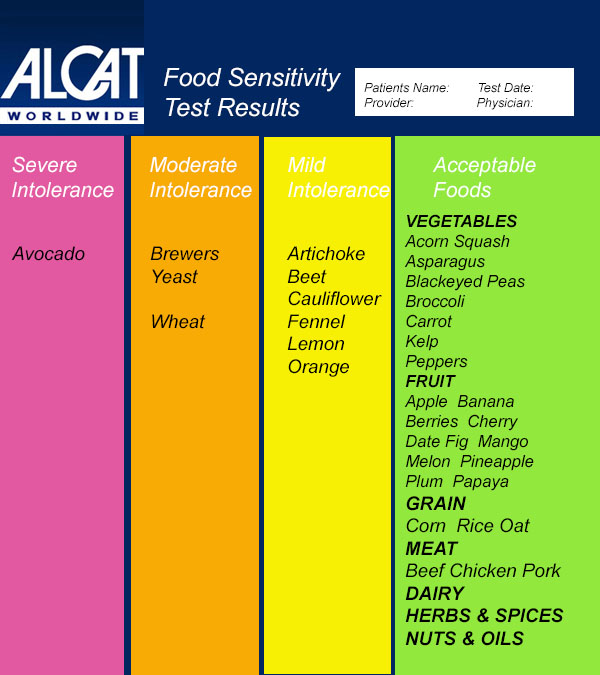
Here is a sample test result sheet:
ALCAT-Food-Allergy-Sensitivity-Test-Sample

The If-It-Fits-Your-Macros Trend

Originally published on mensphysique.com on Thursday, 09 October 2014

http://www.rxmuscle.com/blogs/the-kitchen-eating-strategies/11653-the-if-it-fits-your-macros-trend.html
IIFYMslide
You have probably heard about the “If It Fits Your Macros” (or IIFYM) trend which has been increasing in popularity within the fitness and bodybuilding world. It’s not surprising that the concept was embraced and developed by people within the industry who were sick and tired of adhering to monotonous, restrictive meal plans in which the vast majority of foods were labeled as evil and forbidden. On a personal note, I jumped on the IIFYM bandwagon as well because I was fed up with avoiding certain so-called “bad” foods and also dealing with metabolic burnout from years of caloric restriction. What surprised me was the positive manner in which my body responded to taking in maintenance calories as opposed to constantly functioning at a caloric deficit which only served to slow down my metabolism.

The term macro refers to the principal nutrients which the body requires: protein, fat, carbohydrates. IIFYM dictates that as long as you fulfill the energy needs of your body, you can obtain calories from any food source. Let’s face it: your body needs a certain amount of protein, carbohydrate and fat, along with fiber and micronutrients such as vitamins and minerals in order to function optimally, but it doesn’t scrutinize every macronutrient gram as it is thrown into the body. On the other side of the coin, it is also important to bear in mind that most proponents of IIFYM do not consume large amounts of junk food either. As long as quality protein is consumed in adequate amounts to contribute to muscle growth and repair, along with micronutrients and dietary fiber to support normal digestion, it shouldn’t matter if a small percentage of caloric daily intake is obtained from discretionary or junk food items.

My personal opinion is that the quality of carbs still should come into play if you are employing an IIFYM approach. However, if the majority of carbs comes from quality sources such as oats, sweet potatoes and brown rice, a small amount of junk carbs (cookies, Pop Tarts) shouldn’t tip the balance too much. I am a fan of carb BACKloading and believe the largest insulin spike should come at night before you sleep, since you will be fasting for several hours.

I know some of you are still reading this with great skepticism and want to hold onto your six boring meals of tilapia and green beans every day, refusing to accept the concept of loosening the reins a bit and actually enjoying a variety of foods. IIFYM doesn’t mean that you lose control and eat whatever you want, whenever you want. What it DOES mean is that foods will no longer be forbidden or “bad”, and that you can actually consume them on a fairly regular basis as long as you keep track of your daily nutrient intake.

The main drawback of IIFYM is that you must track your food intake, which in a sense is another form of food fixation. However, there is a greater chance that you will meet your body’s nutrient needs than if you follow a cookie cutter, calorie restricted, orthorexia lover’s contest prep meal plan. When clean eating is followed 100% and the majority of food sources are banned, caloric restriction is almost inevitable. Such caloric restriction, when practiced for an extended period of time, will cause fat loss to stall and metabolism to slow down.

How about if you met your macronutrient needs without having to banish most foods from your diet? So many people in the world of fitness suffer from orthorexia, a psychopathological condition in which foods are labeled as “good” or “bad”, and in which individuals become socially isolated over their need to eat “correctly”. I have seen so many competitors struggle with an increasing difficulty in losing fat, so their coaches restrict their calories even more and ban more foods from their meal plans. Fruit, healthy fats, and healthy carbs are stripped away in an effort to lean the competitor out. Another thing to consider is what food deprivation does to people. If a food is “bad”, suddenly the temptation to indulge in that bad food is intensified.

You might want to consider trying IIFYM if you are in a slump with your current meal plan. You may feel like a hamster on a very boring and restrictive “clean eating” wheel in which you are only allowed to eat very specific foods in certain combinations. For some of you who have been doing this incessantly for years, you may have noticed over time that it has become more and more difficult to lose weight. Your meal plan is probably VERY rigid and VERY boring, consisting of foods you are probably so sick of that if you never had to eat them ever again, you would rejoice in the streets for days. Give IIFYM a try. You might be pleasantly surprised at how your body responds.

Worth Your Weight In Salt: Why Some Dietary Salt Is Good

Originally published on mensphysique.com on Wednesday, 28 May 2014

http://www.rxmuscle.com/blogs/the-kitchen-eating-strategies/10971-worth-your-weight-in-salt-why-some-dietary-salt-is-good.html
salt
Salt has gotten a bad rap due to its rampant overuse in the food and restaurant industries and its potential to elevate blood pressure in susceptible individuals. However, it is responsible for the generation of nerve impulses, electrical conduction of the heart, and the contraction of all other muscles in the body.

The human body contains 4 to 8 ounces of salt and requires this to regulate body water, proper blood volume and normal blood pressure. It’s quite remarkable how the body can rid itself of excess sodium via the production of sweat and urine. Perhaps you have noticed instances in which you have retained water after a brief spike in dietary sodium intake, but this is rather short-lived in healthy individuals. What happens is that the high concentration of sodium causes fluid to travel from body tissues into the bloodstream to dilute the sodium influx. Blood volume increases, then blood pressure also increases, triggering the kidneys to increase urine output in order to excrete the excess sodium and water.

I’m not suggesting that you consume massive amounts of sodium in your daily meal plan, but I have met many competitors and athletes who are so terrified of the idea of consuming any sodium that they do themselves a disservice by pulling their daily sodium intake down significantly. When you keep sodium intake at very low levels for the long term, the kidneys will conserve serum sodium as a safeguard. When contest day approaches, no amount of water manipulation will work to give you that dry and peeled look if sodium was not on board in the weeks preceding the event. It is a far better strategy to maintain a sodium intake of approximately 2 to 3 grams per day, so that when you drop sodium and water intake right before a contest, it will be much easier to shed that subcutaneous fluid.

If you still aren’t convinced of the importance of sodium in your daily diet, remember that your body needs sodium to function properly in general. You also lose a considerable amount of sodium through the profuse sweating that most, if not all, of you fellas experience during your intense lifting sessions. If you consume very little sodium, and also lose a great deal of sodium through sweat, muscle contractility will become impaired and cramping will often develop. That’s reason enough to grab a little sea salt and add it to a few meals each day.

You might want to experiment a bit to see when it is best for you to cut sodium for a contest. For most competitors, cutting sodium intake in half for four to seven days before the event, then cutting water the day before showtime seems to work well.

Celiac Disease: A Blessing In Disguise For Competitors?

Originally published on RxGirl on Thursday, 13 March 2014

http://www.rxmuscle.com/rx-girl-articles/10435-celiac-disease-a-blessing-in-disguise-for-competitors.html
celiac-disease-villi
Celiac disease is an autoimmune response to gluten which results in inflammation in the small intestines and may include symptoms such as abdominal pain, constipation, nausea, fatigue, and diarrhea. This disease can be extremely debilitating for some people, and for this reason, sufferers need to adopt a gluten-free diet for a lifetime.

Gluten is found in so many different food items that it can be quite a challenge to avoid it. For example, gluten is found in grains such as rye and barley, and certain grains like oats can become contaminated with wheat during their production. Wheat is the most ubiquitous gluten-containing grain, hiding in bulgur, farina, kamut, semolina, spelt, beer, breads, baked goods, candies, cereals, crackers, cookies, croutons, French fries, imitation meat, pastas, luncheon meats, salad dressings, soy sauce, potato chips, tortilla chips, soups, modified food starch, and even some supplements and medications. Gluten-free items include fresh eggs, meats, poultry, fish, vegetables, fruits, dairy products, buckwheat, flax, corn and cornmeal, amaranth, millet, quinoa, soy, tapioca, sorghum, and gluten-free soy, corn, rice and potato flours.
gainst-the-grain
The good news is that the dietary restrictions of celiac disease complement the restrictions practiced during contest prep. The only commonly used grain in contest prep which might cause an issue in those suffering from celiac disease (oats) can be found in a gluten-free version now. Gluten free items tend to be very contest friendly and provide sound nutrition for building muscle and optimizing metabolism. In addition, the practice of avoiding the commonly designated forbidden foods which usually serve as nuisances for most competitors is a requirement for the celiac sufferer, because delving into such foods carries significant health consequences for her.
gluten-free
Perhaps you have been competing for a while and were just recently diagnosed with celiac disease. If so, you are most likely practicing eating habits which are consistent with the diet you need to follow in order to manage your disease. Perhaps you have lived with celiac disease for some time and have been considering stepping onstage to compete. If you have been managing your disease with dietary modifications, those modifications will be remarkably similar to what you will be practicing with contest prep.
It may indeed be a blessing in disguise for competitors to have celiac disease, since it can turn a weak will into an iron will. Celiac sufferers must make lifestyle adjustments for a lifetime in order to avoid the potentially devastating complications which can manifest over time when a gluten free diet is not followed. I have noticed that competitors who have celiac disease tend to be the most consistent with their meals and contest prep regimen. It certainly makes sense to underscore the health impact of a meal plan which is gluten free and which centers around whole food sources. Such a strategy will also maximize one’s chances of success onstage.

Eating For Two: Nutrition For Competitors During Pregnancy

Originally published on RxGirl on Thursday, 09 January 2014

http://www.rxmuscle.com/rx-girl-articles/9990-eating-for-two-nutrition-for-competitors-during-pregnancy.html
Kettlebell pregnancy
Female competitors may already find it challenging to keep up with proper nutrition during prep, but pregnancy confers even more nutritional demands. As a general rule, increasing caloric intake during pregnancy by 300 kilocalories per day meets the essential nutrient needs of the growing fetus for the majority of women, regardless of whether they compete or not. So if you are already struggling to get calories in, guess what? You will need to add an extra meal or two in your regimen to meet the caloric needs of pregnancy.

One of the physiological challenges which pregnancy creates in an effort to make enough glucose available to the growing fetus is insulin resistance in muscle tissues. This is similar to the insulin resistance which often occurs when the post-workout refeed one-hour window is missed. As a result, the practice of consuming smaller and more frequent meals among competitors works very well during pregnancy as well. Every meal should include lean protein sources, and protein intake should be increased by about 10% to support proper fetal development and increased blood volume in the mother.

Let’s also look at the carbohydrate needs of a female competitor during pregnancy. It has been shown that sharp decreases in blood glucose occur in the late stages of pregnancy following strenuous workouts. Such precipitous dips in blood glucose may compromise delivery of glucose to the fetus, so pregnant women need to consume adequate carbohydrates prior to exercise. An ideal quantity is 25 to 50 grams of carbohydrates which would be consumed prior to the workout, with an additional 25 grams if the workout period is prolonged or especially strenuous. Pregnancy is NOT the time to fear carbohydrates! Stick to lower glycemic index carbohydrates for

pregnant belly
If you are already accustomed to drinking ¾ gallon to a gallon of water each day, and you plan to exercise regularly during pregnancy, you will also need to consume an additional 8 ounces of water for every 15 minutes of physical activity to maintain proper hydration and blood volume for you and the baby. Make sure to get clearance to exercise from your obstetrician, since certain pregnancy related medical conditions are contraindications to exercise. You should also take a good prenatal vitamin, as well as 800 micrograms of folic acid per day to guard against neural tube defects. Other recommended supplements which pregnant women can safely consume are magnesium, calcium, omega 3 fatty acids, vitamin D, and B-complex.

Though many competitors already refrain from consuming “white” foods (table sugar, table salt, enriched white flour), it is especially important to avoid such foods during pregnancy, not just for the reasons mentioned above, but also because white foods cause the breakdown of elastin in the skin. What that means is that your skin’s elasticity will diminish, increasing your likelihood of tearing during the process of labor. This is especially important in the second and third trimesters of pregnancy. If you practice clean eating with the above guidelines in place, you will optimize your chances for a healthy pregnancy and a healthy, happy baby.

Common Diet Myths

Originally published on RxGirl on Tuesday, 28 May 2013

http://www.rxmuscle.com/rx-girl-articles/8325-common-diet-myths.html
bigstock_Myth_truth_1199244
MYTH: You should avoid eating fat.
FACT: Despite the fact that fat carries more than twice the amount of calories per gram when compared with carbohydrates and protein, fat takes longer to empty from the stomach and thus keeps you feeling fuller for a longer period of time. Fat also adds flavor to foods and heightens the dining experience. In addition, you must consume some fat in order to maintain proper cellular health. Omega fatty acids, monounsaturated and polyunsaturated fats, all of which are healthy forms of dietary fat, actually lower LDL cholesterol in the blood.

Healthy Meal Image
MYTH: Healthy foods are more expensive.
FACT: Many unprocessed foods such as grains, fresh vegetables and fruit are extremely cheap. Think about it. You can purchase a five pound bag of potatoes for a couple of dollars, or you can buy a bag of potato chips for $3.49 or more. And I don’t need to tell you that the bag of potatoes will provide sound nutrition and far more food bulk than the chips. I am not a big fan of certain natural food markets because they are grossly overpriced, so I visit other markets which have very reasonable prices on their unprocessed foods. Processed and fast foods may be more convenient, but they are more costly over time, especially if you eat them frequently.
Double Arches Meal
MYTH: Late night meals will make you fat.
FACT: Your body doesn’t process food differently once the sun comes down. The problem that many people have is that they restrict their caloric intake too much during the day, usually by skipping meals. By the time they get home from a busy day, they are starving, and will eat an excessive amount of calories to satisfy their hunger. Another issue is the mindless munching on snack foods which people often do while watching TV or sitting at the computer.

As long as you eat a reasonably sized, healthy meal, nighttime eating shouldn’t result in weight gain.

MYTH: You can eat any foods you want as long as you do it in moderation.
FACT: It’s okay to indulge in a calorie dense or unhealthy food item once in a while, but if you make it a regular practice to eat junk foods every day, you are doing your body and your health a huge disservice. Trust me, a chiseled physique can never be built on a pizza diet (I know, wishful thinking, right?). Your body requires high quality protein, healthy fats, and unprocessed or minimally processed carbohydrates to function optimally and to support a healthy metabolism.

MYTH: Skipping meals is a good way to lose weight.
FACT: Spacing your meals throughout the day will keep your metabolism running in high gear. It is true that breakfast is an important meal because it provides essential nourishment, regulates mood and energy levels and boosts mental clarity. People who skip meals are notorious for eating excessive amounts of food when they actually do eat, and those meals are usually unhealthy and of poor nutritional value. If you are prone to skipping meals, try keeping a food journal to monitor your meal consumption throughout the day.

MYTH: Carbohydrates will make you fat.

The truth is,carbohydrates are usually consumed in excess by many people. What this does is cause a sharp increase in blood glucose, which triggers insulin release so that the glucose can be converted to glycogen for storage in the liver and muscles. Only a certain amount of this glycogen can be stored, with the excess being stored as body fat. Once the blood glucose level falls below normal, carbohydrate cravings are triggered which many individuals succumb to.

When you cut carbohydrate intake, you will experience a rapid weight loss initially as the body drains glycogen stores for energy. What also occurs is that water is released as the glycogen is utilized, resulting in weight loss from the increased urination which results. But after about two weeks, the increased urination ends, and along with it, the rapid weight loss.

The Incredible Edible…

Originally published on mensphysique.com on Saturday, 06 April 2013

http://www.rxmuscle.com/blogs/the-kitchen-eating-strategies/7870-the-incredible-edible.html

If you haven’t already incorporated eggs into your regular meal plan, you should. Eggs are an excellent source of protein, and also provide all eight essential amino acids which are necessary for optimal muscle gains. Eggs are also packed with the following nutrients:

· Vitamin A
· Vitamin E
· Vitamin K
· Vitamin B12
· Riboflavin
· Folic acid
· Iron
· Zinc
· Calcium
· Selenium
· Choline

You may have been duped into believing that eggs should not be eaten due to the fat content in the yolks. However, there are only 2 grams of saturated fat and a total of 5 grams of fat in an average egg. The body actually requires a certain amount of saturated fat for proper function, which translates to about 20 grams of saturated fat on a 2,000 calorie per day diet. If you add only four whole large eggs to your daily diet, you will get 20 grams of quality protein with only 8 grams of saturated fat. As for the cholesterol content in egg yolks, it has been determined that dietary cholesterol does not raise blood cholesterol levels. In fact, consumption of eggs can improve blood lipid panels.

Here is a macronutrient breakdown of one large egg:
· 71 calories
· 6 grams protein
· 5 grams fat
· Zero carbohydrates
· 211 milligrams cholesterol
· 70 milligrams sodium
· 37 milligrams Omega 3 fatty acids
· 574 milligrams Omega 6 fatty acids

As a general rule, we purchase large or extra-large eggs for our household so that we can get the most protein possible. The larger eggs cost only a bit more than small or medium eggs and are a very cheap and high quality protein source which can be consumed during contest prep.

Individuals who want to gain muscle, especially during a bulking phase, should incorporate egg yolks in order to meet the high energy requirements that such a phase demands. Eggs are very easily digested and absorbed and can help to ensure a balanced diet. They are also quite versatile and can be eaten with other foods in omelets and high protein pancakes. If you want a quick snack which provides a good amount of protein, you can hard-boil eggs, making them a portable food source which can easily be packed in a food cooler for the day.

The Many Benefits Of Cinnamon

Originally published on mensphysique.com on Tuesday, 05 March 2013

http://www.rxmuscle.com/blogs/the-kitchen-eating-strategies/7644-the-many-benefits-of-cinnamon.html
images
Most of you have added cinnamon to your meal plans and know what a flavor boost it can provide to an often dull and monotonous regimen. Some of you also recognize the health benefits which cinnamon provides. This article is directed at individuals who are not aware of the powerful health benefits of this spice.

Ever since I discovered the health benefits of cinnamon a few years ago I have made sure to incorporate a half-teaspoon of this fragrant spice in my first meal of the day. Cinnamon spice is obtained from the bark of the cinnamon tree and can be purchased either in its whole quill form (cinnamon sticks) or as ground powder. I find it more convenient to use the powdered form, but a cinnamon stick in a mug of hot tea is fantastic on a cold winter day.

Cinnamon got a lot of attention a few years back in a 2003 study involving patients with diabetes. Subjects who were given 1, 3 or 6 grams of cinnamon per day demonstrated a measurable reduction in blood sugar, triglycerides, blood pressure, body fat mass, waist circumference, LDL cholesterol and total cholesterol. Studies conducted since that time have determined that cinnamon helps to stabilize blood sugar levels by decreasing insulin response in non-diabetics as well.

As if the blood sugar stabilizing effects weren’t enough, cinnamon has the following health benefits:

· ANTI-FUNGAL AND ANTI-CANDIDA: Especially effective in individuals who are prone to yeast overgrowth.

· ANTI-CLOTTING EFFECT

· ANTIOXIDANT PROPERTIES

· RELIEVES PAIN FROM ARTHRITIS

· INHIBITS BACTERIAL GROWTH AND FOOD SPOILAGE

· FIGHTS ULCER CAUSING H. PYLORI

· FIGHTS E. COLI BACTERIA IN UNPASTEURIZED JUICES

· INHIBITS GROWTH OF LEUKEMIA AND LYMPHOMA CANCER CELLS

· NATURAL MIGRAINE REMEDY

· EXCELLENT SOURCE OF MANGANESE (almost 50% of RDA)

· GOOD SOURCE OF CALCIUM AND DIETARY FIBER

Cinnamon is a versatile spice which can be added to savory dishes while also enhancing sweeter dishes. It can also serve to curb cravings for sugary food items because of its satisfying flavor. Cinnamon is especially tasty in tea, oatmeal, cream of wheat, protein pancakes. If you haven’t added this amazing spice to your daily meal regimen, I highly recommend you do so today!

Emotional Eating

Originally published on RxGirl.com on Monday, 12 November 2012. The original post was published with white text on white background, so the only way to read it on the site is to highlight the text. To make things easier for everyone, I have copied and pasted the article here for you to read.

http://www.rxmuscle.com/rx-girl-articles/6941-emotional-eating.html

emotional-eating ice creamRather than discuss well-known emotional eating disorders such as bulimia, I will concentrate on binge eating which many women engage in from time to time. It is important to recognize this behavior if it becomes a regular pattern, because frequent emotional eating warrants a diagnosis of binge eating disorder and requires treatment and intervention.

Binge eating is characterized by eating compulsively to cope with negative emotions and stressful situations. A binge eater is rarely hungry when she begins to eat and will continue to eat well after she is full. Such episodes can last for up to two hours or can occur off and on throughout the day. The binger feels guilty both during and after the episode, but will not attempt to counteract it by fasting, taking laxatives, vomiting, fasting or over-exercising. A strong lack of self-control as well as feelings of shame will accompany this behavior pattern. There is a strong association between binge eating and depression. Binge eating is also driven by social components such as social pressure to be thin, emotional and sexual abuse, parental criticism of a child’s weight, and the use of food as reward or punishment.

Food cravings are usually the strongest when you are in emotional crisis. You may reach for food for comfort or to serve as a distraction. Consider the following highly stressful events and think about whether you reached for comfort foods during such times:

· Financial problems
· Health problems
· Work issues
· Relationship issues
· Fatigue
· Family issues

Though some people will lose their appetites when stressed and will refrain from eating, many others will engage in impulsive eating in an effort to deal with negative emotions. This may be relatively harmless if such emotional eating occurs on a very rare occasion, but becomes a serious problem when it is used as the only coping mechanism for stressful situations or negative emotions. Just bear in mind that if you have a rare moment of weakness, it is important to recognize it as just that and to prevent yourself from spiraling into excessive feelings of guilt over the incident. If you engage in an episode of emotional eating, learn to forgive yourself and have a fresh start the following day.

Why We Engage in Emotional Eating

What occurs almost invariably when we eat emotionally is that we turn to cookies, cakes, candy, fried foods and breads rather than to healthy foods. There is a biochemical basis for such behavior. Carbohydrates which are high in sugar or fat release dopamine in our brains which in turn stimulates the brain’s pleasure center, creating a sense of euphoria. These foods are usually associated with pleasurable memories, such as cake which you may have looked forward to on your birthday, or macaroni and cheese as a treat after school when you were a child.

Food can also serve as a happy distraction from conflict or stressful events by stimulating the aforementioned pleasure centers. What will frequently occur is that an excessive amount of these foods will be consumed. However, if you remain aware of such automatic connections between food and mood and realize when you are eating for reasons other than hunger, you can break this cycle and get back on track with healthy eating habits which are associated with true hunger.

How To Combat Emotional Eating

· Keep a food diary. Get in the habit of writing down everything you eat and drink, including the quantity, the times at which you eat, your emotional state while eating the meal, and your level of hunger. By doing this you may see patterns which will reveal your emotional relationship with food.

· Remove tempting foods. Avoid stocking comfort foods in your home if you find that they are difficult to resist. And by all means avoid making trips to the grocery store if your emotions are spiraling out of control!

· Practice stress management. Yoga, meditation, and relaxation techniques are effective methods of managing your stress.

· Determine whether you are truly hungry. Many times people may believe they are hungry when in reality they are actually emotionally distraught and desperately searching for a way to defuse such emotions.

· Make sure you consume adequate calories. Individuals who are trying to lose weight will often restrict their calorie intake too much, and will turn to the same foods in an effort to remain on track without rewarding themselves with an occasional treat. Adding variety to your meal plan will also help to keep you on track.
Emotional_Eating cake
· Distract yourself. If you get an urge to snack when you aren’t truly hungry, distract yourself by watching a movie, calling a friend, reading, listening to music, or taking a walk.

· Consume healthy snacks. If an urge to snack between meals strikes, choose a low-calorie snack such as vegetables with seasoned nonfat Greek yogurt, fresh fruit, low fat cottage cheese or rice cakes.

· Get enough sleep. Getting enough sleep is an important component in decreasing cravings for comfort foods.

· Eat at regular intervals. Consume smaller meals every three to four hours to keep you from feeling hungry or deprived.

· Focus on the experience of eating. Learn to eat in a mindful manner, in which you pay attention to your meal and only your meal. Become aware of the sensations associated with eating.

· Reward yourself. It is both physically and emotionally unhealthy to practice excessive calorie restriction for prolonged periods. Allow yourself to have a favorite food or meal once each week.

· Connect with your emotions. When a food craving hits during an emotional time, write down the emotions you are experiencing, such as sadness, loneliness or anger.

· Seek professional help if emotional eating is frequent. There are countless support groups which you can join which will help you to develop insight as well as the skills to avoid engaging in such behavior.