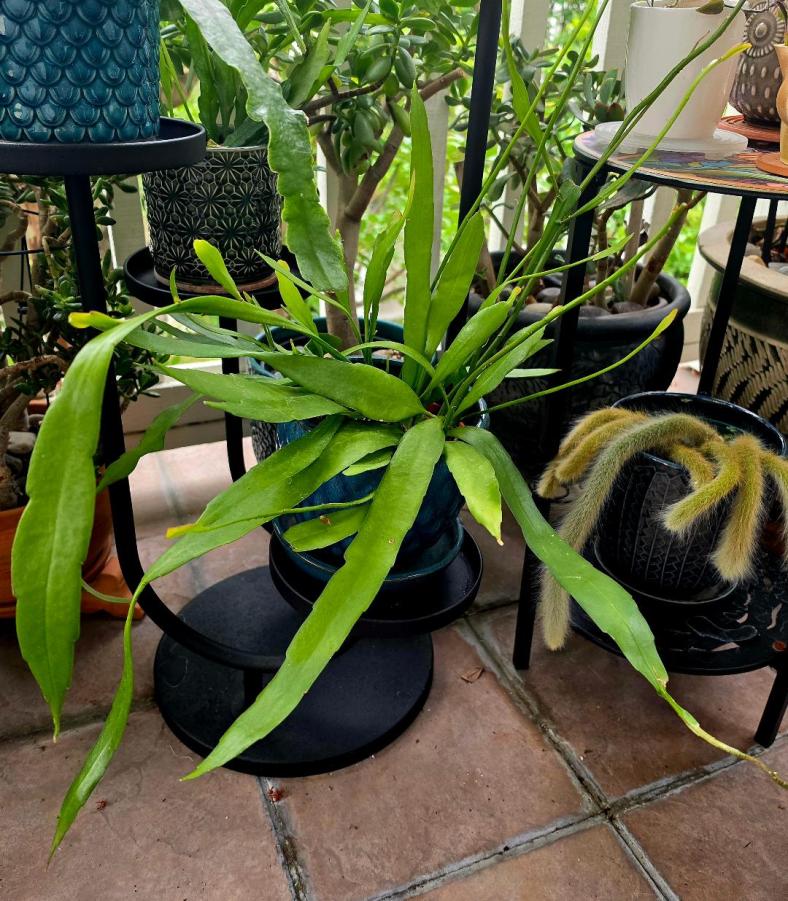
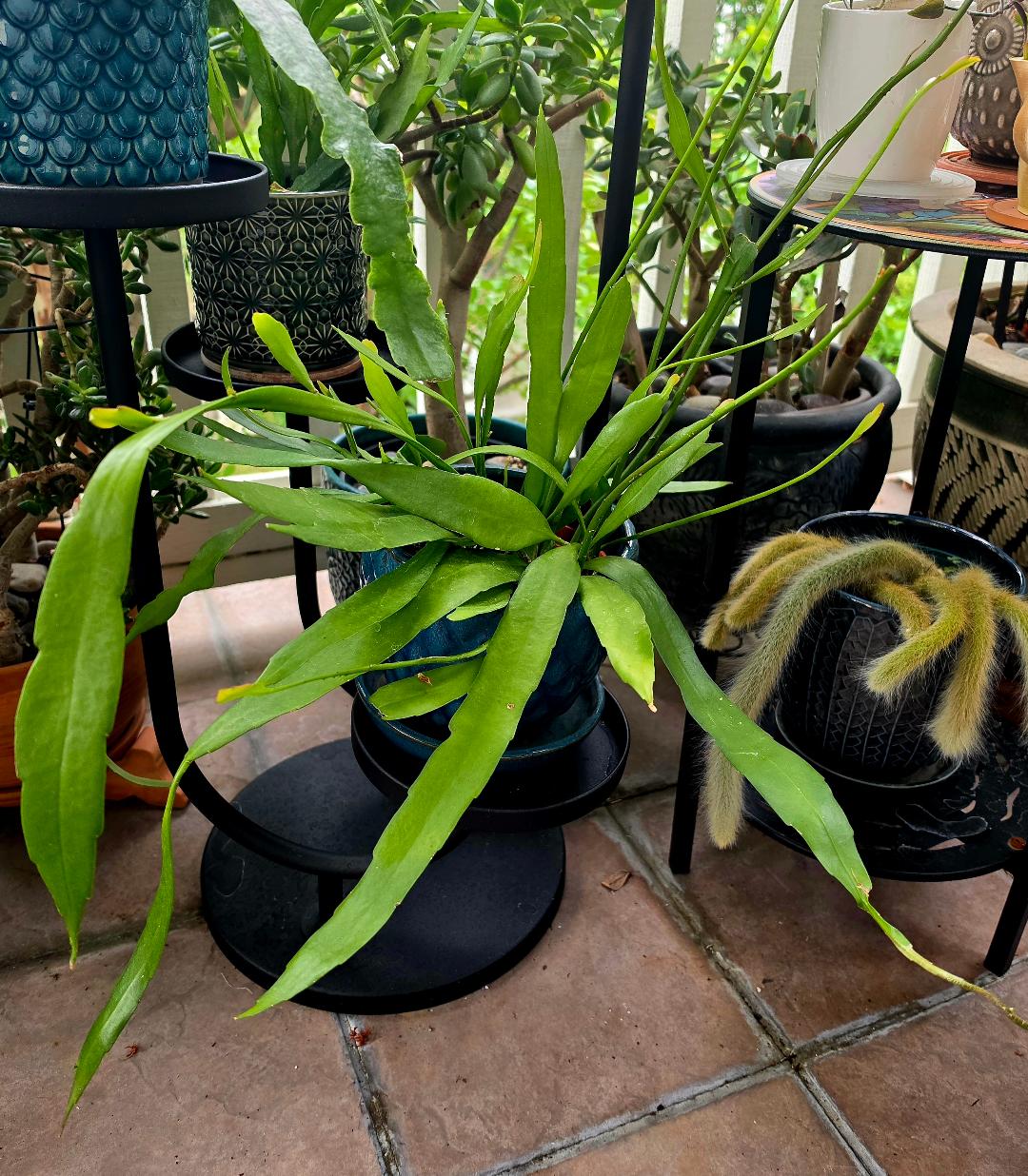
Epiphyllum pumilum
Earlier this year, I was lured into the world of Epiphyllum, also known as Orchid Cacti, and I quickly became a huge fan. It all started with an Epiphyllum ackermannii cutting I got as a freebie along with a plant order from EpiPlants on Etsy. I now have 16 different cultivars in my collection, and I look forward to the time when they eventually start blooming.
Epiphyllum — commonly called “orchid cacti” — are tropical forest cacti known for their dramatic flowers and flattened, leaf-like stems. Unlike desert cacti, they evolved in humid jungles of Central and South America, where many species grow attached to tree branches rather than rooted in dry ground.
What Orchid Cacti Look Like
Orchid cacti usually have:
- Long, flattened green stems called cladodes that resemble thick leaves
- Arching or trailing growth habits
- Smooth or scalloped stem edges depending on species
- Very small or nearly invisible spines
- Epiphytic growth habits (many naturally grow on trees)
The stems can hang several feet long, making them popular in hanging baskets. Some species have deeply lobed stems, while hybrids may have broad paddle-like growth.
Unlike the stereotypical desert cactus, orchid cacti look lush, tropical, and almost vine-like.
What the Blooms Look Like
The flowers are the main attraction.
Orchid cactus blooms are often:
- Huge — commonly 4–10 inches across
- Highly fragrant in many species
- Funnel-shaped or starburst-shaped
- Extremely colorful
Colors include:
- White
- Pink
- Red
- Orange
- Yellow
- Purple
- Bi-colors and striped hybrids
Some species bloom only at night and are pollinated by moths or bats. Others bloom during the day.
One famous relative is Epiphyllum oxypetalum, often called the “Queen of the Night,” whose giant white flowers open for a single night and release a powerful sweet fragrance.
Many modern hybrids produce flowers so ornate they resemble orchids, which is where the common name “orchid cactus” comes from.
How Many Varieties Exist?
There are two ways to answer this:
True Species
Botanists recognize roughly 15–20 accepted wild species in the genus Epiphyllum, though classifications shift as taxonomy changes.
Examples include:
- Epiphyllum oxypetalum
- Epiphyllum anguliger
- Epiphyllum guatemalense
- Epiphyllum crenatum
Hybrids and Cultivars
This is where the numbers explode.
There are:
- Thousands of registered hybrids
- Decades of breeding by collectors and cactus societies
- Endless flower color combinations and forms
Hybrid orchid cacti are especially popular because breeders selected for:
- Larger blooms
- More vivid colors
- Repeat blooming
- Daytime flowering
- Compact growth habits
Some collectors maintain hundreds of named cultivars.
Care Needs
Orchid cacti are easier than many people expect once you understand they are jungle cacti, not desert cacti.
Light
They prefer:
- Bright indirect light
- Morning sun
- Filtered light
Too much harsh afternoon sun can scorch stems.
A bright east-facing window or shaded patio is ideal.
Water
They need more water than desert cacti.
General rule:
- Water when the top inch of mix dries slightly
- Keep evenly moist during active growth
- Reduce watering somewhat in winter
Avoid:
- Bone-dry soil for long periods
- Constant soggy conditions
Humidity
They appreciate moderate humidity because of their rainforest origins.
Ideal conditions:
- 40–60% humidityDity or higher
- Good airflow
Dry indoor air may reduce blooming.
Soil
Use a loose, airy mix with excellent drainage.
Good mixes often contain:
- Orchid bark
- Perlite
- Coco coir or peat moss
- Pumice or perlite
- Small amounts of potting soil
Heavy cactus desert mixes are often too dry and mineral-heavy.
Temperature
Best range:
- 55–80°F (13–27°C)
Many varieties benefit from:
- Cooler nighttime temperatures in fall
- Slight winter rest periods to encourage flowering
Most are not frost tolerant.
Fertilizer
Feed lightly during spring and summer.
A balanced or bloom fertilizer works well:
- Monthly or biweekly at diluted strength
Too much nitrogen may produce stems but fewer flowers.
Blooming Tips
To encourage flowers:
- Give bright indirect light
- Avoid overpotting
- Provide slightly cooler nights in fall
- Reduce watering modestly in winter
- Let plants mature — some need a few years before blooming heavily
Once mature, healthy plants can produce dozens of blooms in a season.
Popular Types
Epiphyllum anguliger
Known for zigzag stems that resemble fish skeletons.
Epiphyllum oxypetalum
Large colorful hybrid flowers.
Disocactus ackermannii
Brilliant red flowers and trailing stems.
Epiphyllum oxypetalum
Night-blooming fragrant white flowers.
Why Collectors Love Them
Orchid cacti attract collectors because:
- Flowers can be spectacularly large
- Some blooms are intensely fragrant
- Hybrids vary enormously
- Plants are easy to propagate from cuttings
- Mature hanging specimens become dramatic showpieces
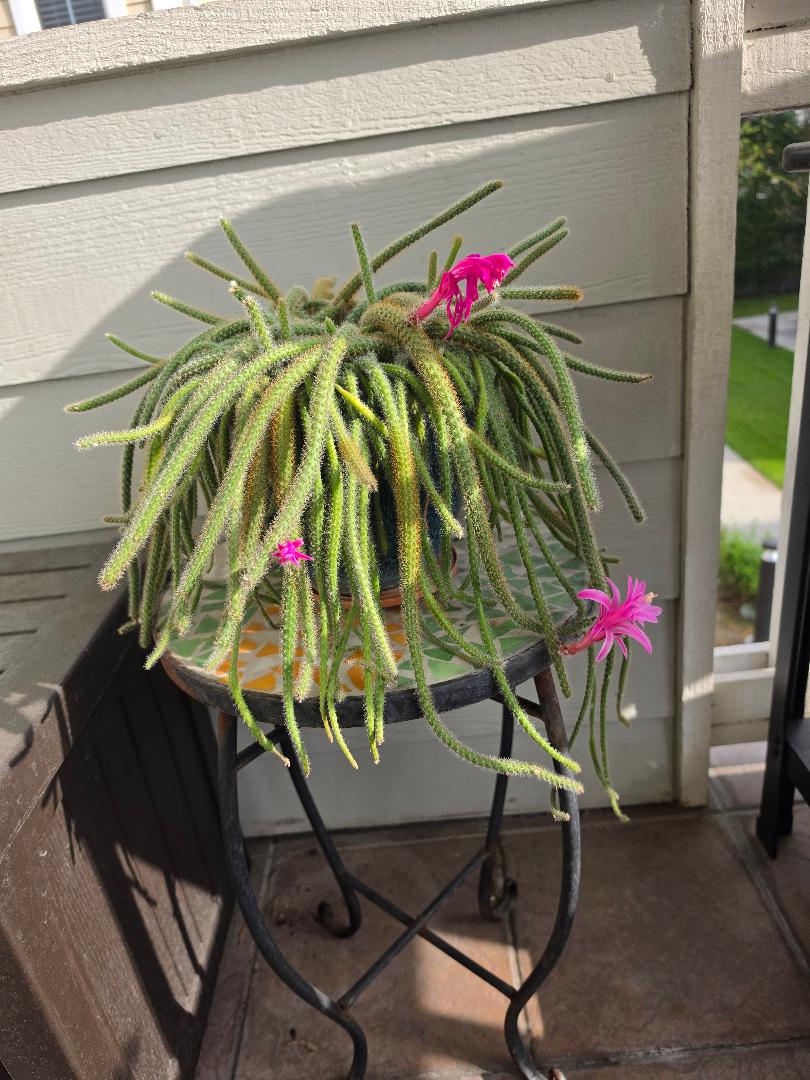
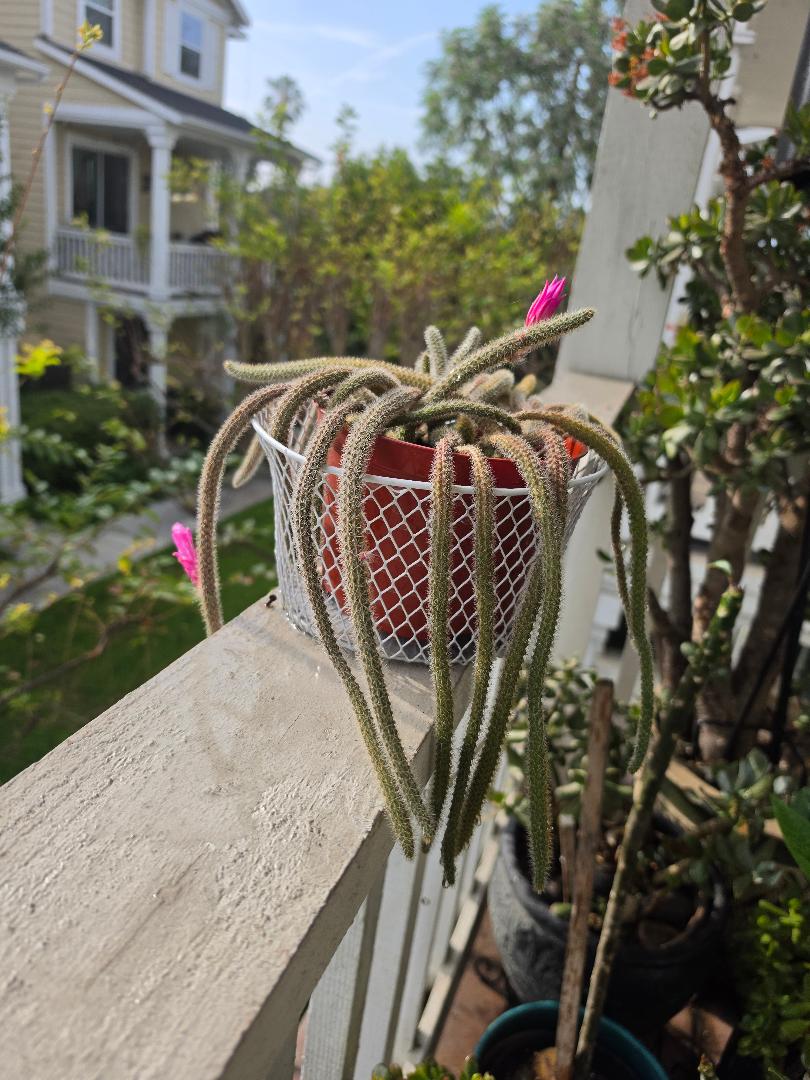
A blooming orchid cactus can look almost unreal — huge tropical flowers emerging from simple green stems.
 dr. stacey naito's blog