
This is how I feel right now, exactly one week before my birthday…yes, I WILL have some birthday cake, but until then, I will practice self-control… 🙂
This is how I feel right now, exactly one week before my birthday…yes, I WILL have some birthday cake, but until then, I will practice self-control… 🙂

For the cleanest and tastiest meals, look no further than MAW Nutrition Inc.! I am so honored and grateful for the opportunity to promote this company, and can tell you first hand that the food is exceptionally delicious and completely guilt free!
Check them out at http://www.mawnutritioninc.com/ and be sure to enter my discount code: NAITO10 for 10% off your order!
As a competitor and fitness professional, I follow a clean meal plan throughout the year, regardless of whether I am training for a competition or just going through an off-season maintenance or growth plan. I am very familiar with the hassle of earmarking an entire Sunday afternoon to prep all my food for the week. For the past few years, it had become such a ritual that I planned my weekend around it, despite the fact that it cut into my time significantly.
Thankfully, there are meal prep services which do all the prep, freeing people from the shackles of the kitchen. Some people complain that such services are expensive, but when the costs of buying pre-measured and prepared food from one of these companies is compared to the costs of buying all the ingredients and spending half a day cooking them, the difference isn’t that significant. Ordering from a meal prep service takes the guesswork out of planning clean, healthy meals, and it is an incredible timesaver!
Check out MAW Nutrition Inc. for a completely clean meal prep service which offers protein, carb and veggie options a la carte so that you can fully customize your meals! This is great if you carb cycle or practice a certain degree of variation within your meal plan. For example, I will alternate between turkey loin and beef loin for one of my meals, and I have two days during the week when I spike my carb intake.
When ordering, enter the code NAITO10 at checkout for 10% off your order!
The use of artificial sweeteners can serve as an aid in coping with one’s sweet tooth, especially when trying to adhere to a healthy diet or contest prep plan. Since artificial sweeteners are non-nutritive, i.e. they have virtually no calories and are not fully absorbed by the body, they do not undermine a calorie-restricted plan. They can also serve as a great alternative for diabetics since they generally do not raise blood sugar levels. Another bonus is that artificial sweeteners do not contribute to tooth decay.
The three most popular artificial artificial sweeteners in use in the United States are the following:
Aspartame – This sweetener was tested in more than 100 scientific studies before the FDA gave it a stamp of approval in 1981 along with a statement by the FDA Commissioner which determined, “Few compounds has withstood such detailed testing and repeated, close scrutiny, and the process through which aspartame has gone should provide the public with additional confidence of its safety.” Since that time it has found its way into carbonated sodas, powdered soft drinks, chewing gum, gelatins, desserts, yogurt, tabletop sweeteners and some vitamins.
Aspartame is composed of aspartic acid and phenylalanine as a methyl ester. During digestion, aspartame breaks down into aspartic acid, phenylalanine and a small amount of methanol which are released into the blood and used in normal body processes without accumulating in the tissues of the body. The acceptable daily intake for aspartame was set at 50 mg/kg of body weight per day. This means that the ADI for a 200 lb. individual would be 4,550 mg.
Sucralose – This nonnutritive sweetener is derived from sugar and is 600 times sweeter than sucrose (table sugar). It was approved in 1999 for use as a general purpose sweetener and is now found in thousands of products, including cooked or baked goods. The ADI for sucralose has been set at 5 mg/kg of body weight per day. For example, if you weigh 200 lbs., your ADI for sucralose would be 455 mg.
Stevia – Also known as Reb-A, stevia was approved for use in food products by the FDA in 2008. As with other artificial sweeteners, stevia does not affect blood glucose or insulin levels and is safe for use in diabetics. The ADI for stevia is set at 12 mg/kg of body weight daily, or 1,092 mg per day for a 200 lb. individual. Stevia is a 100% natural glycoside found in Stevia Rebaudiana, an herd found in the Chrysanthemum family. It maintains heat stability at 95 degrees Celsius and is non-fermentable and non-discoloring.
Conclusion
For those who are trying to eliminate sugar from their diets, whether for the caloric density or the insulin spikes which it imparts, artificial sweeteners are an ideal alternative for adding flavor and sweetness to foods. Their intense sweetness ensures that large quantities of these substances will not be ingested. They can effectively hold sweet cravings at bay and provide important tools in weight loss and weight maintenance programs.
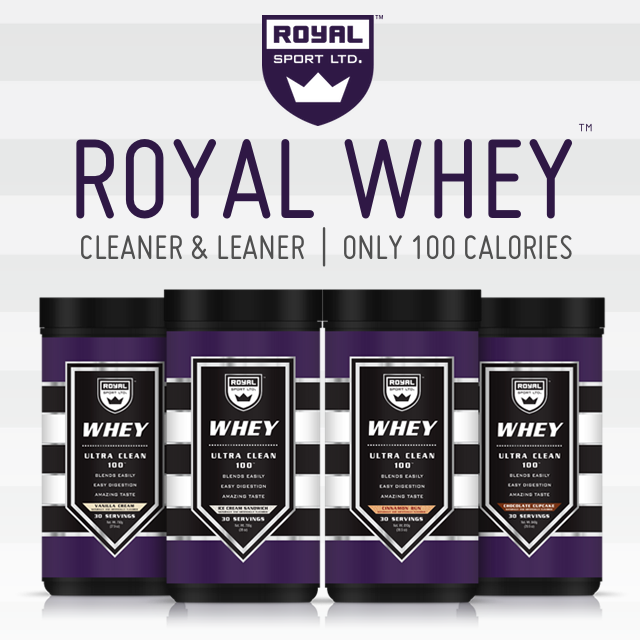
I am not kidding when I say that Royal Sport Ltd.’s Ultra Clean 100 Whey is my staple whey protein source! It mixes quickly and thoroughly, is gluten free, and has no preservatives, no added sugars, no hydrogenated oils, and no artificial colors, dyes, or fillers. One scoop delivers 20 grams of protein in 100 calories. Oh, and then there are the flavors: Ice Cream Sandwich is my absolute favorite and has a decadent flavor which has me tricked every time into thinking that I am having a dessert! I also love the other flavors, Chocolate Cupcake, Cinnamon Bun and Vanilla Cream, and rotate through all four of the flavors during the week. If you are looking for an ultra clean whey protein which won’t cause digestive upset, definitely check out Ultra Clean 100 Whey!

Copyright: whitestar1955 / 123RF Stock Photo
Soy has become so ubiquitous in American packaged food products that it can be challenging to find products that are soy free. What I find so misleading and frustrating is that the majority of them are touted as “health” foods. I am half Japanese and grew up eating soy products, but I consumed the fermented forms, such as soy sauce, miso and tempeh ( I could never stomach natto, which is another fermented soy product). The fermented forms of soy based foods are safe because the fermentation process destroys the antinutrients which are present in soybeans.
In stark contrast, unfermented soy products, including soy milk and tofu, have high concentrations of these antinutrients, including phytates, phytoestrogens, MSG, saponins, trypsin inhibitors, and goitrogens. These substances have multiple deleterious effects on the body, such as impaired absorption of vitamins and minerals, interference with pancreatic and thyroid function, disruption of endocrine function, and damage to the nervous system.
For these reasons, I am strongly opposed to the consumption of soy-based products and eliminate them from patient and client diets whenever possible. If you are vegan, or if you are intolerant of whey or casein, look for other forms of protein, such as pea, quinoa, hemp and amaranth, which cause less inflammation when consumed and have a more benign side effect profile. Make sure to read ingredient labels too, since many products you wouldn’t even think of as having soy often do.
My landing page has links to all FOUR of my websites, FOLLOW buttons for social media, and a contact form if you would like to get in touch with me. Please check it out!


 dr. stacey naito's blog