Discussion of Bump to Rump Video Series Exercise #7 – Swing Lunges

This exercise will challenge your balance, so I highly recommend performing this exercise without weights and your hands at your hips until you get accustomed to the movement. From a standing position, step into a front lunge, then immediately step into a back lunge with that same leg. Switch legs and repeat. As an option, you may wish to do all repetitions on one leg before switching, but I find that most people have better balance if they switch legs with each rep. The key to maintaining balance is to SQUEEZE your glutes when you perform these lunges and keep your hips level without twisting or bending.

For an extra blast on the glutes, you can do swing lunges with a pump. To do this, you will step into a front lunge, then pulse in a small movement at the peak of the lunge. Move immediately into the back lunge and pulse in a small movement at the peak. Don’t be surprised if your glutes burn at the end of a few sets of these!

Discussion of Bump to Rump Video Series Exercise #8 – Single Leg Dumbbell Deadlifts

Stand holding dumbbells at your sides and palms facing in. Another variation is to use one heavier dumbbell which would be held on the side of your supporting leg, with your other hand on your hip as you perform the movement. Bend forward at the hips as you raise one leg behind you, squeezing your glute as you do so. As you do this, bring the dumbbell(s) down so that they almost touch the floor, and pronate or twist your wrists so that your palms face your body as the weights come towards the floor. Return to start. Make sure to keep your knees soft throughout this movement, and if you have issues with your knees, maintain a slight bend in them. You will perform all repetitions on one leg before switching to the other side.

Dancing Onstage

Team U danceIf you compete in Women’s or Men’s Bodybuilding, Women’s Physique or Fitness divisions, you may incorporate dance moves as part of your routine onstage. Dance moves are always a crowd favorite and add to the entertainment value of a posing routine, breaking up the monotony of hitting one mandatory pose after another. But I am not talking about true dance moves here. What I am talking about is the flow of energy and the fluidity which a competitor should ideally bring onstage regardless of the division in which he or she competes. This includes Figure, Men’s Physique and Bikini divisions.

You may exclaim, “But I am not a dancer!”, and that is fine. You don’t need a dance background to move gracefully onstage. However, when you step onstage, your movements should look effortless and should demonstrate the confidence you should have while up there. The worst thing you can do is to have a deer-in-headlights look or to move like a robot because you are overthinking your steps. It also will NEVER serve you to get nervous onstage. So how do you combat these obstacles to really bringing it onstage and crushing the competition? Here are some tips to help you develop that flow and swagger before you hit the stage.

TIP #1: PRACTICE PRACTICE PRACTICE!

You should be practicing walking and posing as MUCH as possible! Make sure to wear your suit or trunks whenever you practice so that you can become aware of how the attire fits your body and shows off your lines as you move. Figure and bikini ladies need to practice in their show heels so that they can become aware of shifts in their center of gravity as they move. Once you have your basic poses down, work on your turns and transitions. Finally, once you are VERY comfortable with your posing, you can add flourishes and styling which are reflective of your personality.

I tell clients to walk around their homes wearing their contest heels not only to break them in but to also get used to how they carry their bodies when wearing those heels. A pair of regular street heels won’t quite do it either, so make sure to wear the shoes you will actually be wearing onstage. Do NOT get high platforms because they are tricky to wear onstage and will increase the chance of tripping or twisting your ankle, and they also make your leg line look very chopped up and clunky. You won’t be fooling anyone by getting Frankenstein platforms, trust me!

TIP #2: VIDEOTAPE YOURSELF AND USE MIRRORS

A great way of getting feedback (besides having competitor pals watch you pose, which I also recommend) is to videotape yourself walking and hitting your poses. You may think you look great, but by watching footage, you may pick up on some bad habits or angles which you can then work on before contest time. After competing for several years I honestly think that videotaping yourself is an indispensable tool when practicing your posing.

Whenever possible, you should also practice in front of a mirror. I used to practice in a dance room which had mirrors on three walls so I could check out my posing from all angles, but if you don’t have access to a room like that, you can just practice in front of an inexpensive full length mirror.

TIP #3: WATCH YOUTUBE VIDEOS

I always advise clients to watch YouTube videos from NPC National and IFBB Pro events in order to learn from top competitors. Watch the competitors who get first callouts because their posing plays a big part in their top callouts. You can usually tell which competitors will end up doing well because they make the poses look like second nature, moving gracefully or purposefully from one pose into the next. One word of caution: if you are a local or new competitor, do not try to add the styling that the pros add. For one thing, that sort of thing will come with time and experience onstage. Secondly, most judges do not like all the unnecessary flourishes and will mark you down if you add too much “flavor”. Keep your transitions nice and clean.

TIP #4: GET A POSING COACH

I think every competitor can benefit from having a posing coach, even if they just have one session. A posing coach will lend a trained eye and correct any bad habits, making adjustments so that the client’s physique is displayed in the best way. Even the slightest shift of the hips can look great on one body and horrible on another. If you are in the Los Angeles area, I am available for one-on-one posing, but if you reside elsewhere, there are some excellent posing coaches out there who can help you out. Make sure to select someone who knows how to pose for your particular division!

TIP #5: FLUIDITY

Once you have been practicing posing for a while, you can work on making your movements as fluid as possible. This means that when you transition from one pose to the next that you don’t look like a robot when doing so. It also means getting out of your head! I have seen competitors who are obviously thinking about their next pose, and their movements end up looking very choppy. You should not be thinking, “okay, front pose, then I will step with my right, er, my LEFT foot, then ummmm…” because that will ensure a very unappealing presentation onstage. You can have your internal chat before you step onstage, but leave it backstage where it belongs.

TIP #6: SMILE!

Perhaps the best thing you can wear onstage to engage the judges and the audience is a smile. You need to look like you are having a blast onstage, not like you are dreading those few minutes up there. This definitely means that you will be smiling so much that your face may end up fatiguing from it, but believe me, it makes a big difference.

TIP #7: DON’T BE NERVOUS

I remember being very nervous the first few times I competed. Then after a while I thought to myself, “What is the point of being nervous?” and all my jitters sort of melted away. This doesn’t that mishaps don’t occur, but your attitude about them makes all the difference in the world. I was at the IFBB North American in Cleveland in August of 2011 and I kind of tripped over my feet when doing a transition during overall comparisons. Instead of getting rattled I just kept moving and it wasn’t a big deal at all. I have also heard a story about a competitor whose top flew open during her posing routine. She kept going, topless, until she finished her poses, then picked up her top from the stage floor and walked off!

If I ever start to feel any kind of nervousness (which at this point is very rare), I remind myself that I know most of the judges and many of the other competitors, and that unless I do something really stupid onstage, I have absolutely NOTHING to worry about. Leave your anxiety and jitters off the stage and just get up there and have fun!
Discussion of Bump To Rump Video Series Exercise #9 – Side Single Leg Press

Sit on leg press machine so that you are supporting your upper body on one side instead of on your back, with your bottom leg nestled on the floor to add stability. Place your other foot on the foot plate so that your toes are near the side edge of the plate. Push plate up, emphasizing pushing through your HEEL and squeezing your glute as the plate moves up. Return to start. Perform all repetitions on one leg, then switch to other side. This is more challenging than a single leg press that is performed when you are on your back, so use a lighter weight and concentrate on your form. As long as you are driving through your heel and getting that glute squeeze in, you will feel the burn even with a light weight.

Try stacking side single leg presses in a superset with weighted bench step ups or swing lunges to really blast the glutes and hams.

Discussion of Bump to Rump Video Series Exercise #10 – The Canadian Deadlift

Several months ago Ian Lauer IFBB Pro and I developed the Bump To Rump Series as a follow up to the Glute Series videos, and decided to open the series with a relatively unusual exercise called the Canadian deadlift. Though I explain the movement thoroughly in the video, I will describe it here for clarification. To begin this exercise, you will stand with feet shoulder width apart, holding a barbell or EZ curl bar at your hips with arms fully extended. Bend at the waist until the bar is at the floor, then bend at the knees fully so that you are crouched with bar on floor. Straighten out knees, then slowly straighten out torso so that you return to standing position.

Due to the complex nature of this movement, you should use a relatively light weight. For example, with regular barbell stiff-legged deadlifts, I use 40 to 50 pounds, but with Canadian deadlifts, I only use 20 pounds. This is a great deadlift variation if you are getting tired of regular stiff-legged deadlifts and want a change in your routine.

L-Carnitine For Energy And Fat Loss

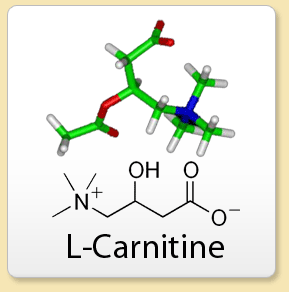
L-CarnitineI am personally a big fan of l-carnitine supplementation and make sure to add it to my intra-workout drink each day that I train. This amino acid compound, consisting of lysine and methionine, can be found in a couple of different forms. This article discusses L-carnitine tartrate, which is the form known to benefit athletic performance and recovery.

There are a couple of important points to consider when supplementing with carnitine. First of all, insulin must be present in the body for carnitine to enter muscle. One way of taking carnitine is to ingest carnitine with carbs so that there is an insulin release, but another effective option is to ingest carnitine with omega-3 fatty acids. Omega-3 fatty acids optimize cell membrane health, thus making cells more sensitive to insulin. Carnitine serves as a delivery system for fatty acids, so if carnitine levels are high, more fatty acids will be shuttled into cells to be utilized for energy. Conversely, when carnitine levels are low, fewer fatty acids are moved into the cells and are instead stored as fat. Supplementation with carnitine before intense exercise will switch the focus on burning fat rather than utilizing glycogen stores, resulting in longer sessions before glycogen stores are depleted. In addition, the presence of carnitine inhibits production of lactic acid, so recovery from intense exercise is more rapid.

Carnitine is not only an excellent performance supplement, it also serves as an excellent means of addressing metabolic syndrome. Metabolic syndrome, characterized by diabetes, atherosclerosis and high cholesterol, can be countered by carnitine’s ability to induce fat loss, prevent atherosclerosis and minimize the development of diabetes. After several months of carnitine supplementation, carnitine levels reach a level at which energy production and performance are enhanced. For this reason, it is best to consider carnitine an essential supplement in your daily regimen rather than as something taken only periodically.

Take 500 to 2,000 milligrams of l-carnitine tartrate daily with omega-3 fatty acids and a small amount of carbohydrates.

You’re HOW Old? – Masters Competitors

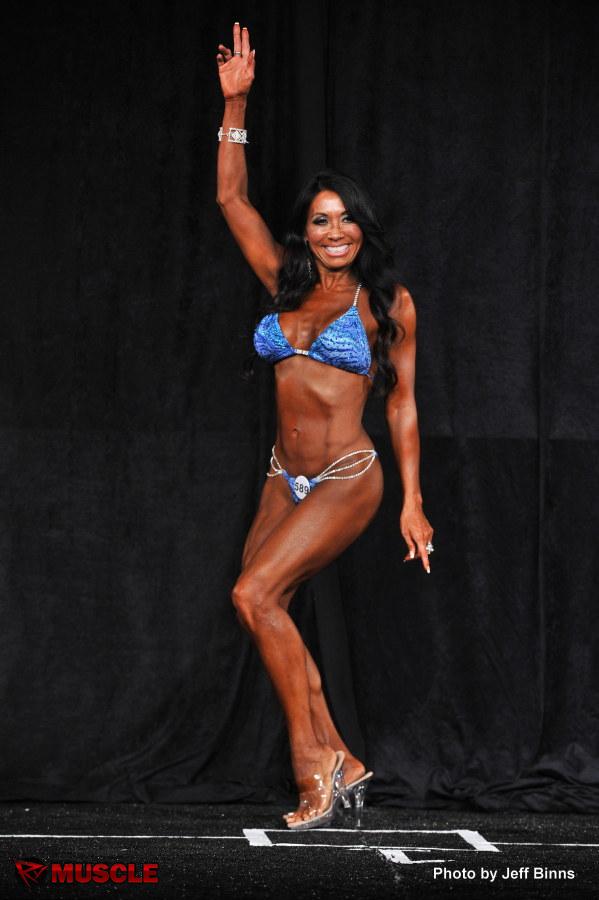
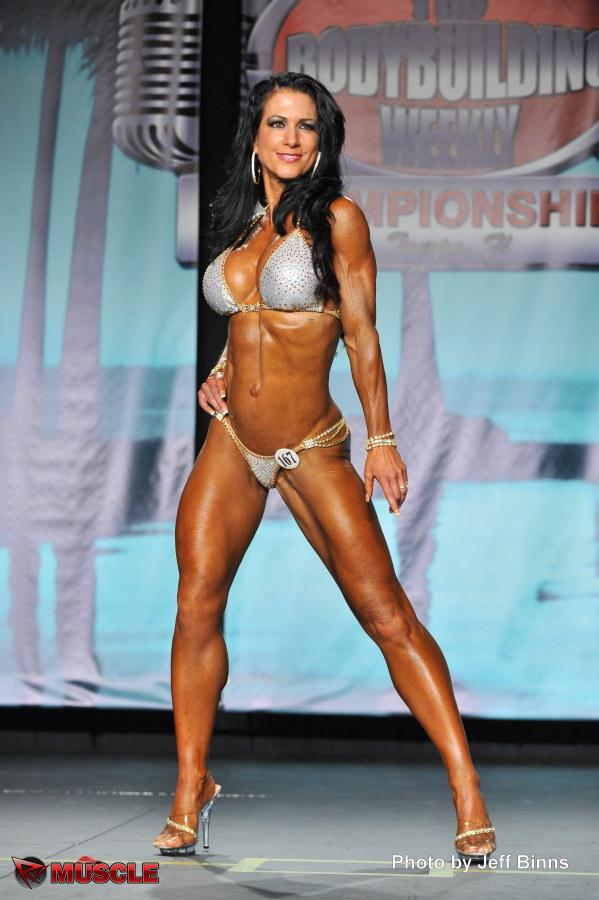
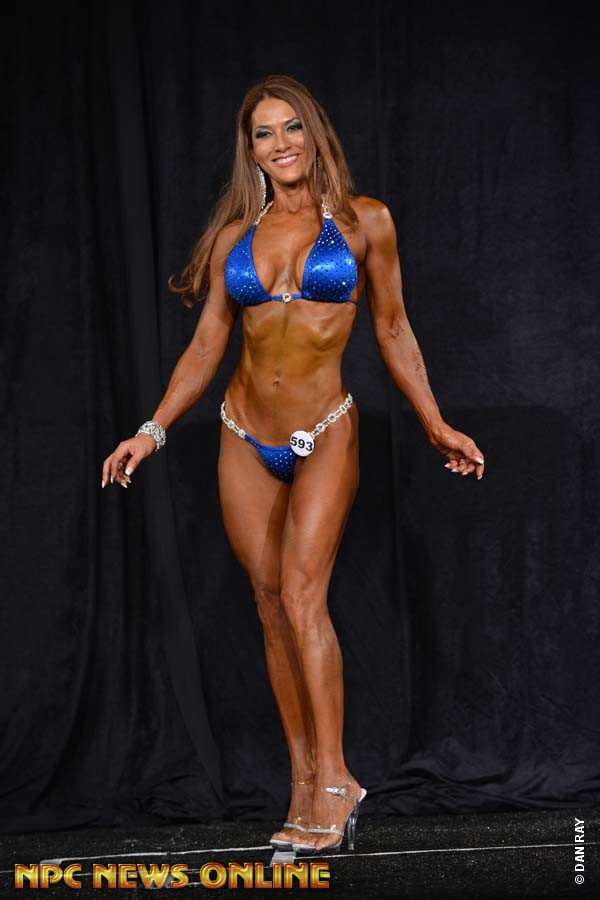
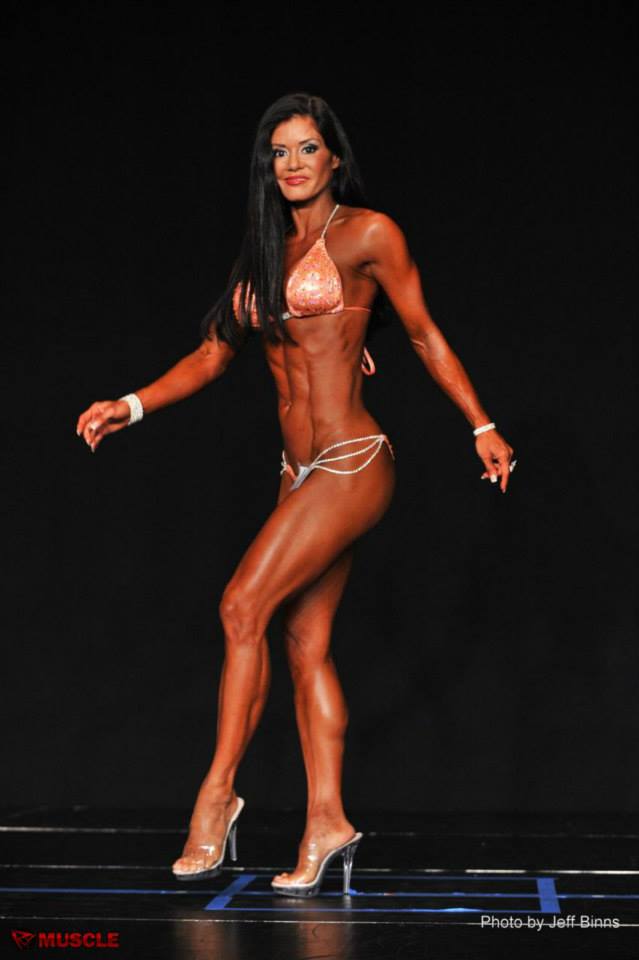
While the bodybuilding world has allowed competitors over the age of 35 to compete, there has always been an undercurrent of ageism. It is true that older competitors do not have the skin tautness of younger competitors, and that they must train harder than their younger counterparts to stay in the race. However, masters competitors have stood up to the challenge and give new meaning to the idea of acing gracefully. I love the look of shock that washes over a person’s face when I tell them how old I am (47), or how old Lizzy Fitchner (53), Janet West (52), or Mary Dent (53) are. I am amazed by these ladies and so proud of them!

I am rooting for this incredible woman and dear friend to get that Pro Card!  She took a 3rd Place finish in Masters 45+ Bikini Class B at Masters Nationals in July.  I adore Lizzy!

I am rooting for this incredible woman and dear friend to get that Pro Card! She took a 3rd Place finish in Masters 45+ Bikini B Class at Masters Nationals in July. I adore Lizzy!

Janet West IFBB Pro always looks amazing!

Janet West IFBB Pro always looks amazing! Here she is at Tampa Pro from last weekend.

Mary Dent earned her IFBB Pro Card at Masters Nationals in July by taking a 1st place finish in Masters 45+ Bikini B Class.  Awesome!

Mary Dent earned her IFBB Pro Card at Masters Nationals in July by taking a 1st place finish in Masters 45+ Bikini B Class. Awesome!

What Will YOU Do With A Pro Card?

Ah yes, the Pro Card. The International Federation of Bodybuilders (IFBB) awards Pro Status to hardworking bodybuilding athletes everywhere. Plenty of individuals who are enchanted by the idea of chasing after Pro Status in the bodybuilding world are under the erroneous impression that their lives will change dramatically upon winning a Pro card. While it is certainly a privilege and an honor to achieve Pro status, don’t think for a second that fame and fortune will suddenly descend upon the new Pro. The majority of new IFBB Pros still have to hustle to get sponsorships lined up, and they still have to figure out how finance upcoming competitions. With the slump in print magazine readership it has become more difficult than ever to secure a cover or a feature article, even as a Pro.

It is far more important to showcase your particular talents and strengths and build your career and your brand well BEFORE even attaining Pro status. Every single thing I have done since I started competing in 2009 was done as an amateur and was fueled by my desire to increase branding and exposure. So for those of you who hunger for that Pro card, don’t forget about what you are doing right now. The path you are walking in that race for the Pro card is your foundation for a great future in fitness and bodybuilding. Don’t risk messing up that foundation by forgetting about all the details which will get you to the Pro ranks.

One final note: I am aware of a large number of people who have jumped ship and joined other federations in their quest for Pro status. While some have made the switch in a diplomatic way, others have been so dazzled by the Pro status prize that they opted for an easier route. If switching federations is a better fit for you, then fine. But if you just want a Pro title so badly that this is the ONLY reason for switching, you might shift your focus on building your brand instead and hang up your competition hat. Remember, competing should be FUN. When you stop enjoying it, you need to retire from the stage.