(This is directly from http://www.evlspraguepro.com/brief-history-of-cz-bodybuilding)
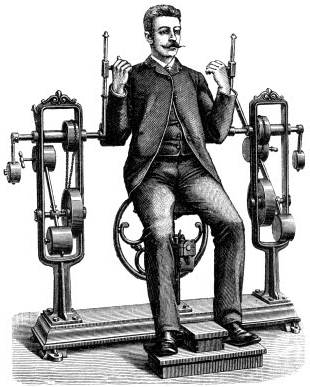
The roots of the Czechoslovak bodybuilding, i.e. intentional muscular and physical development in the manner of ancient Greek heroes, date back to the early 20th century. Certainly not uninteresting is the fact that from 1862 the Czech Sokol Community (a sports movement and gymnastics organization) or the representatives of other traditional power sports such as boxers, wrestlers, and weightlifters had attempted to build well-defined bodies.
This early history is related to the famous name of Gustav Frištenský, the weightlifter with head proudly erected, muscles tighten and a barbell in hands, who is also well-reputed abroad. However, the bodybuilding had to wait a couple of years before it could be recognized as an official sport.
In the 60th of the last century, people in the former Czechoslovakia started showing an interest in the western lifestyle and also in the sport known in the western countries as bodybuilding. Fragmentary information supported by smuggled American magazines had gradually encouraged the first enthusiasts to build their own hand-made fitness centres.
Enthusiasm and interest in everything that was “forbidden” had escalated in the massive spreading of this trend. In the environment of the fitness centres, which number had been increasing, and of newly established unofficial clubs the idea to fight for the sport itself was born, and after many administrative rigmaroles and despite the revulsion of the communist regime the “bodybuilding” finally emerged. It was in 1964 when the first championship in the history of Czechoslovak bodybuilding took place in Bratislava, and its great winner Juraj Višný was introduced to the public.
An idol was born and could soon be seen in the Czechoslovak movie. In 1966 Juraj Višný appeared as one of the protagonists of the legendary film “Who Wants to Kill Jessie”. Juraj played a superman, i.e. a muscular mythical individual apparently related to the western culture. Thereafter, Juraj also appeared in the movies “Road Diversion” and “O´Henry Stories”.
The story of “Who Wants to Kill Jessie” and three main protagonists of the movie had attracted the interest of an American producer who immediately started preparing the production of their own version. The uncompromising history, however, discontinued these attempts after Czechoslovakia had been invaded by the “allied troops of the Warsaw Pact”.
The dreams about the great movie career were dashed and Juraj left for Zurich, Switzerland, where he became successful architect.
Nevertheless, the bodybuilding was hotting up in Czechoslovakia and our team under the leaderships of Alexander Bačinský, the first coach of the National team in the history of bodybuilding, reached its first great international achievements. In addition, Bačinský belonged to the key founders of the sport that already followed its own direction. Unfortunately, also Bačinský was forced to leave the country, i.e. for Germany where he, besides others, worked as a coach of a German Federal League ice-hockey team in Straubing.
At the time when these two legends were active, the Czechoslovak bodybuilding also considerably influenced the international scene. This was probably the reason why IFBB boss Ben Weider took two Czechoslovak charges to IFBB headquarters office in Canada and engaged them successively in the position of general secretaries (Műller and Jablonický). In the course of years the Czechoslovak bodybuilding had gained its international reputation, and even the revolution in 1989 did change nothing in this respect. However, a reversal took place at the end of the nineties of the last century. Human calculation has found its way even in our sport and attempted to deal a final blow to it.
Nevertheless, enthusiasm and interest of the young people in this sport give inspiration to its revival we have now been striving for. So, we have got a change to return the Czech bodybuilding to the world´s top where it has always belonged to.
You can help us just now!


