According to financial expert Scott Galloway, getting into the habit of saving $100 each month is one of the healthiest ways to become financially responsible. By adopting this habit, you’re paying yourself first, and if you invest that $100 in a high yield savings account, the power of compound interest will boost your returns. “If you get used to saving just $100 a month…you’re immediately in the top 10% of most financially responsible people in America,” Galloway said. “Most people can’t do that.”
I’ve actually been following this principle for 15 years now, without any prior knowledge of Scott Galloway’s advice. By setting aside $150 per month, every single month, in a high yield savings vehicle, I was able to create my emergency fund. I started this habit when I was still paying off credit card debt, reasoning that $150 per month would be relatively painless, and once the credit card debt was completely eradicated, it was even easier to set that money aside. Now I have a nice safety net.
Trust me when I say that this method of building wealth works.
I am a huge fan of high yield savings accounts, and have been using them for about ten years now. Why? Because they offer enticing yields, FDIC insurance for up to $250,000 per banking institution (make sure that the banking institution is FDIC insured), and enable people to set aside money for things like emergencies without much effort. In addition, the funds are completely liquid and accessible within a matter of days after a transfer has been initiated.
Anyone who is still holding onto high savings account balances in traditional banks is honestly doing themselves a disservice, since the national average yield in such accounts averages 0.46%. Compare this with high yield online savings accounts, some of which exceed a 5% APY (annual percentage yield). Even when percentage rates drop after the Fed rate drops, online high yield savings accounts will always trump traditional savings accounts.
I strongly believe that a high yield savings account is the best way to set aside an emergency fund, which all people should have. An emergency fund which will cover 3 to 6 months (more if you can actually put more into the fund) of fundamental expenses will serve as an insurance plan, should any unforeseen events occur which disable your usual income stream. At this point, I have enough money in my emergency fund to cover 6 months of expenses, and I still add a small amount every month to continue to grow the balance.
I stumbled upon sobering news from the Bankrate Emergency Savings Report, which reported that only 44% of Americans would be able to cover a $1,000 emergency if it arose. The remaining group of Americans would do the following (according to the December 2023 Bankrate report):
“35% would borrow money, including 21% who would finance with a credit card and pay it off over time, 10% who would borrow from family or friends and 4% who would take out a personal loan.”
It turns out that over 20% of Americans have no emergency savings set aside, leaving them completely unprepared should they experience a significant financial loss such as termination of employment. Another staggering report from Bankrate is that more than one-third of Americans have more credit card debt than emergency savings. Granted, more than half of the U.S. population according to the poll has more emergency savings than credit card debt, but the mere fact that such a large portion of Americans is saddled with significant credit card debt is sobering.
If you are someone who either has no emergency savings, or an insufficient amount to cover at least 3 months of regular expenses, it would be a good idea to focus on putting even a small amount of money into a high yield savings account in order to build up your emergency fund. It’s a good idea to get into the habit of depositing money into an emergency fund at least once a month, especially if you automate it. This way, you are protecting yourself by fattening up your emergency fund on a regular basis. Make sure to steer clear of traditional bank savings accounts, since the average yield on such accounts is 0.59 percent APY.
*Note: This is an updated version of an article which I had posted back in September of 2020, entitled Do Your Finances Need A Tune-Up?
Now that restrictions are lifting after the COVID pandemic and lockdown from 2020, we are now in an especially critical situation due to the financial beating and recession which has negatively impacted the majority of the population. Whether you are someone who already had emergency funds and retirement savings in place before the pandemic hit, or you are hoping to finally start setting aside those funds for the future, it is important for you to review your financial health on a regular basis and to find ways to protect yourself so that you are prepared for any potential financial emergency. What if you don’t know where to start? The most important principles to follow in the quest for financial health include paying down debt, establishing an emergency fund, finding other means to generate income, and continuing to contribute to retirement accounts. Another vital component in good financial health is establishing a budget and really examining your spending habits. Almost invariably, people find out after they create a budget that they are spending money needlessly on frills that they don’t need. By eliminating those hidden money drains, it becomes easier to cover living expenses, thus reducing some of the stress involved in getting by financially.
I have had a budget in place for over 30 years, and I have seen the power it wields. By following a budget, I was able to pay down all credit card debt, pay off a car, establish an emergency fund, and put money aside for retirement, so I know it can all be done. I have lived without credit card debt or a car note for almost a decade now, and I will never fall back into the debt trap ever again. I am also acutely aware of my budget at all times, and I review it on an almost weekly basis to make sure I am on track. The emergency financial cushions which I have established give me peace of mind, because I have successfully created and maintained my own safety nets. By no means am I wealthy, but I know that I am not in any precarious financial waters either.
Source: pigly.com
If you need help in establishing a budget, you can use a budget calculator. I found a wonderful budget calculator on Pigly.com which is very easy to use, and extremely thorough. It helps you break down all expenses, from the essentials to debts and savings so you can target all your goals and ensure that your income is allocated optimally. All you have to do is plug in your income, and the calculator will automatically generate a low end and high end for all the categories. So even if you have never established a budget before, you can set one up instantly.
When budgeting, don’t be afraid to contribute to your retirement accounts right now, as long as you have your debts paid down and you have an emergency fund in place. I am a big proponent of Dave Ramsey’s investing philosophy, and I am grateful that I educated myself on financial wellness and dug myself out of what once seemed like a desperate situation. It was only after I had paid off all of my credit cards and established an emergency fund back in 2013 that I began aggressively started putting money aside for retirement.
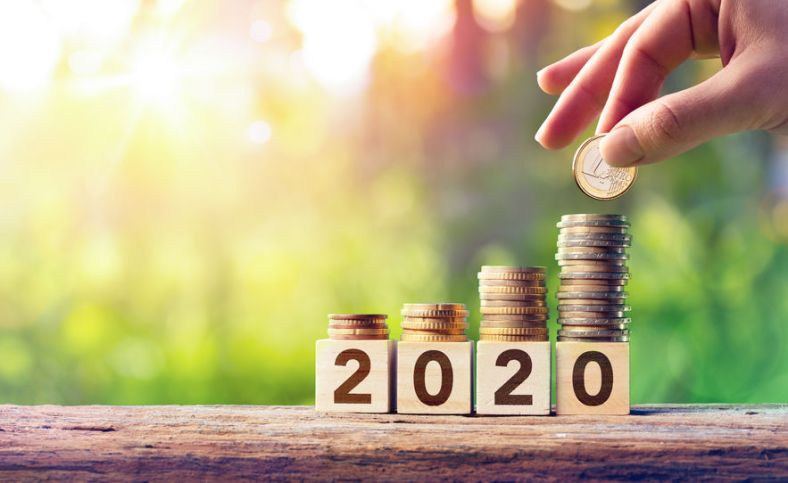
Source: 123rf.com Image ID : 129764462 Copyright : Romolo Tavani
The fact is, we are living in uncertain times, and need to be prepared for whatever hits. By buttressing our financial health, getting creative with income streams, and following a budget, we will be better equipped to survive the ebb and flow of the current economy.





 dr. stacey naito's blog