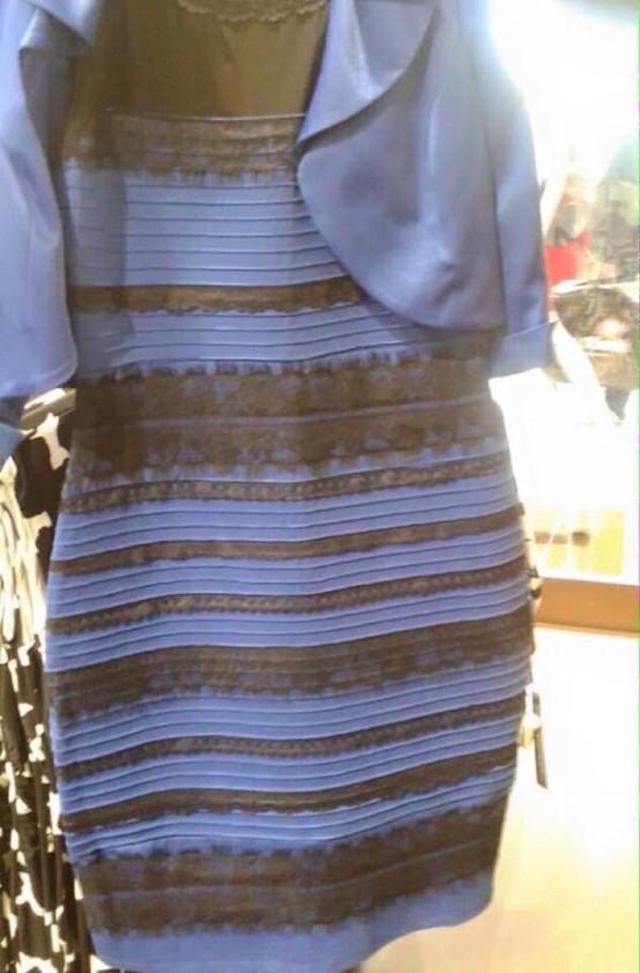
Who would have thought that a global debate would ensue over the colors of a dress posted on Tumblr? Nevertheless, that is precisely what occurred last week. Whether you are in the white and gold camp (70% of people are), or in the blue and black camp, you are subject to variables such as the distribution of rods and cones in your eyes, the lighting in the room, and the screen you are viewing the dress from.
Some scientists have surmised that people who see the dress as white and gold are more light sensitive and have diminished vision in dimly lit rooms, while the blue and black group have more active cones in the retina. This may be true but hasn’t been completely proven. Lighting also plays a factor, and since darker eyes have more melanin pigment than lighter colored irises, less light enters the eye.
I first viewed THE DRESS after sitting in my living room for four hours, near my sliding glass door, staring at a computer screen. The environment I was in, combined with ocular fatigue, altered my perception of the dress, and I could only see it as white and gold. I kept reading about how others could make the colors flip from one combination to the other, but I wasn’t able to do it. Hell, I didn’t pick up anything more than a bluish hue to the white which I saw in the dress.
Then I encountered the image again a day later, after giving my eyes a break from staring at computer and phone screens, and lo and behold, the dress was blue and black. Just like that. I looked at it several more times over the course of an hour to be sure. Yes, it was still blue and black. The following morning, my brain switched over and saw the dress as white and gold. What the hell?
The bluish tint in the photo can be interpreted by some people as shadows, which the brain then compensates for by interpreting the blue of the dress as a bluish-tinged white and the black as gold. One way to correct this is to view the photo of the dress under artificial yellow-tinted lighting. What it all boils down to, though, is that it is all about perception, and that perception is always relative. Two people can look at the same thing and interpret it completely differently. Does it mean that one person is wrong and the other person is right?
One thing that is certain is that the manufacturer of the dress will make a fortune selling this particular design now that a global internet buzz has been created. I am willing to bet that a few people will actually wear Halloween costumes spoofing the color debate as well. Ah, if only I had stock in that company!
I enjoyed reading this description of color constancy which explains why most people see the dress as white and gold:
http://www.businessinsider.com/color-of-the-blue-and-black-dress-science-2015-2
Our brains filter and compensate constantly to process an endless influx of sensory stimuli. Perhaps the world is more aware of that fact now that a dress has challenged our perceptions!
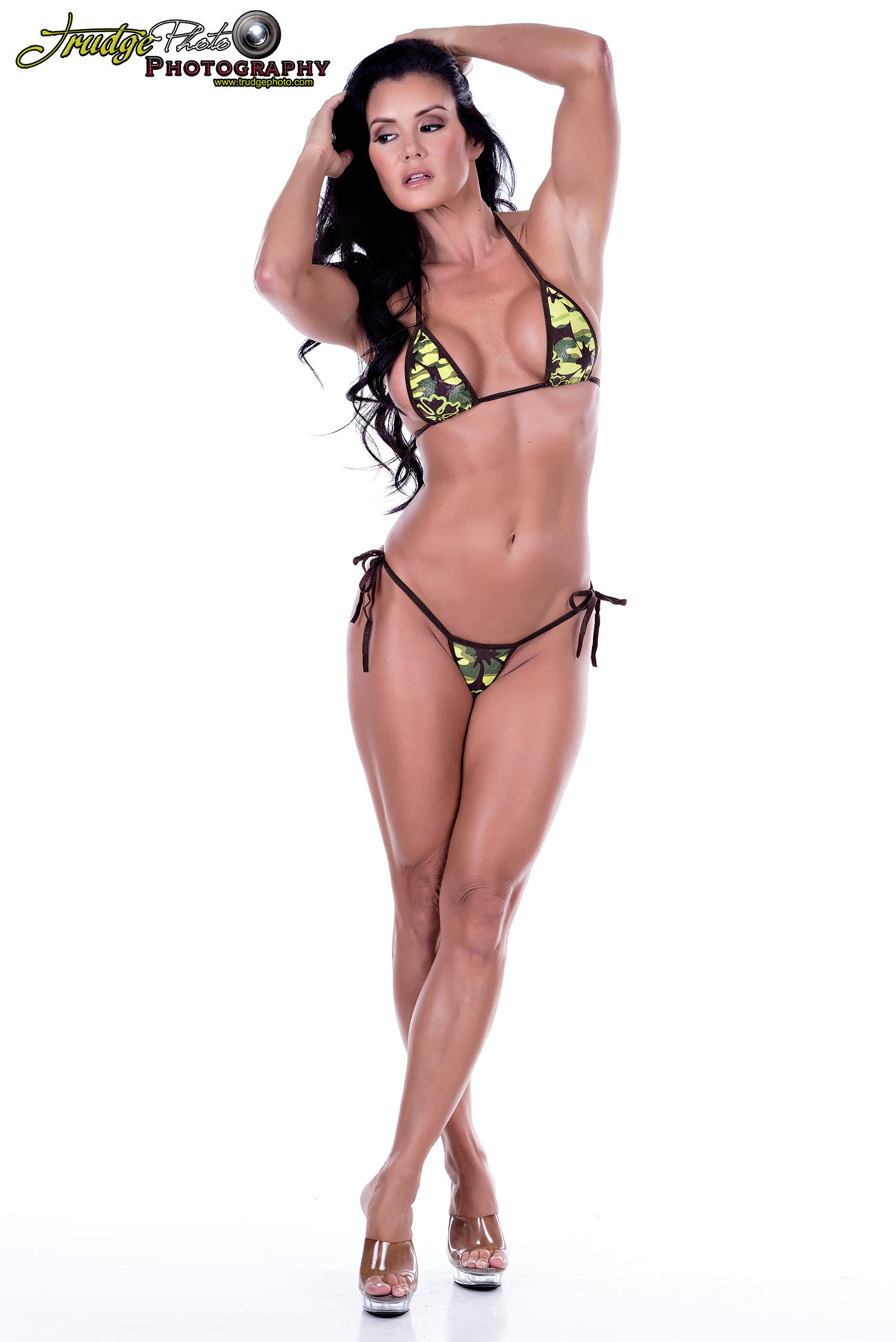

I believe this was shot in mid 2011 out near Las Vegas. It’s one of my favorite images!
Originally published on mensphysique.com on Sunday, 16 October 2011. The text on the original post is all messed up, but I have repaired it here.
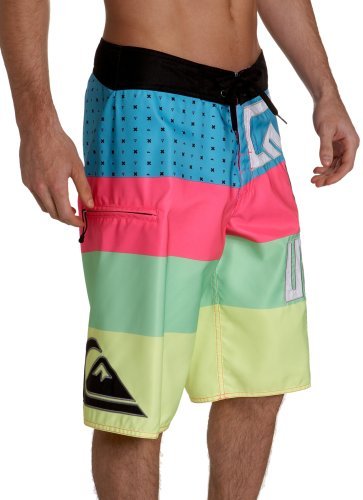
Many men aren’t exactly gifted with the ability to determine swhat looks best on them, especially when selecting board shorts to wear up on stage with glaring lights assaulting them from every angle. Here are a few tips to selecting a great pair for your competition.
1.Make sure to pay attention to proper fit. The shorts should hit low enough in the waistline to flatter your lat spread and make your waist appear nice and tapered. The shorts should also make your rear end look nice and lifted without any excess material creating a sagging or diaper effect. Make sure you don’t go too tight though! The shorts should not ride up your crotch or make the shape of your bait and tackle highly visible! Make sure the rise in the front lies flat and does not bunch up across your lower abdomen. Also make sure the rise isn’t so low that the shorts look like they are about to fall off.
2.Blues, greens, reds and orange tones tend to look nice on stage. Avoid khaki, brown, and dull gray as they tend to look very drab under stage lights. Be careful with white as it can become severely discolored by the spray tan solution.
3.Prints are okay, but don’t go too busy! You can select shorts which have a color blocking on them, or which have a print on them, but don’t go for a very wild pattern. You want the judges to look at your physique, not at the distracting graffiti print splashed across your shorts!
4.Try to find a pair that is distinctive so that you don’t end up wearing the same board shorts as another. In fact, it is always a good idea to have an extra pair on hand at a show in case this occurs.
Originally published on Tuesday, 29 November 2011
You may have modeled alone numerous times and are comfortable with your poses. This may lead you to think that posing with a woman is no different. However, there are numerous points to keep in mind any time you are at a shoot in which you are expected to pose with a lady.
First of all, don’t allow nerves to distract you from performing as expected. What helps tremendously with getting over any nervousness is to chat with the woman before the shoot in order to establish a comfort level. You don’t have to discuss anything in particular, but at least get an idea of her personality.
Be aware of the goal of the shoot. If the goal is to shoot a cover or an ad, you will most likely be the center of focus since many covers showcase the man while using the woman as a type of accessory. Fitness photographers are typically excellent at posing their models, which means you need to be able to follow direction without offering commentary on the poses you are being asked to do. If the photographer tells you to open your shoulders, or turn your head slightly more to the right, then just do it. Sometimes these microadjustments may be challenging since you have to hold a pose while also flexing and looking like you are having the time of your life. But all these elements are key in conveying the proper energy and mood through the images.
Move slowly between each pose and give the lady time to adjust as well. Remember that she needs to be in the proper pose as well. If you are asked to touch each other, perhaps with your hand around her waist and her hands on your chest or shoulder, be respectful of her. That being said, make sure that when you are both in a pose in which you are touching, you both look like you actually like each other, even if you can’t stand each other. Your poses and your facial expressions need to be genuine and believable.
Remember to carry yourself in a professional manner during the shoot. It doesn’t matter if you have the hots for your modeling partner remain a professional. If you must, you can ask for a date WELL after the shoot is over!
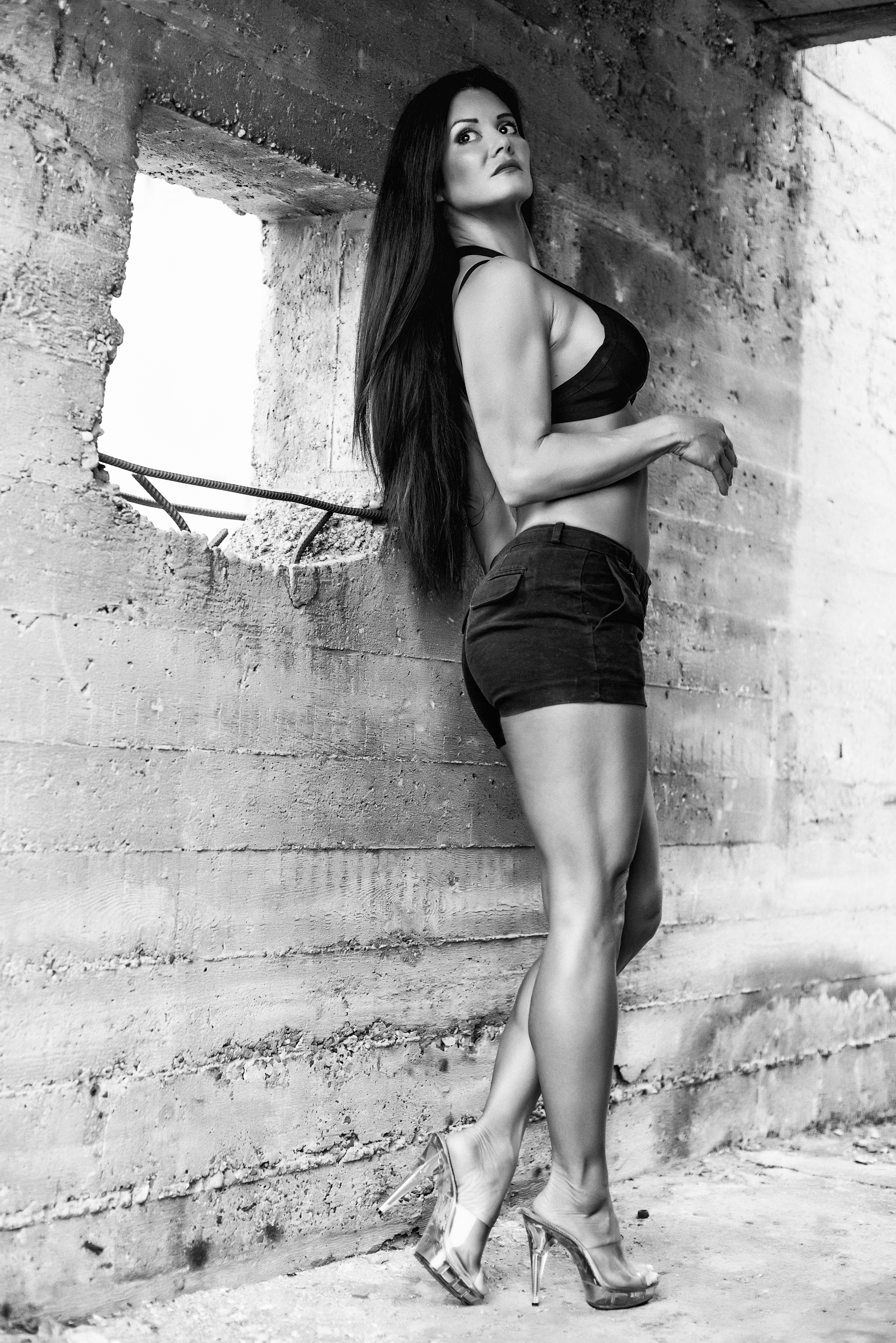

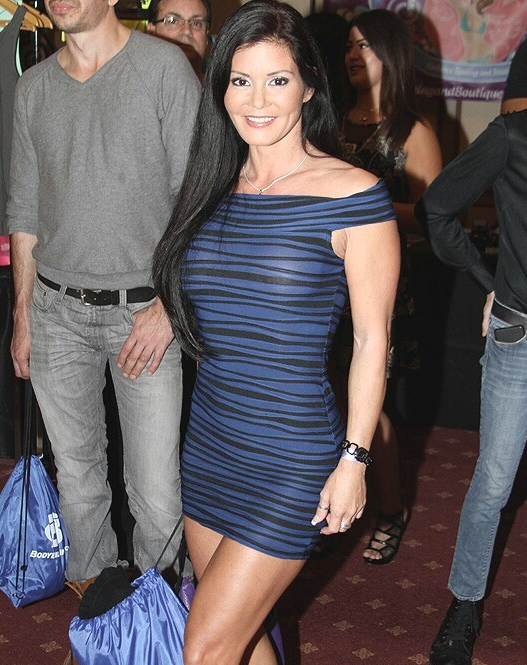
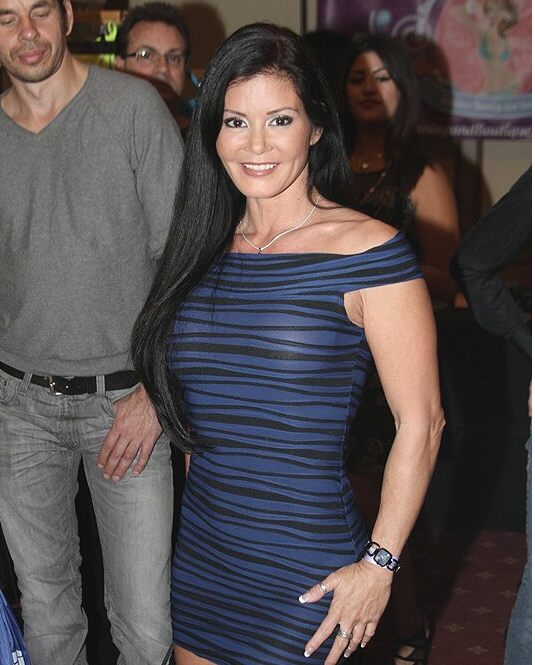
Here’s one of the best photobombs on one of my photos that I have seen in a while!
I am posting this so that people can see the requirements for different types of models. This was copied from http://www.modelingadvice.org/Modeling_Categories.html
Modeling Categories
High Fashion Model
Usually 5’8” – 6’0” (175 cm) tall, a size 0 – 6, age thirteen to twenty-two, and measurements:
Bust: 32” – 34”, cup A, B, or C
Waist: 22” – 26”
Hips: 32” – 35”
Fashion Editorial Model
FEMALE: Usually 5’8” – 6’0” (175 cm) in height. Tall, thin build, narrow hips, smaller bust, and usually young. Ages start at fourteen up to early twenties.
Weight: 113 – 128 lbs.
Bust: 32” – 34”, cup A, B, sometimes C
Waist: 26” maximum
Hips: 35 1/2” maximum
MALE: 5’11” – 6’2” (180-188 cm)
in height. Tall, lean, well built, usually young. Ages fourteen to thirty-five.
Weight: 145 – 165 lbs.
Suit: 40 Regular (U.S. size)
Shirt: 15” – 15.5” x 34 – 35”
Waist: 32” – 34”
Inseam: 32” – 34”
Chest: 38” – 40”
Runway Model
FEMALE: 5’9” (180 cm) and up in height, very thin, narrow hips, small bust. Usually young: can be as young as fourteen to the early twenties.
Weight: 110 – 125 lbs.
Bust: 32” – 34”, cup A or B
Waist: 22” – 25”
Hip: 33”- 35”
MALE: 6’0” – 6’2” (183 – 188 cm) in height. Tall, lean build, usually young. Ages: fourteen to thirty-five.
Weight: 140 – 165 lbs.
Suit: 40 Regular
Shirt: 15” – 15.5” x 34” – 35”
Waist: 32” – 34”
Inseam: 32” – 34”
Chest: 34” – 40”
The “Commercial Print” Model
He or she will be featured in the ads you see everyday. Ads for cookware, pain relievers, hairspray, car insurance, floor cleaner; the list goes on. As a commercial model you may be portraying a character, like a “mom” or “bus driver” or “attorney”. Commercial models are also featured on the covers of magazines like Parenting, Golf Digest, and Travel and Leisure, or they can be seen in sales ads for companies like Target or Sears.
Catalogue Model
FEMALE: Usually 5’9” (175 cm) and up. Tall, lean build, measurements 34” – 24” – 34” (86 cm – 61 cm – 86 cm) and attractive.
MALE: 6’0” – 6’2” (183 – 188 cm), tall. Lean build, suit size 39 – 42 (U.S.) and attractive.
The “Fit” Model
A company hires a fit model to use as a real live mannequin to “fit” their clothes to. Many companies have used the same fit model for years and this can be a very steady and good paying job. This has only one size requirement. As a fit model, you must maintain a consistent size, and that size is whatever the client wants. This means you can’t lose or gain weight and your measurements must remain the same Fit models are both men and women, young and old, and could be a size 4 to a 14.
The “Showroom” Model
A showroom model will work either in a high-end department store or in a designer’s showroom. They wear or display the sample clothes and merchandise for the buyers or customers to see. Usually this is similar to a very informal runway show. There are some showroom models that make well over one hundred thousand dollars per year and they only work for one designer. This kind of work can be somewhat seasonal.
Showroom Model: They are typically taller, but there is quite a bit of flexibility in this category. No strict requirements, sizes vary from designer to designer.
Plus Model
She is usually 5’9” (175 cm) and up in height, starting at a standard U.S. size 8, up to a size 22. Plus models should have proportionate measurements based on their size,
between 34” – 25” – 37” and 40” – 31” – 42”. The waist should be at least 9” smaller than the hips and bust.
Petite Model
She is usually between 5’1” and 5’5”, and a dress size 2P or 4P. Her age is usually eighteen to twenty-five years old, and hips should be 34” or smaller.
The “Glamour” Model
She is all about sex appeal. She would be seen in car magazines (as the girl in a bikini lying across the hood) or hired for a bikini calendar, and she may be in a photo layout for a men’s magazine like Maxim, FHM, or even nude modeling for Playboy or other publications of that nature.
She is very good-looking, attractive to men, proportionate figure with a fuller bust. The desired age is eighteen to mid twenties.
Lingerie and Swimwear Model
Female, generally over the age of eighteen, tight, toned body, no cellulite or excessive muscles, thin waist, narrow hips, fuller bust. Flawless skin, not much body hair, very few moles, scars, or freckles. Models with naturally darker skin or a light tan color (not overly tan, and certainly no tan lines) are preferred.
The “Parts” Model
Sometimes a client may only need a hand for a shoot, perhaps to display a ring or a watch. Or, they might be doing a shampoo ad and just need a beautiful head of hair. When a model is booked for a specific feature (not including the face) it’s called “parts” modeling. So if a model has a specific “part” that looks good (like hands, hair, lips, teeth, legs, back, feet), they might get a “parts” booking.
The “Sophisticate” Model
Also can be called the 40 Plus division. He or she is forty years of age or older, looks great and is in great shape. The forty and older model can be booked in a variety of different categories: fashion, commercial, runway, catalogue, and more. They have a specific look (over forty) so many of these models stay very busy. Height is a plus, but this category has more flexibility.
The “Maternity” Model
This is becoming a very big category. Beautiful mothers-to-be are being seen on magazine covers, in print, on T.V. and in catalogues. The “baby bump” showing, it should be obvious that she is pregnant. Having good skin and being healthy is also a must.
The “Fitness” Model
He or she is featured on the cover of fitness magazines, in ads for energy drinks, protein bars, body building equipment, and health clubs A dedicated fitness regime, and a body in peak condition with very defined muscle tone.
The “Child” Model
These kids are seen in ads, commercials, on billboards, and catalogues. Children up to age eighteen with outgoing personalities and a parent to take them to auditions and jobs. Most child modeling work is cast with children twelve and younger.
The “Promotional & Trade Show” Model
He or she could be doing a variety of different jobs. Promotional jobs are usually short-term bookings anywhere from a few hours to a couple of days. Trade show models will work for a client during a trade show or convention by assisting the exhibitor or client in the promotion of their products or services. You just need to have an outgoing personality and a great attitude. Eighteen and older preferred.
The “Spokesmodel, Presenter, & Narrator
This is a little-known market that is extremely financially rewarding. Many trade show models will see professional spokespersons (both male and female) in various trade show booths delivering the company presentation several times per day. Models do not realize that they too can make that leap from trade show model to trade show presenter. Trade
show Spokesmodel/Presenter fees usually average one thousand dollars per day! To learn how to break into this little-known niche market, make a ton of money and potentially be enormously successful, go to http://www.TradeShowPresenterSecrets.com to launch your Spokesmodel/ Presenter career right now.
There are really no requirements or restrictions for this type of work although the presenters are typically older than eighteen and can continue working into their fifties. Almost anyone can start here!
Celebrity Model
They just need to be their fabulous, famous selves. They do want to keep out of trouble. Since celebrities are in the public eye and the paparazzi are always following them around they need to behave. If they get caught doing something wrong the endorsement deal might get canceled, and some of those endorsement deals are worth millions of dollars.
The “Supermodel
What do Gisele Bundchen, Adriana Lima, Heidi Klum, and Kate Moss have in common? They are all women at the top of the modeling game. To get to that status you have to really stand out, work hard, and remember: this is a business. If you are ready to kick it up notch, you may consider coaching with a professional. There are only a handful of supermodels. These models are seen everywhere: in all the fashion shows, on the covers of Vogue, W, and other fashion magazines; they get huge ad campaigns for companies like Burberry, Louis Vuitton, Revlon, and Victoria’s Secret. Supermodels use their fame to branch out starting their own clothing, jewelry, and make- up lines. Some have successfully switched over to an acting career.
Supermodel: She is one in a million, but remember you don’t have to be a supermodel to be a successful model.
Excerpted from “The Ultimate Beginner’s Guide To Modeling System” by Jennifer Autry
 dr. stacey naito's blog