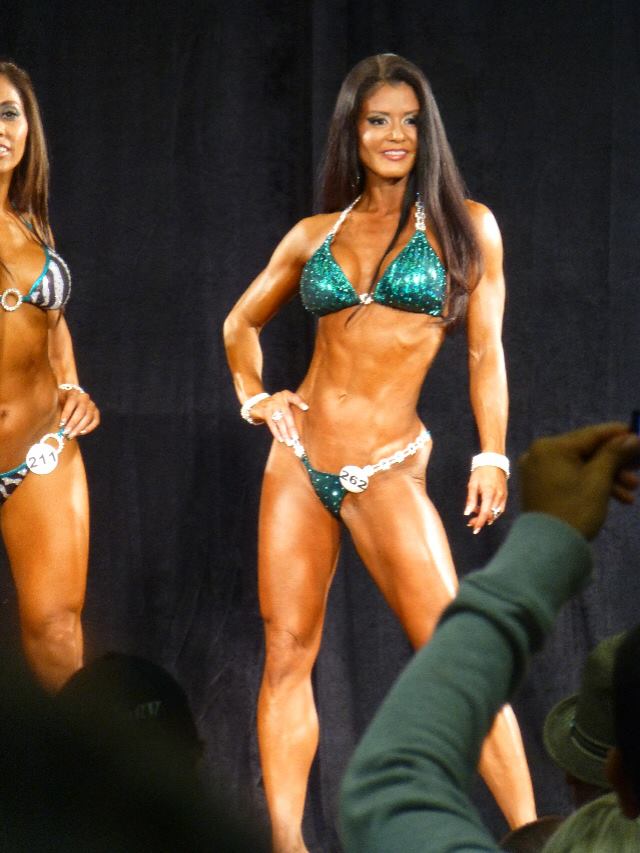
Men’s Physique: The Ideal Physique Reborn

It was a brilliant move on the part of the NPC and IFBB to establish new competitive divisions within the last four years, as it expanded the competitor pool and boosted the appeal of stepping on the competitive stage.  However, each new division has gone through growing pains as the judges have struggled to establish specific criteria with respect to ideal proportions and muscularity.  The added fact that some individuals have stepped onstage with little to no prep has confused some competitors with respect to what is expected within a division.

As an NPC Bikini competitor I have seen the Bikini Division undergo countless permutations since its inception in 2009.  Personally, I have been told to become softer, lose mass, increase mass, stop working my abs, resume working my abs, etc., as the division’s standards went through their permutations.  This year it seems that the burgeoning Bikini Division along with the recent crop of IFBB Bikini Pros has propelled the division to an ideal which appears to reward a slightly higher degree of muscularity.  To some extent it seems that this is the direction in which Men’s Physique is travelling.  However, there are a number of Men’s Physique competitors who without question had previously competed in Bodybuilding (as is the case with some former Figure competitors who have since made the transition to Bikini) and who are currently being penalized for having more muscle mass.  Certainly there must be some clear distinction between each division, but the degree of subjectivity which enters a competition can make determining class winners a somewhat tricky undertaking.

Now that Men’s Physique is in its second year, with a growing list of IFBB Pros who have graced the stage with such status, the confusion about what judges are looking for seems to have lessened somewhat.  Clearly an excessive degree of muscle mass is not being rewarded, and instead a well-conditioned, highly sculpted frame with an appreciable V-taper and deep abdominal crosscuts is the most highly sought ideal.  It seems apparent that the well-conditioned “fitness model” look, perhaps with slightly more muscle mass in the pecs, delts and abs, has defined Men’s Physique and that those who ride the fine line between this division and Bodybuilding are being advised to deflate somewhat.  This being said, being ripped on competition day is acceptable provided a competitor is not beefy or thick-waisted.  There has also been considerable discussion regarding the lack of focus on the lower extremities and the assumption that quad development is of no importance since any quad sweep or hamstring development is completely covered by the regulation board shorts which are worn.

There has been an interesting parallel between the comparison of Men’s Physique to Bodybuilding versus comparisons of the Bikini division to other women’s divisions.  With the exception of the deeply cut abs in Men’s Physique competitors, muscle separation is generally frowned upon in both Bikini and Men’s Physique.  In addition, neither Men’s Physique athletes nor Bikini athletes are meant to sport an extreme degree of muscle mass.  After all, both of these divisions are meant to celebrate the ideal bodies one could imagine emerging from the ocean on a balmy beach day, with tiny waistlines on both genders, broad shoulders and chests with chiseled abs on the men, and perky posteriors and shapely legs on the ladies. These ideals are generally considered more appealing and more attainable to the average person, and as a result, have contributed greatly to the surge in popularity of both divisions.

The Men’s Physique division is still the new kid on the block and will endure more growing pains as the division’s pro ranks increase.  However, as with all other divisions, the competitors who rise to the top will help to define the aesthetic ideal, hopefully bringing about more consistency within the division.  It is a very exciting time.

A Bikini Athlete’s Favorite Abdominal Exercise

I admit that abdominals are my favorite of all the body regions to train and have been for my entire adult life.  In fact I cannot think of a single time that I balked when it was time in my training split to work my abs.  This makes designating a particular abdominal exercise as my favorite especially challenging for me, since I consider very move to be a valuable component of an abdominal routine.

After having evaluated the level of motivation I have during each abdominal exercise, I have determined that my top abdominal move is the decline bench crunch.  If you have not performed this exercise before (and yes, I realize that many of you are already familiar with this move), I would highly recommend that you incorporate decline bench crunches into your routine.  Decline bench crunches are excellent at targeting the rectus abdominis and hip flexors due to the increased range of hip flexion which occurs on a decline bench.

Adjust a decline bench so that it is at a 30 to 45 degree angle (the more advanced you are, the greater the angle you can use).  Sit on bench with your feet hooked under the rollers and lie back on the pad with your arms folded across your chest.  Exhale as you bring your head, shoulders and back off the pad, coming to a full sit up position, then return slowly to start position.  You can perform 12 to 20 reps per set, 3 to 5 sets, but I will admit that when I do decline bench crunches, I perform 5 to 6 sets of 30 reps.  If you crave an extra challenge, extend your arms overhead while you perform this move. 

Decline bench crunches can also be performed with a twisting motion at the top of the move, recruiting the obliques and serratus anterior.

Those of you who are really looking to punch up this exercise can perform a weighted variation of this move in which you hold a dumbbell behind your head, hold a plate on your chest, or pull on a cable during the exercise.

After incorporating decline bench crunches into your training split, don’t be surprised if people begin noticing your washboard abs!


Maintaining a Healthy Perspective With Contest Prep Meal Plans

Those of us who compete are well aware of the critical importance of following specific meal plans which are designed to optimize lean muscle mass and promote fat loss.  However, these meal plans, especially during cutting phases, can be extremely restrictive.  In our quest for attaining the ideal physique for whatever division we compete in, we may find ourselves in a spiral of obsessive nose-to-the-grindstone adherence to foods we may have grown to abhor, intertwined with strong temptation to deviate from the plan and indulge in forbidden foods, only to berate ourselves afterwards for doing so.  After all, we are only human, and after weeks or months of eating clean, we may be so exasperated with daily servings of asparagus, tilapia, chicken breast, and sweet potatoes that our emotional food triggers may kick in and undermine our contest prep efforts.

With orthorexia, there is an unhealthy fixation on clean foods and one’s moods are dictated by how rigidly a clean diet is maintained.  So how is this different from what competitors do in the weeks leading up to a competition?  The mentally healthy approach is to regard food simply as fuel and to dismiss any emotional association with particular items.  I have been witness to and a participant in the fantasizing of forbidden foods in a manner akin to lustful, sexual craving.  I have heard competitors talk backstage at length about all the foods they were planning to indulge in immediately following their final visit onstage for the night.

What I find interesting about such food fixations is how they are distinguishable from anorexic behavior.  When I was 19, I battled anorexia, dropping to 85 pounds on a 5’5’’ at my lightest.  With anorexics, they have a clear and complete aversion to calorie-rich foods and have successfully turned off any interest or cravings for such items, whereas with bulimics, orthorexics and many healthy competitors in contest prep mode, coveting indulgent foods is rather commonplace.  Among all these groups, there is a propensity for obsessive and compulsive behaviors.  One may argue that such obsessions and compulsions are a vital component of contest prep and that without such tendencies a competitor will lack the focus necessary to succeed.

It seems apparent that competitors as a general rule are dangerously close to that fine line which separates a healthy relationship with food from orthorexia.  I remember quite  well how rigid I was about the food I ate when I was anorexic and even kept a daily food journal in which I wrote down the calories and fat grams of every food substance ingested.  I also recall how horrified and ashamed I was of myself when I would reluctantly consume a food I regarded as fattening.

Over 20 years later, I have a healthy relationship with food and for the most part regard it as fuel.  Yet I am immersed in the world of contest prep and like many other competitors will balk and grumble about the clean foods I must eat.  There are times when the mere thought of eating another spear of asparagus seems like the most disgusting activity in the world.  On the rare occasion that I find myself in a restaurant, I find it an alien concept to peruse a menu and actually be able to order whatever I want from any part of the menu.  There are also times during which my metabolism is in hyperdrive and I could eat almost nonstop for the duration of the day.

Here’s the thing: if I indulge in something that is not part of a contest prep meal plan, I don’t flog myself. Rather, I allow myself to enjoy the rare treat and move on.  If you find yourself wallowing in extreme anxiety and prolonged guilt over ingesting a food item which is on the banned list, beware.  This could signify the beginning of a food-related psychopathology.

The Drive To Grace The Stage

This is from my 19th NPC competition…

There is truly something magical about competing onstage at NPC bodybuilding contests that defies adequate description.  People who have not been drawn into the world of competing imagine, and rightly so, that it must be intimidating to step onstage in an outfit which in many respects is similar to a set of fancy underwear, while a panel of judges assess the lines of your body and compare them to other competitors.  What often happens to competitors (and it certainly occurred with me at my first show) is that a spiritual transformation occurs which is in keeping with the physical transformation, similar to a butterfly emerging from a cocoon and spreading its wings in flight for the first time.  The countless months of adhering to a structured training regimen and meal plan are celebrated during the course of several minutes while standing under blinding stage lights.

I take pride in being disciplined enough to endure a rigorous plan which requires me to sacrifice many common pleasures such as having free time on the weekends and eating foods outside my plan. The resulting changes in my physique have made the often arduous journey completely worthwhile.  However, I understand that those who do not compete may regard such dedication as extreme.  People have asked me why I continue to compete when I have already had a number of excellent show placings.  Without getting into a lengthy discussion about my quest to attain IFBB Professional Status in the Bikini Division, I will say that each competition represents a new goal which encourages me to keep raising the bar higher.

I have spoken with countless individuals who have asked me to describe the culture of bodybuilding competitions, and many have expressed an interest in entering a contest just to see what the experience might be like.  At the very least I encourage people to attend a competition because I know that the environment can be very inspiring to behold.  Some people will venture further and ask detailed questions about what it takes to compete, how to train and prep, what suit or shorts to wear, how to tan, etc.  Though I am always excited to discover that someone might be interested in competing, I try to ferret out important personality characteristics which will either make one well suited for competing, or will completely demolish a person’s self-worth.  I realize this sounds negative, but it is reality-based and backed up by my own personal ups and downs since I began to compete.

I have seen people who decide to compete but fail to recognize the work that goes into prepping for a competition.  Those individuals invariably get quite a shock when they discover all the essential elements and expenses involved.  I continue to be amazed by people who believe they can eat and drink whatever they want, exercise minimally, then slap on a Mystic Tan and a suit or trunks they usually wear at the beach and win a show.  At the risk of dissuading some readers from competing, I am providing a list of contest prep elements and expenses which are most commonly encountered.

What Is Involved In Contest Prep?

  1. Structured training and cardio plan
  2. Structured meal plan
  3. Competition suit/trunks
  4. Competition tanning
  5. NPC Registration
  6. Show entry fee
  7. Professional makeup
  8. Professional hair styling
  9. Travel expenses (flight, hotel, rental car, gym fees)
  10.  Jewelry and shoes

As a competitor who has traveled for ten pro qualifiers, all of which are outside of the state in which I live, I am well aware of how prohibitive the combined expenses can be.

Thinking of Competing? 

For those who have not been discouraged thus far, I have three questions which will assist in determining whether or not competing is the right choice for you.

  1. Are you comfortable with being scrutinized by a panel of judges?  It can be quite distressing to stand onstage in a row with other competitors, smiling until your jaw cramps, doing half or quarter turns in unison and hoping you get moved to the middle spot.  Unless you can allow yourself to enjoy the experience for what it is and resist taking a poor show placing personally, you should refrain from competing.

However, if you can celebrate your personal accomplishments and enjoy the experience of being on par with some of the best bodies in society, you may indeed gain great pleasure from competing.

  1. Are you capable of adhering to a strict training and meal regimen?  Quite frankly, following a very strict meal plan which prohibits preferred foods and which coerces you into eating foods you can’t stand can really wear you down after a while.  But it is even more critical to follow such a regimen as you approach a competition.  This often requires you to follow the meal plan to the letter for months at a time (aside from the occasional cheat meal).  In addition, consistency with a specific training regimen also requires complete focus.  If you are the type of person who is prone to omitting training blocks for whatever reason, perhaps you are better off attending rather than competing in a show.

Those who rigidly follow a training regimen and meal plan which is designed to prime them for a specific contest consistently do relatively well.

  1. Do you enjoy being onstage or do you freeze up?  If the mere thought of being onstage with glaring stage lights oriented toward you has you hyperventilating and forgetting any posing you may have easily practiced in the privacy of your own living room, you might as well remain in the audience and watch the other competitors do their thing.


At the other extreme are people who look like they are having a blast onstage and exude such positive and appealing energy that they catch the interest of the judges and audience.

Food Is Not The Enemy: Three Valuable Lessons I Have Learned About Dieting

All too often children formulate emotional associations with food which extend into adulthood. Some of us might have been coerced as youngsters into consuming every morsel on our plates, while others may have developed fixations on foods which delivered a feeling of comfort in the midst of stressful times. Many times the foods which appeal to us are very closely linked to our ethnic heritages and continue to tempt us when we find ourselves at family gatherings. I am half-Japanese and consequently grew up eating glutinous white rice on a daily basis as a child. When I began omitting this substance from my diet I recall feeling guilty, as though my Japanese ancestors would never forgive me for shunning a staple food.

There is no doubt in my mind that the food associations I had formulated as a child set the stage for aberrant eating. Once I entered my late teens, I developed a pathological relationship with food which was intimately linked with the quest for perfection, and found myself inextricably trapped in guilt when eating calorie dense food items. Over the span of a few short months I developed the classic signs of anorexia nervosa, consuming a paltry amount of calories, taking laxatives and keeping a daily log of calories and fat grams consumed. Yet I was fortunate enough to overcome this disorder within a year.

I have been successful over the past two decades in maintaining a healthy relationship with food. However, there are rare occasions in which I am tempted to indulge in forbidden foods, especially during the last couple of weeks prior to a competition. In an effort to assist others in “staying the course”, I have defined three primary guidelines which have been instrumental in keeping me in line.

1. Food is fuel

A particularly insidious relationship with food is one in which eating is a mostly emotional event. One may stubbornly insist on indulging in cultural comfort foods, rationalizing that they define one’s character. Though it was challenging for me to omit sticky white rice from my diet, it became easier over time. When I allow myself this rare indulgence, my gut will rebel within minutes, thus reinforcing the message that such cultural ties are not worth the gastrointestinal insult which ensues.

Those who are involved in contest prep follow rigid meal plans which place “regular” foods on the banned list. If strong emotional ties to food exist, avoidance of forbidden foods may be a torturous undertaking. However, by regarding food simply as fuel which the body requires for optimal function, the emotional component can be virtually eliminated. I have noticed that when I am less than thrilled about consuming prepped meals consisting of asparagus, green beans, spinach, tilapia, or salmon, I simply remind myself that these foods are considered fuel and that they serve specific purposes. I also pay attention to how my body processes these foods versus how it fails to properly digest prohibited foods.

2. A little planning goes a long way

I can already hear readers grumbling about the arduous ritual of food prep because it invariably occupies a good portion of at least one day of the week. However, prepping meals ahead of time and having them stored in individual storage containers acts as an insurance policy to prevent any dietary transgressions. When I consult patients for weight management I make sure to show them my food cooler and explain to them that I travel with my food on a daily basis. I go to such an extent that I will attend dinner meetings and social events with my food in tow. People will frequently shoot odd glances in my direction, and some may even ask why I would do such a thing. These queries often take place while a calorie-laden dessert is being served and various individuals are lamenting about how said dessert will derail their efforts to shed the excess pounds they have been carrying around. However, I never have to worry about scrambling to find clean food items as long as I remain adequately prepared.

3. Listen to your body

Hunger is a primary biological drive which signals a departure from a balanced physiological state known as homeostasis and which is essential for our survival. This drive is so deeply rooted in our evolutionary history that the main regulator of hunger and satiety, the hypothalamus, is also one of the oldest portions of the brain. There also exists a potent psychosocial component to the hunger drive which may at times supersede the biological element. Thus it is important to differentiate between a pure physiological need for sustenance and a psychological one, especially when the food sources contain little nutritional value.

By tuning into one’s biological need for food and permitting the body’s natural feedback loop which signals satiety, overeating can be avoided. There is some research which has revealed a slight depletion of dopamine receptors in the brain. The very neurotransmitter which is a driving force of hunger and which generates a mild euphoric feeling during meals is hence depleted during binges, and has also been found to be depleted in obese individuals. This engenders a vicious cycle in which one needs more food over time to generate the same feeling of euphoria.

Most people have experienced the physical discomfort which comes with consuming excessive portions of food, but consider what physical symptoms may manifest after such a session:

  • Nausea
  • Gas
  • Heartburn
  • Difficulty breathing
  • Sleepiness

The most prudent course of action when sitting down to a meal is to remain aware of the body’s response to the foods ingested and to discontinue the activity if there are clear signs of discomfort or pain.

Summary

Though it can be challenging to develop relatively neutral responses to foods which may have in the past evoked feelings of joy, or conversely, revulsion, such neutrality will ensure that the power remains with the individual, and not with the food items.

My favorite quotes

“Fall down seven times, get up eight.”  – Buddhist Proverb

“Real success is finding your lifework in the work that you love.” – David McCullough

“Faith is taking the first step even when you don’t see the whole staircase.” – MLK Jr.

The first quote is one by which I live.  I have been pummeled by the twists and turns that my life has thrown me so this keeps me going.  The second quote also resonates within me, especially during a particularly pivotal time.  Only in the past few years have I truly understood the difference between doing something because of obligation and doing something because there is unwavering passion.  I absolutely love the world of fitness and wellness, and am thrilled and honored to be in a position to motivate and inspire others.  I also realize that my goals have become immense, so the third quote is one which I need to be acutely aware of as I start the new year with the attitude of a lioness released from captivity back into the wild.  We ALL have the capacity to reach beyond our fears and perceived limitations.  So let’s all get to it!