
Shot in September by the amazing Zoltan Vegh. All rights reserved.
Shot in September by the amazing Zoltan Vegh. All rights reserved.
Original post can be found at: http://sportsnutritionsupplementguide.com/training/crossfit/item/1389-oil-and-water-is-crossfit-detrimental-for-developing-aesthetic-muscle#.VGqav_nF-K0

I will boldly state right now that I’m not a fan of Crossfit, and will be delighted when its novelty wears off. I’ve dedicated my life to supporting, empowering, inspiring, guiding, coaching and otherwise promoting any activity that gets people moving. This is one reason I waited to publicly write about my arguments against the principles of Crossfit. The other more specific reason is that it’s become more common to hear NPC and IFBB competitors ask if Crossfit will enhance their efforts to get into contest shape. If the latter is you, let me cut to the chase. Not only will Crossfit widen your waistline as a result of the constant heavy “functional” lifting, it will also cause cortisol spikes, which make your body hold onto belly fat for dear life.
Before I get into why Crossfit is counterproductive to developing aesthetic muscle, a word to those who have found Crossfit gets them active, and has not caused them injury. Keep it up. If it’s Crossfit you need to keep you moving and motivated to be fit, don’t stop on my account. If however, Crossfit just doesn’t feel right, or your goal is to create your best body, and give you the best chance to stay injury free, read on. You’ll find that you don’t have to become part of the latest fitness craze to reach all of your fitness goals and then some.
CrossFit’s Unnecessary Nine
We begin our class with a review of the nine fundamental exercises that CrossFit is built upon:
Air Squat
Front Squat
Overhead Squat
Shoulder Press
Push Press
Push Jerk
Deadlift Sumo
Deadlift High Pull
Medicine Ball Clean
Oh boy, I can only imagine how many lumbar disc herniations have occurred in weekend athletes as a result of performing most of these movements, not to mention the rotator cuff strains and tears from the stress on the shoulders. First off, it just annoys me to know CrossFit renamed the free squat or bodyweight squat to Air Squat in an effort to be catchy and original. Then again, I see no point in getting a client to perform 200 or 300 “air” squats in a row, not unless your objective is to drive your client to complete exhaustion and overtraining. Based on what I have witnessed with the design of CrossFit regimens, exhaustion and overtraining is the inevitable outcome.
CrossFit routines also incorporate other exercises such as pull-ups and pushups. What bothers me here is that these movements are performed in a high rep range, to the tune of 100 or more. Then the client may be pushed to do tire flips or one of the Olympic lifts that CrossFit has managed to make faddish, even though they were developed over 100 years ago.
One of the calling cards to CrossFit workouts is training at “super high intensity”, which taken in correct doses are fundamental to conditioning. As it is used in CrossFit programming, the benefits are far outweighed by the negatives they incur. In CrossFit context, they tax the central nervous system to an excessive degree. Crossfit fanatics may love the feeling of being pushed to the limit, but this borders on being DANGEROUS. When the body is fatigued to the extent that it is in a Crossfit routine, the risk for muscle breakdown and frank rhabdomyolysis is considerable. No physical discipline is worth the risk of landing in the hospital.
I understand that Crossfit offers a great social environment and a feeling of camaraderie, but at what price? Every single person I know who is a fan of Crossfit has been injured while doing it. The suggested Crossfit regimen of 3 days on, 1 day off is too rigorous when you consider the fact that Olympic lifts are part of the core of Crossfit training. The body simply cannot repair itself in enough time. To fatigue a Crossfit client by having him/her do a WOD (workout of the day for those of you not familiar with Crossfit) and then stack on deadlifts for reps or 5 foot high box jumps is insane.
Benefits drop dramatically when the body is completely depleted like that. The Crossfit ideology of deplete and endure is BS. In contrast, bodybuilders and physique enthusiasts, train hard and heavy, and yes, they often train to depletion or failure, but they certainly aren’t going to attempt 100 pull-ups after destroying a traditional back workout. They understand the law of diminishing returns all too well.
Proponents of Crossfit often state that the training is functional and enhances the day to day activities which people perform. When was the last time you had to do a clean and jerk while on the job? Unless you work as a firefighter, stock room clerk or some other physically demanding work role, I seriously doubt that you are performing movements which mimic what happens while in a Crossfit box. Besides, if you’re injured as a result of Crossfit (or should I say WHEN), you can’t possibly perform any challenging physical movement which strains your injured body part.
For those of you who compete in the NPC or IFBB (or INBA, WBFF, etc.), don’t expect to be able to incorporate Crossfit into your contest prep training and sculpt your physique in the manner required for bodybuilding. I actually had a client who begged me repeatedly to let her do Crossfit two days a week despite my recommendation that she abandon it and focus on traditional weight lifting. I finally acquiesced, and allowed her to incorporate Crossfit as part of her training.
As I had predicted, she sustained an injury, her waist widened from all the heavy complex movements which made her midsection boxy, and she became soft as a result of the cortisol spikes which the high intensity Crossfit training created. After 3 weeks of seeing all her efforts from pre-Crossfit training unravel, I asked her to reconsider her decision to engage in Crossfit. As soon as she stopped doing Crossfit, her waist began to nip in, and her body began to tighten up again. Amen for old school weightlifting!
If it sounds like I am saying you will have to decide between doing Crossfit and competing in any of the bodybuilding divisions, I am. You simply cannot create the nipped in waist and beautiful taper that defines every single bodybuilding division. If you do Crossfit, you will create a strong body (plus some injuries), but you will also widen your silhouette and carry a layer of fat as a result of all that cortisol you will release from constant high intensity training. Look at a typical Crossfit athlete. Shoulders are broad, quads and hams are thick, and the abdominal region is thick and boxy. That is what happens when compound Olympic lifts are performed on a regular basis. If that is your aesthetic ideal, by all means knock yourself out with Crossfit, but you will be destroyed on a bodybuilding stage. On the subject of Olympic lifts, even power lifters have the sense not to rep out on these movements. Yet Crossfitters, blinded by the so-called warrior mentality that leads them to do stupid things that invite injury, will rep out on movements which recruit a tremendous amount of muscle fibers and hence tax the central nervous system. I am willing to bet that the Crossfit nation contends with adrenal burnout, permanent muscle damage, and repetitive tendon and ligament ruptures on a relatively consistent basis, and that such negative aspects will eventually cause the demise of this fad sport.
I will always staunchly defend the focus and the principles behind bodybuilding. I know that NPC and IFBB competitors are true warriors and know how to push through grueling training. I also strongly believe that for the most part, most competitors are smart enough not to over train or invite injury by performing movements which are biomechanically unsound. The world of bodybuilding not only rewards strength, but it also recognizes the aesthetic ideal which all bodybuilders aspire to achieve, regardless of division. Bodybuilding is not about flipping a massive tire across a gym, it’s about sculpting and defining muscle.
Original post can be found at: http://sportsnutritionsupplementguide.com/latest-news/health-and-fitness-news/item/1106-don-t-go-nuts-on-nuts#.VGqaavnF-K0
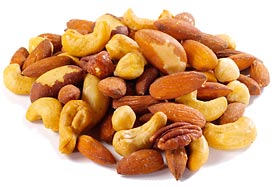
I rarely encounter competitors who aren’t completely enamored of nuts and who lament their absence during contest prep. And for good reason. The substantial texture and flavor of nuts have captured the interest of the general population and have elevated nuts to superfood status. However, due to their significant nutrient density, “too much of a good thing” can certainly be applied to nuts of any kind. I have encountered patients who may have previously been in the habit of mindlessly polishing off an entire bag of potato chips in one sitting and who have similarly finished an entire jar of nuts, believing that the health benefits of nuts could somehow negate the caloric assault on their weight loss plans.
Everything in Moderation
That being said, I am far more likely to praise the benefits of nuts than I am to discourage their consumption. As a self-professed nut lover I am well aware of how delectable they are, yet I usually will portion them out in an effort to prevent any overindulgence. This is especially true when I consume nut butters. I know that if I keep the almond butter jar open, I am likely to dip into it once more, so I make myself remove a serving size then quickly seal the jar and put it away. When you consider that the average nut butter contains approximately 190 calories per 2 tablespoons and 16 grams of fat, the calories can stack up very quickly indeed. However, on a positive note, researchers in Spain discovered that frequent nut consumption was associated with a decreased risk of weight gain.
Benefits of Nut Consumption:
May help to lower cholesterol
Rich in arginine, which enhances blood flow
Rich in fiber, unsaturated fatty acids and phytochemicals
Contain mono- and polyunsaturated fats which are cardioprotective
Best plant source of protein
Rich in vitamin E, B vitamins, selenium, calcium, magnesium, copper, iron and phosphorous
Rich in a number of compounds which may protect against gallstone disease
May reduce the risk of age-related macular degeneration
Negative Aspects of Nut Consumption:
High fat content
Many nuts are flavored with sugar, added fat, sodium, chemicals and preservatives
High in calories • Some people have allergies to nuts which in some cases can serve to be fatal
Contain oxalates which can crystallize and form kidney stones
“Nutty Top Five”
Though all nuts provide superior health benefits, I consider the five nuts listed below to be the best of the bunch for various reasons. Make sure to opt for the raw or dry roasted varieties whenever possible. When nuts are roasted in oil, there is a high probability that they have either been heated in hydrogenated oils or subjected to high temperatures which can destroy their nutrient properties. Studies recommend a daily intake of one to two ounces of nuts as part of a healthy diet.
Pecans: This is the most caloric nut in this list at 200 calories for 18 to 20 halves, and also contains the smallest amount of protein at 3 grams while packing 20 grams of fat. However, these slightly sweet nuts still offer health benefits when consumed. Pecans contain a plant steroid called beta-sitosterol, which helps to relieve the symptoms of an enlarged prostate. They are extremely rich in B vitamins, vitamin E, and ellagic acid, which is a potent antioxidant. Pecans are excellent when added to the vegan baked goods I make, and I especially love them in my admittedly non-contest friendly Thanksgiving stuffing!
Cashews: Technically, cashews are thick-shelled seeds, but confer all of the general benefits of nuts, including monosaturated fatty acids like oleic and palmitoleic acids. They are quite calorie dense at 180 calories for 14 nuts but also contain a number of important minerals, including manganese, potassium, selenium, copper and zinc. Another important substance which can be found in cashews is zea-xanthin, which is selectively absorbed into the retinal macula lutea in the eyes and confers protection against age-related macular degeneration. The texture of these seeds is so meaty and satisfying that they easily made it onto my top five list. In addition, cashew butter is delectable! If you need a change from peanut butter, try this option.
Hazelnuts: These nuts are loaded with folate, vitamin E, and B vitamins. I recently started eating these nuts after encountering them in a mixed assortment, and was surprised by their distinctive flavor and relatively hard texture. Hazelnuts are excellent snacking nuts and good for a change.
Walnuts: Walnuts are extremely rich in alpha linoleic acid (ALA) which can reduce inflammation and oxidation in the arteries after eating fatty meals. A serving of 14 halves contains 180 calories but also provides about 90% of the recommended daily intake of omega-3 fatty acids. Scientists at University of Scranton, Pennsylvania recently discovered that walnuts have highest levels of polyphenolic antioxidants than any other common edible nuts. Walnuts are incredibly versatile and can be mixed into vegan baked goods, fudge, salads, Greek yogurt, oatmeal, or eaten plain.
Almonds: These nuts have the lowest calorie density, and also contain the most calcium of any nut. They are rich in dietary fiber and phytochemicals and confer excellent protection against diseases. Almonds are an excellent source of vitamin E, with 60% of the recommended daily intake of vitamin E packed into a 30 gram serving. Over the past year I have replaced peanut butter with almond butter because I vastly prefer the flavor of the almond variety. I have also heard numerous people report that almond butter was more easily digestible than peanut butter. As for the whole nut, I consider the almond’s textural variety and its flavor to be superior to other nuts, making it my go-to when I grab a serving.
Summary: As long as nuts are not consumed in the same volume as lean meats and vegetables are, daily consumption will confer a myriad of health benefits to one’s diet. If you haven’t already incorporated nuts into your meal plan, consider doing so in order to optimize your health.
 http://sportsnutritionsupplementguide.com/
Be sure to check out this fantastic website which is chock-full of information on training, supplements, nutrition, health and wellness and inspiration! I am honored to be one of the Authoritative Experts on the website.



If you think about all the grasping and gripping you do in your daily life, such as opening doors, driving, working out with weights, etc., it’s pretty obvious that you use the muscles which flex your fingers far more often than the ones which extend (or straighten out) the fingers. Over time, this results in overdevelopment of the finger flexors relative to the extensors. A new product called the Hand X Band enables you to selectively exercise the finger extensors, establishing muscular balance and increasing strength. These clever bands are inexpensive, durable, and effective.
The Hand X Band is great for athletes who want to balance their strength and muscular development, but it is also excellent for upper extremity rehab.
You can order direct from the site: http://handxband.com
https://www.yahoo.com/style/whats-the-deal-with-the-corset-training-101355906803.html
I am posting an article which I found the other day on Yahoo! Style which made me chuckle. Here is the original link as well. I will reserve comments until the end of the article.
To the ways you can attempt to whittle your waist — Slim-Fast, side planks — add one more: Corset training.
The method, which requires you to cinch yourself into a corset for four to six hours a day, is popular with celebrities and has been intriguing many other women seeking hourglass shapes.
Both Kim and Khole Kardashian have tried it. Kim posted a picture of herself yesterday in her mom’s foyer wearing a corset — hers is from a company called “What A Waist” — with the caption “I’m really obsessed with waist training!”
Jessica Alba is a fan, too. She actually wore two at the same time to help her lose weight after both of her pregnancies. “It was brutal; it’s not for everyone,” she told Net-A-Porter. “I wore a double corset day and night for three months. It was sweaty, but worth it.”
Self-described “corset fetishist” Kelly Lee Dekay, 27, has been doing corset training for seven years, and claims she has a 16-inch waist because of it. “I loved how Batman’s outfit let him channel a different side of himself,” she told the Sun. “That’s what the corset does.”
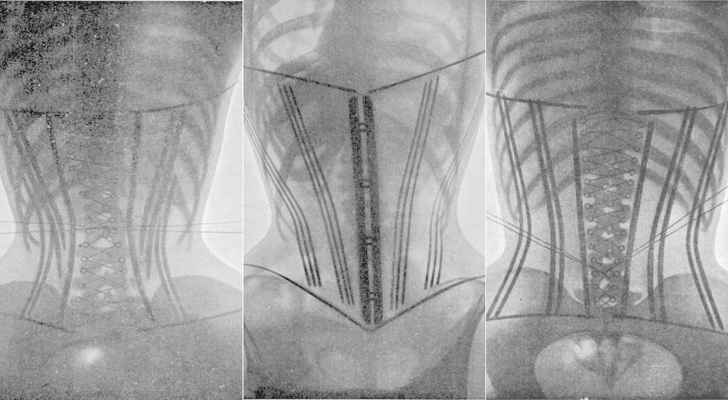
Women have worn corsets for ages. In the 1500s, they smashed down their entire torso. Later, in the late 1800s or Victorian era, they were used to help define the waist. It’s thought that the reason ladies back then were always fainting was because their corsets were squeezing their internal organs and restricting their breathing.
In these modern times, however, women now think that wearing a corset can actually help you lose weight. The Cincher by AMIA claims, “[It can] sculpt inches from your midsection and enhance your curves while increasing thermal activity in your core.”
According to TheCorsetDiet.com, you can shed up to six pounds a week by wearing one of their custom-made waist shapers. The UK-based company describes the pressure from its corsets as “gentle hugging feeling.”
But when writer Rebecca Harrington tried wearing one, albeit from a different brand, she wrote on NYMag.com, “My breathing is slightly impaired, but I can still breathe; I just have to take short, staccato breaths. I try to drink coffee, and it’s very difficult. After four hours, I whip off the corset and throw it across the room. My waist has red welts on it.”
In reality, doctors say that the corset is not — I repeat not — helping you reshape your body with simple pressure. It’s simply so tight around your stomach that you won’t — or can’t — eat too much, and doctors roundly decry any kind of corset diet or waist training as a viable long-term weight loss method.
“It’s outrageous, and it just absolutely makes no medical sense whatsoever,” Keri Peterson, M.D., a physician at Lenox Hill Hospital in New York told Women’s Health.
It also could be dangerous. Wearing one could actually shift or compress your internal organs and fracture your ribs, Dr. Jyotindra Shah said. “People might put it so tight that the liver, spleen and kidneys could get bruised,” she told The Huffington Post.
Even “corset fetish” Dekay knows she has to remove hers sometimes. “It can be restrictive when climbing stairs,” she told the Sun. “You can’t carry heavy things as you could hurt yourself. I don’t go to the gym in it. That would be very dangerous as I lift weights.”

Okay, here goes my commentary. I jumped on the corset bandwagon back in 2011 when I was informed that it was a very effective way to whittle the waist. During the time in which I diligently wore a corset (or two) several hours a day, every day, I noticed my waistline whittle down from 24 inches to 22-1/2 inches. So do I think it works? I KNOW it works.
I have to say I disagree with so-called doctors’comments that the corset prevents consumption of large amounts of food, thus resulting in weight loss. This just sounds like something one of my male colleagues would mutter. If caloric consumption is kept constant, women and men who engage in corset training WILL have a reduction in inches no matter what. This sounds like the typical uber conservative medical snobbery which makes other doctors the types of people I will NEVER choose to spend extensive periods of time with. I do agree that the practice of wearing a corset is outrageous, painful, and could be dangerous. But it DOES work. What price beauty?
Over the centuries, women have compressed their waistlines effectively with corsets, so it blows my mind that these narrow minded physicians have decided to toot their horns and express skepticism. As a physician who competes, I chose to give corsets a chance and had great results. I am glad that I didn’t allow the part of my brain which is trained in traditional Western medicine talk the competitor in me out of doing all that I could to make my waist smaller.
I would usually wear a neoprene wrap underneath my corset (or Squeem as it is somewhat affectionately called in the bodybuilding world due to one manufacturer brand), or one corset over a second. I would do this for at least 6 hours, sometimes as long as 14 hours. Was I uncomfortable? Yes. Did I sweat like a pig? You bet. Was it worth it? I think so.
I have dealt with the metal boning poking out as the corsets would wear out, and would glue them back into their channels, so I know all too well the sensation of metal poking into my underboob, my ribcage or my hip bone when the corsets began wearing out. I would have digestive upset, abdominal pain, and at times had difficulty breathing. During one stretch of time when I was wearing latex corsets, I developed painful lesions all over my back from the yeast overgrowth which resulted from the long hours of wear and the constant sweating. It took me over a year for my skin to heal from all those lesions, and I have a couple of permanent scars to mark my determination to sculpt a waistline that would win a Pro Card. Thankfully, I won that Pro Card in 2013 and almost immediately tossed the corsets aside.
Now I wear corsets from time to time if I feel the need to squeeze out extra water from my midsection, but I will probably never return to the days of wearing corsets for many hours, driving to work in pain because a metal boning was jabbing me in the rib, sweating profusely under nice clothing, and dealing with skin around my midsection which was constantly macerated, lighter in pigment, and showing signs of skin breakdown.
I know you ladies want to slim down the midsection, but please be careful when you wear corsets! It isn’t worth ruining your skin and compressing organs to wear these torture devices for extended periods of time. Give your skin and your torso a rest in between the sessions during which you are training your waist. I recommend wearing corsets for a 4 hour stretch.
Taken in Budapest, Hungary on September 7th, 2014.


