New Pet, Suddenly Allergic?

Image 82105512 (123rf.com)

It’s a really interesting and somewhat frustrating phenomenon when people develop allergies to new pets, even if they’ve lived with pets for years without issue. This just happened to me when I introduced a new kitten into my home. All these years, I had lived peacefully with my pets with no issues, but all it took was one sweet kitten with her dander to spike my allergic response!

There are several factors that could explain sudden allergic responses when a new pet is introduced to the home.

1. Different Allergen Profiles

Each pet produces different types and amounts of allergens. For instance:

  • Cats and Dogs: These animals produce dander (tiny, often invisible flakes of skin) that can trigger allergic reactions. However, not all animals produce the same type or quantity of allergens. A person may have developed tolerance to the specific dander or protein in their existing pets, but a new pet may have a different protein structure that their immune system perceives as a threat.
  • Species Differences: Even between different breeds of dogs or cats, there can be differences in the types of allergens they release. For example, some dog breeds shed less fur or produce different amounts of dander than others. This might explain why someone living with one breed of dog doesn’t experience symptoms, but develops an allergy when adopting a new breed.

2. Immune System Changes

Over time, a person’s immune system can change. Allergies can develop at any age, and the immune system can become sensitized to new allergens at any point in life, even if the person hasn’t had problems before. This might explain why someone who has lived with pets for years can suddenly develop an allergy to a new pet.

  • Delayed Sensitization: It’s possible that the immune system, over time, becomes sensitized to certain proteins present in animal dander, and the person’s immune response triggers once it encounters a threshold. They might not have had a strong reaction to their old pet, but a new pet could have more potent allergens that push the immune system into overdrive.

3. Environmental and Lifestyle Factors

The environment plays a role in how allergens impact someone. If a person moves to a new home or changes their lifestyle, it could increase their exposure to allergens in a way that makes them more likely to develop a reaction.

  • New home, different allergens: If the new pet is introduced into a home with different ventilation, humidity, or dust levels, it could change how allergens accumulate and affect the person. For example, an increase in humidity could make allergens like mold or dust mites more problematic in conjunction with the pet’s dander.
  • Exposure levels: Someone may have had a lower overall exposure to allergens in the past, either due to fewer pets or less contact with them, and the new pet may push that exposure threshold.

4. Cross-Reactivity

There’s a phenomenon called cross-reactivity, where a person who is allergic to one animal might also react to allergens from a different animal. For example:

  • Cat and Dog Allergies: Some people allergic to cats might also react to dogs because the proteins responsible for causing allergies (like Fel d 1 in cats and Can f 1 in dogs) are similar. The immune system can mistake the proteins of a new pet for those of an older one.
  • Rodents, Birds, or Other Pets: People allergic to one type of pet might develop allergies to completely different animals (e.g., developing an allergy to birds after having had no issues with a dog). This is because certain proteins in saliva, fur, or feathers might have structural similarities, confusing the immune system.

5. Type and Age of the New Pet

Young pets (puppies, kittens) often shed more allergens, including fur and dander, than older pets. This could be due to the fact that they have more active skin cells or they may shed more frequently as they grow. So, even if someone was fine with an older pet, a younger one might have more dander circulating in the environment.

6. Sensitivity to Specific Proteins in Pet Saliva or Urine

It’s not just the skin dander that can cause problems. Proteins found in a pet’s saliva or urine can also trigger allergic reactions. For example:

  • Cats and Dogs Licking Fur: Both cats and dogs spread their saliva over their fur when they groom themselves, which means that their saliva proteins get transferred to their fur and skin. If a person has been exposed to the saliva of one pet for a long time without a reaction, the saliva of a new pet could be a different protein altogether, leading to an allergy.

7. Pet Care Products

It’s also worth noting that people might develop sensitivities to products used in caring for pets, such as shampoos, flea treatments, or cleaning supplies. These allergens could cause issues even if someone has lived with other pets without trouble, especially if the new pet is exposed to different brands or types of products.

8. Changes in Body’s Allergic Sensitization

As we age, our immune system changes. A person may have been exposed to the allergens of previous pets without a noticeable allergic response, but their immune system may have become more reactive over time. The introduction of a new pet might be the tipping point.


To sum it up: While someone might not have had issues with existing pets, the combination of new pet dander, proteins, environmental factors, and changes in the immune system can all contribute to the development of an allergy. If this happens, it’s important to consult with a healthcare professional for guidance on managing or alleviating symptoms.
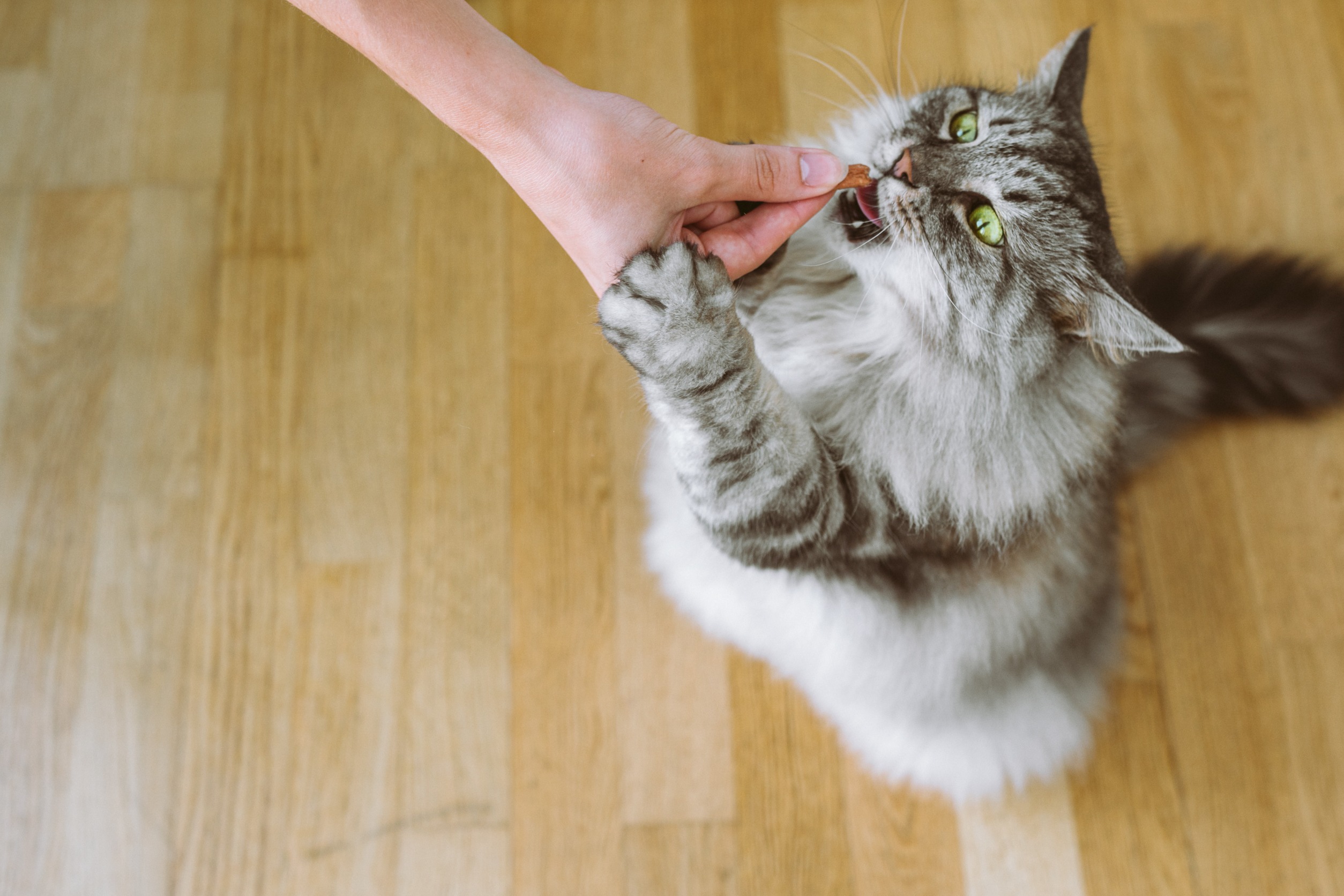

How To Train A Cat Or Kitten

Copyright: larisikstefania


Training a cat or kitten to learn its name and do basic tricks can be a rewarding experience, but it requires patience and positive reinforcement. I know first-hand that it is indeed possible for cats to play fetch, beg, and sit because I have had numerous cats who were able to understand and perform such commands. My cats also know their names and will come (barring any feline defiance which can kick in at times) when called.

The most basic command which most people would like their pets to learn is to respond to their names and come when called by name. Here are some steps and tips which you can use to reinforce your cat’s learning.

  1. Choose a Short and Distinct Name: Select a name for your cat that is short, distinct, and easy to pronounce. Cats tend to respond better to names with one or two syllables. Use the chosen name consistently. All of my cats have two-syllable names which are easy to pronounce.
  2. Establish a Connection: Spend quality time with your cat to build a bond and trust. Petting, playing, and providing treats are all ways to create a positive association with you. In fact, I would say treats are essential when getting a cat or dog to learn its name, as it serves as positive reinforcement.
  3. Use Positive Reinforcement: Cats respond well to positive reinforcement, such as treats, praise, and petting. Reward your cat when it responds to its name or successfully completes a trick.
  4. Start with Name Recognition: To teach your cat its name, use a calm and friendly tone. Say the cat’s name while making eye contact. When the cat responds, reward it with a treat or affection. Repeat this regularly.
  5. Be Patient: Cats may take time to recognize their name and respond. Don’t get discouraged if they don’t respond immediately. Be patient and consistent in your efforts.
  6. Teach Basic Tricks: When it comes to teaching tricks, start with simple ones like “sit” or “come.” Use treats and positive reinforcement to guide your cat into the desired behavior.
  7. Use Clicker Training: Clicker training can be effective for cats. Associate the sound of a clicker with treats, and use it to mark desired behaviors. Click when the cat responds to its name or performs a trick, followed by a treat.
  8. Keep Training Sessions Short: Cats have shorter attention spans than dogs. Keep training sessions brief, around 5-10 minutes at a time. Multiple short sessions throughout the day can be more effective than one long session. My training sessions with my cats are very brief, about 3 to 5 minutes, and I truly believe that the brevity is what keeps my cats engaged.
  9. Be Consistent: Consistency is key in cat training. Use the same command words and reward system every time. Avoid confusing your cat with different words or signals for the same behavior. I personally always use “sit” and “beg” when training Koji, my 2-1/2-year-old cat.
  10. Stay Positive and Patient: Cats can be independent, so don’t scold or punish them if they don’t respond immediately. Always use positive reinforcement to encourage desired behaviors.
  11. Adjust to Your Cat’s Personality: Every cat is unique, so be flexible in your training approach. Some cats may respond better to treats, while others may prefer play as a reward.
  12. Practice Regularly: Regular practice and reinforcement are essential for your cat to retain what it has learned.

Remember that not all cats will learn tricks, and some may be more responsive than others. The key is to be patient, use positive reinforcement, and focus on building a strong bond with your cat. Training should be a fun and enjoyable experience for both you and your feline companion.

Pet Dental Health

Source: 123rf.com
122857374
Yuliia Sonsedska


I’m sure the majority of you are well aware about the importance of good dental health, but have you ever thought how important good dental health is in your pets?  Just as in humans, the mouths of your pets are teeming with bacteria, and some of those bacteria can enter the digestive tract, respiratory tract, and bloodstream, and cause disease, particularly in the heart, lung, and kidneys.

Another factor to consider in our pets is the fact that we have domesticated these animals over the millenia, and as a result, they no longer depend on hunting to procure their food.  This means that the natural form of teeth cleaning, in essence, gnawing and tearing at the flesh of their prey, has, for the most part, been eliminated, and replaced with dry kibble and canned foods.  Eighty percent of pet dogs and cats who have had no dental cleaning or intervention show signs of oral disease by the time they are 3 years old.

I take all of this very seriously with my pets, and I am diligent about taking them in every six months for non-anesthetic dental cleaning.  It’s worth the financial expense, even though I struggle to pay for their dental care twice a year.  The way I see it, I’d rather take them in for regular dental cleaning than to put them at risk for a myriad of diseases, and have them suffer needlessly as a result.  I’ve been taking them in for regular cleanings from the time they were young adults, and they have had mild issues with no need for a more aggressive cleaning with anesthetic.  I realize that they may at some point need cleaning under anesthesia, but until we cross that bridge, I will continue to take them in for the anesthesia-free option.

There are definitely some limitations with non-anesthetic teeth cleaning for pets, such as the fact that only the plaque above the gum line can be removed.  The veterinarian examines the pet’s teeth and gums to determine if there is any inflammation or sign of infection, and if there are any findings which are beyond the scope of the non-anesthetic cleaning crew, the pet is referred for cleaning with anesthesia.

Overall, if you aren’t paying attention to your pet’s teeth and gums, you should.  It’s a good idea to ask your veterinarian at your next visit what he or she recommends in the way of dental care.  There are dental chews which help to clean the teeth, and some very brave pet owners actually brush their pet’s teeth.  Your vet will help determine the best care regimen for your beloved pet.


Pets and Your Health

42089792 - woman with her dog tender scene

Image ID : 42089792 Copyright : soloway 123rf.com


I don’t know how I would get through difficult days without my three wonderful cats. Tenshi, Shima, and Kazu are so special to me that I always look forward to coming home and seeing their sweet faces. Those of you who have pets to whom you are closely bonded know how comforting it is to come home to them. Animals are capable of deep, unconditional love which is unparalleled. A pet won’t care that you look all disheveled from battling a grueling day. If you are distraught, a pet will make you smile and perhaps even laugh with cute and silly antics. Pets are natural antidepressants, and create the perfect distraction when you are tempted to feel sorry for yourself or ruminate over something which is only causing you anguish.

Pets are wonderful for our well-being and spiritual health.

It turns out that owning a pet also confers physical health benefits as well. Pet owners enjoy a reduction in stress and anxiety, which has a positive impact on blood pressure. Another very striking and unexpected benefit to having pets is a decrease in a child’s chances of developing allergies to animals. The decreased chance of developing allergies to animals in small children who live with animals is as high as 30 percent, according to research conducted by pediatrician James E. Gern which was published in the Journal of Allergy and Clinical Immunology. Dr. Gern conducted a number of studies on children exposed to pets, all of which concluded that children who were exposed at an early age to animals tended to develop stronger immune systems overall, and were far less likely to develop pet-related allergies.

When I think of friends who have allergies to cats or dogs, most of them did not grow up with a pet in the house. I also did not grow up with a family pet per se, unless you count the two rabbits I had in fourth grade for about six months. My mother was so fed up with them that she sold them to a pet store, and that was that. But I spent extended periods of time petting and hanging out with numerous outdoor cats in the neighborhood, enough so that I had a regular exposure to them. I also spent weekends with my dad’s dog, or with his friends’ dogs, so the exposure was steady.

I honestly believe that early and regular exposure to pets is a boon to immune health in young children. And since there is a large body of scientific evidence to back that up, why not get a family pet for your children to love?

Rathergood.com

punk_kittens_thumb

About nine years ago, I encountered the amusing and rather irreverent music videos which characterized Rathergood.com. As soon as I saw punk rock kittens wailing on guitar and drums to The White Stripes “Fell In Love With A Girl”, I was a fan.

http://rathergood.com/punk_kittens/

After watching this video several times, I came across another amusing group of musical kittens playing music on a beach. The song (“We Like The Music”, by John B) became the inspiration for the very first Rathergood.com musical kittens video, and many more were subsequently created.

http://rathergood.com/kittens/

http://rathergood.com/independent_woman/

If you are interested in seeing more ridiculous music videos featuring kittens, hamsters and dogs mixed in with characteristic British wit, then check out the classic archives:

http://rathergood.com/2015/11/03/classic-rathergood-stuff

In addition to amusing music videos, rathergood.com also offers some clever keyboard programs. If you want a good laugh when you’re at work (make sure the boss has no problems with a rash of obscenities), then you can check out Buffy’s Swearing Keyboard or the Swear-O-Tron. They offer fantastic ways to vent frustrations! (WARNING: Extreme obscenities)

http://rathergood.com/buffy/

http://rathergood.com/swearotron/

Can Animals Be Left-Handed/Pawed?

left handed dog

Here is an interesting article which I copied and pasted. The article can be found through this link:

http://www.anythinglefthanded.co.uk/can-a-dog-be-left-handed.html#sthash.siZgW3BC.dpbs

It turns out that dogs do show a clear preference for their left or right paw and there’s roughly a 50:50 split between left-pawedness and right-pawedness across all dog breeds. Here are a few tests you can do to find out whether your dog is a ‘southpaw’:

Have your dog sit, and then get up and walk. Which paw do they lead off from?
When you ‘shake hands’ with your dog, which paw do they offer most often?
When trying to get a toy out from under the sofa, which paw do they use?
But whereas left-handedness in humans makes you superior in lots of ways (well, we think so anyway), what does it mean for dogs?

Well, it seems left-handedness in dogs also gives you an advantage. Left-pawed dogs are generally preferred for police and military use and also as guide dogs because they are easier to train (this is mentioned in a few articles but we cannot find a research reference for it. There IS research showing that left-pawed dogs are more aggressive and that may explain the military use) . And a recent study by the Vrije University in Amsterdam has proven once and for all that left-pawed dogs are quicker at learning and better than problem solving (Report: Paw Preference Correlates to Task Performance in Dogs). In the study, the team of researchers selected an equal number of left-pawed and right-pawed dogs to complete some basic intelligence tests. The team found “that dogs departing with the left front paw perform significantly better than dogs departing with the right front paw.”

So let’s hear it for our four-footed lefty friends, and all the dog owners out there do let us know in the comments here if your dog is a lefty or a righty and what effect you think this has.

Wine Tasting In Paso Robles

Paso Robles wine country

I have always enjoyed wine tasting and make a point of visiting nearby wine regions a few times each year. Usually I go to Temecula since it is less than a hundred miles away from where I live, but since I know that area so well, I have been itching to visit other places. While I love Napa and Sonoma, I avoid those destinations for two reasons: 1) both treks are a bit too far for me to make an easy drive, and 2) the wine tasting fees, wines, and lodging out there are outrageously expensive. Yes, the wines up there are phenomenal, but I am not about to go into the poorhouse for the sake of wine tasting up there.

Last week we visited Paso Robles for a three day getaway, and were determined to explore the central portion of the wine tasting region there. I hadn’t been to Paso Robles for close to ten years, so the experience felt relatively new to me. On Friday we visited one winery (Falcon Nest) which we knew stayed open later than the others, and ended up having a lovely conversation with the winemaker there. After our evening wine tasting, we drove into town and had a quick bite to eat, then headed back to the very comfortable and charming bed and breakfast inn where we were staying (Union Road Guesthouse).

We had planned to visit as many wineries as we possibly could the following day, but since the wineries we wanted to visit were only open from 11-5, we didn’t have much time to do wine tastings. We started our wine tour at Glunz Family Winery without any expectations, so we certainly didn’t expect their Bernese Mountain Dog Jenga to literally run towards our car as we pulled up to the winery! With such a great beginning to our visit to Glunz, we knew we were in for a great experience. I was so impressed with Glunz wines that I not only bought a bottle of Grenache Blanc and a bottle of Zin, I also became a member of their wine club, which is something I typically avoid.
wine-tasting
We spent about an hour at Glunz, then continued our wine tasting by heading to Hug Cellars/Bodega De Edgar, not realizing that there were two other wine tasting rooms right next door (Paydirt and Brochelle). We met the second dog of the day at Paydirt, a funny little dog named Max. We also tasted a nice zin there which we ended up purchasing. By the time we left the three winery cluster, we were starving so we got something to eat, then resumed our wine tasting tour, visiting Barr, Clautierre, Pear Valley, Steinbeck (and our third dog of the day, Lola), and PasoPort. We paid another visit to Falcon Nest before heading back to the inn, then had dinner at a steakhouse in town.

By Sunday, we had pretty much had our fill of wine, but I just couldn’t resist going for one more tasting at Glunz, since the wines were so fantastic there. Our second visit there resulted in the purchase of their Mission Angelica Port, which is rich with butterscotch and caramel flavors. Seriously WOW.

Overall, I would HIGHLY recommend visiting the Paso Robles area for wine tasting. The quality of the wines there is exceptional, the area is filled with charm, and there are plenty of great restaurants and bed and breakfast inns there (though we highly recommend Union Road Guesthouse).

My Cats Are Dogs Trapped In Cat Bodies

Shima the part feral shy girl

Shima the part feral shy girl

All three of my cats are five years old and have been with me since they were kittens. I have one rescue, Shima, who came into the household when she was three weeks old, so I became Mommy in a big way and bottle raised her. Since Shima’s feline mother was feral, Shima’s personality is understandably very skittish, and she needs a lot of coaxing to warm up to strangers. She even runs away from me if I move too quickly. She is very much a feline in her mannerisms and personality, and fits the stereotype of the aloof cat who doesn’t interact much with humans.

My Labrador trapped in a cat's body

My Labrador trapped in a cat’s body

In stark contrast, my two Burmese cats are like dogs, following ANY human around the house, even complete strangers, playing fetch, begging and grabbing treats with their paws on command. My European Burmese, Kazu, dutifully waits for me to enter the house from the garage when I come home and purrs instantly upon seeing me without me petting her. Kazu has the coloring and the personality of a Labrador Retriever, and is always so happy and sweet. I could definitely learn a thing or two from her about how to be in a state of contentment all the time. Another characteristic which Kazu shares with dogs is her innate penchant for fetching. The first time Kazu approached me with a toy and nudged me, I hadn’t realized that she had an instinct to fetch, but I soon discovered that this was something she enjoyed immensely. During her fetching sessions, in which she will continue to fetch for as long as I throw the toy, she purrs the instant she drops the toy next to me and begins to nudge my hand if I don’t pick up the toy immediately.

Check out Kazu’s fetching talents here:

Tenshi my boyMy American Burmese, Tenshi, is the alpha male of the group and loves meeting new people. He is such an in-your-face cat that he rubbed against the legs of the plumber during a recent visit to our house and investigated every single thing the plumber was working on, prompting the plumber to laugh and remark on the doglike nature of my cat. Tenshi walks with a swagger that I have only seen in a few tomcats over the years (pretty impressive for a eunuch!), and he picks on Shima and Kazu regularly. He gets very jealous if people give the other cats attention and will literally shove them away or hit them in the face to scare them off. If I go on a trip for a few days, Tenshi glues himself to me and doesn’t allow me out of his sight. Whenever I go into our trophy room, Tenshi will yell at me until I come back into the main house.

Though I love dogs, I lament the fact that I can’t have them. At least my two Burmese cats make up for it by acting exactly like dogs!

Just Because I Like Cats, Doesn’t Mean I Am A Cat Person

Yes, I like cats. As a matter of fact, I adore them, and have always gotten along well with them and understood their movements and instincts. As a child I was able to befriend strays who would never dare come near any other humans, so this earned me a label very early on of “cat person”. Why do I have to wear such a label because I like and own cats? The labels “dog person” and “cat person” are often attached to an applied exclusion in which the two are not expected to comingle, and in which both labels could not possibly be worn by one person. So what if I have cats? It doesn’t mean that I am anti-dog! I would LOVE to have dogs, but since I have always been a fan of large dog breeds, and because I don’t have a yard, it would be unfair of me to have dogs at this point in my life. I am also so incredibly busy that I wouldn’t have time to walk a dog or devote the extra time which dogs demand from their owners. Most importantly, two of my cats are very doglike and follow me EVERYWHERE I go when I am at home.

My babies...

My babies…

Another thing I do not engage in is collecting cat motif items. Do not expect to walk into my home and see cat pillows, cat artwork, etc., in the common areas, because I will not subject myself nor anyone else in the household to such feline tributes. The only cats you will see in my living room are the living furry companions who are family members and sources of great joy to me. I do have photos of my cats on the fridges (we have two fridges in our place), but there are only a few.

It always surprises me when people who don’t know me well reveal with hesitation that they have dogs, as if I am anti-dog. Instead, I respond with excitement, asking them what kinds of dogs they have. Honestly, I adore dogs so much that I get dog lust if I hang around great dogs. I have also been tempted on more than one occasion in my life to adopt a dog even though my schedule has never been accommodating enough for me to be a good doggy mom.

Whether you have cats or dogs, chances are I will be fine with them all.