Tag determination
Vision Boards and Vision Boxes
 A few years back I started both a vision board and a vision box to help me visualize what I wanted to accomplish in my life. While the vision board was limited to a couple of images of female competitors who had the physique I wanted to attain, the vision box held (and still does) clippings of the house I wanted, vacations I wanted to take, and other coveted elements. I have yet to acquire the home and the vacations I wanted, but I have been able to travel as a result of competitions and other fitness events, and I reached my goal of having an enviable physique despite getting older with each passing year.
I now firmly believe in the power of vision boards and vision boxes because they enable one to truly envision what they want. Goals and dreams become tangible when they are focused on with intention. There is a great deal of power in putting your intentions out to the universe and empowering yourself to make the movements and changes which absolutely can manifest in reality. You should frequently look at the items you collect and harvest the belief that they can all come true. Great things happen to those who put their energies towards moving towards goals, no matter how lofty they may be.
Emotional Eating
Find original post at: http://www.rxmuscle.com/rx-girl-articles/6941-emotional-eating.html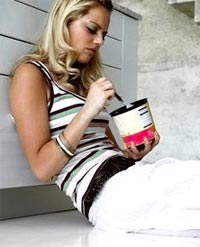
Rather than discuss well-known emotional eating disorders such as bulimia, I will concentrate on binge eating which many women engage in from time to time. It is important to recognize this behavior if it becomes a regular pattern, because frequent emotional eating warrants a diagnosis of binge eating disorder and requires treatment and intervention.
Binge eating is characterized by eating compulsively to cope with negative emotions and stressful situations. A binge eater is rarely hungry when she begins to eat and will continue to eat well after she is full. Such episodes can last for up to two hours or can occur off and on throughout the day. The binger feels guilty both during and after the episode, but will not attempt to counteract it by fasting, taking laxatives, vomiting, fasting or over-exercising. A strong lack of self-control as well as feelings of shame will accompany this behavior pattern. There is a strong association between binge eating and depression. Binge eating is also driven by social components such as social pressure to be thin, emotional and sexual abuse, parental criticism of a child’s weight, and the use of food as reward or punishment.
Food cravings are usually the strongest when you are in emotional crisis. You may reach for food for comfort or to serve as a distraction. Consider the following highly stressful events and think about whether you reached for comfort foods during such times:
- Financial problems
- Health problems
- Work issues
- Relationship issues
- Fatigue
- Family issues
Though some people will lose their appetites when stressed and will refrain from eating, many others will engage in impulsive eating in an effort to deal with negative emotions. This may be relatively harmless if such emotional eating occurs on a very rare occasion, but becomes a serious problem when it is used as the only coping mechanism for stressful situations or negative emotions. Just bear in mind that if you have a rare moment of weakness, it is important to recognize it as just that and to prevent yourself from spiraling into excessive feelings of guilt over the incident. If you engage in an episode of emotional eating, learn to forgive yourself and have a fresh start the following day.
Why We Engage in Emotional Eating
What occurs almost invariably when we eat emotionally is that we turn to cookies, cakes, candy, fried foods and breads rather than to healthy foods. There is a biochemical basis for such behavior. Carbohydrates which are high in sugar or fat release dopamine in our brains which in turn stimulates the brain’s pleasure center, creating a sense of euphoria. These foods are usually associated with pleasurable memories, such as cake which you may have looked forward to on your birthday, or macaroni and cheese as a treat after school when you were a child.
Food can also serve as a happy distraction from conflict or stressful events by stimulating the aforementioned pleasure centers. What will frequently occur is that an excessive amount of these foods will be consumed. However, if you remain aware of such automatic connections between food and mood and realize when you are eating for reasons other than hunger, you can break this cycle and get back on track with healthy eating habits which are associated with true hunger.
How To Combat Emotional Eating
- Keep a food diary. Get in the habit of writing down everything you eat and drink, including the quantity, the times at which you eat, your emotional state while eating the meal, and your level of hunger. By doing this you may see patterns which will reveal your emotional relationship with food.
- Remove tempting foods. Avoid stocking comfort foods in your home if you find that they are difficult to resist. And by all means avoid making trips to the grocery store if your emotions are spiraling out of control!
- Practice stress management. Yoga, meditation, and relaxation techniques are effective methods of managing your stress.
- Determine whether you are truly hungry. Many times people may believe they are hungry when in reality they are actually emotionally distraught and desperately searching for a way to defuse such emotions.
- Make sure you consume adequate calories. Individuals who are trying to lose weight will often restrict their calorie intake too much, and will turn to the same foods in an effort to remain on track without rewarding themselves with an occasional treat. Adding variety to your meal plan will also help to keep you on track.
- Distract yourself. If you get an urge to snack when you aren’t truly hungry, distract yourself by watching a movie, calling a friend, reading, listening to music, or taking a walk.
- Consume healthy snacks. If an urge to snack between meals strikes, choose a low-calorie snack such as vegetables with seasoned nonfat Greek yogurt, fresh fruit, low fat cottage cheese or rice cakes.
- Get enough sleep. Getting enough sleep is an important component in decreasing cravings for comfort foods.
- Eat at regular intervals. Consume smaller meals every three to four hours to keep you from feeling hungry or deprived.
- Focus on the experience of eating. Learn to eat in a mindful manner, in which you pay attention to your meal and only your meal. Become aware of the sensations associated with eating.
- Reward yourself. It is both physically and emotionally unhealthy to practice excessive calorie restriction for prolonged periods. Allow yourself to have a favorite food or meal once each week.
- Connect with your emotions. When a food craving hits during an emotional time, write down the emotions you are experiencing, such as sadness, loneliness or anger.
- Seek professional help if emotional eating is frequent. There are countless support groups which you can join which will help you to develop insight as well as the skills to avoid engaging in such behavior.
Why I MUST Go To The Gym
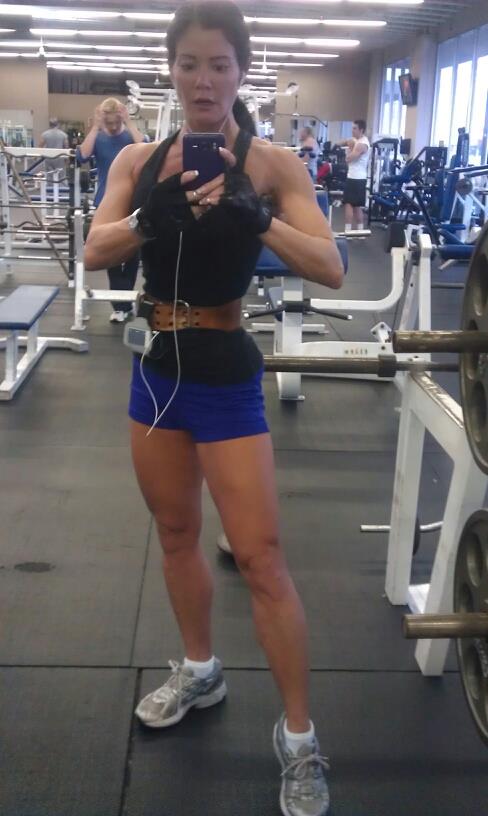 I move at a frenetic pace every single day, switching gears constantly and trying to pack as much as I can into each day. My determination, organization and just plain stubbornness usually ensure that every single item on my to-do list gets done, and that certainly includes my intense workout regimen. I work out six days per week, usually twice per day, and find it downright challenging to fit it all in while also attending to my career, family, and personal responsibilities. So why not just abandon the crazy gym schedule? Not a chance!
When I go to the gym, I have a perfect opportunity to recharge my body. I push myself to train harder and heavier with each day, and I love getting to that point where I may question whether I have the energy or strength to complete the entire routine (I always do though). The time I spend in the gym is my personal time, ME time, and allows me to take care of myself without worrying about anyone or anything else in my life during that small pocket of time. It’s like putting the oxygen mask on myself to ensure that I will be able to help others. My daily workouts keep me on a consistent schedule and provide structure to my day.
Another wonderful benefit of training as hard as I do is that I get to beat the aging process. I can honestly say that I am in better shape now than ever before. One of the joke statements I often make is that I am aging like a fine wine. What amazes and inspires me is the fact that there are a number of people in the fitness industry who are doing the very same thing. The population may be aging, but the newer crop of people over 40 who have embraced clean eating and resistance training looks better than ever and enjoys better vitality and health than the over 40 crowd from previous decades. It can be quite a guessing game to accurately determine someone’s age by looks alone these days!
NPC and IFBB Bikini Division
 The NPC and IFBB established the Bikini division in 2009 for women who did not want to gain the muscle mass necessary for bodybuilding, fitness or figure. Bikini is defined by a toned physique but without the excessive leanness seen in the other divisions, with an overall feminine shape. What I love about the bikini division is that it enables competitors to show a flirty attitude onstage. This division has grown tremendously among competitors and spectators since its inception, but has gotten a bit of heat from naysayers who hold onto the “bigger is better”approach in bodybuilding.
Here are the NPC guidelines for the Bikini division:
• Competitors will compete in a two-piece suit.
• The bottom of the suit must be v-shaped.
• No thongs are permitted.
• Competitors can compete in an off the rack suit.
• All swimsuits must be in good taste.
• Competitors must wear high heels.
• Competitors may wear Jewelry.
Height Classes
For National Level Contests that are Professional Qualifiers:
• Up to and including 5’1”
• Over 5’1” and up to and including 5’2½
• Over 5’2½” and up to and including 5’4”
• Over 5’4”and up to and including 5’5½”
• Over 5’5½” and up to and including 5’7”
• Over5’7
A promoter can choose to have fewer Height Classes for non-national level contests as follows:
For all Contests with Two (2) Height Classes:
• Up to and including 5’4”
• Over 5’4”
For all Contests with Three (3) Height Classes:
• Up to and including 5’4”
• Over 5’4 and up to and including 5’&’
• Over5’6”
For all Contests with Four (4) Height Classes:
• Up to and including 5’2”
• Over 5’2” and up to and including 5’4”
• Over 5’4” and up to and including 5’6”
• Over 5’6
Competition Judging
Presentation
Competitors will walk onstage alone and perform their Model Walk (personal preference).
The Model Walk consists of the following:
• Walk to the center of the stage, Stop and do a Front Stance,
• then a full turn and do a Back Stance,
• then turn to the front again and face the Judges as directed,
• then proceed to the side of the stage.
Comparison Round – Two-Piece Swimsuit
• Competitors will be judged wearing a two-piece swimsuit and heels.
• The competitors will be brought back out in a group and directed to do a full Front and Back Stance.
• Judges will have the opportunity to compare competitors against each other in half turns. (No side judging permitted, front and back only)
NPC and IFBB Figure Division
 The NPC added the Figure division in 2001 as a contrast to women’s bodybuilding, which had become increasingly less feminine and more muscular. With figure, the ideal is a muscular, lean but feminine physique, far less extreme, with a small degree of muscularity with separation but no visible striations. Think of a toned, shapely body which is less lean than women’s bodybuilding.
Guidelines for the NPC Figure division are as follows:
Figure competition
• Competitors will compete in a two-piece suit.
• The bottom of the suit must be v-shaped.
• No thongs are permitted.
• Competitors can compete in an off the rack suit.
• All swimsuits must be in good taste.
• Figure will not have a routine round.
• Competitors must wear high heels.
• Competitors may wear jewelry
Height Classes
For National level contests that are Professional Qualifiers:
• Up to and including 5’1
• Over 5’1 up to and including 5’2
• Over 5’2 up to and including 5’4
• Over 5′4 up to and including 5’5
• Over 5’5 up to and including 5’7
• Over5’7
A promoter can choose to have fewer Height Classes for non national level contests as follows:
For all contests with Two (2) Height Classes:
• Up to and including 5’4”
• Over 5’4
For all contests with Three (3) Height Classes:
• Up to and including 5’4
• Over 5’4 and up to and including 56
• Over 5’6
For all contests with Four (4) Height Classes:
• Up to and including 5’2”
• Over 5’2” up to and including 5’4
Competition Judging
Presentation
Competitors will walk to the center of the stage alone and perform model turns, starting by facing the judges before moving into their model turns then proceed to the side of the stage.
Comparision Round
• Competitors will be judged wearing a two-piece swimsuit and high heels
• The competitors will be brought back out in a group and directed to do quarter turns
• Judges will have the opportunity to compare competitors against each other in quarter turns.
Scoring
• Judges will be scoring competitors using the following criteria:
• Small degree of muscularity with separation, no visible striations.
• Overall Muscle Tone with shapely lines, overall firmness and not excessively lean
• Full general assessment
• Healthy appearance
• Make-up
• Skin Tone
NPC and IFBB Fitness Division
 The Fitness division is softer than women’s bodybuilding, with a slightly higher body fat percentage and less muscle mass. The ideal for the fitness division is a small amount of muscle mass with separation between muscle groups but no striations, along with low body fat. These ladies are athletic in appearance, and show their athleticism, flexibility and strength onstage via routines which are set to music. The routines are performed in costumes which enhance their muscularity, while the comparison round requires the ladies to wear two-piece bikinis and high heeled shoes.
Listed below are the NPC guidelines for the Fitness division:
Fitness Competitor Rules and Regulations
Round One (1)
• Competitors will compete in a two-piece suit. The bottom of the suit must be v-shaped.
• No thongs are permitted.
• Competitors can compete in an off the rack suit.
• All swimsuits must be in good taste.
• Competitors must wear high heels.
• Competitors may wear jewelry.
Round Two (2)
• Is a maximum two (2) minute Routine.
The Contestants should have shape to their muscles but not size, definition or vascularity as in Bodybuilding physique. If these are present the Contestant will be scored down.
National Level Contests do not permit competitors to cross over into Bodybuilding, Figure or Bikini in the same event. All other competitions are permitted to have cross overs at the discretion of the promoter with appropriate approval.
Height Classes
For National Level Contests that are Professional Qualifiers:
• Up to and including 5’2
• Over 5’2’ up to and including 5’4 1/2
• Over 5’4 1/2
A promoter can choose to have fewer Height Classes for non-national level contests as follows:
• 1 Class may be used at regional competitions
For all contests with Two (2) Height Classes:
• Up to and including 5’3”
• Over5’3”
Check In – Fitness Division Competitors will be Checked-in and Measured the same as Figure and Bikini competitors.
Competition Judging
Presentation
• The contestants will be brought out on stage in one or more lines for quarter turns.
Two Piece Swimsuit – Round 1
• Competitors will be judged wearing a two-piece swimsuit and heels.
• Competitors will walk to the center of the stage alone and perform model turns, starting by facing the judges before moving into their model turns then proceed to the side of the stage.
• Judges will have the opportunity to compare competitors against each other.
Scoring – Round 1
Judges will score the degree of athleticism using the following criteria:
• Firmness
• Symmetry
• Proportion
• Overall Physical Appearance including:
o Complexion
o Poise
o Overall Presentation
Fitness — Round 2
• Each athlete will perform a maximum two minute routine.
Scoring – Round 2
Judges will use four (4) aspects to score this round using the following criteria:
• Strength — The amount and types of strength moves.
o The degree of difficulty of these moves.
o The ease and correctness of the moves.
• Flexibility — The number and types of flexibility moves.
o The degree of difficulty of these moves.
o The ease and correctness of the moves.
• Cardiovascular — The tempo of the routine.
• Overall Package — full general assessment including but not limited to Creativity, Stage Presence, Outfits, Hair and Make-up.
NOTE: At National Level Competitions the Routine must incorporate Five (5) Mandatory moves as follows:
• Three (3) Strength moves:
o One Arm Push-up
o Straddle Hold
o Leg Extension Hold
• Two (2) Flexibility moves:
o High Kick
o Side Split
NPC and IFBB Women’s Bodybuilding
 Both men’s and women’s bodybuilding focus on building as much muscle as possible. Female bodybuilders go through “bulking” phases just like the men do, consuming many calories and training with very heavy weights. During the “cutting” phase, competitors drop significant amounts of body fat while making every effort to retain their hard-earned muscle.
Before you assume that one needs only to be loaded with tons of muscle, you should be aware that judges also critique competitors on their overall symmetry, balance and conditioning. Symmetry refers to the muscle bellies, with complete symmetry on both sides of the body as the desired goal. Balance refers to the proportion of muscle development throughout the body. In other words, a bodybuilder may have a very developed back but little calf development, or may have huge biceps but little shoulder development. Both examples will make a competitor look out of proportion. Conditioning refers to the degree of muscle definition in a competitor. If a bodybuilder does not dehydrate properly, he or she may hold interstitial water and end up obliterating muscle definition when onstage. Accordingly, if insufficient carbohydrates are consumed pre-contest, the muscles will be depleted of glycogen and will look flat.
One of the most potentially enjoyable aspects of watching the female bodybuilders is seeing their posing routines. Female bodybuilders perform onstage barefoot with two piece suits and make sure that their routines incorporate mandatory poses during their routines, while also showcasing their grace, athleticism and creativity.
Here are the NPC Guidelines for NPC Women’s Bodybuilding:
Women’s Bodybuilding Competitor Rules and Regulations
Check-In – Competitors will be checked in and weighed.
Posing Suits
• All suit bottoms must be V-shaped, no thongs are permitted.
• Suits worn by female competitors at the Prejudging must be two-piece and plain in color with no fringe, wording, sparkle or fluorescents.
• Suites worn by female competitors at the Finals must be two-piece but may include a printed design with fringes, lace, sparkle or fluorescents that are in good taste.
• All Prejudging suits will be checked at the morning check-in.
• Competitors are not permitted to alter the fit of the posing suit by hiking it up in the back or by pulling up the sides during Front and Rear Lat Spreads.
Female Weight Classes
2 Classes
• Lightweight,……………Up to including 125 lbs.
• Heavyweight….. …. ….Over 125 lbs.
3 Classes
• Lightweight……….. ..Up to including 125 lbs
• Middleweight………..Over 125 up to including 140 lbs.
• Heavyweight …. ……Over 140 lbs.
4 Classes
• Lightweight…………….Up to including 115 lbs.
• Middleweight………….Over 115 up to Including 125 lbs.
• Light-Heavyweight…..Over 125 up to including 140 lbs.
• Heavyweight. …….. …Over 140 lbs.
NOTE: Class Winners of the drug-free NPC Team Universe Championships go on to represent the United States in the IFBB World Championships that follow the IFBB weight limits below and for all polygraph tested events.
• Lightweight…………….Up to including 114 ½ lbs.
• Middleweight …………Over 114 ½ up to including 125½ lbs.
• Heavyweight…… …….Over 125 ½ lbs.
Prejudging Posing
Rounds for Male and Female Competitors
Judges will score competitors according to the NPC “Total Package” which is a balance of Size, Symmetry and Muscularity.
Relaxed Round
• Keep your feet flat
• Keep your heels together
• Hold your aims at your sides
• No twisting
• Your head must be facing the same direction as your feet.
Individual Round
• Begin when ready — no signal is necessary from the Head Judge.
• Maximum of 60 seconds with a warning when 10 seconds remain.
• You are not obligated to use all 60 seconds.
• Lying on the floor is not permitted.
Mandatory Round
• Front Double Bicep
• Front Lat Spread
• Side Chest
• Side Triceps
• Rear Double Bicep
• Rear Lat Spread
• Abdominal with one thigh
NPC And IFBB Men’s Physique Division
 When the NPC established the Men’s Physique Division for male competitors in its bodybuilding events back in 2011, it fueled an impressive interest in competing among men who were in great shape but not big enough to compete in the bodybuilding division. Suddenly a division popped up which did not demand the extreme muscularity that characterizes Men’s Bodybuilding. But what are judges looking for in the Men’s Physique Division? They want to see men who are fit and who display great shape, muscularity, conditioning and symmetry. Overall proportion trumps massive muscle bellies here, but keep in mind that Men’s Physique competitors have a decent level of muscularity.
Men’s Physique competitors are split up into different classes on the basis of height instead of weight. Local and regional events will usually have an Open division (all ages), Masters 35+, and at times a Masters 45+ division. At the national level, only a couple of contests feature a Masters Division, forcing many older competitors to compete against those much younger in the Open Divisions. IFBB Men’s Physique Pros compete in one class regardless of height or age.
Attire for Men’s Physique competitors consists of board shorts which sadly cover the majority of the quadriceps and the hamstrings. Competitors compete barefoot.
During judging, each competitor is expected to walk to the center of the stage individually and perform front and back poses for the judges. Once each competitor has had a chance to hit his poses, judges will call out competitors to the center of the stage for comparisons.
NPC and IFBB Men’s Bodybuilding
Men’s bodybuilding can best be characterized as the quest to be as big as possible. The concept of “bigger is better” certainly applies here. During the “bulking” phase, male bodybuilders will consume massive amounts of calories and train at the gym with Herculean strength in an effort to put on as much muscle mass as humanly possible. As contest day approaches, a “cutting” phase is employed in which competitors drop significant amounts of body fat while making every effort to retain their hard-earned muscle.
Before you assume that one needs only to be loaded with tons of muscle, you should be aware that judges also critique competitors on their overall symmetry, balance and conditioning. Symmetry refers to the muscle bellies, with complete symmetry on both sides of the body as the desired goal. Balance refers to the proportion of muscle development throughout the body. In other words, a bodybuilder may have a very developed back but little calf development, or may have huge biceps but little shoulder development. Both examples will make a competitor look out of proportion. Conditioning refers to the degree of muscle definition in a competitor. If a bodybuilder does not dehydrate properly, he or she may hold interstitial water and end up obliterating muscle definition when onstage. Accordingly, if insufficient carbohydrates are consumed pre-contest, the muscles will be depleted of glycogen and will look flat.
One of the most potentially enjoyable aspects of watching men’s bodybuilders is seeing their posing routines. When male bodybuilders perform onstage, they wear small posing trunks which are similar in cut to Speedos, and they perform barefoot. Though bodybuilders have a limited amount of time onstage and must hit mandatory poses during their routines, they have the opportunity to express their personalities, grace, athleticism and creativity by performing a routine.
Here are the general weight divisions for Men’s Bodybuilding in the NPC:
Male Competitors (All contests that are pro qualifiers)
• Bantamweight…………. …Up to including 143 ¼ lbs.
• Lightweight………………..Over 143 ¼ up to including 154 ¼ lbs.
• Middleweight ……………..Over 154 ¼ up to including 176 ¼ lbs.
• Light Heavyweight………Over 176 ¼ up to including 198 ¼ lbs.
• Heavyweight………………Over 198 ¼ up to including 225 ¼ lbs.
• Super-Heavyweight Over 225 ¼ lbs.
Male Welterweight Class for USA and National Championships
• Bantamweight…………….Up to including 143 ¼ lbs.
• Lightweight………………..Over 143 ¼up to including 154 ¼ lbs.
• Welterweight* ……………Over 154 ¼ up to including 165 ¼ lbs.
• Middleweight …………….Over 165 ¼ up to including 176 ¼ lbs.
• Light-Heavyweight………Over 176 ¼ up to including 198 ¼ lbs.
• Heavyweight………………Over 198 ¼ up to including 225 ¼ lbs.
• Super-Heavyweight ……Over 225 ¼ lbs.
• *NOTE: The Welterweight Class is optional at Local, Regional, and National QualItylng Contests.
Male Welterweight Class for Team Universe Championships
• Bantamweight……………. Up to including 143 ¼ Lbs.
• Lightweight……………….Over 143 ¼ up to including 154 ¼ lbs.
• Welterweight* …………….Over 154 ¼ up to including 165 ¼lbs.
• Middleweight …………….Over 165 ¼ up to including 176 ¼lbs.
• Light-Heavyweight………Over 176 ¼up to including 198 ¼ lbs.
• Heavyweight………………Over 198 ¼ up to including 225 34 lbs.
• Super-Heavyweight…..Over 225 ¼ lbs.
 dr. stacey naito's blog