Remove Your Shoes Please!

Copyright: andsst

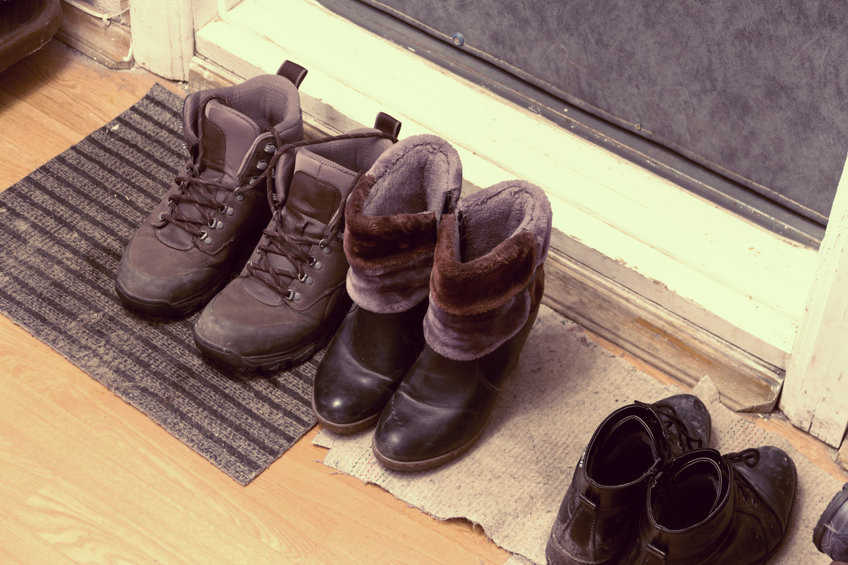
I grew up in a shoes-off household, which meant that as soon as anyone stepped into my home, they had to remove their shoes and leave them at the front door. Throughout my childhood, I noticed that none of my friends removed their shoes while in their homes, but then again, none of whom were Asian. In stark contrast, I noticed that the habit of removing shoes, sandals, and boots was always followed by my mom’s Asian friends, as well as by my relatives (also Asian) in Hawaii. I soon noticed that the floors in my friends’ homes didn’t feel nearly as clean on my bare feet as the ones in my own apartment, since they didn’t practice the same ritual my Japanese-American mother and I did. What I ended up doing in my friends’ homes was either keep my shoes on, or I would keep my socks on if I was wearing any when I visited them. To be honest, I always felt that it was so much cleaner to be in the habit of removing shoes once entering a residence, and this is something I continue to practice to this day. Since I am also the person who usually cleans the floors, rugs and carpets in my house, I have become a stickler for ensuring that no one enters in shoes which have traversed sidewalks, driveways, lawns which are teeming with all kinds of nasty gunk.

These days, I even go so far as to ask service technicians who enter my home to either remove their work boots, or to wear shoe covers, if they intend to conduct work inside the house. Before you accuse me of being extreme in my desire to keep my abode clean, keep in mind that back in July of 2021, a central air service technician tracked so much dirt and oil into my bedroom that it took me two sessions to remove all the stains from my bedroom carpet. Shortly after that, I ordered disposable shoe covers and have them right at the foyer for convenience.

Copyright: Elenathewise

Even with the shoes-off policy in my home, I still notice dust and dirt on my floors, and since I have pets, there is also the issue of shedding hair which accumulates. The last thing I want is to worry about when I clean the floors every week is chemicals, dog feces, and various microbes being introduced to my house via outdoor footwear. A study conducted by the University of Arizona discovered that 96% of soles of shoes were found to harbor fecal matter, which is picked up from the floors of public restrooms, as well as bird droppings and dog feces from asphalt, concrete, grass and soil. When you wear your shoes inside your house, you are spreading all of that bacteria, most notably E. coli, over all of your floors. Not only do you have to worry about germs, you also need to be aware of how many chemicals we track into our homes with our shoes, from gasoline which we pick up while pumping gas at a gas station, to carcinogenic chemicals which are used on lawns, and the list goes on.

Why not improve your indoor environment with a simple step and implement a no-shoes policy when you are inside your house? You’ll be rewarded with a cleaner home and will decrease your exposure to potentially harmful substances.

Chemical-Free Laundry

NOTE: This is an UNPAID, UNBIASED review of the Magnetic Laundry System.

Back in July, one of my roommates sent me a link to a revolutionary magnetic laundry system which would eliminate the need for harsh detergents.

Magnetic Laundry System

Here is the description of the system which I have copied and pasted below:

About Magnetic Laundry System

These blue balls, patented technology, are proven to be a durable, healthy and environmentally friendly alternative to laundry detergent, completely eliminating your reliance on harsh chemical detergents forever.The truth is water is a powerful element and a universal solvent. Detergent simply enhances water’s already existing powerful cleaning potential. How? By changing the surface tension of the water. This helps water molecules become more spaced out and slippery to pull out the dirt trapped in dirty clothes.

Product Features

With multiple permanent magnets arranged in a unique configuration, the MLS generates a powerful magnetic field to do just that, to change the surface tension of the water, – just like detergent does, only without all the toxic chemicals.

No more wasting money on harsh chemical detergents many of which are made of synthetic, hazardous, petroleum based chemicals – which are linked to health problems: headaches, skin sensitivities, allergies, respiratory irritations, asthma and even cancer.

These chemicals don’t rinse out; they hang around as residue and get absorbed through your skin over time, build up in the body and can wreak havoc on your health.When they do rinse out they go on to polluting our water supply, aquatic life, and environment.Just imagine how much chemicals have ended up in your body, how much money you have spent on detergent, and how much energy you have wasted battling with skin sensitivities and allergies. Make the switch today!

Instructions

Simply put the MLS in your washer. You can leave the magnets in there and never think about them again. It is a reusable, onetime buy, with a 50 years manufacturer’s warranty.

Basically, detergents are designed to change the surface tension of the water which is inside the washing machine. Strong magnets do the exact same thing. Since this was a one-time purchase, and my curiosity got the best of me, I purchased the system. Weeks went by, and the company didn’t respond to my email inquiry regarding the whereabouts of the shipment. But I was excited about trying the system and kept my fingers crossed that I would receive the package, and that the concept would in fact work. It took almost six weeks to receive the order, but I definitely did get it.

I was in such a rush when it was time to do my next load of laundry, that I promptly forgot about the magnets and used detergent, so I resolved to use the magnets the next chance I got. I made sure I had a full load of laundry, consisting of towels and clothing, for the first go-round with the magnets. I filled the washer with water, loaded the clothes, and threw the magnets in. 27 minutes later, I opened the lid, and found that my laundry was completely clean. In an effort to keep my first load of laundry washed with the magnets completely chemical-free, I tossed several wool dryer balls, each enhanced with a drop of peppermint oil, into the dryer with the load. Though the dryer balls slowed the drying process, they were quite effective in reducing static cling and imparting a clean, natural scent to my laundry.

Since that time, I have used the magnet system a couple of times, and I am thrilled with the results. I certainly hope that the magnet system continues to work well, since I prefer to omit, or at least reduce, the use of chemicals while doing laundry. I’m still on the fence about heavily soiled and stinky laundry, but there are people using the magnet system who wash items like soiled diapers, and they say the results are great. I think if I have a very heavily soiled laundry load and there is extra time to experiment, I may use the magnets for one wash to see how well they clean. However, the clean freak in me is leaning towards using bleach and detergent to clean those loads.

ALCAT Food Intolerance Testing

ALCAT-Logo-1

I URGE people to get the ALCAT Test done to determine what specific food intolerances they may have. The impact to one’s health from being exposed to such triggers can be significant! I am not talking about food allergy, which is an IgE immune system response that is rapid (seconds to hours) and is typically characterized by hives, shortness of breath, upset stomach and anaphylaxis in some cases. The most common food allergies are to nuts, shellfish, wheat and dairy. Interestingly enough, only about 4% of the United States population has a food allergy. The ALCAT Test does not detect food allergy, but it tests food INTOLERANCE which is far more widespread and insidious.

Food intolerance is characterized by digestive disorders, migraines, obesity, chronic fatigue, aching joints, skin disorders and behavioral issues. It has been stated that upwards of 70-80% of the US population has food intolerance. Unfortunately for many, those food intolerance symptoms are often identified as individual problems and treated as such, thus treating the symptoms and not the cause. The ALCAT Test is now considered the, “gold standard” laboratory method for identification of non-IgE mediated reactions to foods, chemicals, and other substances.

Some insurance plans will cover part or all of the expense of the testing…We at Urban Med recommend the Comprehensive Wellness Panels 1, 2, and 3, which include testing of 150 to 200 Foods, plus Food Additives/Colorings, Environmental Chemicals and Molds. These panels run from $675 to $850. Here’s the thing: though the testing is pricey, it is very specific. In addition, you get a detailed rotation diet for reintroduction of the foods which you have intolerance to after you have eliminated them for the recommended period (3 months for moderate intolerant foods, 6 months for severe intolerant foods). This information can be invaluable if you are suffering from unexplainable conditions or conditions which are resistant to medications or other interventions.

I finally got mine done in January for the first time despite the fact that I have counseled and tested patients using this technology for over three years. I had suspected that I had some intolerance to certain foods which the ALCAT test confirmed, but I was astonished by some of the other results.

These panels are extensive and specific, and only require a blood draw. You can explore your options for obtaining testing here: https://www.alcat.com/alcattesting.php

The different panels which are offered by ALCAT are listed here:
https://www.alcat.com/test_panels/

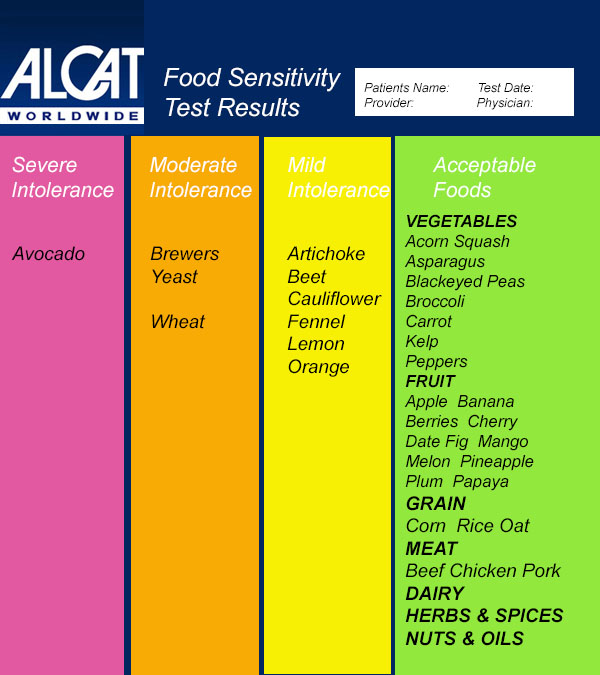
Here is a sample test result sheet:
ALCAT-Food-Allergy-Sensitivity-Test-Sample

Should You Be Afraid Of Water Bottles And Cans?

Originally published on mensphysique.com on Sunday, 15 July 2012
cans_plastic
http://www.rxmuscle.com/blogs/the-lab-supplement-school/6078-should-you-be-afraid-of-water-bottles-and-cans.html

Unless you have been living under a rock you have heard about the concern over human exposure to Bisphenol A, also referred to as BPA. BPA is an organic compound (chemical formula (CH3)2C(C6H4OH)2 ) which is a colorless solid used to confer hardness to polycarbonate plastic. It is also used in epoxy resins to create and antibacterial coating in the lining of metal cans which are used in the food industry. BPA can leech from containers into the foods they hold and become ingested by individuals when those food items are consumed.

What makes BPA a concern for people is the fact that it is a weak endocrine disruptor which mimics estrogen and has substantial negative side effects on health. A U.S. Government sponsored review of the scientific literature on BPA was conducted in 2006, resulting in the following statement:”BPA at concentrations found in the human body is associated with organizational changes in the prostate, breast, testis, mammary glands, body size, brain structure and chemistry, and behavior of laboratory animals.” I don’t know about you, but such a conclusion is terrifying to me and enough to keep me invested in using containers made of stainless steel, glass, and BPA-free plastic for the rest of my life.

The Centers for Disease Control (CDC) reported that approximately 93% of Americans have detectable levels of BPA in their bodies. Even at low doses, BPA causes diabetes, heart disease, reproductive issues, breast and prostate cancer, low sperm count, altered brain development and obesity. When one considers the long-term exposure to which most of us have been subjected, the implications become staggering and quite disconcerting.

Diseases Linked to BPA Exposure

HEART DISEASE – Data from the National Health and Nutrition Examination Surveys discovered that men with the highest levels of BPA exposure (measured through urinary samples) were 10% more likely to develop heart disease. It is believed that BPA suppresses a hormone which has a protective effect against heart attacks, oxidative stress, and damage to blood vessels.

DIABETES AND OBESITY – BPA causes an increase in insulin release from the pancreas which causes a reduction in the body’s ability to utilize fat, thus increasing the risk for both diabetes and obesity.

THYROID FUNCTION – BPA has been shown to bind to thyroid hormone receptors, thus disrupting normal thyroid function.

NEUROLOGICAL DAMAGE – Numerous research studies on different animal models have determined that low-dose BPA maternal exposure causes long-term neurobehavioral development in developing fetuses, interfering with brain cell connections vital to memory, attention and mood. Furthermore, BPA potentiates, or boosts, central dopaminergic systems, creating increased sensitivity to drug-abuse induced reward effects.

INTESTINAL DAMAGE – BPA can damage intestinal lining, causing “leaky gut syndrome”. This interferes with the gut’s ability to block toxins and bacteria from entering the body.

INFERTILITY – Chronic exposure to low doses of BPA can impair the growth and function of the egg cells which are involved in ovulation due to the fact that it binds to receptors in the cells which are designed to bind with estrogen.

ERECTILE DYSFUNCTION – A 2009 study conducted on over 200 Chinese workers in BPA factories found that those men were four times more likely to have erectile dysfunction and seven times more likely to have problems with ejaculation.

CANCER – BPA is capable of inducing neoplastic transformation in human breast epithelial cells and has also been found to reduce sensitivity to chemotherapy treatment of specific tumors.

Where BPA Lurks

BPA is far more pervasive than you may ever imagine. Here is a list of items which have been found to contain BPA:

· Water bottles
· Food cans
· Soda cans
· Infant formula
· Wine and Beer (due to fermentation in BPA resin lined vats)
· Recycled paper (including toilet paper)
· CDs
· Baby bottles
· Dental fillings
· Plastic cups
· Hard plastic 5-gallon drinking water bottles
· Credit card receipts at gas stations
· Plastic food storage containers

The Centers for Disease Control have conducted numerous studies which have detected BPA in the urine of over 90% of adults and children tested. Another study which was conducted in 2009 revealed that drinking from plastic water bottles almost doubled urinary BPA levels. Yet another study examined subjects who consumed canned soup during one test period and fresh soup during another test period. After only five days the participants consuming the canned soup had an increase in urinary BPA levels of 1221% compared to those consuming fresh soup.

Guidelines to Minimizing BPA Exposure
Fortunately a large number of food storage containers can now be found which utilize stainless steel, glass and BPA-free plastics. In fact many shaker cups are now being constructed from BPA-free plastic. A handful of bodybuilders who still incorporate canned tuna into their meal plans have the option of purchasing their tuna in foil pouches instead of cans which are lined with BPA.

I realize that the following list is rather comprehensive, so it is up to you to decide how aggressively you would like to minimize BPA exposure.

· Do not drink out of plastic water bottles unless they are BPA-free.
· Replace plastic storage containers with those made of stainless steel, glass, ceramic or paper. If you must use plastic, look for resin identification codes (the number on the underside of containers) 4, 5, 1 or 2. Make sure to avoid containers marked with 7, as these almost invariably contain BPA.
· Avoid purchasing food and beverages which are packaged in cans.
· Wrap sandwiches in paper or cloth.
· Do not drink soda from a can.
· Avoid purchasing recycled toilet paper or paper products.
· Never heat food in plastic or place warm or hot food into plastic containers, bags, or cling wraps.
· Do not put plastic items in dishwasher.
· Avoid contact between acidic or fatty foods and plastic.
· Use metal eating utensils.
· Purchase reusable water bottles and shaker cups which are labeled BPA-free.
· Buy glass appliances whenever possible. (eg: blenders)
· Replace plastic coffee filters with ceramic or metal ones
· If you use a French press for coffee, make sure it is all metal and glass with no plastic parts.
· Wash hands after touching cash register receipts or money.