Staying Well Amid Chaos: Tips for a Healthier, Balanced Lifestyle

Image via Pexels

I hope you enjoy reading this wonderful article, written by Camille Johnson of Bereaver.com

Maintaining healthy habits often feels like an impossible task when life is filled with constant demands. However, a busy lifestyle doesn’t have to stand in the way of your well-being. By incorporating practical, time-efficient strategies, you can make healthy choices part of your daily routine without added stress. The key lies in finding small, actionable steps that seamlessly fit your schedule, helping you prioritize health even on the busiest days.

Enhancing Your Routine with Time-Blocking

Incorporating time-blocking techniques into your daily routine can significantly improve your ability to maintain healthy habits. By dividing your day into dedicated time slots for specific tasks, you ensure that each activity receives the focus it needs. For instance, setting aside time from 9 am to 10 am for exercise can help prioritize this important habit. This approach not only provides structure but also aids in organizing and prioritizing tasks, transforming a hectic schedule into a more manageable one.

Energizing Your Morning with a Nutritious Smoothie

Kickstart your day with a vibrant super greens smoothie that not only boosts your energy but also enhances mental clarity. By blending nutrient-rich greens like spinach and parsley with almond milk, you create a wholesome alternative to caffeine. When selecting a greens powder, prioritize those made from organic vegetables and free from artificial additives to ensure purity. Additionally, review the best greens powders and find one that includes probiotics to support gut health. This simple morning ritual fuels your body and sets a positive tone for the day ahead.

Strengthening Your Brain and Energy with Smart Nutrition

Incorporating nutrient-dense foods into your daily meals can significantly boost your cognitive abilities and energy levels. Essential nutrients like fiber, vitamin D, probiotics, and polyphenols improve memory and reduce inflammation, crucial for optimal brain function. By ensuring a steady intake of these nutrients, you provide your brain with the necessary fuel to stay sharp and focused. This not only aids in better decision-making but also supports your ability to adhere to new routines.

Embracing Mindful Eating for a Healthier Lifestyle

Mindful eating offers a refreshing approach to cultivating healthier eating habits, especially for those with busy lifestyles. By immersing yourself in the sensory experience of food, you become more attuned to your body’s natural hunger and fullness cues. This awareness can lead to better portion control and a reduced tendency to overeat. Unlike traditional dieting methods, mindful eating encourages you to savor each bite, promoting satisfaction and reducing stress. This approach, rooted in the Buddhist concept of mindfulness, fosters a positive relationship with food and supports a balanced dietary lifestyle.

Building Habits That Reflect Your Core Values

Incorporating self-reflection into your routine can be a powerful strategy for developing habits that align with your core values. By understanding what truly matters to you, you can make intentional choices that resonate with your authentic self. This practice supports personal growth and enhances decision-making skills, allowing you to invest in habits that support your long-term goals.

Discovering Patterns Through Journaling

Journaling is a powerful tool for uncovering the behavioral patterns that influence your daily life. By consistently recording your thoughts and experiences, you create a personal narrative that helps identify why certain habits persist. This practice can illuminate emotional triggers, such as stress or anxiety, that might lead to intense reactions. Embracing journaling as a means of self-discovery boosts your emotional intelligence and empowers you to cultivate healthier habits.

Prioritizing Meaningful Habits for a Balanced Life

To truly enhance your daily life, focus on habits that genuinely boost your well-being and productivity. Start by evaluating your current routine and identifying activities that offer little value. By eliminating such non-essential tasks, you create space for pursuits that align with your personal goals and values. This approach boosts efficiency and enhances overall happiness, leading to a more balanced and fulfilling life.

Building healthy habits within a busy lifestyle isn’t about drastic changes but about creating routines that work for you. With consistent effort and a focus on small, achievable goals, you can seamlessly integrate wellness into your daily life. Remember, every positive choice adds up, and even minor changes can have a significant impact over time. By staying committed and flexible, you can cultivate a healthier, more balanced life regardless of your schedule.

Elevate your wellness journey with expert nutrition and fitness plans from Dr. Stacey Naito – your destination for transformative health and lifestyle solutions!

What Do You Take For Granted?

_cpr0320

Chances are that you probably take many things in your life for granted. For example, you probably take for granted that you will wake up to face another morning. You may take for granted that you have job security or financial security. You may take your good health for granted, or you may have resigned yourself to sub-optimal health while taking for granted that you will somehow overcome the inevitable consequence of poorly managed illness. You may take your relationship or marriage for granted, assuming that because you have a partner whom you love and who presumably loves you back, you will never be alone or have to struggle with being single again. You may take for granted that your home is completely safe from violence, thieves, or natural disasters.

Never, EVER take anything you have in your life for granted. Anything can be stripped away from you in a heartbeat. The saying, “hope for the best, but prepare for the worst” has some utility in reminding us to pay attention and take steps to ensure our comfort, our safety, our health, our sanity. Nothing we have is permanent. It’s all on loan until we move on from this physical realm.

I know this sounds depressing, but it isn’t meant to be. It is simply a reminder to pay attention to what you are blessed with, to appreciate it, and to realize that just because you enjoy it and it has given you comfort or joy, doesn’t mean that it will last. Don’t count on it. Live every day as if it was your last.

Different Types Of Buddhas

Check out this link: http://feng-shui.lovetoknow.com/Buddha_Statues_for_the_Home_and_Garden

buddha-toothrelic(1)I have copied and pasted the information on the different types of Buddhas which is presented in the article from the link above. There are suggestions on where to put each type of Buddha in your home, based on Feng Shui principles.

Meditating Buddha
This statue style most commonly found in Buddhist altars in the home. These statues typically render Buddha in a sitting position with both hands in a meditative position called “Cosmic Mudra. The hands overlap each other. The left hand is placed on top of the right one so the thumb tips touch to form an oval, symbolizing the turning of one’s attention inward.

The statue should face the east direction since the Buddha meditated on the sun rising in his search for enlightenment.

Rubbing his belly will bring greater good luck and fortune.

Laughing Buddha
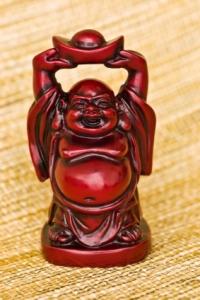
In western culture, the laughing Buddha is probably the most widely recognizable and used. It’s also known as the good luck, prosperity or abundance Buddha. It depicts Buddha in his later years as happy and with a large belly from an abundant lifetime. He’ll either be in a sitting position or standing with his hands over his head supporting a real or imaginary Ru-Yi pot (vessel or bowl of plenty).

This statue is affectionately dubbed Happy. It’s tradition to rub his belly to ensure even greater luck is bestowed upon you. Place this statue in your personal wealth corner or southeast sector of your home. It’s great for an office on the north wall facing those who enter.
102123-200x300-Laughing_Buddha
Other variations include:

Laughing Buddha with children at his feet: Place in west sector (descendants) of garden facing your home. Also use in same sector inside your home.
Traveling Buddha: A variation of the laughing Buddha as a monk features a cotton-sack over one shoulder or tied to a stick. He holds a wealth ball in his other hand. It is an excellent choice if you travel for work. Place in your office in north sector.
Spiritual Journey Buddha: This is another version of the Traveling Buddha. He carries a gourd (wu-lou) of enlightenment suspended from a stick while holding a fan in his other hand and wears a prayer bead necklace. Place in northeast sector (education) or southwest (love and relationships).
Blessing Buddha
The Blessing pose depicts Buddha bestowing fearlessness (upper hand gesture) and compassion (lower hand). Good areas inside the home for this statue include the office and den. You can apply this as a cure for any area inside or outside your home that suffers from weak or afflicted chi due to flying star placement.

Teaching Buddha
Known as Dharma Chakra Buddha, the Teaching Buddha statue is in a sitting or standing position. The most popular is the sitting pose, since this is the position the Buddha assumed when teaching. This is an important period in the Buddha’s life. It symbolizes his sharing of the knowledge he’d gained after his enlightenment in the deer park, Sarnath, located in Uttar Pradesh, India with his disciples.

Since the Buddha’s teachings came from his heart, the both hands are in front of his chest. The index fingers and thumbs touch to form a circle, representing his teaching of the Wheel of Dharma (union of wisdom and method). The other three fingers of both hands always remain extended.

This is an excellent choice for the northeast (education) sector of both inside your home or office and your garden.

Some statues depict the thumb touching the ring finger instead of the forefinger. This changes the meaning to one of good fortune. This style can be placed in the north sector (career) or southeast sector (wealth).

Long Life Buddha
This Buddha sits with the bag of blessings by his side or may hold the bag in his lap. In one hand, he cradles a wealth ball raised in front of him and a Ru-Yi pot in his other hand. Place in your home or garden in the east (health), west (children, descendants) or southeast (wealth) sector. You can also place it in your office in these directions.

Happy Home Buddha
The seated Happy Home Buddha holds a parasol over his shoulder. Place inside and outside your home in the southwest sector (relationships).

Earth Buddha
Also known as the Calling Earth to Witness, the Earth Buddha sits on the ground with his right hand extended so his fingers point to the earth beneath him. This statue honors the time when Buddha was repeatedly tempted by the demon, Mara, but resisted and finally reached enlightenment.

You can place this statue in any sector inside or outside your home that you’re being tempted to reject. If you’re having difficulty in a relationship, place it in the southwest sector to bolster your resolve and commitment. If you’re becoming complacent at work, put this in the north sector (career) to strengthen your dedication to your job.

Reclining Buddha
Buddha awaits his transition from this life to death, viewed as a mere transition into a different state of being. if you’re in a transition period, this is a good choice for inside your home or in a garden.

Place in the sector that represents the area of your transition. For example, place in north sector of home or office if changing jobs. If a relationship has ended, place in southwest sector. If you’re a new empty nester, place statue in west sector to ease this life-changing transition.

gold-buddha-altar

Japanese Good Luck Darumas

never_give_up

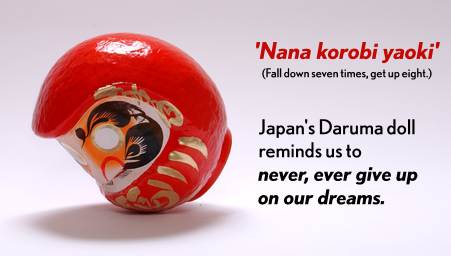
From the time I was a child I was fascinated with the slightly scary Daruma dolls that I would see in the Japanese stores my mom would take me to. I knew that they were good luck and that if you added the right pupil while concentrating on your wish that it would lead to the fulfillment of that wish, after which you could paint in the left pupil. I did not have a daruma until I was an adult and wanted to remind myself of specific goals which I had set for myself.

The Daruma doll is modeled after Bodhidharma, the founder of the Zen sect of Buddhism. Bodhidharma was a Buddhist monk who lived during the 5th/6th century CE. He is traditionally credited as the transmitter of Ch’an (Zen) to China. One legend claims that he sat facing a wall in meditation for a period of nine years without moving, which caused his legs to fall off from atrophy. Another popular legend is that after falling asleep during his nine-year meditation, he became angry with himself and cut off his eyelids to avoid ever falling asleep again.

It is quite powerful to see a Daruma with one pupil colored in, because it causes you to recall your goal. The custom is partially explained through a promise to Daruma-san to give him full sight once your goal is attained, thus motivating him to grant your wish. I believe in the power of these dolls because they serve as a constant reminder of whatever goal or dream you have chosen and keep you on track so that it comes to fruition. I had a Daruma when I was in medical school which helped me to maintain focus during the most arduous times during my education and training. The day that I was able to paint in the other pupil was a very powerful one indeed. Now I have a Daruma sitting on my desk with the right pupil painted in which is a representation of my goal to attain IFBB Pro Status. I see this Daruma daily and am more fixated on this goal than I have been in the entire five years that I have been competing. Painting in that left pupil will be a delicious reward indeed.