Leaky Gut

food-allergy-leaky-gut-inflammation
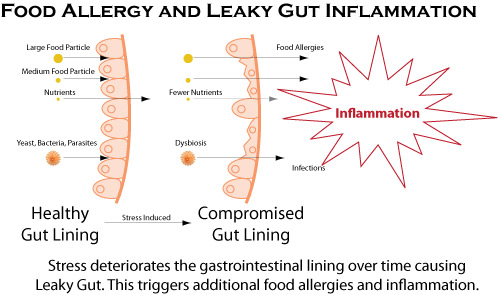
If you suffer from sudden food sensitivities, aching joints, digestive upset, fatigue or weight gain, you may be suffering from leaky gut, which is also referred to as increased intestinal permeability. Leaky gut is characterized by the opening of pores in the small intestine, resulting in undigested food particles, bacteria, and toxins traveling to the bloodstream. The presence of these substances in the bloodstream triggers an immune response, whereby the body builds antibodies to the foreign substances but also attacks itself, creating food allergies and autoimmune disorders.

You are probably wondering how something like this occurs and if you are at risk. Let’s look at the main causative factors leading to leaky gut syndrome:

1. Chronic constipation – If you are usually constipated, toxins will often build up in stool, irritating the intestinal lining and causing inflammation, which then causes the pores in the small intestine to expand. In severe cases, Crohn’s Disease, irritable bowel syndrome,or colitis can occur.

2. Chronic stress – The immune system really takes a beating when subjected to chronic stress. If the immune response is compromised, pathogenic bacteria can cause widespread inflammation in the intestines, and leaky gut is a common result.

3. Dysbiosis – This is an imbalance between beneficial and harmful bacteria which can result from antibiotics or poor diet. Inflammation develops, causing the pores to widen.

4. Toxins – We are exposed to many thousands of toxins, but the worst offenders are found in our water supply, pesticides, and in certain medications.

leaky-gut
What Is The Solution If You Have A Leaky Gut?

I have several dietary recommendations for treating a leaky gut.

1. Glutamine – I am already a big fan of glutamine in general, but especially for those who suffer from leaky gut. This amino acid has specific activity in the intestine, and restores healthy soft tissue in the region. Over time, regular supplementation with glutamine has a protective effect against intestinal disease. I tend to be fairly aggressive with glutamine and recommend 6 to 8 grams per day, or more if you engage in frequent exercise.

2. Fish oil – Try to find a formula which contains primarily omega-3 fatty acids. You can also increase your consumption of salmon.

3. Digestive enzymes – Digestive enzymes will aid in the breakdown of food substances, especially in older individuals and those suffering from leaky gut. Try taking them with every meal.

4. Betaine hydrochloric acid – Some people produce insufficient amounts of hydrochloric acid, which is needed to break down food in the stomach. If that is the case, betaine hydrochloric acid optimizes the process.

5. probiotics – Most individuals will benefit from adding probiotics into their daily regimen. Make sure to take at least 25 billion units per day for optimal gut health.

Antibiotic Resistance

antibiotic resistance

I cringe every single time I hear people say that they stopped taking an antibiotic after a day or two because they felt better. Those of you who are not trained in medicine, who flippantly decide that you won’t continue to take an antibiotic because you “feel much better”, should be aware that by engaging in this habit, you are making the issue of antibiotic resistance even worse.

Bacteria are quite crafty, because they constantly find ways to neutralize or block the effects of antibiotics. Most of the time, they acquire genetic mutations from the bacteria which have become resistant. So even if some of the more susceptible bacteria die, even one resistant bacterium can multiply rapidly and thus replace all the bacteria which were killed. Those new bacteria also have the same resistance which the original stubborn bacterium has. This is how things can get pretty ugly pretty quickly in the face of bacterial resistance.
it is a virus
Antibiotic resistance can occur even when patients follow instructions and take the full course of antibiotic therapy, but the chances are far greater when patients miss doses or stop taking the medication because a smaller proportion of the bacteria are killed or inhibited. Another situation in which antibiotic resistance can run rampant is when antibiotics are taken for viral infections such as the common cold. Specific antibiotics are used for specific types and strains of bacteria, and are not one-size-fits-all medications. Yet people continue to foolishly turn to an antibiotic (usually one which was prescribed for a bacterial infection, and which was abandoned before the full course was taken) when they have symptoms which they believe to be from a bacterial source. I have even heard friends freely admit that they took their child’s or spouse’s leftover antibiotic in hopes that it would make them feel better.

Please don’t be one of those people who contributes to antibiotic resistance by being irresponsible about antibiotic use!

Leaky Gut

food-allergy-leaky-gut-inflammation
If you suffer from sudden food sensitivities, aching joints, digestive upset, fatigue or weight gain, you may be suffering from leaky gut, which is also referred to as increased intestinal permeability. Leaky gut is characterized by the opening of pores in the small intestine, resulting in undigested food particles, bacteria, and toxins traveling to the bloodstream. The presence of these substances in the bloodstream triggers an immune response, whereby the body builds antibodies to the foreign substances but also attacks itself, creating food allergies and autoimmune disorders.

You are probably wondering how something like this occurs and if you are at risk. Let’s look at the main causative factors leading to leaky gut syndrome:

1. Chronic constipation – If you are usually constipated, toxins will often build up in stool, irritating the intestinal lining and causing inflammation, which then causes the pores in the small intestine to expand. In severe cases, Crohn’s Disease, irritable bowel syndrome,or colitis can occur.

2. Chronic stress – The immune system really takes a beating when subjected to chronic stress. If the immune response is compromised, pathogenic bacteria can cause widespread inflammation in the intestines, and leaky gut is a common result.

3. Dysbiosis – This is an imbalance between beneficial and harmful bacteria which can result from antibiotics or poor diet. Inflammation develops, causing the pores to widen.

4. Toxins – We are exposed to many thousands of toxins, but the worst offenders are found in our water supply, pesticides, and in certain medications.

leaky-gut
What Is The Solution If You Have A Leaky Gut?

I have several dietary recommendations for treating a leaky gut.

1. Glutamine – I am already a big fan of glutamine in general, but especially for those who suffer from leaky gut. This amino acid has specific activity in the intestine, and restores healthy soft tissue in the region. Over time, regular supplementation with glutamine has a protective effect against intestinal disease. I tend to be fairly aggressive with glutamine and recommend 6 to 8 grams per day, or more if you engage in frequent exercise.

2. Fish oil – Try to find a formula which contains primarily omega-3 fatty acids. You can also increase your consumption of salmon.

3. Digestive enzymes – Digestive enzymes will aid in the breakdown of food substances, especially in older individuals and those suffering from leaky gut. Try taking them with every meal.

4. Betaine hydrochloric acid – Some people produce insufficient amounts of hydrochloric acid, which is needed to break down food in the stomach. If that is the case, betaine hydrochloric acid optimizes the process.

5. probiotics – Most individuals will benefit from adding probiotics into their daily regimen. Make sure to take at least 25 billion units per day for optimal gut health.