Indoor Plants Are Good For You

Cactus Plant Tree Pot Nature Environmental Conservation Concept

rawpixel Image ID53431489 123rf.com

As an avid plant lover, I have enjoyed the many benefits of being surrounded by beautiful greenery in my home. I honestly believe that having indoor houseplants offers a multitude of benefits. Here’s a closer look at why incorporating greenery into your home is a great idea:

Health Benefits

  1. Improved Air Quality – Many houseplants, such as spider plants and snake plants, help remove toxins like formaldehyde and benzene from the air, creating a cleaner living environment. I have several snake plants (Sansevieria genus) in my home, and appreciate the fact that they clean the air while looking very attractive and interesting.
  2. Increased Oxygen Levels – Plants release oxygen during photosynthesis, which can improve air circulation and overall respiratory health.
  3. Humidity Regulation – Plants release moisture through transpiration, which can help maintain healthy humidity levels, reducing issues like dry skin and irritated sinuses. I also help my plants out by running two humidifiers in my den and kitchen to optimize plant functions.
  4. Reduced Allergens – Some plants, like peace lilies, can trap dust and allergens, helping those with sensitivities breathe easier.
  5. Stress Reduction & Lower Blood Pressure – Studies have shown that being around greenery can help lower stress levels and even contribute to reduced blood pressure. When I am in my home, I truly feel like I am in a garden paradise, and I feel instantly calm.

Decor Benefits

  1. Aesthetic Appeal – Houseplants add natural beauty to any room, complementing different interior design styles. I make sure to stage my plants in such a way that they make sense in my interior living space, without sacrificing their ambient light needs.
  2. Versatility in Design – Whether you want a bold statement piece like a fiddle-leaf fig or a subtle accent like a small succulent, there’s a plant to match every space.
  3. Enhanced Space Perception – Large plants can fill empty corners, creating a fuller and more inviting atmosphere. If I lived in a larger home, I would definitely have tall plants strategically placed in empty corners.
  4. Seasonal Adaptability – Unlike furniture or decor that can feel outdated, plants offer a timeless appeal and can be rearranged easily for a fresh look.
  5. Brings Nature Indoors – For those in urban settings, houseplants help create a connection to nature, bringing an element of the outdoors inside.
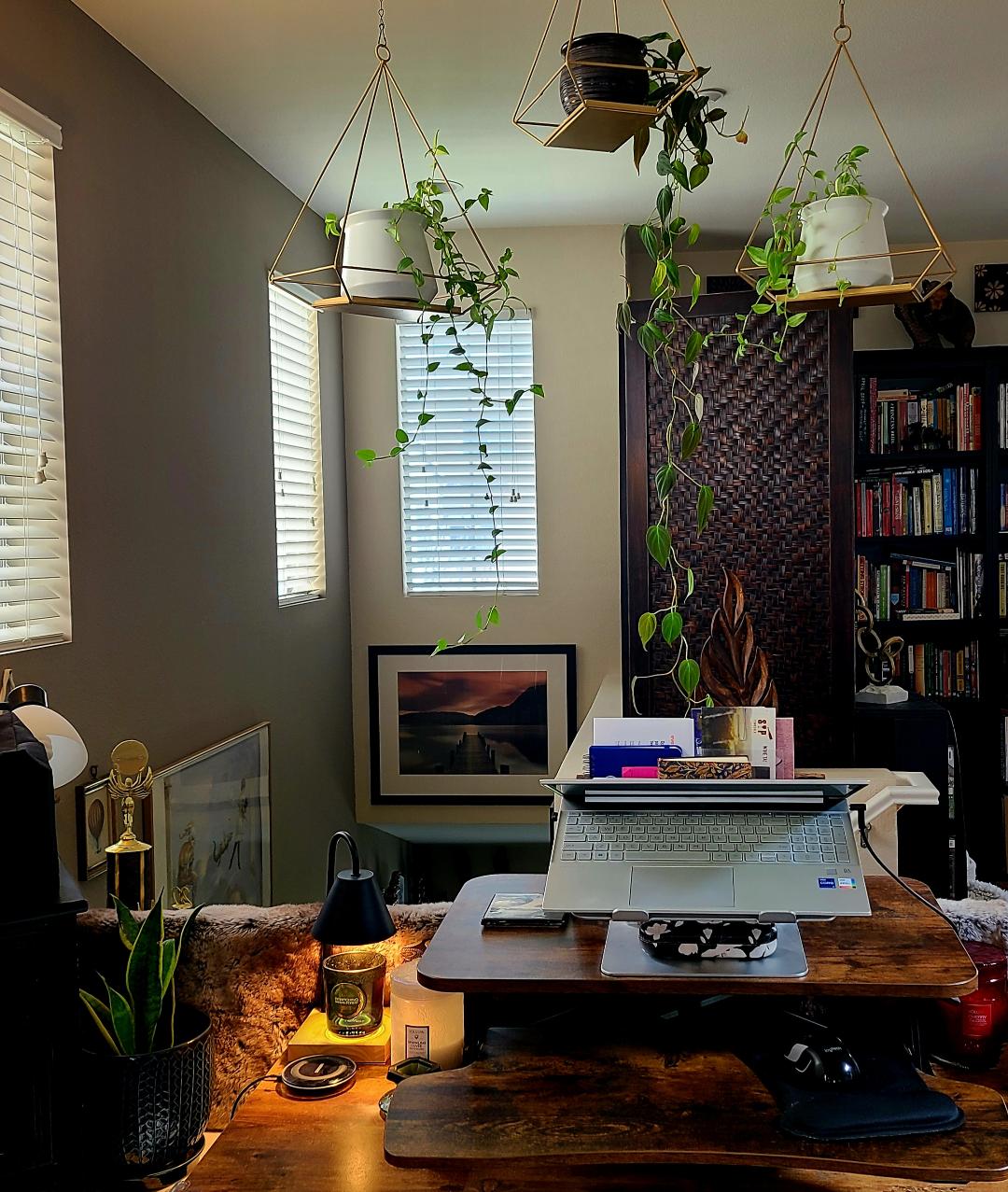
The desk sentinels around my workspace

Mood Benefits

  1. Boosted Mental Well-Being – Studies suggest that caring for plants can reduce anxiety and depression, providing a sense of accomplishment and responsibility. I know that I have a responsibility to keep my plants as healthy as possible, and I make an effort to address their needs on a weekly basis.
  2. Increased Productivity & Focus – Plants in workspaces have been shown to enhance concentration and creativity, making them great additions to home offices. There are plants all around my desk space, and I absolutely love them.
  3. Better Sleep – Certain plants, like lavender and jasmine, have calming properties that promote relaxation and better sleep. I only wish I could keep such plants alive in my home! Instead, I use scented candles to impart a calming mood.
  4. Mood Elevation – Simply looking at greenery can evoke feelings of happiness and tranquility, making plants a natural mood booster.
  5. Encourages Mindfulness – Watering, pruning, and tending to plants can be a meditative and mindful practice, helping people slow down and enjoy the present moment. Despite the fact that my weekly plant watering is a bit of a chore, I find myself getting into a zone which is meditative and beneficial.

Final Thoughts

Houseplants do much more than just decorate a space—they contribute to better air quality, reduce stress, and create a soothing ambiance. Whether you’re looking for a productivity boost, improved well-being, or a stylish home upgrade, adding indoor plants is a simple yet impactful way to enhance your living environment.

The Benefits of Houseplants

Since one of my biggest interests lies in houseplants, I thought I should cover the health benefits of growing greenery within a household. Houseplants offer a range of health benefits, both physical and mental, making them a great addition to any home or office space. Here are some of the key benefits:

1. Improved Air Quality

One of the most well-known benefits of houseplants is their ability to purify indoor air. Plants absorb carbon dioxide and release oxygen through photosynthesis. Additionally, certain houseplants, such as peace lilies, spider plants, and snake plants, are known to remove toxins from the air, including formaldehyde, benzene, and trichloroethylene. This can lead to cleaner, fresher air indoors, which may help reduce respiratory issues and improve overall health.

2. Stress Reduction

Several studies have shown that being around plants can help reduce stress and anxiety. The presence of greenery has a calming effect, potentially lowering heart rates and blood pressure. Simply interacting with plants—whether it’s watering them, trimming leaves, or just admiring their beauty—can trigger a relaxation response, helping you feel more grounded and less overwhelmed. Houseplants offer a range of health benefits, both physical and mental, making them a great addition to any home or office space. The best part of having a large collection of houseplants is that my home has a Bohemian, Zen-like feel to it which people find relaxing and welcoming.

I will say that watering the plants in my collection is a bit of a hassle, even considering the fact that I only water half of the plants each week. Part of the issue is that I have over 100 plants inside my home, and many of them are suspended from ceiling hooks, making it necessary for me to cart around a stepladder on plant watering day. However, as long as you have a manageable assortment of plants in your residence, the task shouldn’t be too strenuous.

3. Enhanced Mood and Mental Health

Houseplants can have a positive impact on mental well-being. Studies suggest that spending time around plants can improve mood, reduce feelings of fatigue, and increase feelings of calm and contentment. The act of caring for a plant, and the sense of responsibility that comes with it, can also boost feelings of accomplishment and purpose. For people experiencing mild depression or anxiety, the nurturing of plants can offer therapeutic benefits, acting as a form of mindfulness or relaxation practice.

4. Improved Productivity and Concentration

Research has shown that having plants in the workspace or at home can improve focus, cognitive function, and productivity. Plants can increase attention span, enhance memory retention, and even promote creativity. In offices, employees with plants in their workspaces often report higher satisfaction, fewer sick days, and improved mental clarity. The presence of plants can help people feel more connected to nature, even in an urban setting.

5. Better Humidity and Temperature Regulation

Houseplants naturally release moisture into the air through a process called transpiration, which can help maintain a more balanced level of humidity in the home. This is particularly helpful in environments where air conditioning or heating systems dry out the air. Proper humidity can reduce the risk of dry skin, sore throats, and respiratory irritation. Additionally, plants can help moderate temperature fluctuations by absorbing sunlight and releasing moisture, leading to a more stable and comfortable living environment.

6. Better Sleep

Certain plants, like lavender and jasmine, have been shown to promote better sleep. The calming scents emitted by these plants may help to lower anxiety levels and encourage relaxation before bedtime. Moreover, the act of caring for plants and spending time in nature can also help you develop healthier sleep habits by reducing stress during the day.

7. Boost to Immune System

Some research suggests that exposure to plants and nature can have a positive effect on the immune system. Spending time in green spaces, even within your home, can increase the production of white blood cells, which help defend against illness. Additionally, houseplants can encourage you to spend more time in your living space, which could lead to healthier habits, such as better hydration, nutrition, and sleep, all of which support a stronger immune system.

8. Reduction in Noise Pollution

Houseplants can also absorb sound, which helps reduce noise levels in indoor environments. In a busy home or office, the presence of plants can create a more peaceful atmosphere by dampening echoes and muffling background noise. This can lead to improved concentration and overall well-being, particularly in noisy urban environments.

9. Connection to Nature

Having plants in your home helps foster a sense of connection to the natural world. In urban environments, where access to parks and green spaces may be limited, indoor plants can provide a touch of nature, helping to counteract the effects of “nature-deficit disorder” (a term coined by Richard Louv to describe the negative impact of disconnection from nature). This connection can improve your mental and emotional well-being, helping you feel more grounded and centered.

10. Aesthetic and Environmental Benefits

In addition to the direct health benefits, houseplants also improve the aesthetic value of a space, making it feel more welcoming and vibrant. A well-decorated home or office with plants can enhance your environment, making it feel more lively and positive. This positive visual impact can indirectly boost your mood and contribute to a healthier mindset.

Final Thoughts

Integrating houseplants into your environment can be a simple yet effective way to enhance both physical and mental well-being. Whether you’re looking to improve air quality, reduce stress, boost productivity, or just make your home more inviting, the presence of plants can have far-reaching benefits for your health. And the best part is that they require relatively little effort to maintain, making them an easy and accessible way to improve your overall quality of life.

Five Steps to Transform Your Entire Well-Being

Sheila Olson is at it again with another fantastic article which I am sharing here. Let Sheila guide you towards optimal well-being!

Five Steps to Transform Your Entire Well-Being
by Sheila Olson

Being healthy is a goal that we all have, and we are frequently exposed to countless trends that promise to drastically improve our well-being overnight. Of course, that isn’t realistic on any level. What our minds and bodies need is long-term commitment. If you’re interested in improving your entire well-being, check out the following tips.

Center Yourself

When left unaddressed, stress can occupy our thoughts throughout the day and leave us restless at night. Unfortunately, our physical health is directly connected to our mental health. After all, stress can disrupt sleep, impede focus, and leave us with a host of physical issues. Yet, with the right tools, you can learn the proper ways to manage it.

A good starting point is meditation. Mindfulness habits can balance our emotional states, leaving us physically and mentally healthier as a result. Beginning a practice can be as easy as spending 10 minutes in a quiet place every day. Thanks to the internet, you can also use guided tutorials to help you learn that process. How you explore meditation is up to you. You may want to focus on breathing exercises, or you might prefer a room dedicated to emotional centering.

Clean Your Air

It’s natural to assume that our homes are a refuge from pollutants, but sometimes that isn’t the case. We may have pets that shed, or we use cleaning chemicals that do more harm than good. This decline in air quality can cause many health issues, such as asthma or allergies. Fortunately, you can drastically cut pollutants by investing in an air purifier. These devices filter air at the microscopic level. They won’t purge our homes completely of contaminants, but you can notice marked improvement in both your health and air quality. Before you choose a specific model, learn more about the products on the market. There are several different kinds of purifiers available, so know what you need before you buy one.

Contextualize Fitness

Being active shouldn’t be a chore; if it is, then you need to find routines that you enjoy to make healthier living more sustainable. Don’t rely on bruising sessions at the gym to achieve your goals, as this can lead to burnout. Instead, remind yourself that all activity counts. That might be walking through a park or playing basketball with a group of friends. Do you work out best with others? Join a sports team, or take up regular jogs with your buddies. Above all, give yourself manageable goals that you can work toward, and make sure you follow through with them. By having a positive mindset, you can keep your fitness moving forward.

Focus on Sleep

Having a good night’s rest is easier said than done. However, sleep recharges one’s emotional and physical batteries. So, get to the root cause of any restlessness and find a solution. Do you drink caffeine? Limit it as best you can, and consider a cutoff point in the early afternoon. Are you using electronics? They may seem ideal to help you unwind at the end of the day, but they can override your body’s sleep processes. Don’t overlook your environment, either. If it’s bright, invest in blackout curtains. Likewise, keep your room cool to help your body prep for sleep. Identifying the source may mean replacing your mattress or changing your decor. Whatever the cause, though, you can rejuvenate your health with sleep.

Embrace Positive Living

Unhealthy habits can be a significant obstacle to wellness. They are hard to stop, but doing so can be transformative. Negative habits can have various underlying causes, so it’s important to determine what they might be. This can help you understand certain patterns and avoid them in the future. However, don’t just try to drop an unwanted habit “cold turkey.” Instead, challenge them by adopting positive alternatives. If you smoke when you’re feeling stressed, find a substitute that you can use to manage your anxieties. Don’t end your nights on a stressful note by checking social media or email. Positive living is a strategy that adds up over time and can become a central part of your day-to-day life.

Good health is not a fad. It’s perfectly achievable by making easy adjustments to our lifestyle and outlook. Make your well-being a priority every day.

Image courtesy of Pixabay