This 94-Year-Old Grandmother Is A Champion Powerlifter

I am utterly shocked and completely impressed by this lady! Read on to find out how she got started at the age of 91. This totally proves that you are NEVER too old to lift weights!

Original post can be found at:
http://www.mindbodygreen.com/0-22172/this-94-year-old-grandmother-is-a-champion-powerlifter.html

by Emi Boscamp, MBG Editorial – October 16, 2015 5:25 PM

A 94-year-old woman can dead lift 135 pounds. What did you do today? (Yeah, I didn’t do much of anything either.)

Floridian Edith Traina is a grandmother — and that’s an accomplishment in itself — but she’s also a champion powerlifter. She started doing it at the tender age of 91 and has since become addicted to the competition, reports FOX13 Tampa.
“(My friend) dragged me kicking and screaming to the gym, and I figured I’d keep her happy for a while and get her off my back, but I got hooked,” Traina (which, by the way, is the most fitting last name possible) told FOX13 Tampa.

Since then, the self-described “champion” has competed in more than a dozen competitions, is the only person in her age group, and hopes to be able to lift 200 pounds by the time she hits 100. Though it may be good for her health, she does it because of how it makes her feel emotionally.

“With this, I just walk up, lift it, put it down. I get all these applause — great for the ego,” she said.

Watch her do her thing below (and prepare to feel like a bum). Keep on trainin’, Traina — we’re rooting for you!

Learn a Foreign Tongue To Protect Your Brain

o-KID-LEARNING-LANGUAGE-facebook-806x393

Please read my original post at:

http://xactmind.com/xc/articles/learn-a-foreign-tongue-to-protect-your-brain/

By: Dr. Stacey Naito – Physician and IFBB Pro

Bilingual Brains

Numerous research studies have revealed that people who speak two or more languages possess greater skill in multitasking and paying attention than those who only speak one language. In addition, a 2013 study discovered that individuals who spoke two languages developed the signs of dementia more than four years later than people who only spoke one language, which strongly suggests that being bilingual may help to delay the onset of dementia.

Never Too Late

Scientists have determined that the earlier one learns a second language, the greater the protective benefits against dementia, but it is never too late to learn a foreign tongue, even if you only learn a bit of the language. Be ready for a challenge, though, because most aspects of learning a foreign language later in life will be more difficult.

One clear benefit which older individuals have over youngsters when learning a foreign language is that they have much larger vocabularies which are often as large as those of native speakers. However, the challenges which exist for older people learning a foreign tongue are numerous. First of all, phonemes, or sounds, of a language are very easily picked up by children, but are much more difficult for adults to learn. Secondly, adults automatically hear a foreign language through the filter of their native language, which is not the case in toddlers. As a result, the older learner may have issues with pronunciation.

A toddler’s brain has about fifty percent more neuron connections than an adult brain. The extra connections are a safeguard against potential early trauma, but are also critical for early language acquisition. After a child reaches six years of age, adaptability declines as a result of the brain’s need to acquire other skills during development. This adaptability, also known as neuroplasticity, continues to plummet throughout the years, making it more difficult to obtain new language skills.

Several studies have suggested that learning a foreign language later in life can delay age-related cognitive decline, as well as delay the onset of dementia. In addition, the mental challenge of learning a new language during later years improves executive function, which is important for mental flexibility.

Whaddya Mean, I Need Reading Glasses?

reading glasses

I have struggled for the past several years with my reading vision. Reading things like menus in dark restaurants, and the small print on supplement bottles, has become extremely challenging. It is very frustrating for me, because I used to be able to read the smallest print better than most other people were able to. Of course, that was because I had myopia and astigmatism which robbed me of crisp distance vision from the time I was a child, up until I got Lasik at the age of 41.

When I had the Lasik procedure done, I went from having 20/400 distance vision to having 20/30 distance vision in my right eye and 20/25 distance vision in my left eye. The reason why the distance vision in my right eye is slightly worse is because the right eye was corrected for reading vision.

For about 4 years after I had Lasik, my reading vision sat at about 20/25, which was a sacrifice for me, since I had enjoyed 20/10 reading vision for decades. However, I have spent the past few years noticing my close-up vision dwindle. At this point I am at a 20/35 on a good day, and 20/40 in dimly lit conditions or first thing in the morning. This is all due to presbyopia, the age-related stiffening of the lens of the eye, which makes it more difficult for the eyes to accommodate the way they need to for crisp reading vision.

You would think that I would wear reading glasses whenever I needed them, but I am SO stubborn that I very rarely reach for them. Part of the reason is that I always hated wearing glasses before I had Lasik (I almost exclusively wore contact lenses whenever I was out and about). The notion of whipping out reading glasses and having them perched on the edge of my nose is not appealing to me at all! In addition, I have a small nose, so reading glasses tend to slip off my nose while I am wearing them. I think I also have a natural resistance to reading glasses because I used to look at people wearing reading glasses, and think, “wow, that person is OLD.” I know that’s terrible and short-sighted (pun intended), but I just can’t help it! I’d rather grab a magnifying lens than my glasses!

For those of you who might be scratching your heads, wondering what all the numbers above mean, read the explanation which the American Optometric Association has on their website:

20/20 vision is a term used to express normal visual acuity (the clarity or sharpness of vision) measured at a distance of 20 feet. If you have 20/20 vision, you can see clearly at 20 feet what should normally be seen at that distance. If you have 20/100 vision, it means that you must be as close as 20 feet to see what a person with normal vision can see at 100 feet.

20/20 does not necessarily mean perfect vision. 20/20 vision only indicates the sharpness or clarity of vision at a distance. There are other important vision skills, including peripheral awareness or side vision, eye coordination, depth perception, focusing ability and color vision that contribute to your overall visual ability.

Some people can see well at a distance, but are unable to bring nearer objects into focus. This condition can be caused by hyperopia (farsightedness) or presbyopia (loss of focusing ability). Others can see items that are close, but cannot see those far away. This condition may be caused by myopia (nearsightedness).

A comprehensive eye examination by a doctor of optometry can diagnose those causes, if any, that are affecting your ability to see well. In most cases, your optometrist can prescribe glasses, contact lenses or a vision therapy program that will help improve your vision. If the reduced vision is due to an eye disease, the use of ocular medication or other treatment may be used.

Stress And Your Skin

stressed out woman

Did you know that stress can do a number on your skin? You are probably familiar with the stress-induced breakout, but prolonged, chronic stress can also prematurely age the skin. Stressful situations trigger the release of cortisol, adrenaline, pro-inflammatory cytokines, and angiotensin, all of which rob your skin of collagen and weaken its cellular repairing capabilities. Circulation is diverted away from the skin during stressful situations, which explains the dull, pale appearance of the skin in people who deal with constant stress.

Cortisol in particular inhibits the growth of fibroblasts which are responsible for making collagen, so they can’t keep up with the constant breakdown of old tissue. The result is skin which is collagen deficient, resulting in thinner, more wrinkled skin. Free radicals are formed in response to stress, which then damages skin cells and adversely affects the condition of the skin.

beautiful-look-without-makeup
So how can you fight the effects of stress on the skin? There are three keys:

1. Exercise:

Every cell in the body benefits from exercise, including skin cells The pores of the skin dilate during exercise, and when you work up a sweat, trapped dirt particles are released. In addition, the increased circulation which results from exercise delivers more oxygen and other nutrients to skin cells, as well as carries away waste products and free radicals.

2. Relax:

We all know how frustrating it can be to have a big event looming, only to have an acne breakout right before the big day. The fact is that the stress associated with preparing for the event can trigger excess oil production in the skin, which clogs pores and sets up the perfect environment for an acne flareup. Even other skin issues, like psoriasis, are linked to stress. However, by practicing relaxation techniques, you can increase blood flow to the skin and offset any triggering factors (such as buildup of oil or free radicals) which contribute to skin maladies.

3. Use topicals:

Some of the best friends for your skin are topical agents such as antioxidants and retinoids. I am a big fan of vitamin C, not only because of its general antioxidant benefits, but also because it has a tendency to lighten up brown spots and impart a brighter appearance to the complexion. Retinoids are great for increasing cell turnover, and are potent anti-aging compounds.

Who Is THAT In The Mirror?

young-vs-old

This post is dedicated to every single patient and client who has admitted to me that at some point after they began their descent into middle age, they looked in the mirror and no longer recognized the reflection staring back. The aging process can be terribly cruel, and when hormonal levels plummet, the physical changes can appear almost overnight. Taut, supple skin is replaced with saggy skin. A full, thick head of hair is reduced to a thin, lifeless mass. Joints begin to creak and resist natural movement. Brilliant white teeth begin to look dingy. Once full cheeks and lips become deflated. Grey and white hairs sprout and take over the scalp. Back fat and belly fat obliterate a once trim waistline. I could go on, but you get the idea.

wrinkled face

None of the changes associated with aging are fun, especially the physical changes which end up making us feel frustrated by a rapidly changing physical landscape. While some folks begrudgingly accept the aging process without considering any interventions, a growing segment of the aging population has turned to everything from adrenal support supplements, to hair dye, to dermal injectable fillers, to surgery, in an effort to fight the aging process every step of the way.

The good news is that there are more anti-aging options than ever before. In addition, there is a greater awareness of the importance of proper nutrition and regular exercise in fighting the aging process. But let’s face it. Many people still want a magic pill or an instant fix, and that is where cosmetic interventions such as fillers and surgery come into play.

Is it cheating to have treatments which make you feel more like yourself? I certainly don’t think so, nor do my patients. Unless you are on a mission to pump your face so full of fillers that you look like a Barbie doll, you can turn to fillers to restore volume which has been lost over the years and STILL LOOK LIKE YOU.

For those of you in the Los Angeles area who are interested in injectable filler treatments, Botox, chemical peels, or bioidentical hormone replacement, please check out my medical site: http://www.drstaceynaito.com/#!procedures/c1pna

The Joy of Old Age. (No Kidding.)

Oliver Sacks swimmer
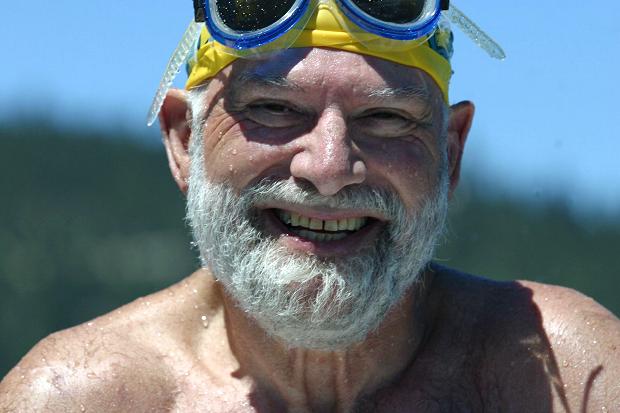
I am sharing this essay which was written by the late Dr. Oliver Sacks for the New York Times. It is a delightful essay which honors old age.

Original post can be found at:
http://www.nytimes.com/2013/07/07/opinion/sunday/the-joy-of-old-age-no-kidding.html

LAST night I dreamed about mercury — huge, shining globules of quicksilver rising and falling. Mercury is element number 80, and my dream is a reminder that on Tuesday, I will be 80 myself.

Elements and birthdays have been intertwined for me since boyhood, when I learned about atomic numbers. At 11, I could say “I am sodium” (Element 11), and now at 79, I am gold. A few years ago, when I gave a friend a bottle of mercury for his 80th birthday — a special bottle that could neither leak nor break — he gave me a peculiar look, but later sent me a charming letter in which he joked, “I take a little every morning for my health.”

Eighty! I can hardly believe it. I often feel that life is about to begin, only to realize it is almost over. My mother was the 16th of 18 children; I was the youngest of her four sons, and almost the youngest of the vast cousinhood on her side of the family. I was always the youngest boy in my class at high school. I have retained this feeling of being the youngest, even though now I am almost the oldest person I know.

I thought I would die at 41, when I had a bad fall and broke a leg while mountaineering alone. I splinted the leg as best I could and started to lever myself down the mountain, clumsily, with my arms. In the long hours that followed, I was assailed by memories, both good and bad. Most were in a mode of gratitude — gratitude for what I had been given by others, gratitude, too, that I had been able to give something back. “Awakenings” had been published the previous year.

At nearly 80, with a scattering of medical and surgical problems, none disabling, I feel glad to be alive — “I’m glad I’m not dead!” sometimes bursts out of me when the weather is perfect. (This is in contrast to a story I heard from a friend who, walking with Samuel Beckett in Paris on a perfect spring morning, said to him, “Doesn’t a day like this make you glad to be alive?” to which Beckett answered, “I wouldn’t go as far as that.”) I am grateful that I have experienced many things — some wonderful, some horrible — and that I have been able to write a dozen books, to receive innumerable letters from friends, colleagues and readers, and to enjoy what Nathaniel Hawthorne called “an intercourse with the world.”

I am sorry I have wasted (and still waste) so much time; I am sorry to be as agonizingly shy at 80 as I was at 20; I am sorry that I speak no languages but my mother tongue and that I have not traveled or experienced other cultures as widely as I should have done.

I feel I should be trying to complete my life, whatever “completing a life” means. Some of my patients in their 90s or 100s say nunc dimittis — “I have had a full life, and now I am ready to go.” For some of them, this means going to heaven — it is always heaven rather than hell, though Samuel Johnson and James Boswell both quaked at the thought of going to hell and got furious with David Hume, who entertained no such beliefs. I have no belief in (or desire for) any post-mortem existence, other than in the memories of friends and the hope that some of my books may still “speak” to people after my death.

W. H. Auden often told me he thought he would live to 80 and then “bugger off” (he lived only to 67). Though it is 40 years since his death, I often dream of him, and of my parents and of former patients — all long gone but loved and important in my life.

At 80, the specter of dementia or stroke looms. A third of one’s contemporaries are dead, and many more, with profound mental or physical damage, are trapped in a tragic and minimal existence. At 80 the marks of decay are all too visible. One’s reactions are a little slower, names more frequently elude one, and one’s energies must be husbanded, but even so, one may often feel full of energy and life and not at all “old.” Perhaps, with luck, I will make it, more or less intact, for another few years and be granted the liberty to continue to love and work, the two most important things, Freud insisted, in life.

When my time comes, I hope I can die in harness, as Francis Crick did. When he was told that his colon cancer had returned, at first he said nothing; he simply looked into the distance for a minute and then resumed his previous train of thought. When pressed about his diagnosis a few weeks later, he said, “Whatever has a beginning must have an ending.” When he died, at 88, he was still fully engaged in his most creative work.

My father, who lived to 94, often said that the 80s had been one of the most enjoyable decades of his life. He felt, as I begin to feel, not a shrinking but an enlargement of mental life and perspective. One has had a long experience of life, not only one’s own life, but others’, too. One has seen triumphs and tragedies, booms and busts, revolutions and wars, great achievements and deep ambiguities, too. One has seen grand theories rise, only to be toppled by stubborn facts. One is more conscious of transience and, perhaps, of beauty. At 80, one can take a long view and have a vivid, lived sense of history not possible at an earlier age. I can imagine, feel in my bones, what a century is like, which I could not do when I was 40 or 60. I do not think of old age as an ever grimmer time that one must somehow endure and make the best of, but as a time of leisure and freedom, freed from the factitious urgencies of earlier days, free to explore whatever I wish, and to bind the thoughts and feelings of a lifetime together.

I am looking forward to being 80.

The Power Of Leucine

Original post can be found at:

http://www.sportsnutritionsupplementguide.com/supplementation/item/1528-the-power-of-leucine

Leucine310x250
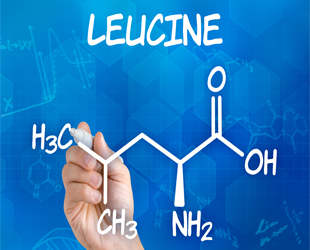
Leucine could be considered the most important supplement you should add to your regimen as you age, especially if you are a competitor. Leucine breaks down much faster during exercise than the other two branched-chain amino acids (isoleucine and valine), and is also unique in that it plays a critical role in intramuscular protein production through anabolic signaling and mediation of insulin secretion, so it certainly makes sense to ensure that you are getting sufficient amounts of leucine in your diet.

If you are over the age of 35 or 40, leucine is depleted even more rapidly, so replenishing this amino acid through leucine rich food or through leucine supplements can be an insurance policy to guard against age-related muscle loss.

Leucine crosses the blood-brain barrier, and once in the brain, it sends satiety signals to the hypothalamus, thus guarding against overeating.1 It also promotes glucose tolerance and insulin sensitivity by optimizing glucose metabolism. Another important function which leucine has in the brain is the stimulation of glutamate production and release. Since glutamate is an important neurotransmitter in the brain which is involved in memory and learning, the presence of leucine exerts protective effects on cognitive function.

One study by Donato et al discovered that leucine supplementation while on a calorie restricted diet resulted in more fat loss overall, as well as increased protein synthesis in muscle tissue and the liver. 2 The human requirement for leucine is the highest of all the essential amino acids, at approximately 40 milligrams per kilogram of body weight in sedentary adults. However, this requirement does not take into account the muscle preserving needs of individuals who are engaged in intense resistance training. Such individuals benefit greatly from supplementing with up to 200 milligrams of leucine per kilogram of body weight. 3

If you are considering adding leucine to your regimen, be sure to time it so that you ingest it when you take in a protein-rich meal. If you prefer actual food sources of leucine, you can consume turkey breast (over 2 grams of leucine in a 3 ounce serving), fish, dairy products, seeds, soy or nuts. Leucine powder is VERY bitter, so make sure to mix it with a tasty protein powder, or take it in capsule form with your whole food meals. This will optimize protein synthesis in muscle tissue and enhance the anabolic effect.

REFERENCES

1. Potier M, Darcel N, Tome (2009) Protein, amino acids and the control of food intake. Curr Opin Clin Nutr Metab Care 12(1):54-58.

2. Donato J Jr, Pedrosa RG, Cruzat VF, Pires IS, Tirapegui J (2006) Effects of leucine supplementation on the body composition and protein status of rats submitted to food restriction. Nutrition 22 : 520 –527,2006

3. WHO/FAO/UNU (2007) Protein and amino acid requirements in human nutrition. Report of a joint WHO/FAO/UNU expert consultation. World Health Organ Tech Rep Ser. 1–265.

The Wrinkle Banisher…That’s Me!

Puppy wrinkles
Just like the elastic in an old pair of sweatpants, the elasticity of the skin diminishes over time, resulting in unattractive skin folds and lines and a deflated appearance. Sun exposure, cigarette smoking, and consumption of processed foods, sugar and alcohol also contribute to fine lines, uneven skin tone, and brown discoloration. Fortunately, there have been countless advancements in aesthetic medicine which have resulted in the development of non-surgical interventions which can diminish or even completely eliminate these signs of aging.

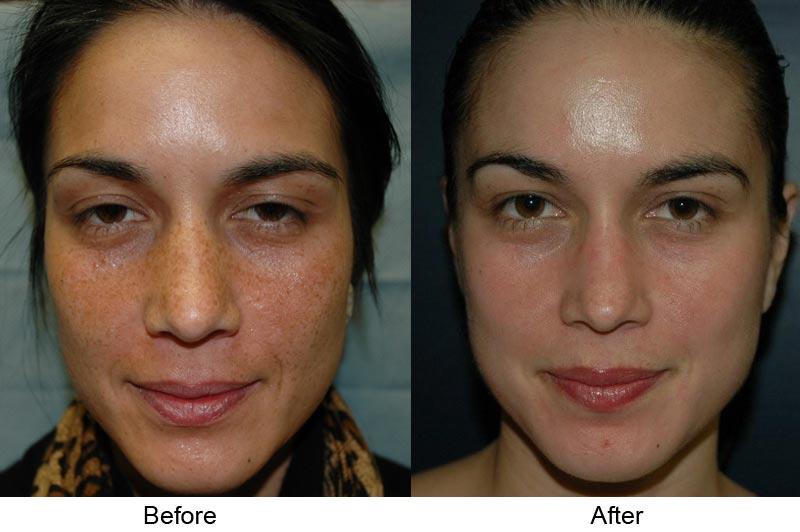
Some individuals who are needle-shy will opt for laser treatments as a means of resurfacing and refining the skin. However, these treatments must usually be done in series and can be rather costly. Another non-invasive and cost-effective solution for aging skin is a chemical peel. There are many different types of chemical peels available, ranging from very light glycolic acid peels to an aggressive TCA (trichloroacetic acid) peel. One composite peel (phenol, TCA, salicylic acid and Retin-A) which is my personal favorite is the Vi-Peel which is painless, well tolerated by the majority of skin types, and only requires a few days of social downtime. The Vi-Peel is my peel of choice and the one which I offer to my patients. http://www.drstaceynaito.com/#!chemical-peels/comt

Before and after images from a single Vi-Peel treatment

Before and after images from a single Vi-Peel treatment

Another wonderful option for correcting loss of volume in the face is an injectable filler. There are a number of hyaluronic acid based fillers available now (Restylane, Perlane, Juvederm, Belotero) which last 6 months to a year. Radiesse is another natural filler option, which is comprised of calcium hydroxylapatite, a substance which also acts as a biostimulator, stimulating cells in the skin to produce collagen over time. Radiesse lasts 18 months or more and is a very cost-effective treatment for women in their 40’s and beyond who want to refill sunken areas which often develop as menopause looms. http://www.drstaceynaito.com/#!injectable-fillers/c1tgx

02juvederm
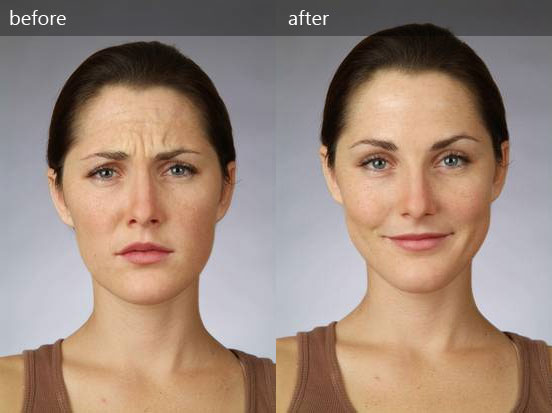
If you have wrinkles in the forehead and around the eyes, Botox and Dysport are excellent treatments and will last for 3 to 6 months. I tend to prefer Botox over Dysport because the effects are more robust and tend to last longer than what I have seen with Dysport over the years. Xeomin is another form of botulinum toxin which is well-suited for patients who have developed a rare resistance to Botox of Dysport over time. http://www.drstaceynaito.com/#!botox-treatments/cr7z
botox-before-and-after

For those of you in the Los Angeles area, I offer the Vi-Peel, Botox, Juvederm (including Voluma), Radiesse, Restylane, Perlane, and Belotero treatments. I also perform electrocautery treatments on benign moles and skin tags. Please visit the links in this blogpost for more information on how to schedule a consultation. Why not start the summer looking your very best?