Naturally Gray

123rf.com image
yaroslavastakhov Image ID158276168

When the COVID-19 pandemic swept across the world in early 2020, it disrupted nearly every aspect of daily life—including personal grooming routines. For many women, the closure of hair salons meant they could no longer maintain their regular appointments for root touch-ups or color treatments. Suddenly, the choice to hide gray hair was taken out of their hands. For some, this was initially a distressing situation, especially in a society that has long associated gray hair in women with aging, invisibility, or a lack of vitality.

However, something unexpected happened. As the weeks turned into months, and the pandemic dragged on, many women began to embrace the gray. What started out as a necessity slowly evolved into a movement. Social media played a huge role, with women posting photos of their “silver linings” and sharing their journeys of going gray—roots growing out, transitions in color, and emotional realizations along the way. Hashtags like #grombre (gray + ombré), #grayhairdontcare, and #silversisters began trending, creating a virtual support network that celebrated authenticity over convention.

For many women, going gray became symbolic of something much bigger. It represented a rejection of unrealistic beauty standards and the freedom to age on their own terms. It was an act of self-acceptance and empowerment. Some women shared how liberating it felt to stop covering something that was natural and beautiful. Others described how they felt more themselves than they had in years—bold, honest, and unfiltered.

This shift was about more than hair color; it was about autonomy. In a time of uncertainty, women reclaimed control over something deeply personal. They no longer felt pressured to hide a part of themselves just to conform to societal norms. As a result, what started as a temporary break from salon visits became, for many, a permanent transformation—not just in appearance, but in mindset.

As for my personal hair color journey during the pandemic, I was already so accustomed to coloring my gray roots at home every two weeks that it did not bother me one bit that I wasn’t able to visit a salon. In addition, the hairdresser who had been doing my hair during that time worked out of her home, so the interruption in professional hair care services was very brief for me. However, I was so inspired by the women who were daring enough to go naturally gray that I briefly considered traveling down the same path.

What stopped me was the realization that any lighter hair color looks truly bizarre on me, whether it be blonde, gray or white. I have verified this over the years by donning blonde and platinum white wigs, only to cringe in horror. Last month, I applied a gray hair color paste on my hair and took photos, then washed the stuff away. One friend thought it looked cool and suggested that I sort of resembled Storm, but that certainly wasn’t enough for me to consider leaving the temporary color in my hair for more than a few minutes.

Here I am with a temporary gray hair paste

If you have ever considered going naturally gray, I have listed pros and cons of such a decision below.


🌟 Pros of Going Naturally Gray

1. Authenticity and Self-Acceptance
Allowing gray hair to come in can be a bold statement of self-acceptance and confidence. It signals a refusal to conform to ageist beauty standards and an embrace of one’s natural evolution.

2. Healthier Hair
Frequent coloring, especially with harsh dyes, can damage hair over time. Going gray allows the hair to recover its natural texture, strength, and integrity.

3. Financial Savings
Salon visits for color treatments can be costly. Eliminating this routine saves both money and time—no more constant root touch-ups.

4. Time and Convenience
Gray hair maintenance often requires less frequent upkeep compared to colored hair. Once the transition is complete, you’re no longer on a schedule.

5. It Can Look Stunning
Natural gray or silver hair can be incredibly striking. When properly cared for, it can be glossy, elegant, and eye-catching. Many women find that it enhances their features and gives a sophisticated, modern edge.

6. Social Shifting
There’s a growing movement encouraging women to defy beauty norms. Embracing gray can connect you to a supportive community and help challenge outdated societal expectations.


⚠️ Cons of Going Naturally Gray

1. Societal Judgment and Ageism
Women are often judged more harshly than men for visible signs of aging. Going gray can provoke unsolicited comments or subtle discrimination, especially in professional environments.

2. Confidence Rollercoaster
The transition period—when roots are growing in—can be tough. Many women feel awkward or less attractive during this in-between phase.

3. Maintenance Doesn’t Disappear Entirely
While you’re not dyeing your hair anymore, gray hair often has a different texture and can be more coarse, wiry, or dry. It may require new types of products to look its best, including purple shampoos to combat yellowing.

4. Perceived Loss of Youthfulness
Some women feel that gray hair makes them look or feel older than they are, and may worry about losing their youthful edge or romantic appeal.

5. Not All Grays Are Created Equal
Gray hair doesn’t always come in beautifully silver. It may be patchy, dull, or uneven, and not everyone ends up with that sleek silver fox look.


Today, the visibility of gray-haired women in media, fashion, and public life continues to grow. The pandemic may have forced the change, but what followed was a grassroots movement of women stepping into their power, embracing their natural beauty, and redefining what it means to age gracefully.

Final Thought:

Going gray is not about “giving up”—it’s often about reclaiming control. For some women, coloring their hair helps them feel vibrant and polished. For others, letting it go natural is a power move toward freedom and authenticity. Neither path is superior—it’s about what makes you feel most confident in your skin.

How Menopause Messes With Our Hair

Women who have gone through menopause typically experience striking changes in hair texture, which can quite frankly, be distressing. For those of you who didn’t know about menopausal hair changes, be afraid. Be very afraid. Because your hair texture will morph into something you won’t understand or find very manageable.

My hair before the waves kicked in…

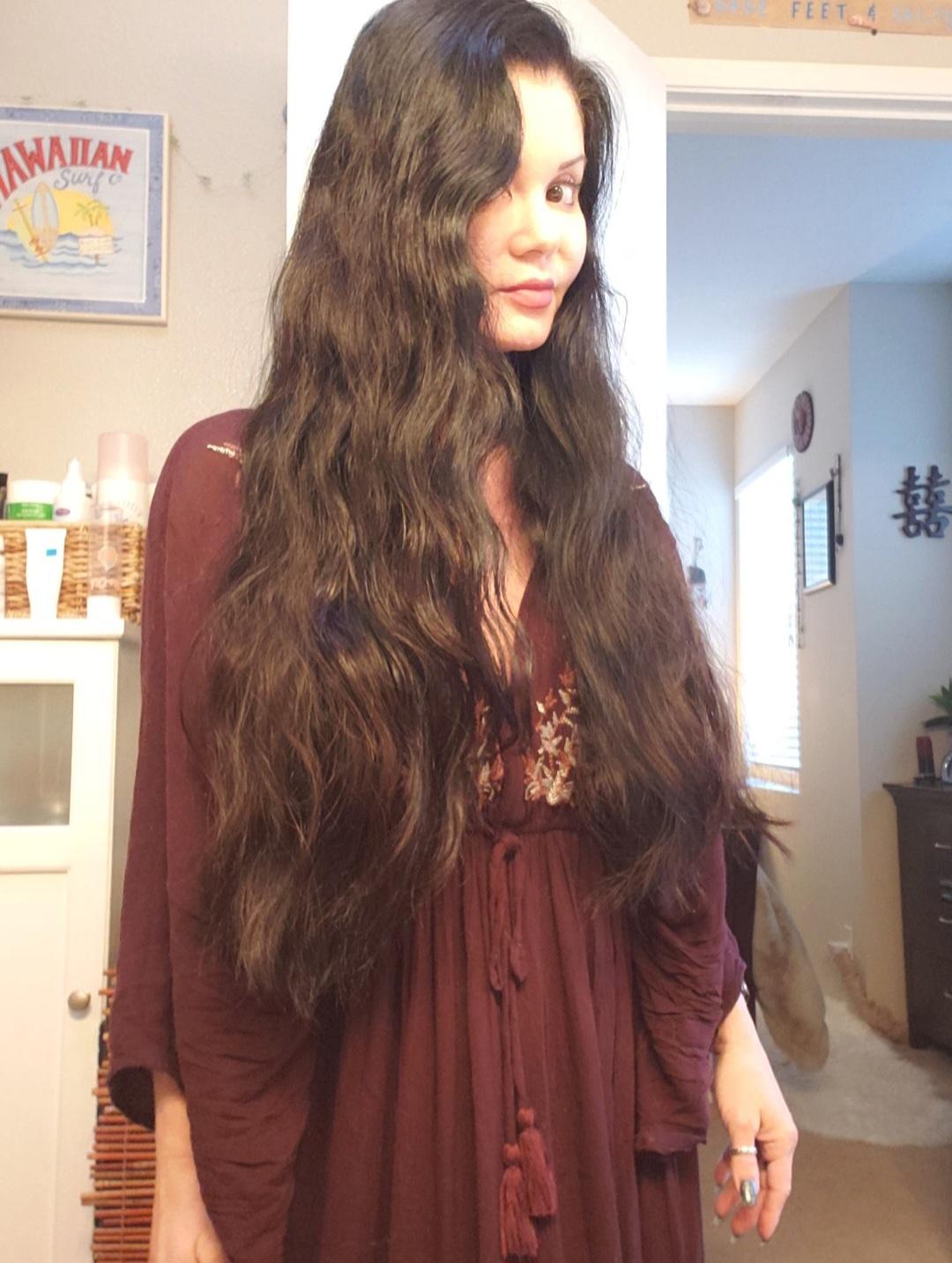
When a woman reaches menopause, hormonal changes can lead to noticeable differences in hair texture, volume, and growth patterns. While hair thinning and loss are commonly discussed, another fascinating change is how hair texture can become curlier or more unruly. On a personal note, my hair went from being almost arrow straight to having a pronounced wave, which makes it look like I had braided my hair and then let the crimps remain after unraveling the braid. I fight this new waviness by flat ironing my hair, because I just can’t stand the look. The waves became intense for a while (see pic below), then settled down a bit once I reached 57.

There are several scientific explanations which help account for the changes in hair texture during menopause:

1. Hormonal Changes and Hair Texture

Estrogen and progesterone, two key hormones that regulate many aspects of a woman’s body, play an important role in hair growth and structure. Before menopause, these hormones help maintain the hair growth cycle, ensuring strong and healthy strands. As estrogen and progesterone levels decline, their regulatory effect diminishes, which can lead to changes in the shape and structure of hair.

At the same time, androgen (male hormone) levels remain relatively stable or increase in comparison, which can influence hair follicles in several ways:

  • Some women experience hair thinning or miniaturization, particularly along the crown.
  • Androgen dominance may alter the activity of sebaceous (oil) glands, affecting hair texture.
  • Hair strands may become drier, more brittle, or coarser.

2. Changes in the Hair Follicle and Muscle Relaxation

One lesser-discussed but compelling explanation involves changes in the follicular muscle layer—specifically, the arrector pili muscle, a tiny muscle attached to each hair follicle. This muscle plays a role in the positioning of the follicle in the scalp.

  • During menopause, the arrector pili muscle may weaken or relax due to hormonal shifts, particularly as estrogen levels drop.
  • When this muscle relaxes, it can cause the hair follicle to shift at a different angle.
  • A change in the follicle’s orientation may lead to hair emerging in a more curved or spiral pattern, making previously straight or wavy hair appear curlier.

3. Structural Changes in the Hair Shaft

The cross-sectional shape of the hair shaft is a major determinant of hair texture. Straight hair typically has a round cross-section, whereas curly hair has a more oval or flattened shape.

  • Hormonal shifts can influence keratin production, the protein that makes up hair.
  • Changes in keratin bonding patterns could contribute to an altered hair structure, making it curlier or frizzier.
  • Hair may also become thinner in diameter, which can enhance the appearance of curls or waves.

4. Aging and Changes in Scalp Health

The scalp itself undergoes changes with age, including:

  • Reduced blood flow to hair follicles, which affects nutrient delivery.
  • Changes in oil production, leading to drier hair that may behave differently.
  • A shift in collagen and elastin levels in the skin, which might indirectly impact follicle positioning and hair texture.

The waves in my hair tend to look more like this, but I have a lot of frizz right after washing my hair. Thank goodness for flat irons!

Conclusion

Menopause brings a variety of changes to hair due to the interplay of hormonal fluctuations, follicular shifts, and changes in scalp and hair fiber structure. While some women may experience thinning, others may find their hair becoming curlier or more textured due to follicle repositioning, muscle relaxation, and shifts in keratin structure. Understanding these changes can help women adjust their hair care routines to maintain healthy, manageable hair during and after menopause.

Resistance Training: The Ultimate Anti-Aging Tool

Regular resistance training is one of the most powerful tools for maintaining youthfulness and slowing down the aging process. It benefits the body and mind in multiple ways, including preserving muscle mass and bone density, improving digestion, boosting cardiovascular fitness, and benefitting cognition and mental attitude. Let’s explore these in detail:

1. Muscle Mass Preservation and Growth

As we age, we naturally lose muscle mass—a process called sarcopenia—which can lead to frailty, loss of mobility, and metabolic decline. Resistance training:

  • Stimulates muscle protein synthesis, helping to maintain and build lean muscle.
  • Increases metabolic rate, making it easier to maintain a healthy weight.
  • Enhances insulin sensitivity, reducing the risk of type 2 diabetes.
  • Supports functional strength, improving balance and reducing the risk of falls and injuries.

2. Skin Integrity and Anti-Aging Effects

The skin’s health and appearance are directly affected by lifestyle choices, including exercise. Resistance training:

  • Improves circulation, ensuring better oxygen and nutrient delivery to skin cells.
  • Stimulates collagen production, which helps maintain skin elasticity and reduces wrinkles.
  • Reduces cortisol levels, lowering inflammation and minimizing stress-induced skin aging.
  • Increases human growth hormone (HGH) levels, which contributes to cell regeneration and youthful skin.

3. Digestive Health and Metabolism

Aging often slows digestion and can lead to issues like bloating, constipation, and poor nutrient absorption. Resistance training:

  • Speeds up metabolism, ensuring efficient digestion and energy utilization.
  • Stimulates gut motility, reducing the risk of constipation.
  • Helps regulate hormones like insulin and cortisol, which affect digestion and appetite control.

4. Cardiovascular Fitness and Longevity

While resistance training is not traditionally associated with cardio health, it plays a crucial role in keeping the heart young. It:

  • Lowers blood pressure and improves vascular flexibility, reducing strain on the heart.
  • Enhances circulatory function, improving blood flow and oxygen delivery to tissues.
  • Reduces inflammation, lowering the risk of heart disease.
  • Helps control cholesterol levels by reducing LDL (bad cholesterol) and increasing HDL (good cholesterol).

5. Joint Health and Mobility

Contrary to the myth that weightlifting damages joints, resistance training actually protects and strengthens them. It:

  • Increases the production of synovial fluid, which lubricates the joints.
  • Strengthens the muscles around joints, providing better support and stability.
  • Reduces inflammation associated with conditions like arthritis.
  • Improves flexibility and mobility, reducing stiffness and pain.

6. Bone Density and Strength

Osteoporosis and bone fractures become major concerns with aging. Resistance training combats this by:

  • Stimulating osteoblast activity, which helps build stronger bones.
  • Increasing bone mineral density, reducing the risk of fractures.
  • Enhancing posture and balance, minimizing fall-related injuries.
  • Supporting calcium and vitamin D absorption through hormonal regulation.

7. Hormone Regulation: Testosterone, HGH, and More

One of the most underrated benefits of resistance training is its ability to optimize hormone levels, which naturally decline with age. Strength training has been shown to:

  • Boost testosterone production, which is essential for muscle maintenance, fat metabolism, energy levels, and libido in both men and women.
  • Increase human growth hormone (HGH), which supports tissue repair, fat loss, and skin regeneration.
  • Improve estrogen balance in women, reducing the risk of osteoporosis and metabolic disorders.
  • Lower cortisol levels, reducing stress, inflammation, and belly fat accumulation.
  • Improve thyroid function, enhancing metabolism and energy levels.

8. Mental Attitude and Cognitive Health

Aging isn’t just physical—it’s mental. Resistance training improves cognitive function and emotional well-being by:

  • Releasing endorphins, reducing anxiety and depression.
  • Boosting dopamine and serotonin, improving focus, clarity, and happiness.
  • Enhancing memory and brain function, reducing the risk of dementia.
  • Increasing self-confidence, making you feel strong and capable at any age.

9. Resistance Training and Insomnia

Struggling with sleep? Resistance training can help improve sleep quality and reduce insomnia by:

  • Reducing cortisol levels, helping the body wind down for sleep.
  • Boosting deep sleep cycles (slow-wave sleep), which is crucial for recovery and memory consolidation.
  • Regulating circadian rhythms, ensuring better sleep-wake cycles.
  • Reducing stress and anxiety, making it easier to relax at bedtime.
  • Increasing energy during the day, leading to natural tiredness at night.

Conclusion

Regular resistance training is one of the most powerful ways to stay young, both physically and mentally. It preserves muscle, strengthens bones, supports joints, enhances skin health, regulates digestion, protects the heart, optimizes hormone levels, improves sleep, and boosts mental well-being. If you want to age with strength, vitality, and confidence, lifting weights should be a non-negotiable part of your lifestyle! 💪

I Can’t Read That!

123rf.com image rawpixel 69392647

Dealing with the loss of ability to see things up close which comes with the aging process, also known as presbyopia, is one of those frustrating realities that sneaks up on you—and it’s even more maddening if you’ve spent years basking in the glory of perfect vision after Lasik. I had Lasik in October 2007, when I was 41 years old, to correct myopia (nearsightedness) and astigmatism. I loved the freedom I had from glasses or contact lenses for about 8 years. Then when I reached full menopause at the age of 49, me reading vision tanked like the Titanic.

I went from feeling invincible, seeing the world in crisp, vivid detail, to suddenly struggling with menus, ingredient labels, and my phone screen. It feels unfair, doesn’t it? At least I was aware of the distinct possibility that presbyopia would indeed set in at some point, and had many years of crisp, perfect vision. The only thing I wasn’t prepared for was how sly the onset of presbyopia was. One day, I was fine, and then the next, I found myself doing the whole “arm stretch” thing just to read my emails or check a text. I also wasn’t prepared for the emotional toll, basically having to admit defeat by having to carry around reading glasses or magnifiers when I had been free of them my entire life. It suddenly was a nuisance to try reading a restaurant menu or a nutrition label in dim lighting. The way I adapted to the need for reading glasses was to place three prescription pairs in specific places: bedroom nightstand, my desk, my handbag.

It’s not just the practical side of things; there’s also a sense of frustration because it feels like a step backward. After Lasik, I became so accustomed to being free from glasses or contacts—it’s this incredible feeling of independence. Then, when presbyopia hit, I had no choice but to get new glasses. It’s almost insulting to the effort and investment I had devoted to my eyes when I had Lasik.

Suddenly having to wear glasses again can mess with your confidence, too. It’s one of those subtle reminders of aging, even if you don’t feel old. Despite the fact that I have had to wear reading glasses for the last ten years, I still find myself frequently ignoring my presbyopic eyes, squinting to read a text on my phone, even if I have a pair of glasses nearby.

Can Booze Keep You Alive Into Old Age?

Copyright: angrysun

We have all heard that excessive or regular alcohol consumption can have serious adverse effects on health and can contribute to a range of health problems. That being said, some studies have suggested limited health benefits associated with moderate alcohol consumption. It’s also interesting to note that there are many instances in which centenarians, including a 105-year-old patient I once treated, have touted their regular intake of alcohol has played a part in keeping them alive and healthy into their elder years.

Here are several arguments which support the idea that moderate alcohol consumption could contribute to longer lifespans:

  1. Cardiovascular Benefits: Some research has suggested that moderate alcohol consumption may be associated with a reduced risk of heart disease. It is believed that alcohol can raise HDL (high-density lipoprotein) cholesterol levels, which can have a protective effect on the heart.
  2. Antioxidant Properties: Red wine, in particular, is often touted for its potential health benefits due to the presence of antioxidants, such as resveratrol. These antioxidants may have anti-aging and disease-fighting properties.
  3. Social and Psychological Benefits: Moderate alcohol consumption in social settings can promote relaxation, reduce stress, and improve overall well-being. These factors may indirectly contribute to a longer lifespan by promoting mental and emotional health.
  4. Reduced Risk of Some Diseases: Some studies have suggested that moderate alcohol consumption is associated with a reduced risk of certain conditions, such as type 2 diabetes. However, this relationship is complex and not well understood.

Certain populations, especially those found in regions known as “Blue Zones,” where people tend to live longer, healthier lives, include moderate alcohol consumption as part of their cultural traditions. However, it’s important to note that the longevity of these populations cannot be solely attributed to alcohol consumption but is influenced by a combination of factors, including diet, lifestyle, genetics, and social interactions. It’s important to stress that these potential benefits are associated with moderate alcohol consumption, which is typically defined as one drink per day for women and up to two drinks per day for men. Excessive or heavy alcohol consumption can have detrimental effects on health and longevity, including an increased risk of liver disease, addiction, cancer, and other serious health problems.

Furthermore, the relationship between alcohol and health is still a subject of ongoing research, and individual responses to alcohol can vary widely. If you have specific health concerns or are considering alcohol consumption for potential health benefits, it’s advisable to consult with a healthcare professional who can provide personalized guidance based on your medical history and individual circumstances. In many cases, the potential risks of alcohol may outweigh the potential benefits, and non-alcoholic means of promoting heart health and overall well-being should be considered.


What To Do When Your Parents Need Different Types of Senior Care

Written by Julia Merril of befriendyourdoc.org

Dr. Stacey Naito of Dr. Stacey Naito’s Blog is a board-certified family practice physician with a wide range of interests that she shares with readers. Read more informative articles today!


Image via Pexels

What To Do When Your Parents Need Different Types of Senior Care

As your parents age, they may need help finding senior care or an alternative living situation. When that time comes, you may be faced with an unexpected challenge — figuring out what to do when only one parent needs to move into a nursing home. Dr. Stacey Naito of Dr. Stacey Naito’s Blog explains that by involving your parents and handling the process with compassion, you can create a smooth, loving transition.

Choosing a Nursing Home

The right nursing home is essential for your parents’ comfort, health, and financial stability. As you choose a facility, follow these steps:

  • Verify insurance coverage. Find out how much your parents’ plan will pay each month.
  • Identify appropriate facilities. Find nursing homes that accept your parents’ insurance and fulfill their care requirements. Go online to find the facilities in your area and read up on pricing information, payment options, and reviews. You’ll find nearly 80 assisted living communities in Los Angeles.
  • Determine excess costs. Calculate the extra monthly costs for each facility.
  • Make a short list. Select facilities that fit your budget, care, and location preferences.
  • Read reviews. Look into the reputation, quality of care, and services at each facility.
  • Visit facilities. Bring both of your parents to check out your top 3-5 nursing homes. Look at factors such as cleanliness, activities, and interpersonal relationships.
  • Ask about openings. Find out when a room or bed will open.

Paying for a Nursing Home or Assisted Living Facility

In the United States, US News & World Report notes that the average room in a nursing home costs more than $100,000 per year. For a shared room, you can expect costs of more than $93,000 per year. Some ways to cover nursing home costs are:

  • Medicaid
  • Long-term care insurance
  • Life insurance
  • Savings and retirement income
  • Family contributions

Keep in mind that costs can vary significantly between states and cities. If you live in a different city, you might save money by moving your parents to a nursing home near you.

Helping Your Other Parent Downsize

Maintaining a home is a big job; when one parent moves into a nursing home, your other parent may want to move as well. Some options are:

  • Move the parent in with you or a sibling
  • Find a smaller apartment or condo near the nursing home
  • Rent a room in an assisted living facility

When your parents are moving to different places, you’ll need to deal with two moves. A moving company can make the transition easier for everyone; they can handle the packing and the heavy lifting so you can focus on your parents. For safety and security, choose a trusted company by reading moving company reviews online and selecting the best one. Ideally, the moving company you choose has experience with senior moves. 

Providing Compassionate Help to Aging Parents

Moving your parents into separate homes can be emotional and exhausting for everyone involved. As an adult child, DailyCaring points out that all of the stress can make it harder to remain compassionate. To ease the process, you can:

  • Hire a senior move manager. They’ll help with sorting, organizing, and selling belongings during the downsizing process.
  • Take personal time. Make time for your friends and favorite activities.
  • Ask relatives for help. Don’t be afraid to lean on siblings, aunts, uncles, and cousins.
  • Get support. Join a support group to express your emotions in a safe place.

Managing the Senior Care Process

With patience and compassion, you can help both of your parents settle into new homes. Remember to put a lot thought into choosing the right senior living facility, paying for continued care, helping with downsizing, and providing all the care you can. 

Treating Low Testosterone In Women With DHEA

123rf.com
Image ID : 60343150
Copyright : Sasin Tipchai

Many women who have low serum levels of testosterone (normal total levels range between 15–70 nanograms per deciliter) are often wrongly convinced by their doctors, loved ones or coworkers that they are suffering from depression or stress. Low testosterone in women commonly causes fatigue, low libido and sleep disturbances, symptoms which are also found in mood disorders. The fact of the matter is, like men, women become deficient in testosterone as they age, and may manifest a whole host of symptoms.

Here are some common symptoms of low testosterone which women may experience:

muscle loss
muscle weakness
weight gain
increase in fat stores
reduced libido
decreased sexual satisfaction
vaginal dryness
low fertility
irregular periods
dry skin
thinning hair
bone loss
development of cardiovascular disease

Image ID : 15314531
Copyright : alphaspirit

While some women will agree to boost their testosterone levels by using testosterone supplements (either injected or in topical form), there are numerous side effects which may emerge from such therapy. These side effects, some of which are irreversible, include hair loss (male-pattern baldness), weight gain, insulin resistance, acne, excess facial hair, hirsutism, deepening of voice, aggression, enlarged clitoris, and smaller breast size. If a woman is concerned about these side effects, she can turn to DHEA, regular exercise, and certain foods to increase testosterone levels.

A significant increase in serum testosterone levels has been consistently demonstrated during the hours following exercise, so a regular exercise regimen will naturally and safely increase testosterone levels in women. There are also numerous foods which boost testosterone levels in the body. They are:
Bananas
Pomegranate
Ginger
Asparagus
Onions
Tuna
Salmon
Oysters
Eggs
Beans
Nuts

Image ID : 86626652
Copyright : annyart

What if exercise and the introduction of testosterone-raising foods isn’t enough for a woman to create normal testosterone levels in the blood? A hormone which is secreted in the bloodstream by the adrenal glands known as dihydroepiandosterone, or DHEA, can be taken as an oral supplement. DHEA is converted in the body into DHEA sulfate, then androstenedione, then ultimately to testosterone and estrogens. DHEA reaches its highest levels in the body in one’s twenties, when undergoes a slow and steady decline (about 10% for each decade of life). Oh the joys of aging, right? Probably the most concerning aspect of DHEA’s decline is the potential development of major diseases such as heart disease and cancer, but another confounding aspect is the decline in the sex hormones, with a corresponding drop in muscle mass, increase in visceral fat, skin changes, and all the other symptoms associated with perimenopause and menopause.

It is widely believed that DHEA is a key hormone which can be administered as an anti-aging treatment for older individuals. One key study followed 30 male and female subjects ranging between 40-70 years of age for six months, during which time they were given 50 mg of DHEA per day for 3 months, then 3 months of placebo, in random order. It only took two weeks for patients taking DHEA to reach the serum DHEA levels of young adults, and after 3 months on DHEA therapy, the majority of subjects reported improved sleep, more energy, and less anxiety. Another study which examined women between the ages of 45-55 found that the subjects who were given 50 mg daily of DHEA had significantly higher testosterone levels than women who were in the placebo group.

If you are a woman considering boosting your blood testosterone levels with DHEA, please make sure to get a full workup and bloodwork from physician who is well-versed in hormone replacement therapy to determine whether you are indeed deficient in testosterone. I always advise starting with DHEA as opposed to testosterone, since the side effect profile of DHEA is much more tolerable than that of testosterone. I also recommend getting your DHEA supplementation compounded with pregnenolone from a well-respected compounding pharmacy for the best purity and quality. You may still experience some side effects from DHEA supplementation, especially at higher doses (in excess of 25 mg daily). These side effects include oily skin and acne, skin thickening, hair loss, stomach upset, headache, insomnia, high blood pressure, changes in menstrual cycle, facial hair in women, deepening of the voice, and fatigue.

REFERENCES
Morales AJ, Nolan JJ, Nelson JC, Yen SS. Effects of replacement dose of dehydroepiandrosterone in men and women of advancing age. J Clin Endocrinol Metab. 1994 Jun;78(6):1360-7.

How Sleep Can Revitalize Your Body and Mind

Sheila Olson of fitsheila.com has done it again with another informative article!  Check it out here.

sleep

Image courtesy of Pixabay

When we lose out on restful sleep, our bodies tend to age before their time. If you’re tired or feeling run down and a bit haggard, it might be due to lack of proper rest. After all, nothing replenishes us the way a good night’s slumber does.


Why Sleep Keeps Us Youthful

How do you feel after a night of no sleep? Is your thinking slowed and your energy nonexistent, and do you notice new lines beneath your eyes? If so, you’re not alone, as poor sleep can make us feel and look older than we are. Our cortisol levels shoot up, our brains can’t properly restore themselves, and we look as haggard as we feel. Your mind and body both need this time to reset themselves and flush out toxins, which helps us stay healthy and energetic. Unfortunately, trying to force ourselves to slumber through sheer will alone seldom works. Instead, we need to be proactive about our patterns to change our sleep habits.


Transform Your Bedroom

If your room is uncomfortable, stressful, or too stimulating, you may not be sleeping as well as you could. If you have a television where you can watch from bed, a lumpy mattress, or curtains that let in every stream of light, then it’s definitely time for a change. Have good bedding, including both linens and your mattress, and add blackout curtains to extend your rests. Every change adds up, so transform your bedroom into a paradise today.


Best Sleep Position

Sleeping on your back is the best way to avoid the development of premature wrinkles, but there are options for side sleepers to overcome this problem. Adding a body pillow to take some of your weight, or using a silk pillowcase, can greatly cut down the strain your skin experiences at night. Supplements, meanwhile, can provide vitamins and collagen that our skin needs to stay youthful, which allows us to continue side sleeping without fear. Even a good moisturizer can go a long way to helping your skin fill in lines created from the pull of a pillow.


Banishing Tech

Many of us use smartphones into the late hours, but that can deprive us of restful sleep. The light from our phones and tablets signals to our brains that it is daytime, and thereby prevents us from beginning the sleep process. It can be hard to put your phone down at a certain time each night, as tech addiction is very real in today’s society, but we must learn how. Start by removing notifications from your phone, taking off tempting apps and cutting back in increments. All in all, do what you can to eliminate your tech usage before bed.


Eat for Good Rest

What we eat can impact the quality of our rest. When we eat poorly or consume foods that cause indigestion, our sleep is interrupted, and we may wake throughout the night. Even drinking coffee in the afternoon can negatively influence how well we slumber. To give yourself the boost you need, reach for healthy carbs over empty ones, and don’t overeat before bed. Cherries, milk, and poultry are also good options to ease you into a refreshingly restful night.


Keep a Routine

When you go to bed at different hours, and when you wake up irregularly too, you’re setting your body up for failure. It has no ability to learn when it should get sleepy or when it will awaken. That’s why setting a nighttime routine and sticking to it even when you don’t work the next day is beneficial. By teaching your body to rest at a specific hour, you give yourself a higher possibility of falling asleep when you lie down.


To keep your complexion flawless and to have more energy during the day, get the sleep your body craves. It may take some training, and you may need to rearrange your bedroom, but you can get more rest. Each and every one of us deserves a good night of slumber.