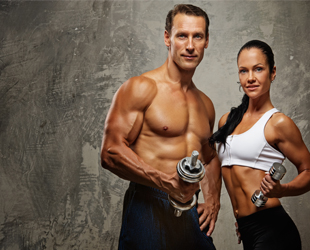
Why Whey Protein Is The Key To Anti-Aging

Original post can be found at:

http://www.sportsnutritionsupplementguide.com/health-wellness/anti-aging/item/1519-why-whey-protein-is-the-key-to-anti-aging#.VZ2WSvlViko

Fitpicture310x250

Adequate protein intake is vital to anyone seeking to preserve muscle mass, especially since the aging process threatens the loss of all that hard-earned muscle through a process called sarcopenia. Sarcopenia causes a loss of muscle mass and strength in all individuals as they age, even in die-hard gym addicts.

The aging process hits us with a double whammy because 1) our dietary protein needs increase over time, and 2) our ability to synthesize new proteins plummets as a consequence of diminished levels of testosterone, human growth hormone, and insulin-like growth factor-1. In other words, it becomes tougher and tougher to meet the aging body’s protein needs, and the result is a loss of muscle.

One of the biggest challenges in meeting the protein demands of the body as we age is the physical challenge of consuming adequate protein. Protein powders are an excellent means of meeting protein requirements in a low bulk form since they are dissolved in liquid. Whey protein in particular is an excellent protein source for anyone over the age of 30, provided they have no issues with allergy or intolerance to whey.

Whey protein is rich in branched chain amino acids, especially leucine, which is considered the most important branched chain amino acid for protein synthesis, especially in older people. Branched chain amino acids are also responsible for proper dermal collagen protein synthesis, so they play a huge role in the condition of the skin, maintaining its suppleness and tone.

Another age-related benefit of supplementing one’s diet with whey protein is the presence of lactoferrin, which fortifies bone and prevents osteoporotic fractures by activating osteoblasts. Whey protein also contains high levels of cysteine, an amino acid which boosts glutathione production. Glutathione, an antioxidant with powerful anti-aging effects, steadily declines naturally as we age, and since its production relies on the presence of cysteine, the introduction of whey protein into a meal plan can guard against age related diseases.

Whey protein has profound effects on glucose metabolism as well. It reduces serum glucose levels in healthy individuals while impairing glucose tolerance in diabetic and obese individuals. When consumed consistently as part of a sensible high protein meal plan, the result is a reduction in body weight and an increase in fat oxidation. This is due to the release of leptin, cholecystokinin, and glucagon like-peptide 1, all of which create a feeling of satiety.

In summary, the benefits of whey protein are numerous and significant, especially for older individuals. If you have yet to incorporate whey protein into your meal plan and you have been lamenting the ravages of Father Time, do yourself a favor and add whey protein to your daily regimen.

References: Sousa G et al. Dietary whey protein lessens several risk factors for metabolic diseases: a review. Lipids Health Disc. 2012;11:67

Peaceful Buddha Fountain In My Dining Room

IMAG2590

I have had this water fountain in my dining room since approximately 2008 and love the glow which the light casts on Buddha’s face. I remember seeing this fountain at a local garden center and just had to get it. Since I already had fountains outside, I decided to put it in the dining room, making sure to place it in a spot which was clearly visible from the living room as well. This isn’t a small tabletop fountain (it measures 27 inches high, 15-1/2 inches wide, and 7 inches in depth), so it definitely carries some visual impact.

Eventually, this fountain developed a number of issues, such as a burnt out adapter for the light, a spewing corner of the fountain which caused it to leak onto the floor, a strong tendency to build up sediment in the reservoir, and a very loud pump. My cats also were drawn to the fountain and would (and still do!) drink from it, much to my horror, since there was so much sediment floating around in the water.

I finally completely cleaned out this fountain TWICE this year, bought a new light, and connected a quiet pump to the fountain. I also elected to fill the fountain only with distilled water. As a result of my efforts, this fountain is now the relaxing, quiet, and mesmerizing showpiece it was meant to be.

Don’t Feel Like Yourself? Hormone Imbalance Could Be The Problem.

Portrait of a happy middle aged couple together outdoors

Portrait of a happy middle aged couple together outdoors

Are you experiencing any of the following?

Low energy
Insomnia
Irritability
Hair loss
Weight gain
Mood swings
Hot Flashes
Night sweats
Skin changes
Dry skin
Brittle nails and hair
Decreased libido
Erectile dysfunction
Difficulty concentrating
Memory loss
Depression
Anxiety
Muscle loss
Decreased strength

The above signs and symptoms are usually a clear sign of hormonal balances which are a function of the aging process. It is pretty widely known that women go through a process in which their estrogen and progesterone levels diminish and bring about symptoms of menopause which can be downright frustrating. However, men also go through a decline in testosterone as they age, with some men experiencing a sharp or early decline which manifests in troubling symptoms which have an adverse effect on their day to day lives. This decline, known as andropause, can be monitored through salivary or serum testing of hormone levels and treated with BHRT.

The good news is that in many cases, natural supplements and certain food choices can correct these issues, but some individuals, both men and women, may require supplementation with bioidentical hormones, also referred to as BHRT. Bioidentical hormones have the same molecular structure as the hormones which are produced naturally within the body. As a result, the body treats bioidentical hormones exactly like hormones produced within the body, which means that the body’s hormone balance can be restored.

If you are in the Los Angeles area and interested in booking a consultation with me for hormone balancing, please visit: http://www.drstaceynaito.com/#!natural-hormone-support/c1wd8

The Celebrities I Am Told I Resemble

I am often told that I resemble two different celebrities: Brooke Burke, who is mentioned the most frequently, and Catherine Zeta-Jones. I consider such references compliments because they are both incredibly beautiful women. I am posting a bunch of images of the two celebrities along with a bunch of my images so that you can determine if you agree with what many people say about me when talking about stars I may resemble.

StaceyKAT6
Brooke-Burke-54
maxresdefault
Edited booty Chaz
brooke-burke
63ac9e24067ada7dd9bba390febf71a2
DSC_6929
brooke-burke-41a
10565103_790238694339902_858736397148021578_n
10349134_790238621006576_6888364482549464334_n
1532036_790236917673413_4302394553856950127_o
SN 2013-08LH5866-Edit
660_BrookeBurke

Ohhh My Hip…Ohhh My Leg…

itbandanatomy_thumb

Though I don’t really mention this to people, I deal with almost constant body pain. The bizarre thing is that most of my chronic pain issues are located on the right side of my body. I wake up almost every night from intense pain in my right shoulder whenever I roll onto my right side. The pain in my shoulder is the result of a rotator cuff tear which I sustained in April of 2013 and an acromio-clavicular joint dislocation which occurred in December of 2014.

Then there is my right hip which goes into spasm almost daily, and sends a wicked pain along my tensor fascia lata, iliotibial band and peroneus longus (aka lateral thigh and leg) which at times literally takes my breath away. Fun stuff. I power through the pain, especially when a heavy leg day looms ahead, but this chronic pain has me near tears on some days. I am beginning to wonder if I have tensor fascia lata (TFL) syndrome.

My right tensor fascia lata muscle is always tight and inflamed, as is my right gluteus maximus. When my hip spasms, both of these muscles seize up as well. As a result of this ongoing issue, I often dig my knuckles right into my hip to address trigger points and to get some relief, and I also must get deep tissue massages on a regular basis to keep the spasms in check somewhat. I am actually known at the places where I get massages for being the fitness lady who needs at least 90 minute massages to address my musculoskeletal issues!

I recently stumbled upon a great post, written by by Stephen O’Dwyer, CNMT, which I am pasting here:

How the Tensor Fascia Lata (TFL) Causes Hip Pain

This muscle causes pain in two primary ways:

1) Once the TFL has been tight and ischemic for some period of time (it’s different for each individual), it can develop myofascial trigger points.

Trigger points can then refer pain to other parts of the hip, the groin, the buttocks and even down the leg.

2) When the TFL becomes chronically contracted it can exert a mechanical strain on other muscles by distorting joint movement.

For example the gluteals or the piriformis muscle often suffer from an unnatural “pull” from an excessively tight TFL.

Pain, then, might be felt in one or more of the following areas…

• Deep in the hip joint

• Into the groin

• Wrapping around the outer hip

• Deep in the gluteal muscles

• The sacroiliac joint

• Traveling down the leg

What Causes Tensor Fascia Lata (TFL) Dysfunction?

I have been considering for a long time how the TFL becomes excessively tight and locked up (aka dysfunctional) and have concluded that there are two chief reasons…

1) Weakness in the rectus femoris muscle.

The rectus femoris, the top quadriceps muscle along the front of your thigh, is your secondary hip flexor (after the psoas and iliacus which are your primary hip flexors).

And the rectus femoris muscle so often becomes weak as a result of the second reason for TFL dysfunction…

2) Excessive tightness and shortening of the psoas and iliacus.

This is a common occurrence in many of us who sit for long hours at a desk and/or commuting in our cars. The primary hip flexors, the psoas and iliacus, are put into a shortened position when we’re sitting. This can cause them to adapt to the shortened position.

Chronic shortening of the primary hip flexors, the psoas and iliacus, can causes the secondary hip flexor, the rectus femoris, to atrophy.

I believe this occurs, in part, because short hip flexors will abbreviate your stride thus reducing a full and natural leg swing.

In runners who are heel strikers this problem can be even more exaggerated. The quadriceps, and especially the rectus femoris, are severely underused.

In the reaching stride characteristic of heel strikers, the leg extends and straightens at the knee as the foot hits the ground. This leg movement disables the quadriceps muscles.

An aside for runners: underuse of the quadriceps can be rectified using the “barefoot running technique.” This technique does not require one to actually run in bare feet but rather to…

1) Adopt the upright, “running on hot coals” running method

2) To use a running shoe without the beefed up heels of conventional running shoes which don’t allow your foot to go through its full range of motion.

I recommend the Merrell’s Pace Glove for Women or Merrell’s Trail Glove for Men (the shoe I run in).

How to Treat Tensor Fascia Lata (TFL) Dysfunction

There are three strategies that alleviate excessive tightness in the tensor fascia lata:

1) Direct manual therapy treatment of the tensor fascia lata
I find that putting a client in a side-lying position with a pillow between their knees (and one to support their head and neck) is optimal.

Then direct manual pressure applied at different angles will help to locate the greatest “liveliness” in the muscle (I like to use this word instead of “pain”).

Gentle but detailed work will produce the best, most lasting results.

2) Maintaining flexibility in the entire hip

Stretching of the hip flexors and the entire hip and leg.

See Hip Stretches for excellent video support.

3) Strengthening the quadriceps
I’m not a fan of seated leg extensions on a weight machine to accomplish this.

Much more effective are single leg squats. If squats are not possible due to pain, then sitting against a wall is an excellent strategy.

Your knees should be at a 90 degree or right angle. Otherwise it’s not stable for your knees.

I love this article because it discusses a very common scenario which I see in my patients and which I am also personally experiencing. I definitely have a weak rectus femoris, partially due to the overactivity and spasm of the psoas and iliacus. Over the years I have had osteopathic manipulation to treat the psoas issue, but it keeps flaring back up. The weird thing is that I don’t necessarily sit for extended periods of time, yet my hip flexors are always tight. So if you have hip pain which never seems to resolve, you should check out the site where I found this article:

http://www.lower-back-pain-answers.com/tensor-fascia-lata.html#axzz3eaeKtVlT

I also highly recommend the stretches demonstrated on this link: http://www.lower-back-pain-answers.com/hip-stretches.html#axzz3eaeKtVlT

If you truly suffer from chronic, daily hip pain, then you can carve out a few minutes each day to perform these exercises. I have been so miserable from the pain in my hip that I am going to start doing these stretches every day. I will post a follow-up after doing these stretches consistently to provide personal feedback on the efficacy of these stretches, but the theory behind these stretches is so solid that I am sure they will make a big positive difference in my hip issues.