
No odd surgery or up here. Just clean eating, hard training, focus and determination. From IFBB North American this past Labor Day weekend.
No odd surgery or up here. Just clean eating, hard training, focus and determination. From IFBB North American this past Labor Day weekend.
I have had so many questions about how to eat in a healthy fashion that I am posting a sample meal plan which will balance your metabolism, optimize fat burning, and impart greater energy. This meal plan incorporates dairy, fish, wheat, nuts and poultry, so keep that in mind if you have certain sensitivities or are practicing a vegetarian or vegan lifestyle. Make sure to eat every two to three hours to keep your metabolism whirring throughout the day. It’s a good idea to pack your meals the night before so they are ready to go the next day. Keep in mind that this meal plan is not for competitors, but for the average person who either wants to eat healthier and who might want to lose weight.
For those of you who want a more customized plan, please contact me at hot.hapa@yahoo.com for rates on packages. You may also visit my websites at http://www.1hothapa.com and http://www.staceynaito.com.
Sample Meal Plan:
MEAL 1 – 4 egg whites with 1 tablespoon tomato salsa, 1/3 cup old fashioned oats (NOT instant!) with dash cinnamon, 1/4 cup blueberries, 1 tablespoon slivered almonds or walnut pieces, 1/4 cup almond milk
MEAL 2 – 1 cup Greek yogurt (Fage is my favorite brand) with 1 apple
MEAL 3 – 5 ounces tilapia or mahi mahi, 2 cups Romaine salad with cherry tomatoes, 1/2 sliced cucumber, 2 teaspoons olive oil, 1 tablespoon balsamic vinegar, 2/3 cup green peas
MEAL 4 – whole wheat wrap filled with 4 ounces chopped grilled chicken breast, 1 tablespoon low fat mayo, 1/4 cup chopped celery, spices of your choice
MEAL 5 – Two slices Ezekiel bread with 1 tablespoon raw almond butter or peanut butter (no sugar or salt added), 2 hard boiled egg whites
MEAL 6 – 4 ounces salmon, 1/2 cup whole wheat pasta, 10 asparagus spears, 2 cups spring greens salad with 2 teaspoons olive oil, 1 tablespoon balsamic vinegar

My Aunt Priscilla died on November 25th, just three days shy of her 70th wedding anniversary to my Uncle Jerry. Though I was sad to hear of her passing, I was much more affected by the enormous love which my uncle demonstrated to her up to her dying day. I spent my entire life marveling at the fact that this couple would always hold hands and kiss each other, according each other immense respect and demonstrating adoration, acceptance and affection that was pure and unabashed. They never concerned themselves with how others would perceive their public displays of affection. They doted upon each other over the many decades they spent together, and their communication was like nothing I have ever seen with another couple.
When my aunt became very ill, the family decided to place her in home hospice care. My uncle bought a whistle and gave it to my aunt, instructing her that she was to blow the whistle any time she needed him. And by golly, whenever she blew that whistle, he would rush to her aid. She spent her days with her husband by her side, holding her hand and singing her goofy songs to cheer her up.
The family was certain that Aunt Priscilla was trying to hang in there until November 28th, the day that marked 70 years of marriage for her and my uncle. But as the day approached, her strength left her body and she was unable to respond. My uncle felt strongly that she was aware of her surroundings, so on that one Sunday, he told her, “Happy Anniversary, Priscilla my dear. You made it!’ This completely selfless act spoke volumes of their endless devotion to each other. My uncle wanted her to pass on with the feeling that she had achieved that mark. Within three hours, she died.
When my uncle realized that my aunt had passed on, he held her hand, sang a song that began with, “Priscilla Brown, don’t be down…”, and blew the whistle one last time to let heaven know that she was coming.
I don’t think anything speaks of true love more than the love these two very special and wonderful people shared.

Candice Perfect and me at the end of a very long night handing out trophies!
As a physician I meet new people constantly and have mastered the art of setting a patient’s mind at ease. I am amenable to chit-chat when 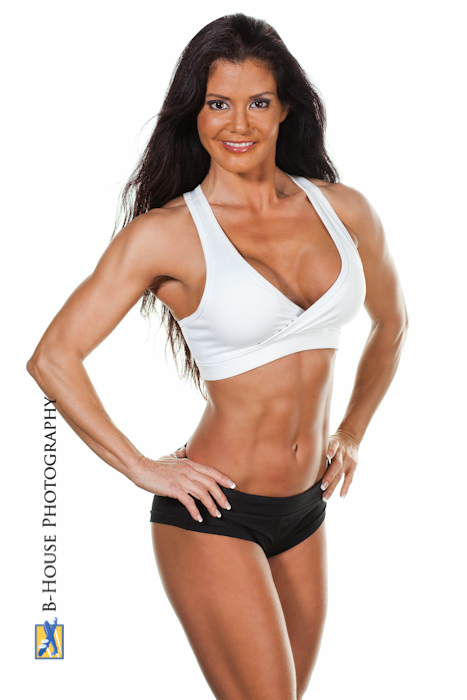 running errands and enjoy engaging in conversations with strangers while at social events. However, when I am at the gym, I automatically shift into a “don’t mess with my flow” mode which has left other gym members with the distinct impression that I am some sort of ice queen.
I have made numerous attempts over the years to train with friends and at the conclusion of every one of those training sessions have resolved to avoid such scenarios at all costs. Thus in my estimation having a training partner has a completely ergolytic effect on my regimen. Though I recognize the utility in having a supportive human by one’s side to encourage one more rep, such commentary from a pep squad only serves to distract me and in some cases raise my ire.
I have spent my entire life as an aggressive self-starter. Without such drive I would never have endured the rigors of medical school and residency. As an NPC national Bikini champion I have consistently pushed myself to reach a personal best, which has been no easy task given the demands of my career and life in general. I stroll into a gym with my equipment and my regimen for the day like a thoroughbred horse lining up at the gate, blinders in place, ready to charge towards the finish line at full speed. It certainly doesn’t help that I am usually in an incredible rush to get to the office or a meeting and must keep moving from movement to movement. You can imagine how I respond to the weekend warrior who decides to wipe the drool from his chin and ask me while I am in the middle of a set how he can get his abs to look like mine. So the mere thought of spending my entire gym session hyperaware of my time constraints while trying to work in on gym equipment with a training partner is more anxiety-provoking than a trip to the dentist.
If you and your training partner are completing staggered supersets, I suppose you could yell words of encouragement at each other. If there is sufficient equipment for two side-by-side setups, or if you are engaging in plyometrics, it is possible that you may both train simultaneously. However, if you are taking turns on equipment, especially if you are using different weights for each set, a thirty-second rest could easily broaden into 60, 90, 120 or more seconds as you load or re-rack or perhaps have a good laugh about the Facebook post one of you just saw on your cell phone.
With all that said, I realize that some individuals thrive in a workout regimen which includes a training partner. After all, a supportive and upbeat buddy could consistently push you beyond what you believe you are capable of with respect to strength, power and endurance. If this is what your training partner possesses, and this person is easily able to surrender the cell phone along with idle chat for the duration of the workout, you are quite lucky indeed.
I admit that abdominals are my favorite of all the body regions to train and have been for my entire adult life. In fact I cannot think of a single time that I balked when it was time in my training split to work my abs. This makes designating a particular abdominal exercise as my favorite especially challenging for me, since I consider very move to be a valuable component of an abdominal routine.
After having evaluated the level of motivation I have during each abdominal exercise, I have determined that my top abdominal move is the decline bench crunch. If you have not performed this exercise before (and yes, I realize that many of you are already familiar with this move), I would highly recommend that you incorporate decline bench crunches into your routine. Decline bench crunches are excellent at targeting the rectus abdominis and hip flexors due to the increased range of hip flexion which occurs on a decline bench.
Adjust a decline bench so that it is at a 30 to 45 degree angle (the more advanced you are, the greater the angle you can use). Sit on bench with your feet hooked under the rollers and lie back on the pad with your arms folded across your chest. Exhale as you bring your head, shoulders and back off the pad, coming to a full sit up position, then return slowly to start position. You can perform 12 to 20 reps per set, 3 to 5 sets, but I will admit that when I do decline bench crunches, I perform 5 to 6 sets of 30 reps. If you crave an extra challenge, extend your arms overhead while you perform this move.
Decline bench crunches can also be performed with a twisting motion at the top of the move, recruiting the obliques and serratus anterior.
Those of you who are really looking to punch up this exercise can perform a weighted variation of this move in which you hold a dumbbell behind your head, hold a plate on your chest, or pull on a cable during the exercise.
After incorporating decline bench crunches into your training split, don’t be surprised if people begin noticing your washboard abs!

June 2012 Shoot
Kale chips are a healthy alternative to potato chips and they are absolutely DELICIOUS! You can either purchase these ready-made from stores like Whole Foods or save a considerable amount of money and make them at home. They are incredibly easy to make, even for people who are oven-shy. YUM!
Preheat oven to 375 degrees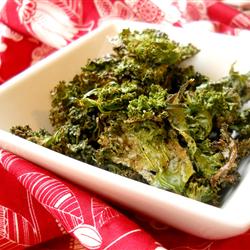
You will need a large bunch of kale, about the size of a basketball. Rinse and dry very thoroughly. Separate the leaves from the thick stems and break up into small bite size pieces. Spread out on cookie sheets. Drizzle one tablespoon of olive oil over pieces.
This is where it gets fun. You can sprinkle Parmesan cheese, garlic powder, black pepper, kosher salt, or use my favorite which is lemon pepper (Trader Joe’s makes a great version).
Bake for approximately 15 minutes, until edges turn sightly brown and kale is crispy. Remove from pan and allow to cool before eating.

One of those “between shots” shots…

