A Bikini Athlete’s Favorite Abdominal Exercise

I admit that abdominals are my favorite of all the body regions to train and have been for my entire adult life.  In fact I cannot think of a single time that I balked when it was time in my training split to work my abs.  This makes designating a particular abdominal exercise as my favorite especially challenging for me, since I consider very move to be a valuable component of an abdominal routine.

After having evaluated the level of motivation I have during each abdominal exercise, I have determined that my top abdominal move is the decline bench crunch.  If you have not performed this exercise before (and yes, I realize that many of you are already familiar with this move), I would highly recommend that you incorporate decline bench crunches into your routine.  Decline bench crunches are excellent at targeting the rectus abdominis and hip flexors due to the increased range of hip flexion which occurs on a decline bench.

Adjust a decline bench so that it is at a 30 to 45 degree angle (the more advanced you are, the greater the angle you can use).  Sit on bench with your feet hooked under the rollers and lie back on the pad with your arms folded across your chest.  Exhale as you bring your head, shoulders and back off the pad, coming to a full sit up position, then return slowly to start position.  You can perform 12 to 20 reps per set, 3 to 5 sets, but I will admit that when I do decline bench crunches, I perform 5 to 6 sets of 30 reps.  If you crave an extra challenge, extend your arms overhead while you perform this move. 

Decline bench crunches can also be performed with a twisting motion at the top of the move, recruiting the obliques and serratus anterior.

Those of you who are really looking to punch up this exercise can perform a weighted variation of this move in which you hold a dumbbell behind your head, hold a plate on your chest, or pull on a cable during the exercise.

After incorporating decline bench crunches into your training split, don’t be surprised if people begin noticing your washboard abs!


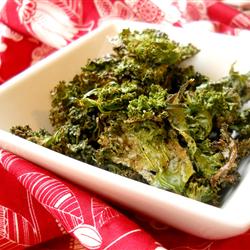
Move Over, Potato Chips…Here Come Healthy Kale Chips!

Kale chips are a healthy alternative to potato chips and they are absolutely DELICIOUS!   You can either purchase these ready-made from stores like Whole Foods or save a considerable amount of money and make them at home.  They are incredibly easy to make, even for people who are oven-shy.  YUM!

Preheat oven to 375 degrees
You will need a large bunch of kale, about the size of a basketball.  Rinse and dry very thoroughly.  Separate the leaves from the thick stems and break up into small bite size pieces.  Spread out on cookie sheets.  Drizzle one tablespoon of olive oil over pieces.

This is where it gets fun.  You can sprinkle Parmesan cheese, garlic powder, black pepper, kosher salt, or use my favorite which is lemon pepper (Trader Joe’s makes a great version).

Bake for approximately 15 minutes, until edges turn sightly brown and kale is crispy.  Remove from pan and allow to cool before eating.

Clean House, Clean Mind

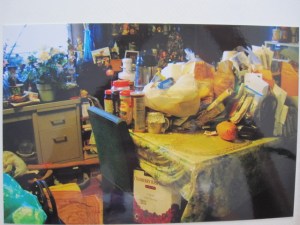
No one should have to live like this!

No one should have to live like this!

The phrase which I have used for the title of this post is one I was always intrigued by, perhaps mostly due to the fact that I grew up in a household in which various areas were “clutter zones”.  This is not to say that I grew up in a messy home.  My mom was actually quite tidy and quite the neat freak.  But I never saw more than half the surface of the dining room table since the other half was covered with one foot high stacks of bank statements, other financial documents, greeting cards and letters from family.  In like fashion, about a third of our coffee table was piled with astrology guides, tv guides, and other books which my mom was reading.  Stacks of papers and magazines sat next to our living room sofa.  My mom’s bedroom had banker’s boxes instead of furniture at the foot of the bed.

I also was witness to my mom’s extensive collection of jewelry and clothing.  Though we had six closets, only one was filled with my clothing, while all the rest were jam-packed with my mother’s clothing. Some of the clothing had never been worn and had the price tags still attached.  I admit that I knew this behavior was unusual, but I did not know how pervasive such behavior was in my mom’s family until I went to Hawaii and saw that my aunts and uncles also practiced the same behavior.  Some of my relatives were so extreme in their tendency to hold onto things that they earned the label of pack rats.  In fact, when one of my uncles had a severe stroke and had to be placed in a convalescent home, my cousins discovered five-foot high stacks of newspapers throughout the house in a serpentine pattern (leaving just enough room for a person to wiggle through the house), moldy food in the refrigerator, Japanese antiques which were stuffed in a room collecting dust, and a plethora of other collectibles and junk which made it next to impossible for him to use the kitchen, toilet or sleep in his bed.

When my mom became ill and had to be placed in a convalescent home, the task of cleaning her apartment fell upon me.  The enormity of sorting through all the things my mother had collected was overwhelming, and I shut down emotionally numerous times.  I was shocked to find collectibles that had never been displayed, bank statements going as far back as the 1950’s, hundreds of pairs of earrings and shoes, about 150 handbags, etc. Suddenly it was left up to me to determine what items of my mom’s were worthy of being kept. Since these items could not be stored at the nursing home, they were stored in my garage and my closet. My mom still asks about her things and becomes angry if I tell her that we had to sell or give away many of the items she had collected over the decades.  I did my best to keep what she deemed most valuable, either monetarily speaking or in terms of sentimental value.  It always breaks my heart when I see her upset over losing her things.

Now I am trying to figure out what to do with my favorite aunt who lives in Hawaii.  She has no children and is a widow, so that means I am the one who will help her.  I am happy to do it only because my love for her is very deep.  But entering her house makes me hyperventilate. I cannot fathom why it is so important to keep 60 plastic Smurf miniatures, nor do I understand why my aunt has a collection of about 200 plastic food storage containers. My aunt’s collections are numerous and extensive. If you have ever tuned into the show “Hoarders” you would get a sense of what my aunt’s environment is like. I fail to understand why she has allowed her belongings to swallow up her living space so severely that she is unable to stretch out on her bed and can barely get to her toilet because there is so much junk in the bathroom.  The last thing I want is for that house full of things to entomb her.

This past week has been hellish, trying to come up with options for an assisted living situation which my aunt can afford. It is no easy task when I aam 3,000 miles away from her and am being asked by her to decide on what is best for her given her disabled condition and need for ongoing care.  Tough my aunt’s safety and comfort is my primary concern, I also know that I will need to organize a major cleanup of her home, all the while feeling like I am infringing on her privacy.

In October of this year I had to move from a place I had been in for over six years.  Though I have gone through my entire adult life very successfully squashing any hoarding tendencies that may be hidden in my genetic makeup, I had still acquired many things over the years, including some of my mother’s belongings which I had felt guilty about giving away or selling.  Once I was in the new place and had to sort through everything, I just said, “Enough is enough.  I don’t have to feel guilty about STUFF.”  What ended up happening was I went through one of the most spiritually cleansing purges of my life.  That is saying a lot since I go through the bulk of my belongings three to four times a year and perform regular purges.  This time, though, I truly cut out the fat from my life, and it was liberating.
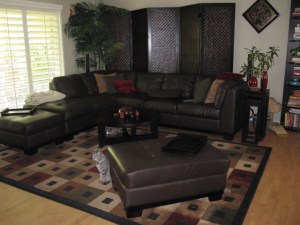
No clutter...just cats!

No clutter…just cats!

When it comes to your belongings, don’t allow yourself to become encumbered by them.  Don’t hold onto feelings of guilt.  If you haven’t used something in a while and it is collecting dust, get rid of it. There is probably someone out there who will use it and will appreciate it. If there is something you haven’t used or worn because you are waiting for the right occasion, either USE IT or let it go!  I used to frequently argue with my mom about our differing philosophies about objects.  She always told me I was hard on things.  Scratches on my watches and my shoes were deemed by my mom to be marks of carelessness, when in contrast, my mom sequestered similar items in boxes and tissue paper for decades, never to be worn or used, in a static, pristine state and hidden under a bed or a drawer. I will continue to use the things I possess and will not worry about wear and tear. I will also make sure that tables and all the living areas of my house serve only their intended purposes, and that my storage areas never get to the point where they are overflowing.

If you know a hoarder, please GET HELP. http://hoardershelp.org/

Maintaining a Healthy Perspective With Contest Prep Meal Plans

Those of us who compete are well aware of the critical importance of following specific meal plans which are designed to optimize lean muscle mass and promote fat loss.  However, these meal plans, especially during cutting phases, can be extremely restrictive.  In our quest for attaining the ideal physique for whatever division we compete in, we may find ourselves in a spiral of obsessive nose-to-the-grindstone adherence to foods we may have grown to abhor, intertwined with strong temptation to deviate from the plan and indulge in forbidden foods, only to berate ourselves afterwards for doing so.  After all, we are only human, and after weeks or months of eating clean, we may be so exasperated with daily servings of asparagus, tilapia, chicken breast, and sweet potatoes that our emotional food triggers may kick in and undermine our contest prep efforts.

With orthorexia, there is an unhealthy fixation on clean foods and one’s moods are dictated by how rigidly a clean diet is maintained.  So how is this different from what competitors do in the weeks leading up to a competition?  The mentally healthy approach is to regard food simply as fuel and to dismiss any emotional association with particular items.  I have been witness to and a participant in the fantasizing of forbidden foods in a manner akin to lustful, sexual craving.  I have heard competitors talk backstage at length about all the foods they were planning to indulge in immediately following their final visit onstage for the night.

What I find interesting about such food fixations is how they are distinguishable from anorexic behavior.  When I was 19, I battled anorexia, dropping to 85 pounds on a 5’5’’ at my lightest.  With anorexics, they have a clear and complete aversion to calorie-rich foods and have successfully turned off any interest or cravings for such items, whereas with bulimics, orthorexics and many healthy competitors in contest prep mode, coveting indulgent foods is rather commonplace.  Among all these groups, there is a propensity for obsessive and compulsive behaviors.  One may argue that such obsessions and compulsions are a vital component of contest prep and that without such tendencies a competitor will lack the focus necessary to succeed.

It seems apparent that competitors as a general rule are dangerously close to that fine line which separates a healthy relationship with food from orthorexia.  I remember quite  well how rigid I was about the food I ate when I was anorexic and even kept a daily food journal in which I wrote down the calories and fat grams of every food substance ingested.  I also recall how horrified and ashamed I was of myself when I would reluctantly consume a food I regarded as fattening.

Over 20 years later, I have a healthy relationship with food and for the most part regard it as fuel.  Yet I am immersed in the world of contest prep and like many other competitors will balk and grumble about the clean foods I must eat.  There are times when the mere thought of eating another spear of asparagus seems like the most disgusting activity in the world.  On the rare occasion that I find myself in a restaurant, I find it an alien concept to peruse a menu and actually be able to order whatever I want from any part of the menu.  There are also times during which my metabolism is in hyperdrive and I could eat almost nonstop for the duration of the day.

Here’s the thing: if I indulge in something that is not part of a contest prep meal plan, I don’t flog myself. Rather, I allow myself to enjoy the rare treat and move on.  If you find yourself wallowing in extreme anxiety and prolonged guilt over ingesting a food item which is on the banned list, beware.  This could signify the beginning of a food-related psychopathology.